Laurustinus
Laurustinus - Viburnum tinus
Laurestine
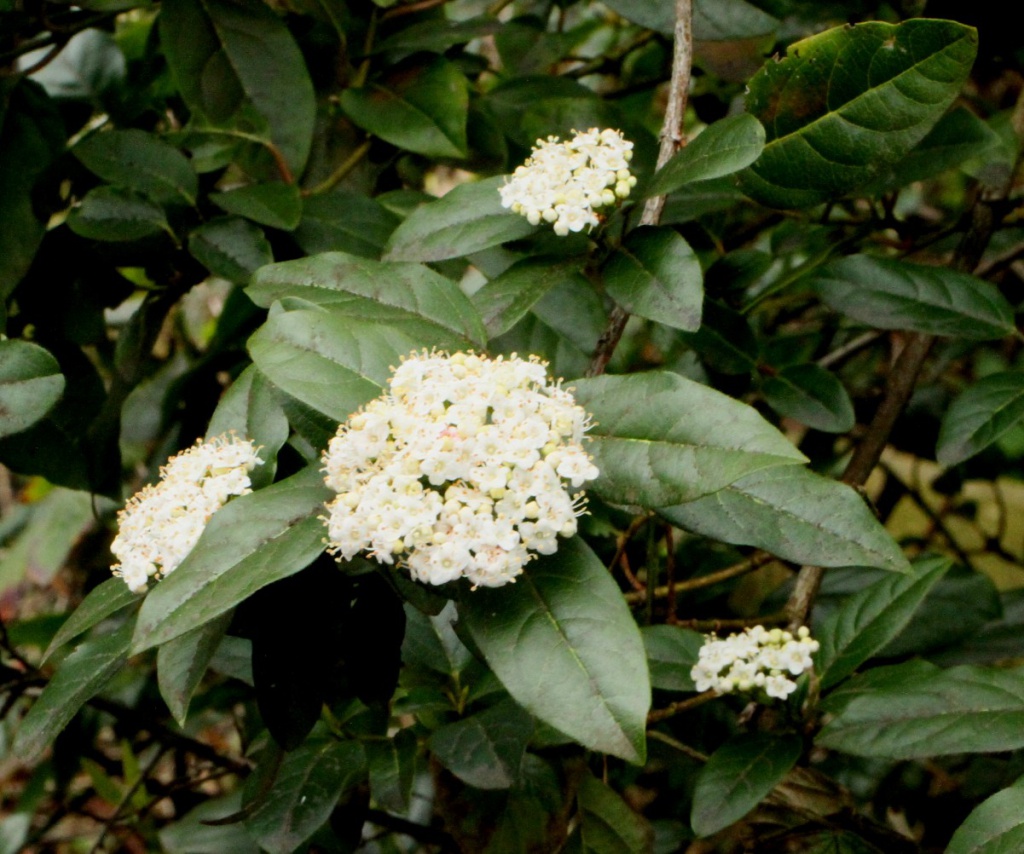
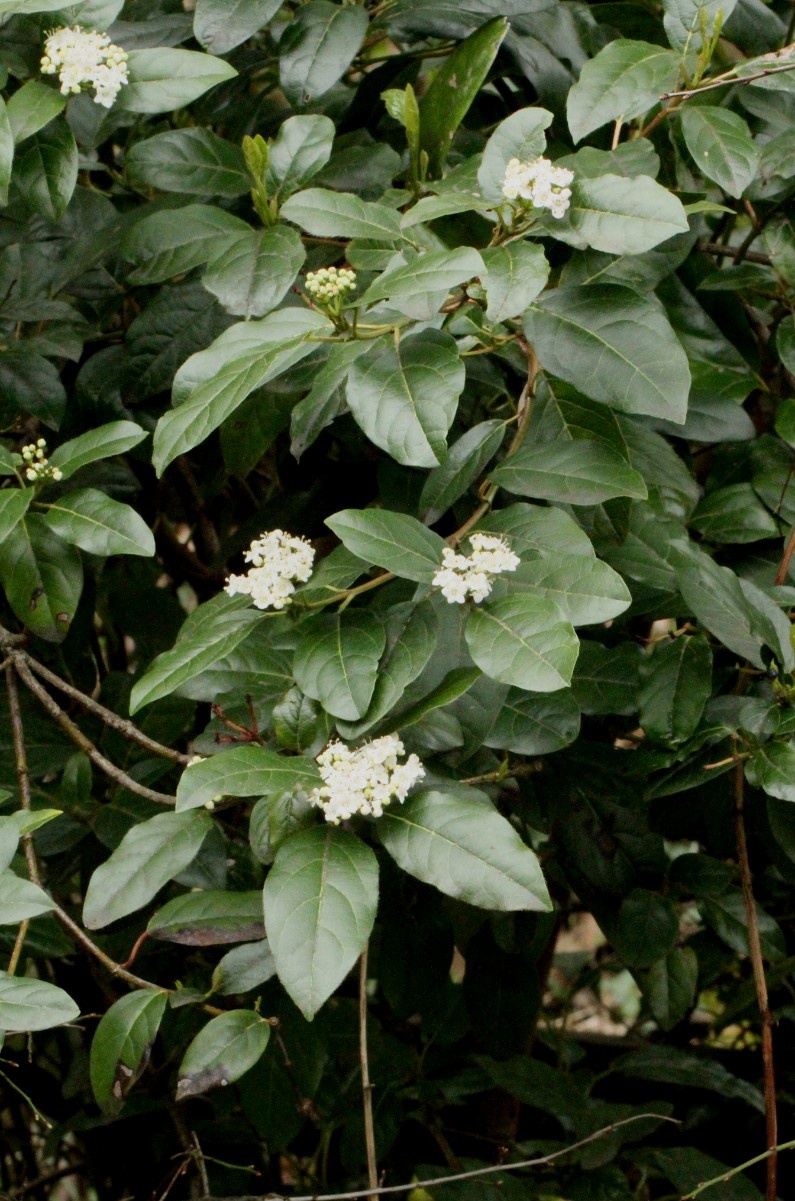
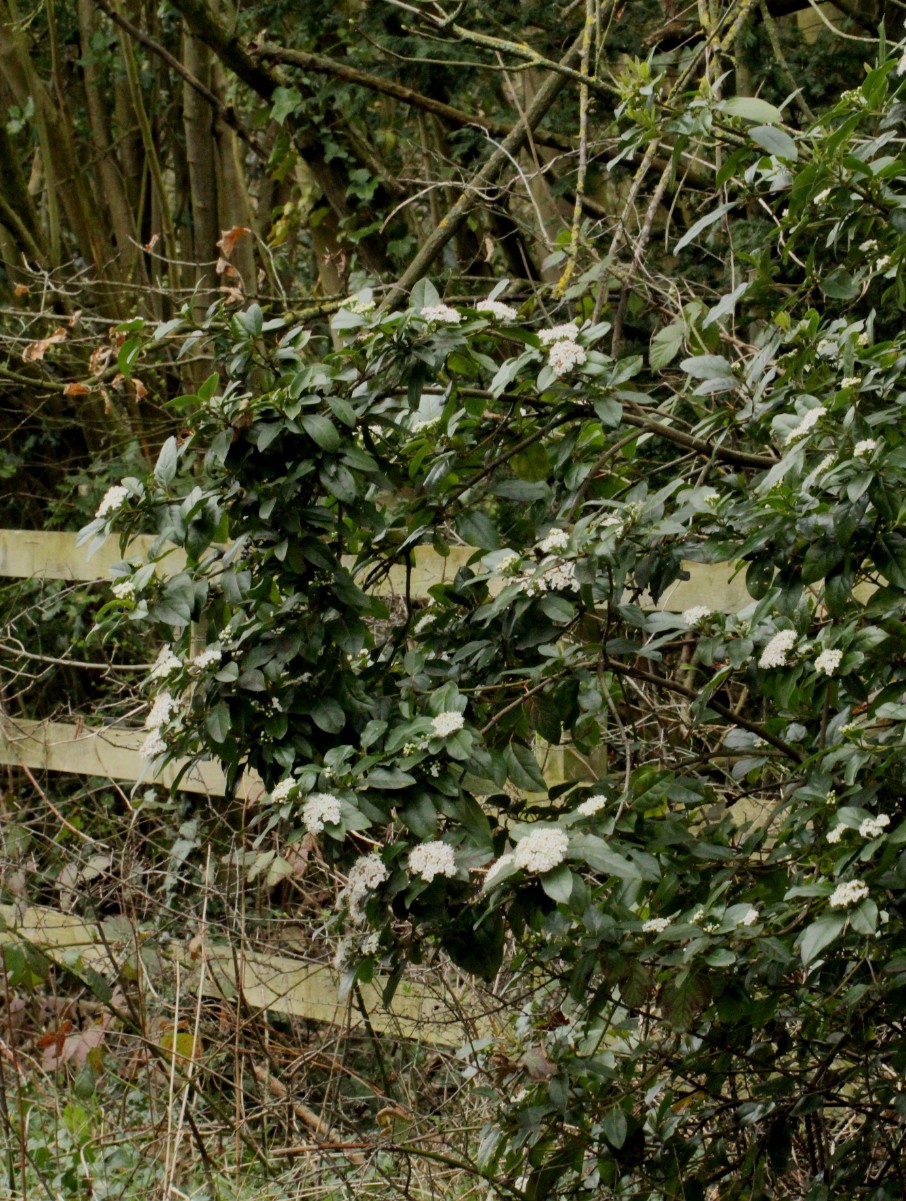
Viburnum tinus is a dense, evergreen shrub with dark and oval, glossy leaves and fragrant pinkish-white flowers, followed by black fruit.

Unless identified by a recognised expert, a photo is required. If the photo doesn't show the key ID features, then in the comments box describe the size and identifying characters you have observed.
Usually found as an escape, or a throw out from cultivation, and often close to habitation.
Flowering period is from February to April.
Evergreen perennial shrub.
Widespread records, particularly in the southern half of Britain.
Status in Leicestershire and Rutland not known.
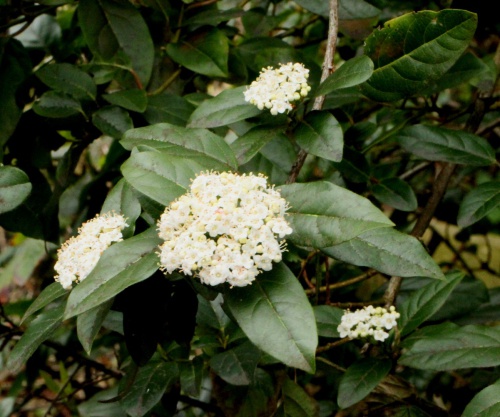 Craig Mabbett
Cropston Bradgate Road
26 March 2023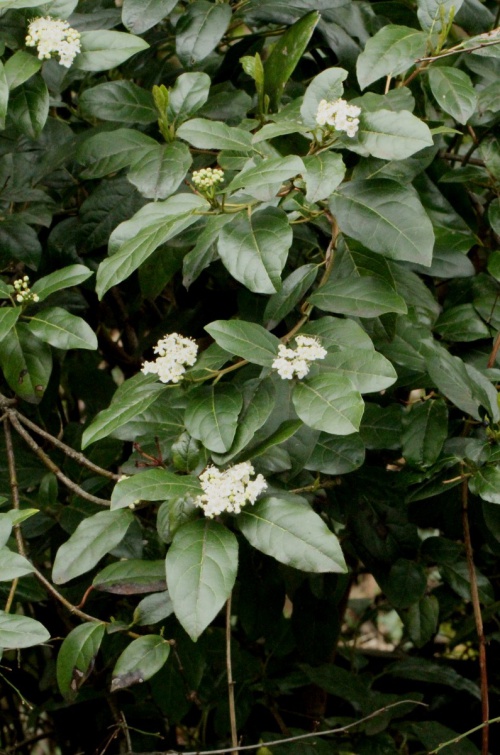 Craig Mabbett
Cropston Bradgate Road
26 March 2023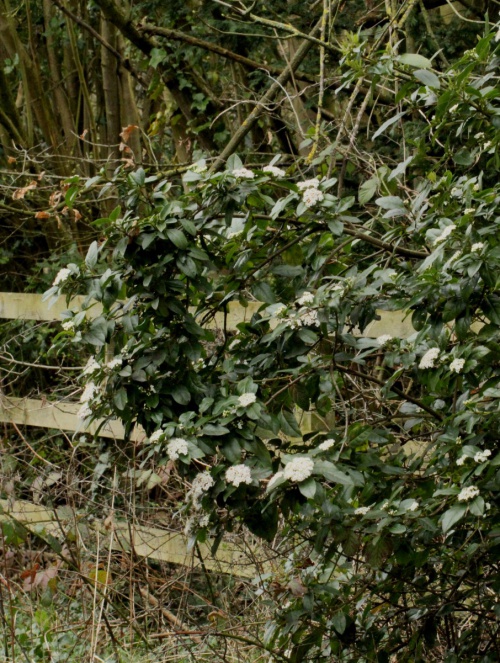 Craig Mabbett
Cropston Bradgate Road
26 March 2023
Leicestershire & Rutland Map
Enter a town or village to see local records
MAP KEY:
Yellow squares = NBN records (all known data)
Coloured squares = NatureSpot records: 2025+ | 2020-2024 | pre-2020
UK Map
Additional images
No additional images available for this species.
All NatureSpot records
Viburnum Cushion Scale
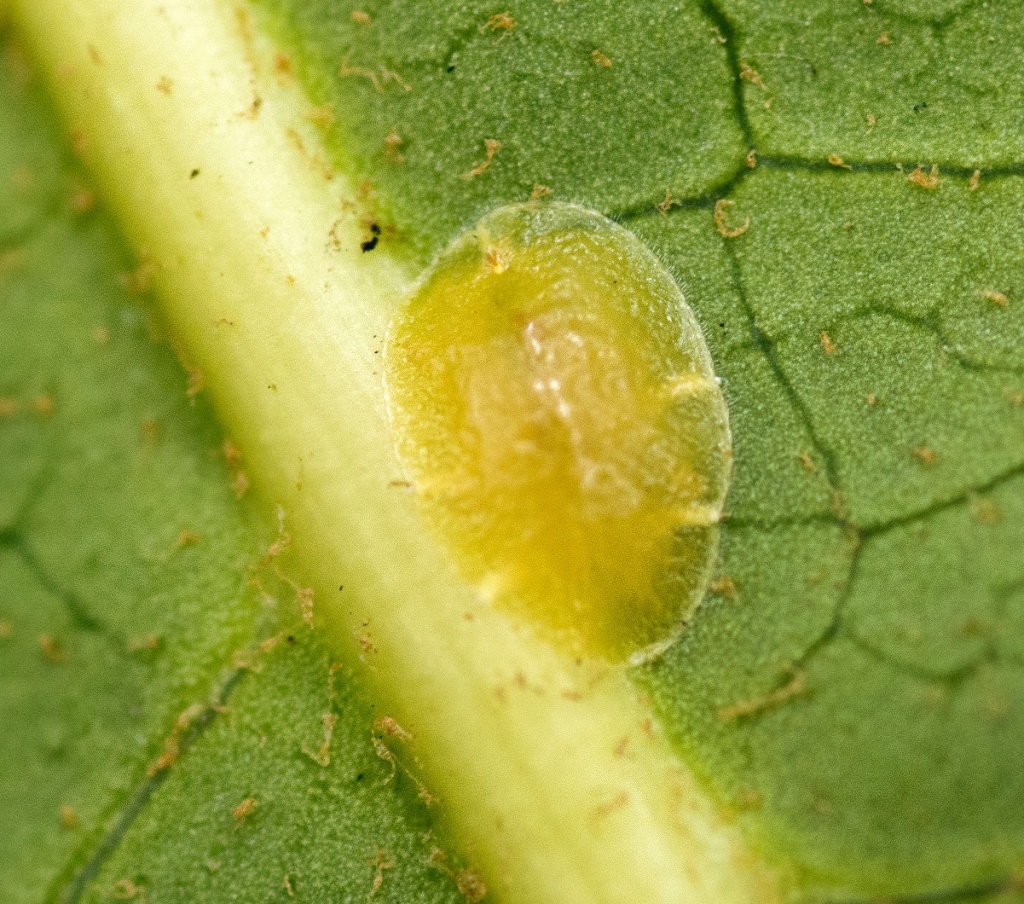
The Viburnum Cushion Scale (Lichtensia viburni) is mainly found on the foliage of Laurustinus (Viburnum tinus) and Ivy. Adult females are flat, oval, pale yellow and up to 4mm long. Males are 2.5mm long, white and elongate ovals. In May-June the females become covered with a white fluffy wax coating in which the eggs are laid. The larvae hatch from the eggs in late June.

Phyllonorycter lantanella
The larva of the moth Phyllonorycter lantanella mines the leaves of Wayfaring-tree and less frequently other Viburnum species such as Guelder-rose or Laurustinus (Viburnum tinus). The larval mine is on the underside of the leaf, causing a strong fold and distorting the leaf, sometimes more than one mine to a leaf.