House-fly
House-fly - Musca domestica
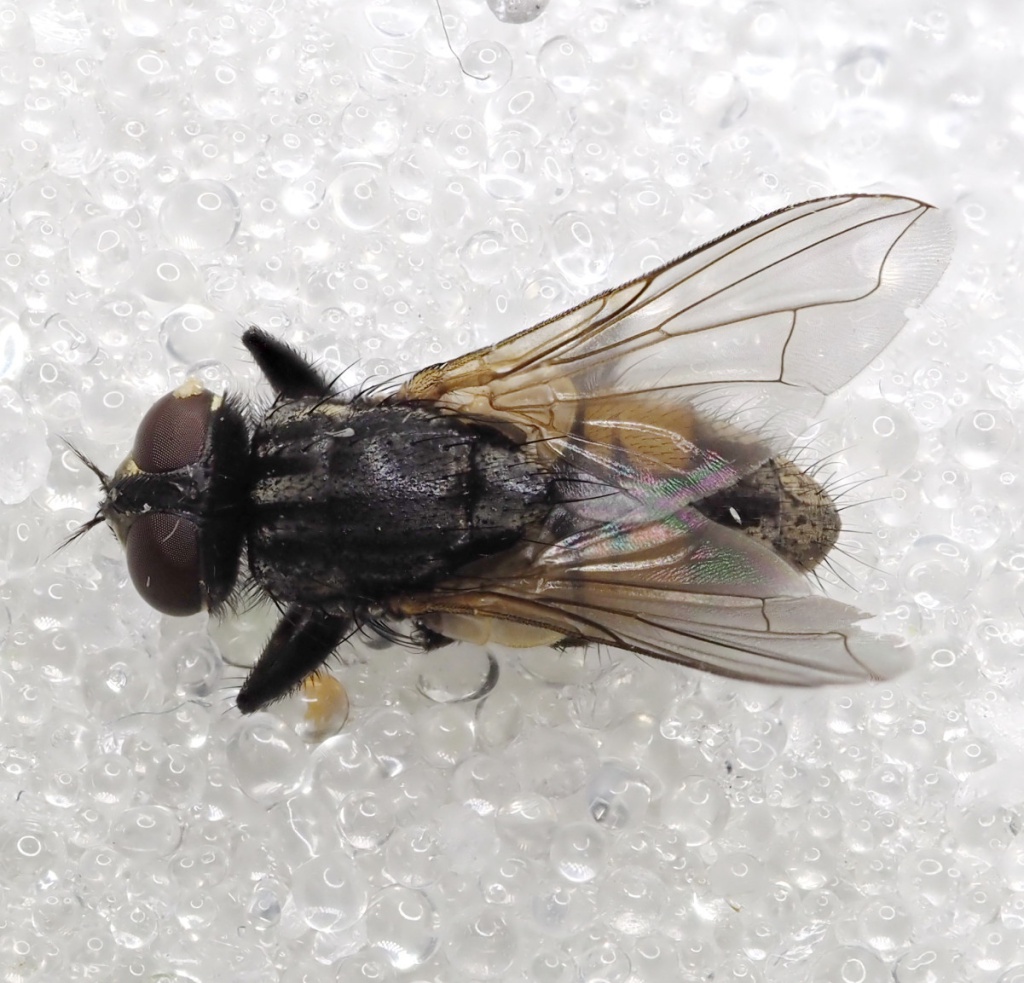
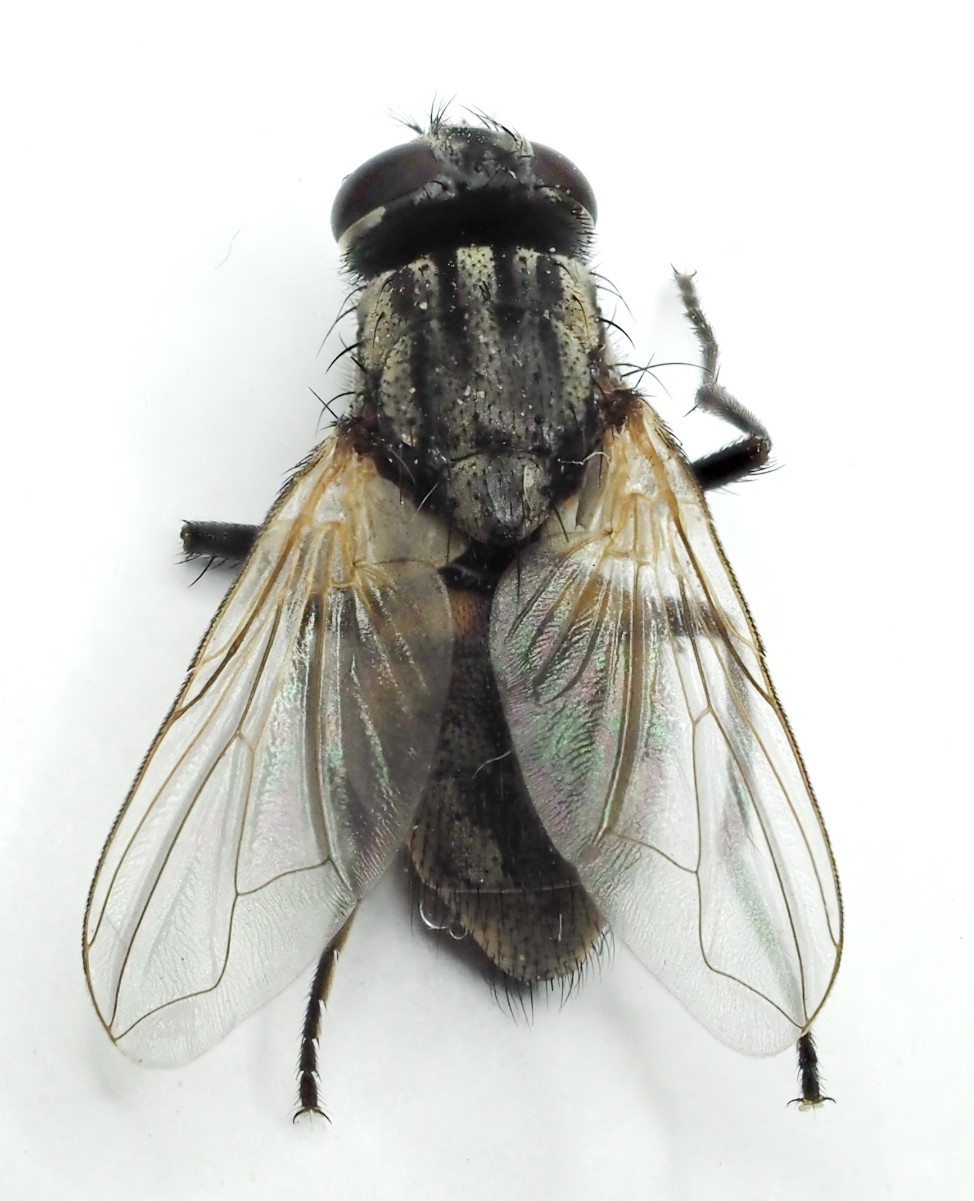
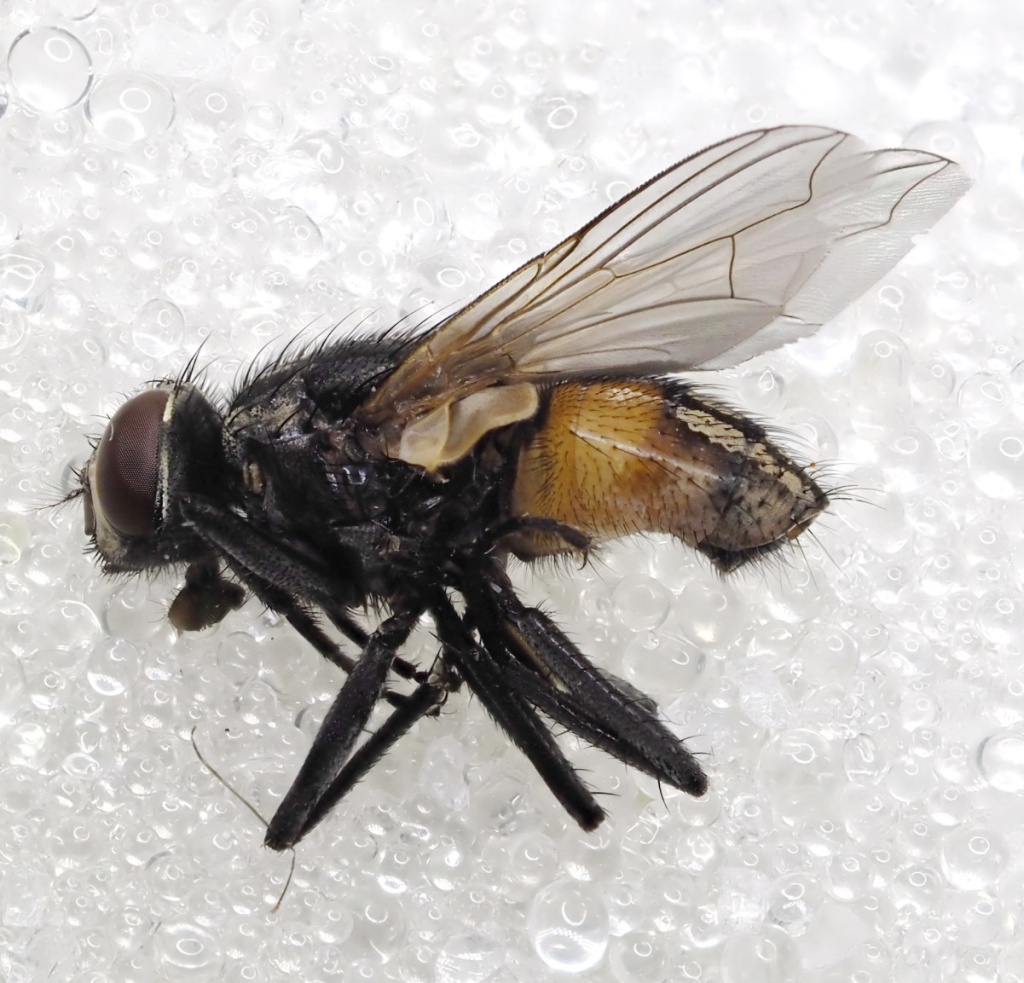
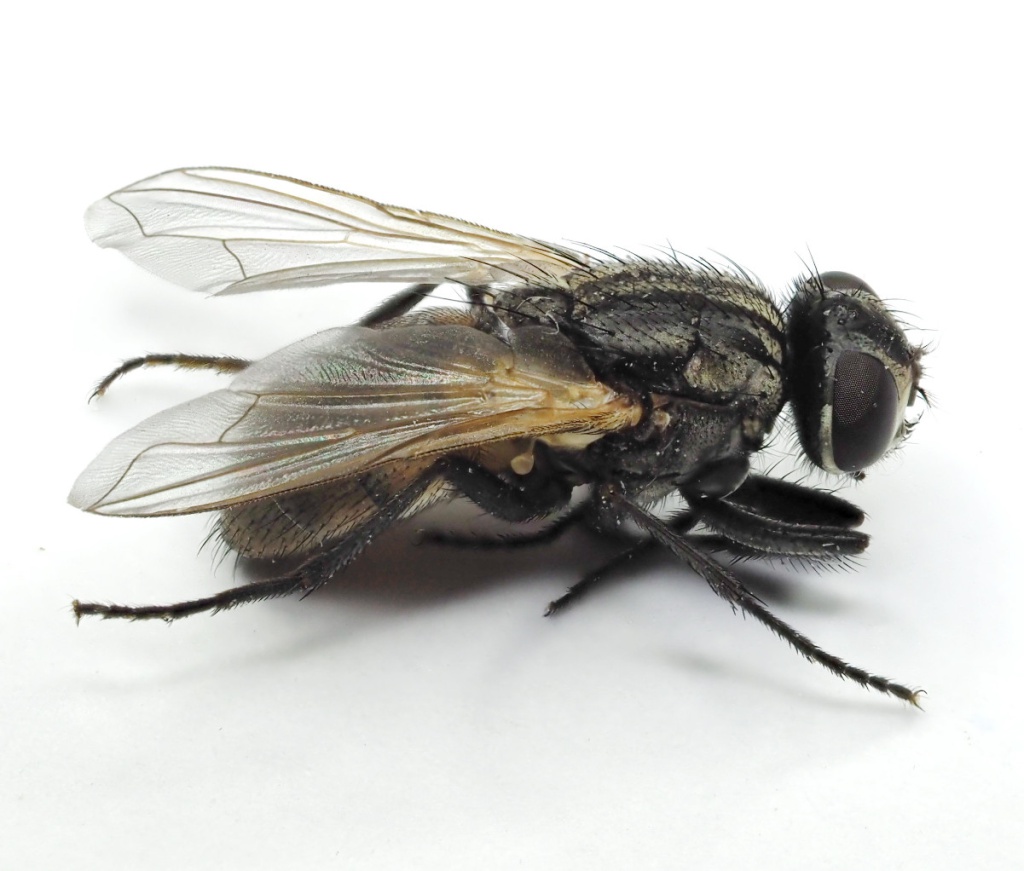
Length 6 to 7 mm. With varying amounts of orange on the basal segments of the abdomen and four black stripes on the thorax. The legs are all black and the eyes are bare. As with other Musca species, the arista has feather-like long hairs.
Similar to the very common Face Fly, Musca autumnalis.

- 6-7mm
- 4 dark lines on the thorax
- legs all black
- eyes bare
- long, plumose arista
- suprasquamal ridge bare
Unless identified by a recognised expert, a photo is required and the specimen should be examined with a microscope. In the comments box, state the key or ID method used and describe the size and identifying characters.
A familiar fly of indoors and around garbage associated with buildings but rare away from habitation.
Adults fly from spring to autumn.
Larvae can develop on a variety of decomposing organic substances including excrement, carrion and rotting vegetable matter, especially where bacterial fermentation is taking place.
M. domestica is recorded throughout the British Isles but is not as common as in the past due to improved storage of garbage (the main breeding location).
Rarely recorded in Leicestershire and Rutland.
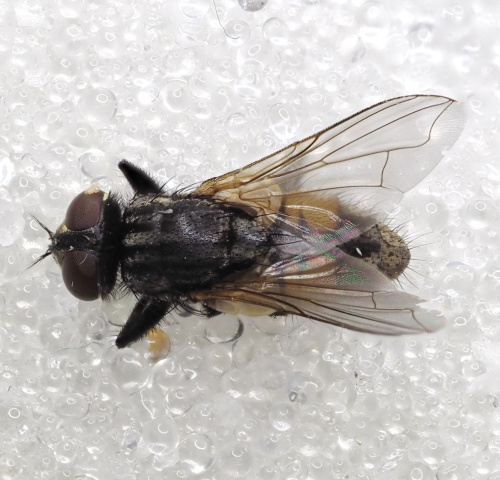 David Nicholls
Ratby garden
22 August 2022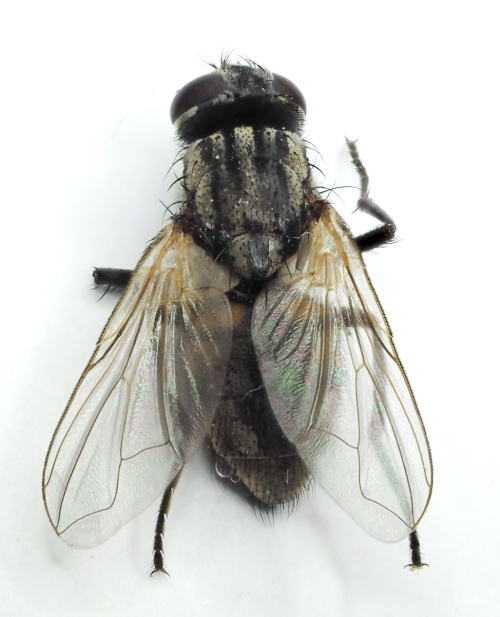 David Nicholls
Ratby garden
22 August 2022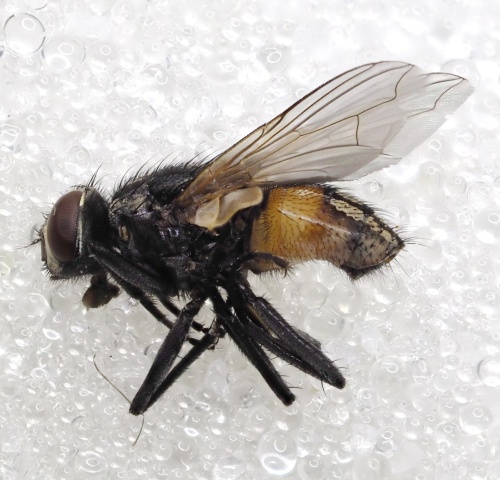 David Nicholls
Ratby garden
22 August 2022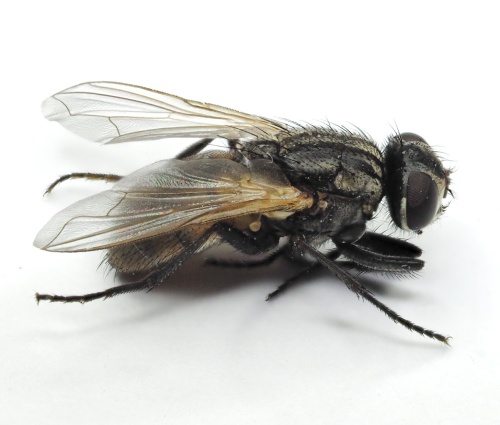 David Nicholls
Ratby garden
22 August 2022
Leicestershire & Rutland Map
Enter a town or village to see local records
MAP KEY:
Yellow squares = NBN records (all known data)
Coloured squares = NatureSpot records: 2025+ | 2020-2024 | pre-2020
UK Map
Additional images
No additional images available for this species.