Sepia Bolete
Sepia Bolete - Xerocomellus porosporus
Boletus porosporus
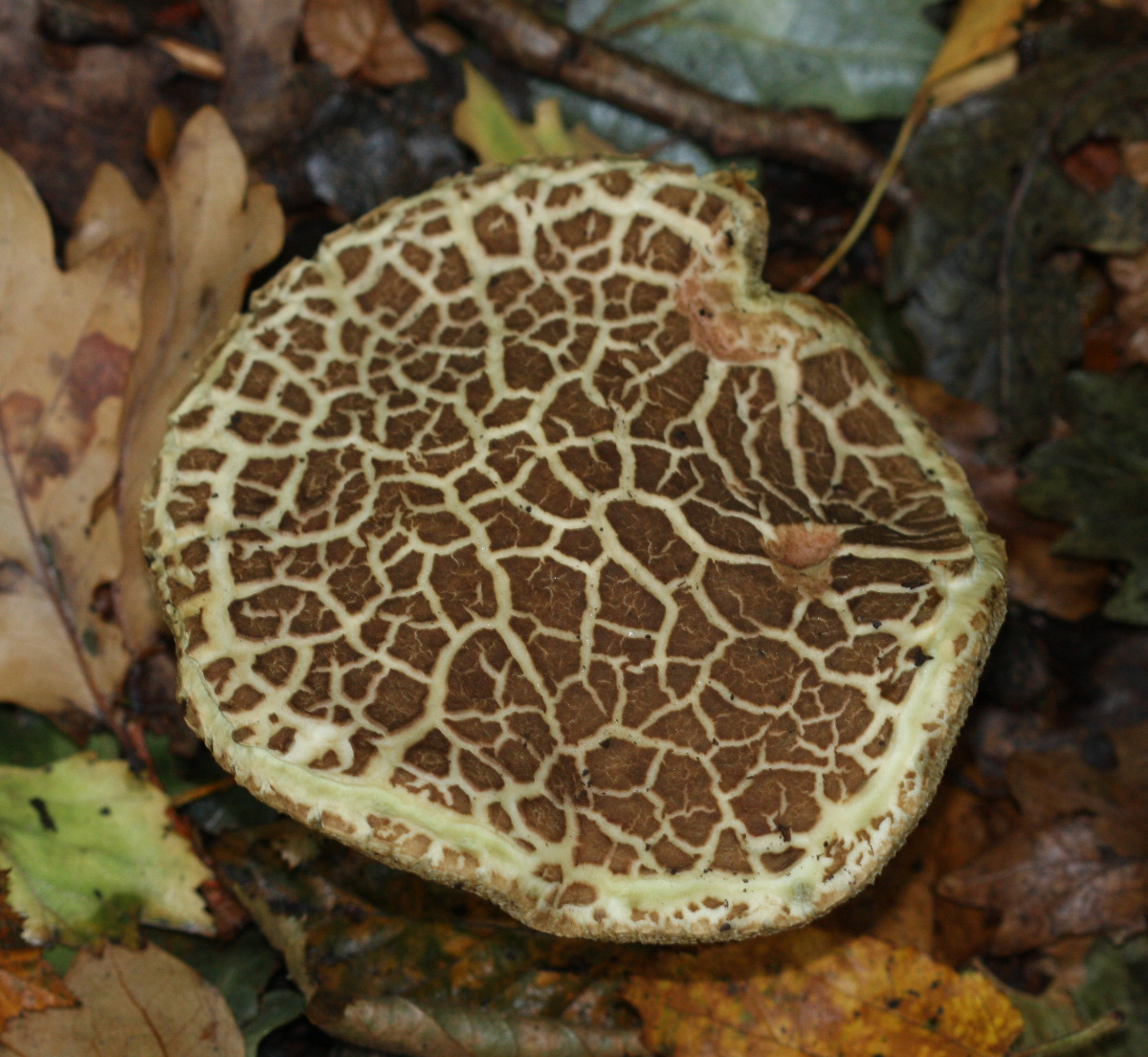
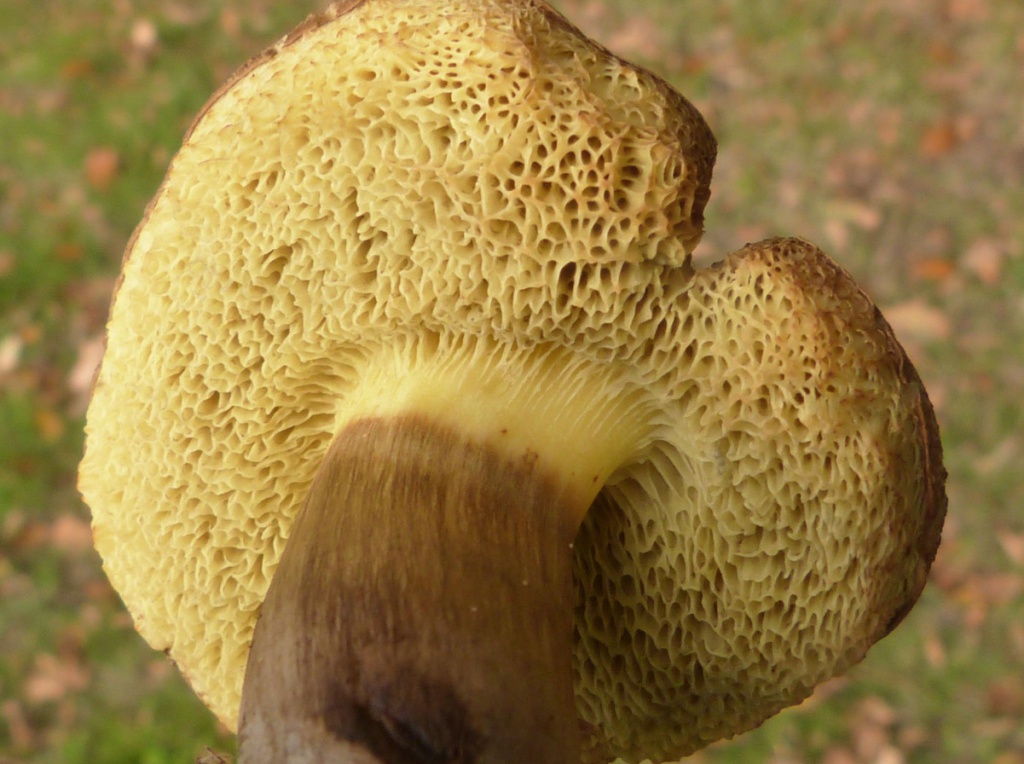
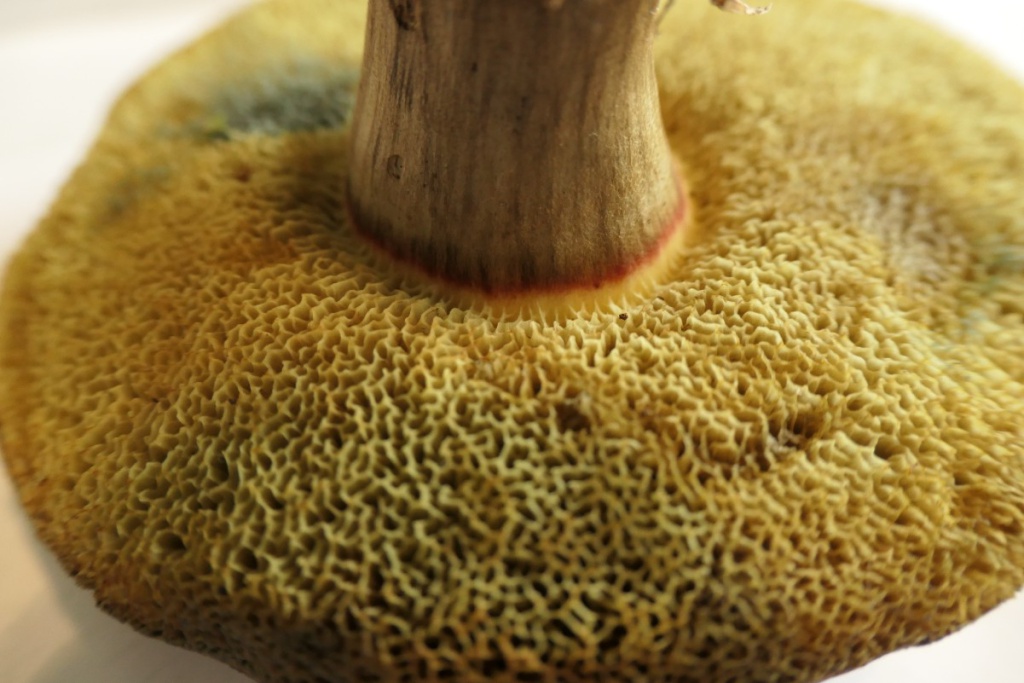
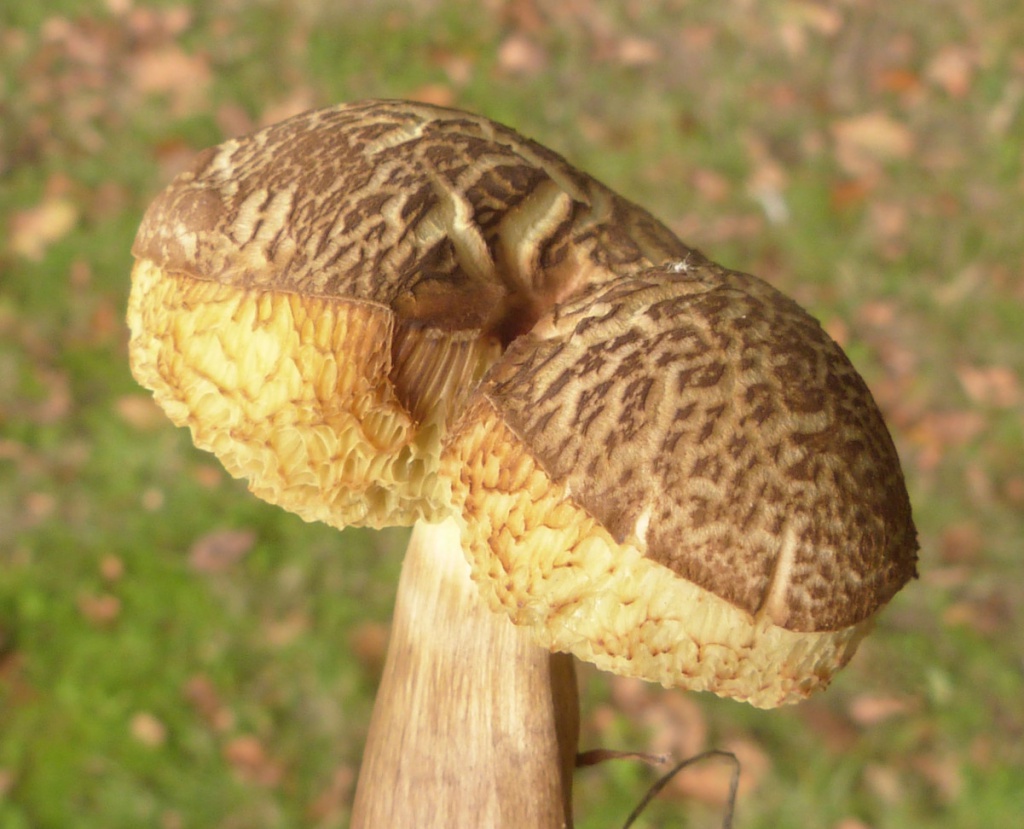
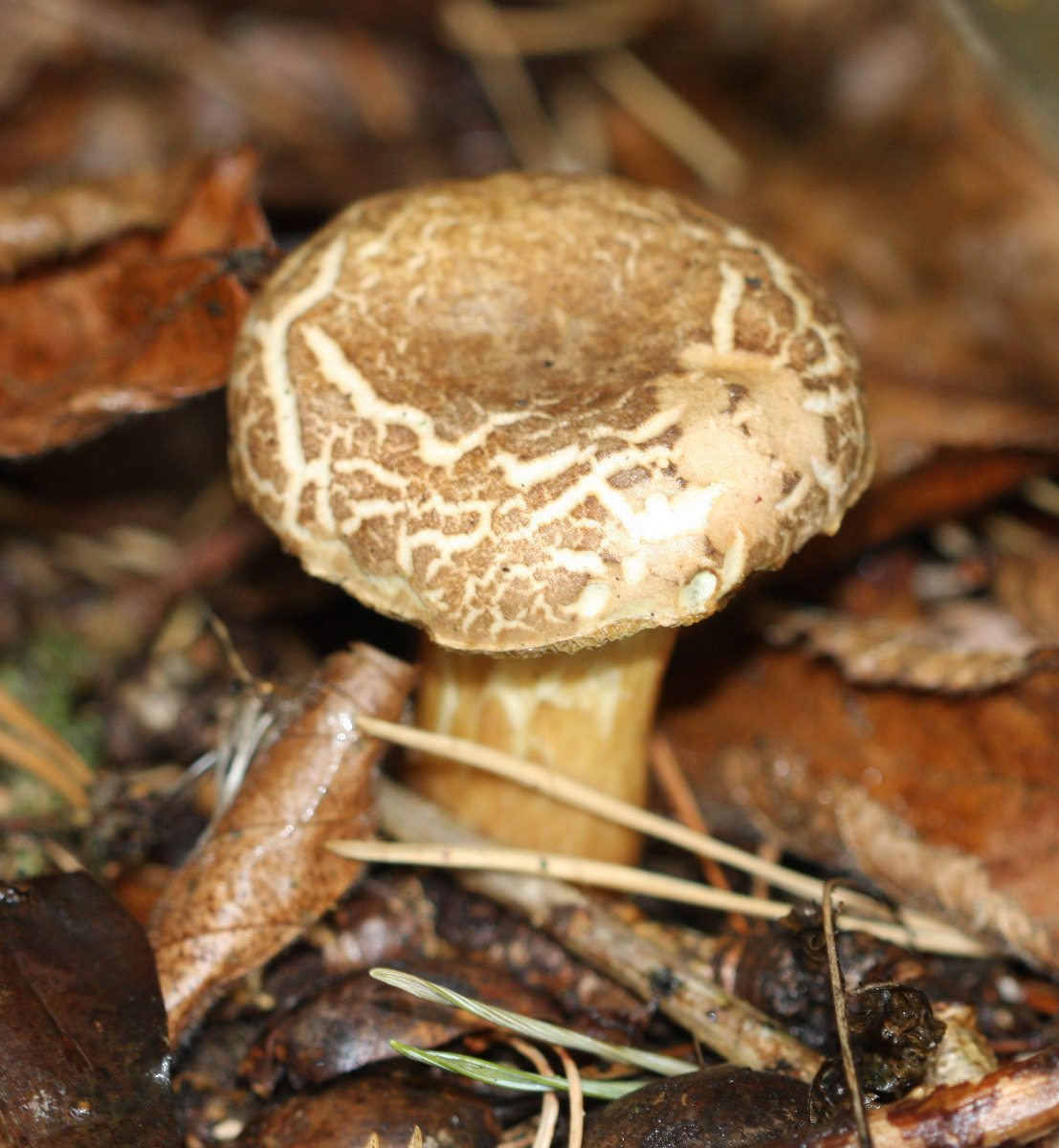
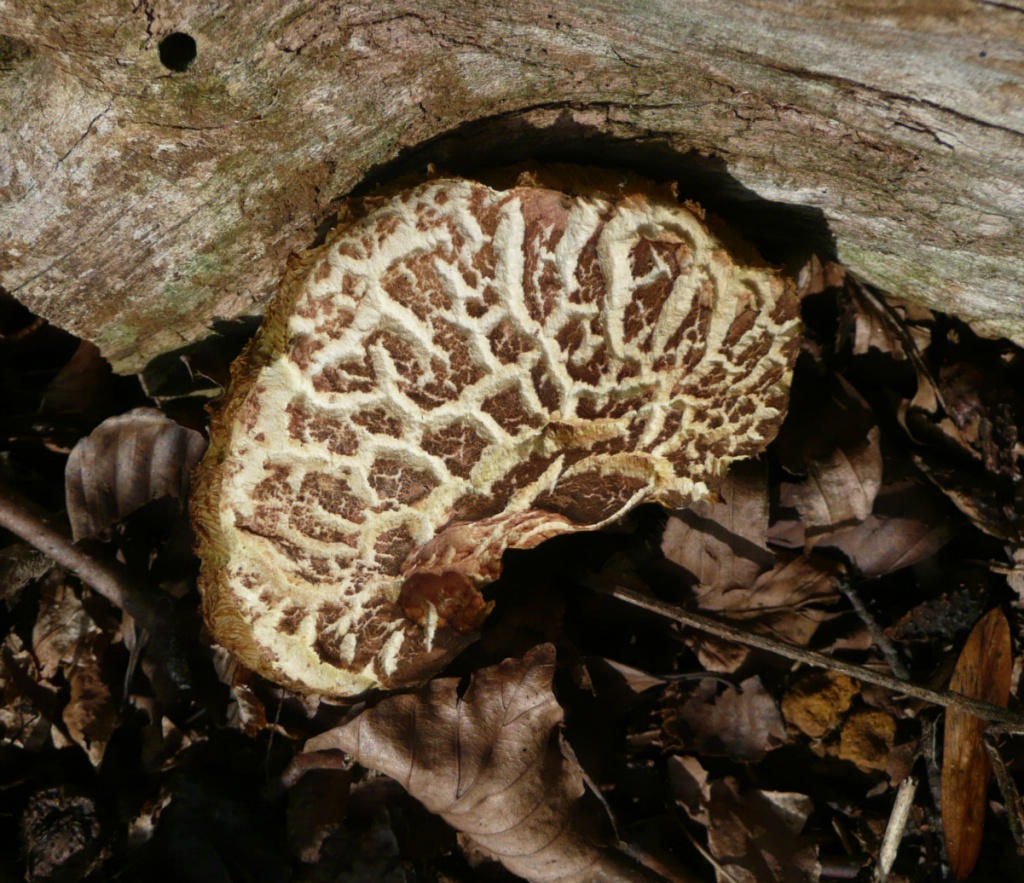
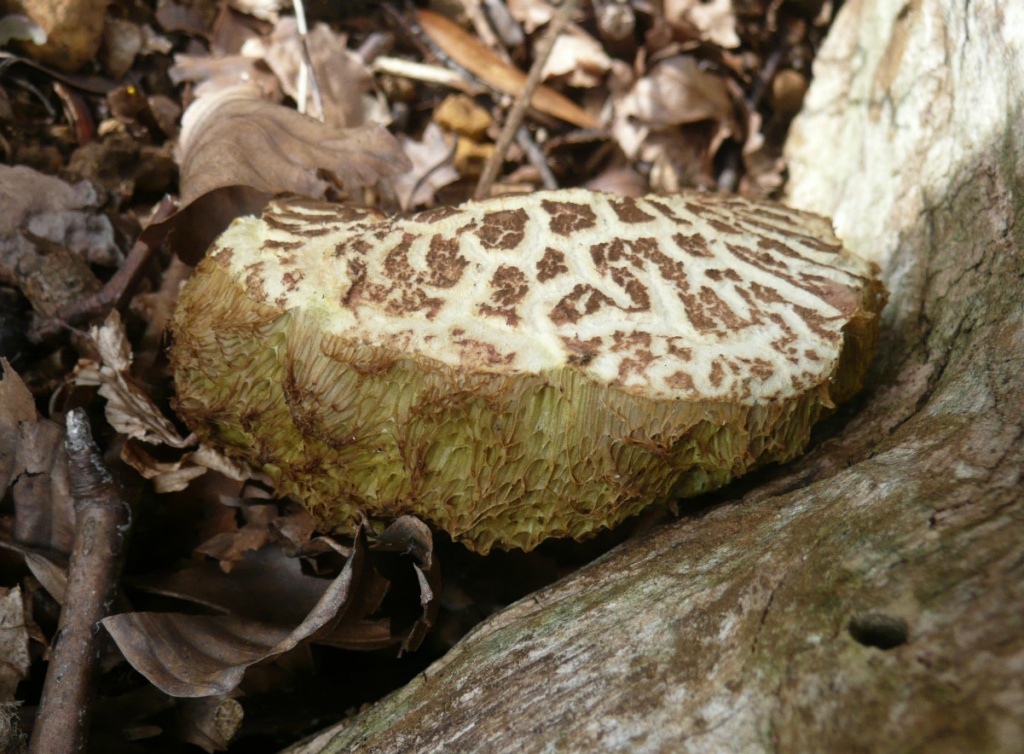
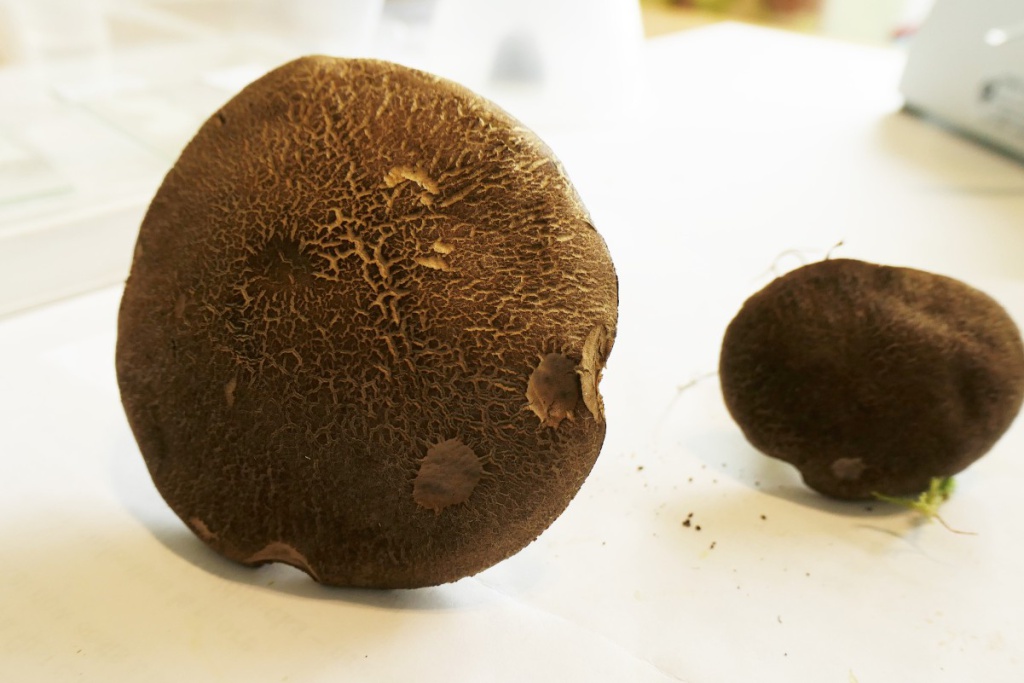
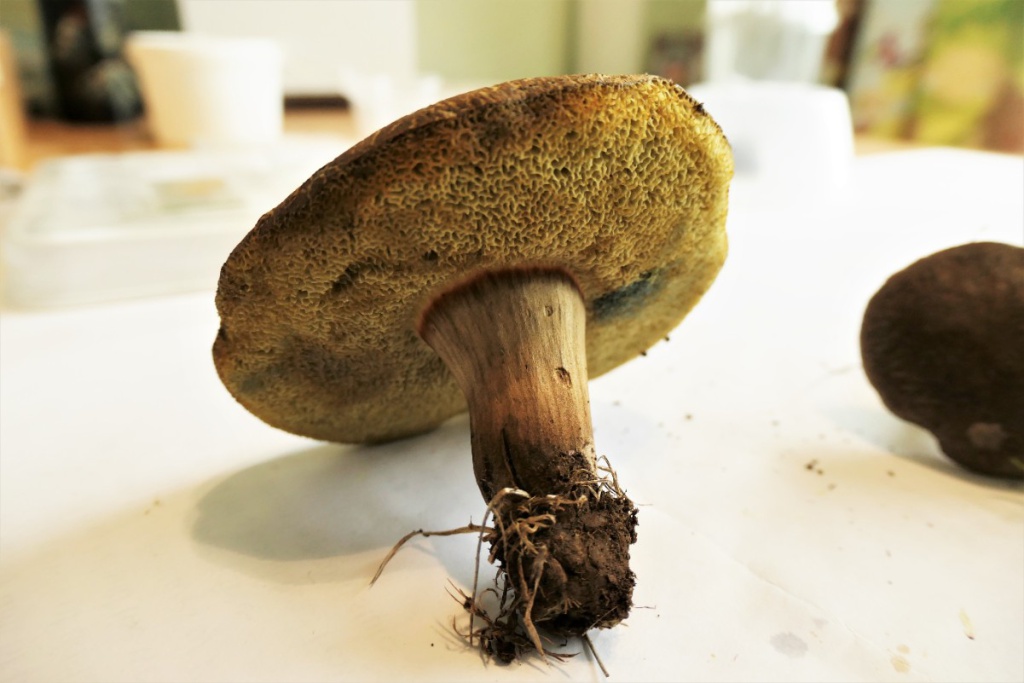
A smallish bolete with a dry brown cap, slightly velvety when young then flattening and becoming smooth and cracking to reveal pale cream flesh. The pores are pale yellow, darkening with age; mature pores turn blue when bruised. The stipe is mostly greyish brown, usually with a fine red zone just below the yellow apex. The flesh of the stipe stains slightly blue whe cut and bruised. It has spores that (unlike others in the genus) are truncated or flattened at one end.
3 other Xerocomellus species are frequently or occasionally recorded in VC55. All have dry, brown caps and yellow pores that stain blue when bruised. Identification can be difficult, and the species have been much confused in the past.
- Red Cracking Bolete (X. chrysenteron) is associated wth conifers, rarely Beech, never Oak. It has a zone of red flesh under the cap surface that is revealed when it is cracked or nibbled.
- Matt Bolete (X. pruinatus) is associated with Beech. The cap is usually darker plum-brown or red brown, not cracking, and has a narrow red margin.
- Bluefoot Bolete (X. cisalpinus) is associated wth deciduous and coniferous trees, including oak. The cap has a zone of red flesh under the cap surface that is revealed when it is cracked or nibbled. The flesh of the stipe and cap slowly stains slowly blue throughout when cut; the surface of the stipe also stains blue a few minutes after it is bruised.

Old/damaged specimens should not be recorded. Photograph a fresh specimen from top down and in side view, and underneath to show pores and full length of stipe. Note habitat and substrate. Check for staining on cap, pores and stem base when cut and then bruised. We recommend that your record is confirmed from a specimen by an expert before submission to NatureSpot.
Deciduous or coniferous trees, including oak
Autumn.
Fairly frequent in Leicestershire and Rutland.
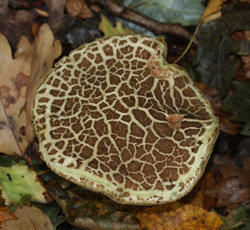 David Nicholls
Martinshaw Wood
18 September 2011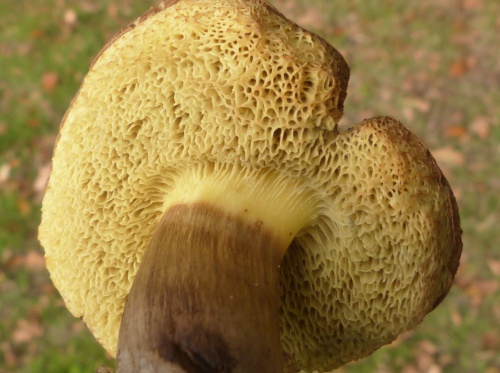 Graham Calow
Broughton Astley, Byre Crescent
19 October 2022
grey-brown fibrillose stipe
yellow apex and narrow red zone below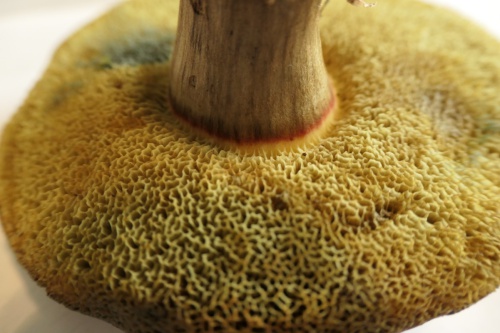 carrybax
Glaston rd, Uppingham
05 November 2022
Red ring on stipe. 4.5cm x 2.5cm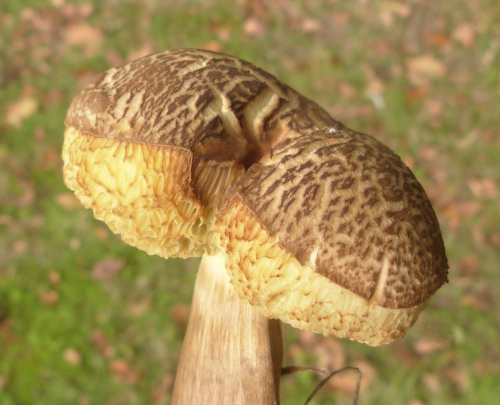 Graham Calow
Broughton Astley, Byre Crescent
19 October 2022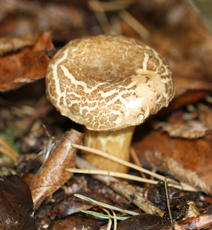 David Nicholls
Martinshaw Wood
18 September 2011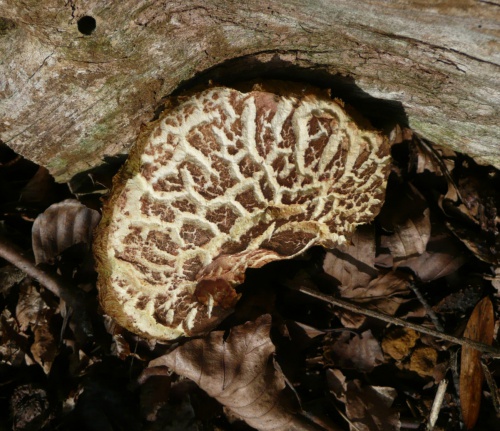 Barbara Cooper
Belvoir Woods
21 August 2013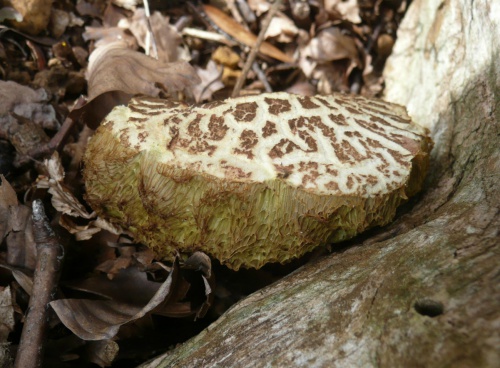 Barbara Cooper
Belvoir Woods
21 August 2013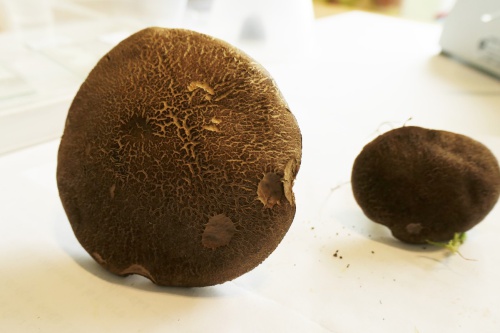 carrybax
Glaston rd, Uppingham
05 November 2022
Cap cracked 9cm dia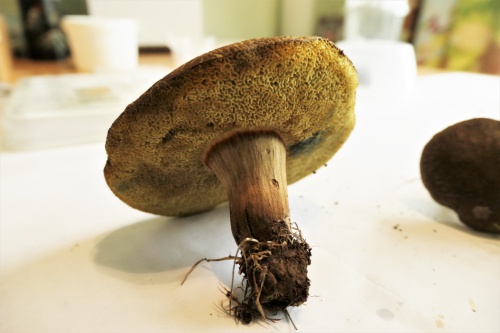 carrybax
Glaston rd, Uppingham
05 November 2022
pores. yellow staining blue
Leicestershire & Rutland Map
Enter a town or village to see local records
MAP KEY:
Yellow squares = NBN records (all known data)
Coloured squares = NatureSpot records: 2025+ | 2020-2024 | pre-2020
UK Map
Additional images
No additional images available for this species.