Chromatomyia syngenesiae
Chromatomyia syngenesiae
The larvae mine the leaves of various plants creating an upper-surface (sometimes lower surface also) corridor. Frass appears in isolated grains. Pupation takes place within the mine, usually in a lower-surface, puparial chamber.
The larvae of Chromatomyia syngenesiae and Chromatomyia horticola form identical mines on a wide range of plants and for most purposes they are treated as an aggregate (Chromatomyia horticola/syngenesiae agg. also known as Chromatomyia 'atricornis'). However, in Britain only Chromatomyia syngenesiae is known to mine Lesser Burdock.
See the National Agromyzidae Recording Scheme webpage for this species for further details of puparium and adult insect.
The leafmine is identical to the mine of Chromatomyia horticola.
ref.: Warrington, B.P. (2023). Chromatomyia syngenesiae. Accessed at https://agromyzidae.co.uk/species/agromyzidae/phytomyzinae/chromatomyia/chromatomyia-syngenesiae/ on 13/12/2023)
Leafmine  Adult
Adult
This species can only safely be identified by examination of the male genitalia. If this is not possible, the leafmine should be recorded as Chromatomyia horticola/syngenesiae agg.
This species mines a wide range of plants so can be found in many different habitats.
Click on the 'further details' link in the 'Description' section above. Then click on the Phenology tab which will provide phenology details for both adult and larval stages.
The leafmines may be found in most months of the year.
Chromatomyia syngenesiae seems to be widespread in Britain. However true status is difficult to determine due to the difficulty of identification.
Status in Leicestershire and Rutland not known.
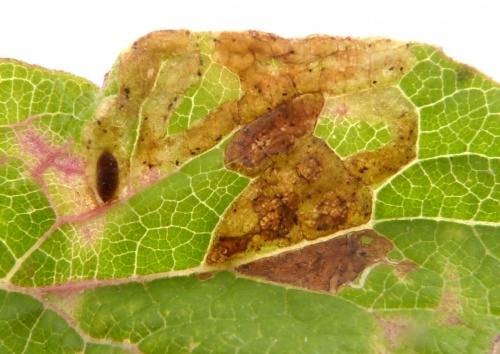 Graham Calow
Sapcote, Land behind William Spencer Avenue
24 July 2021
leafmine on Lesser Burdock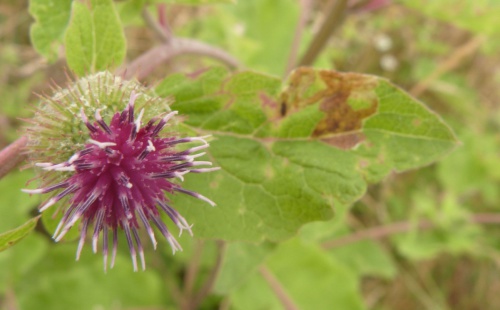 Graham Calow
Sapcote, Land behind William Spencer Avenue
24 July 2021
leafmine on Lesser Burdock
Leicestershire & Rutland Map
Enter a town or village to see local records
MAP KEY:
Yellow squares = NBN records (all known data)
Coloured squares = NatureSpot records: 2025+ | 2020-2024 | pre-2020
UK Map
Additional images
No additional images available for this species.