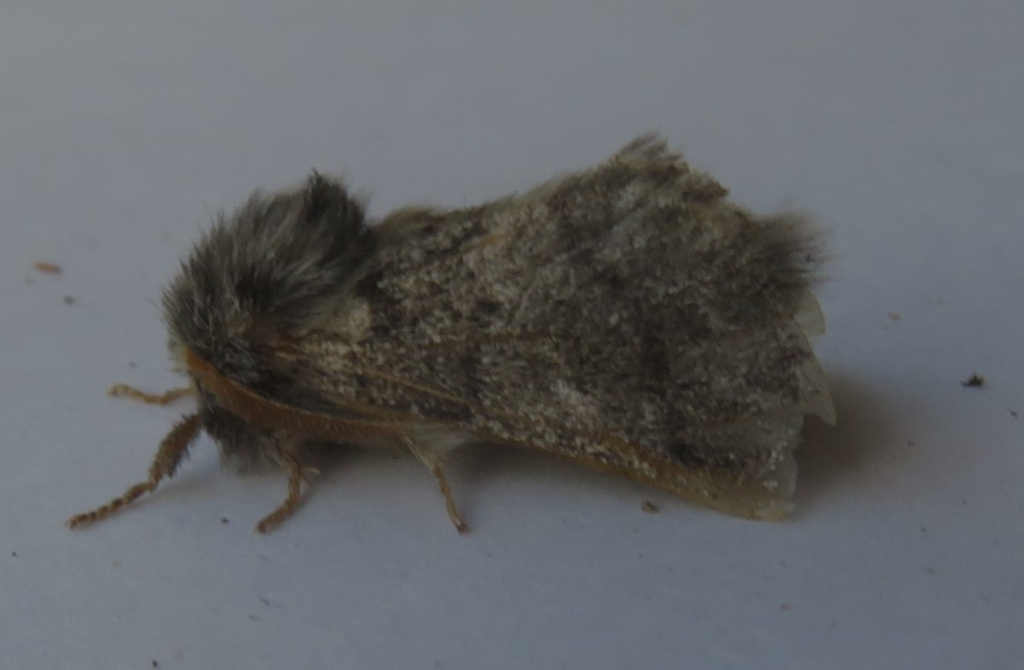
Oak Processionary
Oak Processionary - Thaumetopoea processionea
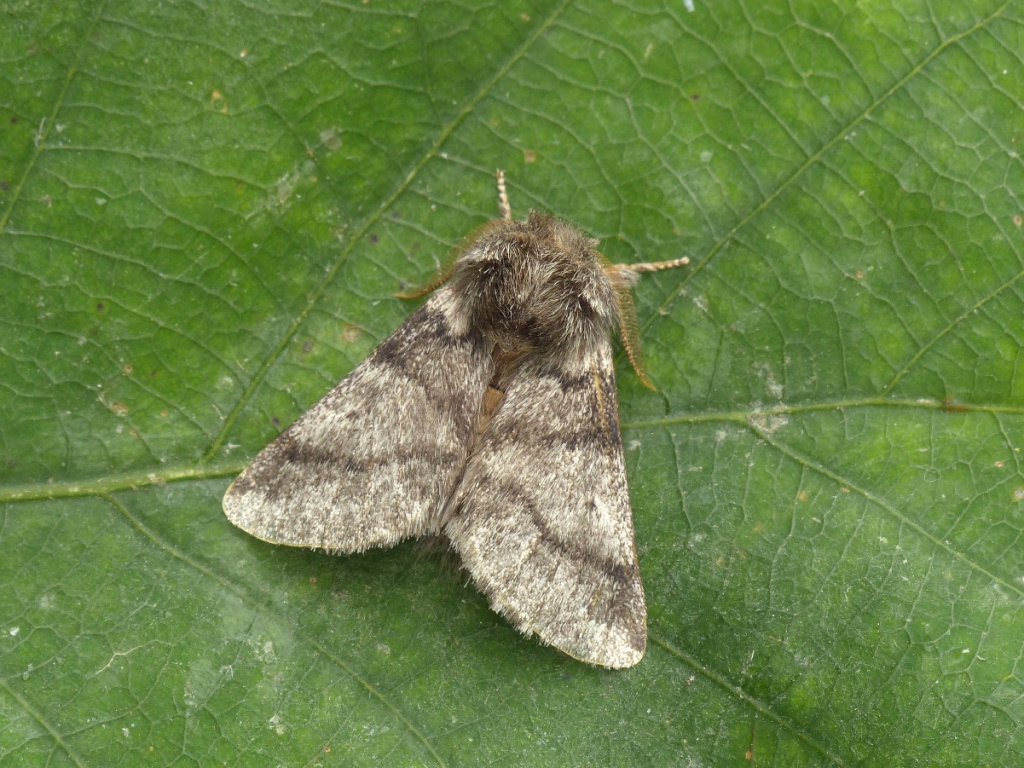
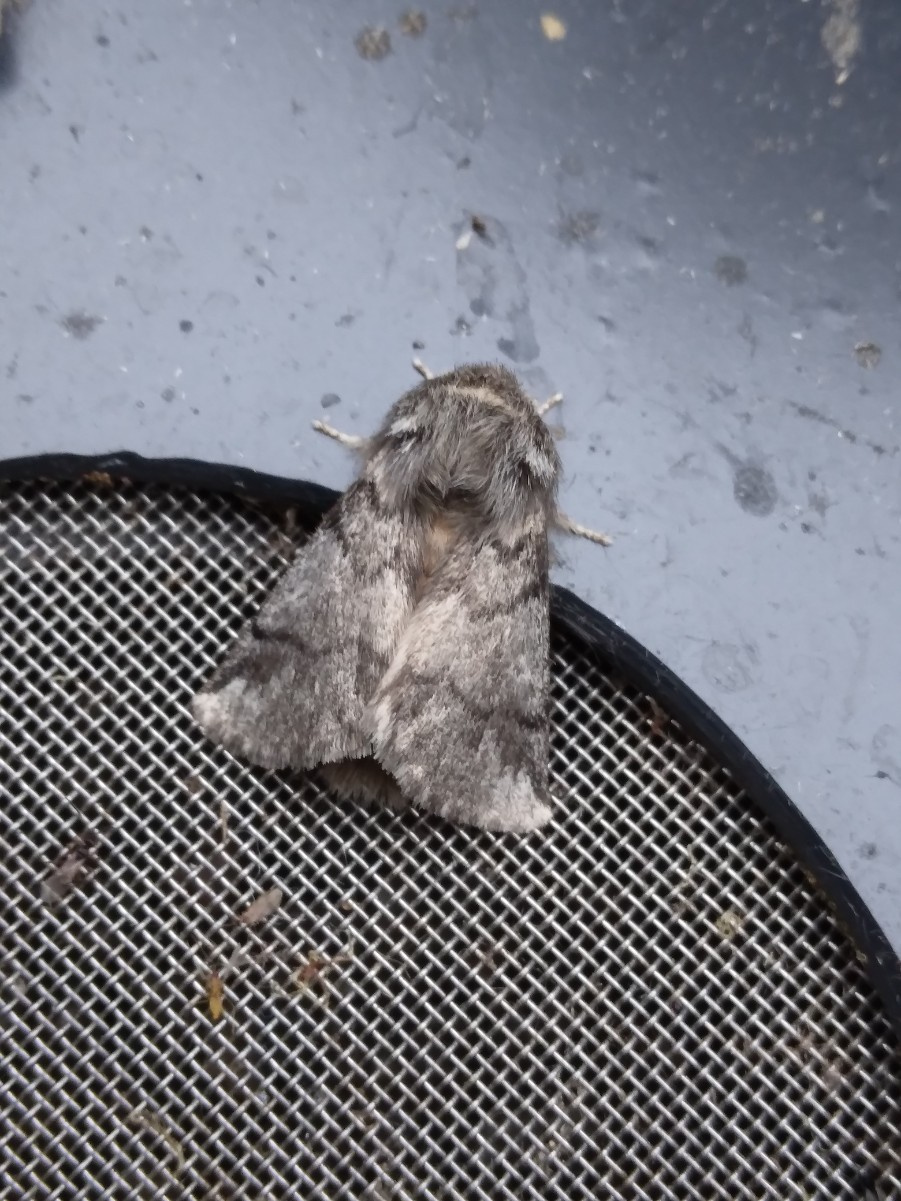
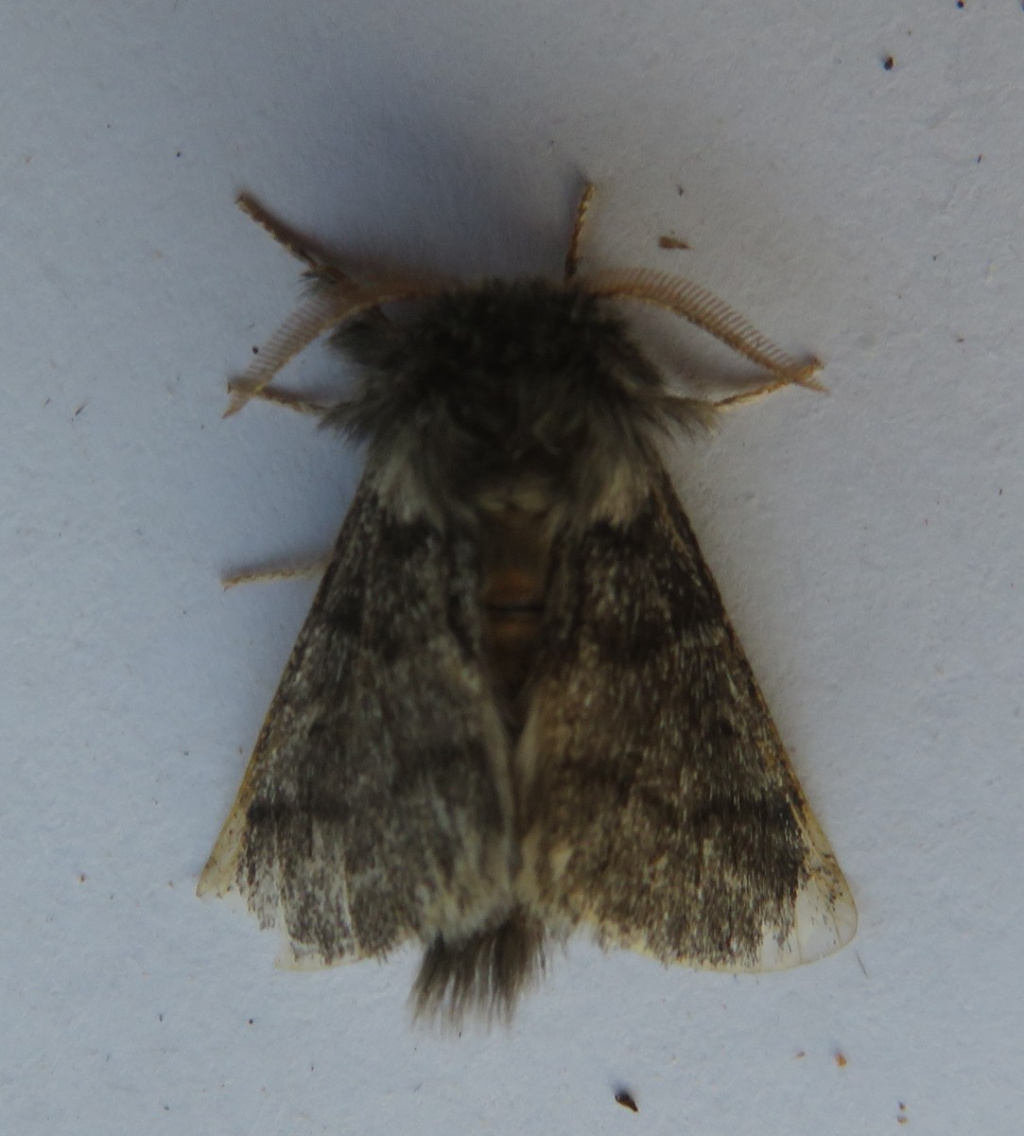
Wingspan 25 to 35 mm. It can be distinguished from related species by the pale basal area of the forewing.

Please provide a photograph and liaise with the County Recorder prior to record submission.
Broadleaved woodland, parkland and open spaces with oak (Quercus).
Adult males of this moth are likely to disperse from late July to mid-September.
Both the English and scientific names refer to the behaviour of the larvae, whose habit of forming a long nose-to-tail procession is quite peculiar.
Formerly considered a very rare migrant. Adventive populations were discovered in west London and in a small area of Berkshire in c2006, and it has since become well established in parts of London, the Home Counties and surrounding areas.
It is considered a pest due to potential impacts on oaks and risk to human health. Minute urticating hairs on the dorsum of the larger larvae can cause persistent or severe irritation, including to the eyes and throat.
Despite control measures the population appears to be growing and expanding range.
Very rare in Leicestershire and Rutland.
Oak Processionary is a Notifiable Pest species. Males to VC55 moth traps are likely to be wanderers from established populations, and are not in themselves notifiable. Any larval nests that are found should be fully confirmed and verified before taking action to notify. Note that control measures are likely to impact on all moths and other insects in the vicinity of confirmed nests.
Butterfly Conservation statements regarding risk and control measures:
OPM position statement 201021.pdf
Fact Checker Oak Processionary Moth 22.9.21.pdf
Forestry Commission Info Sheet:
Oak Processionary Moth Information leaflet
Gov.UK Guidance:
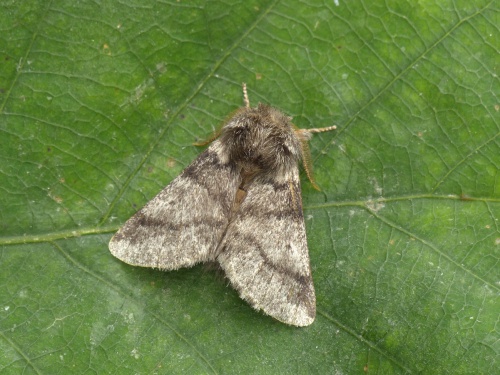
30 July 2020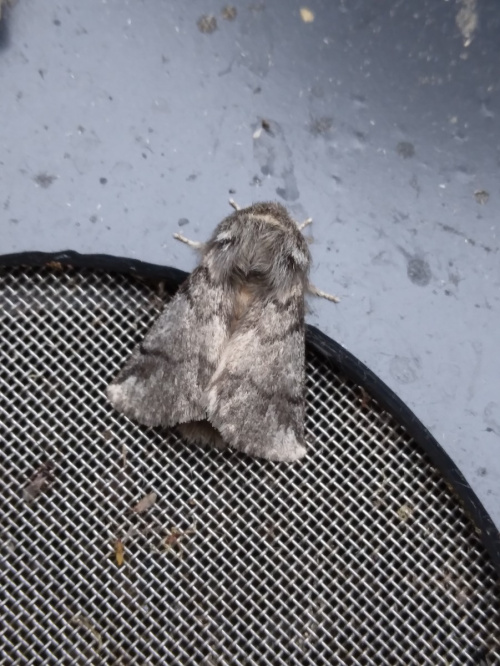
19 July 2025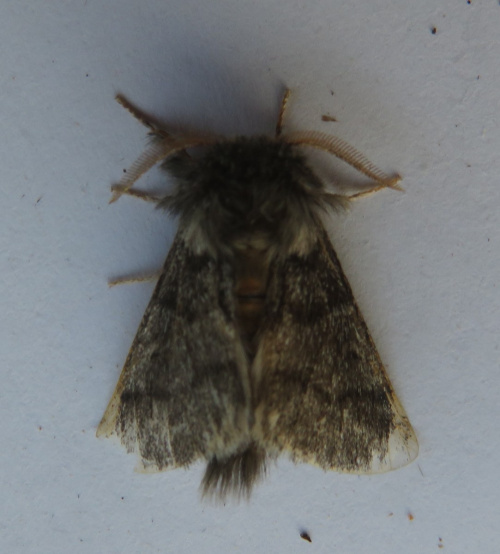 n0rm@ndy
20 July 2025
Leicestershire & Rutland Map
Enter a town or village to see local records
MAP KEY:
Yellow squares = NBN records (all known data)
Coloured squares = NatureSpot records: 2025+ | 2020-2024 | pre-2020
UK Map
Additional images