Dicyphus escalerae
Dicyphus escalerae
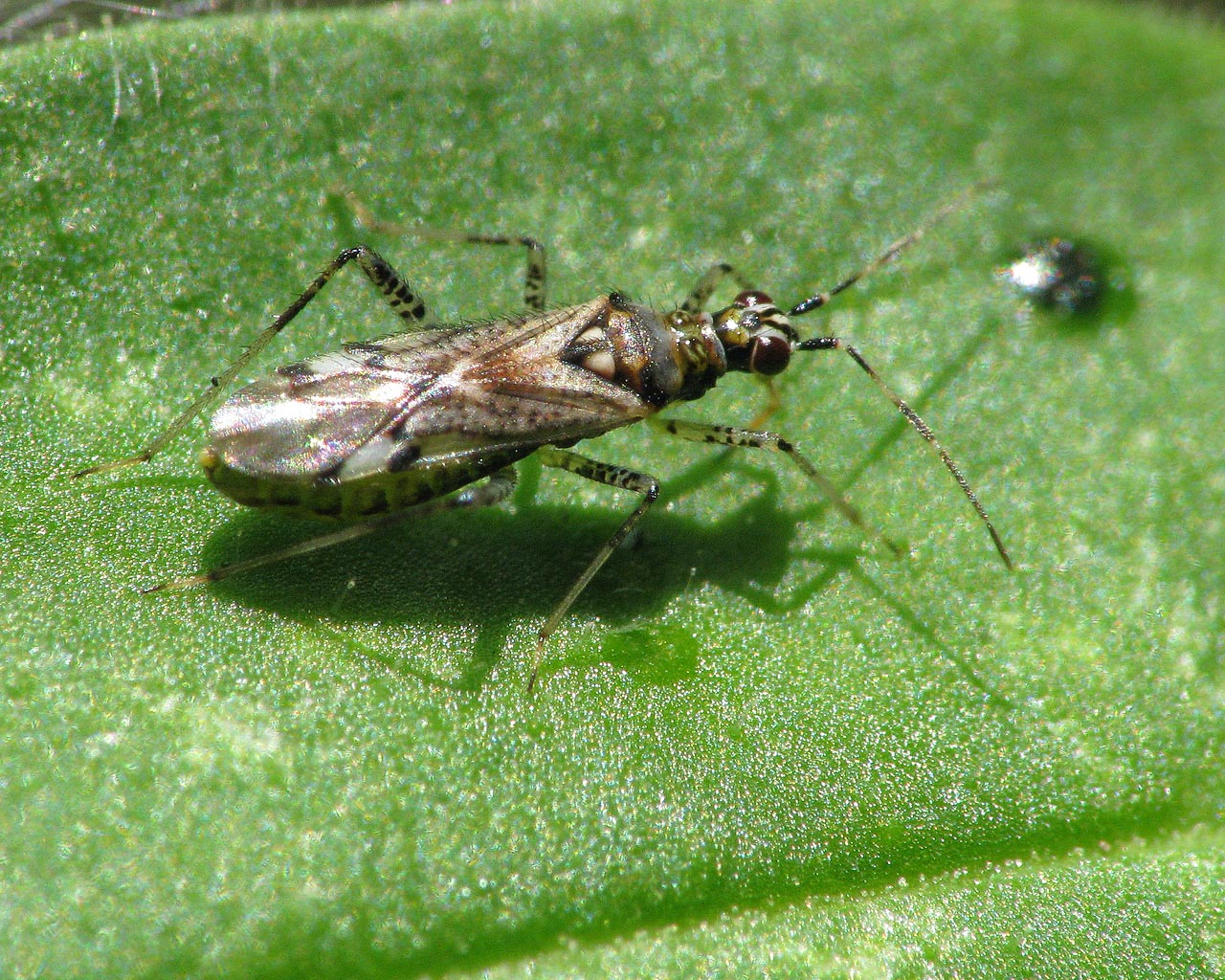
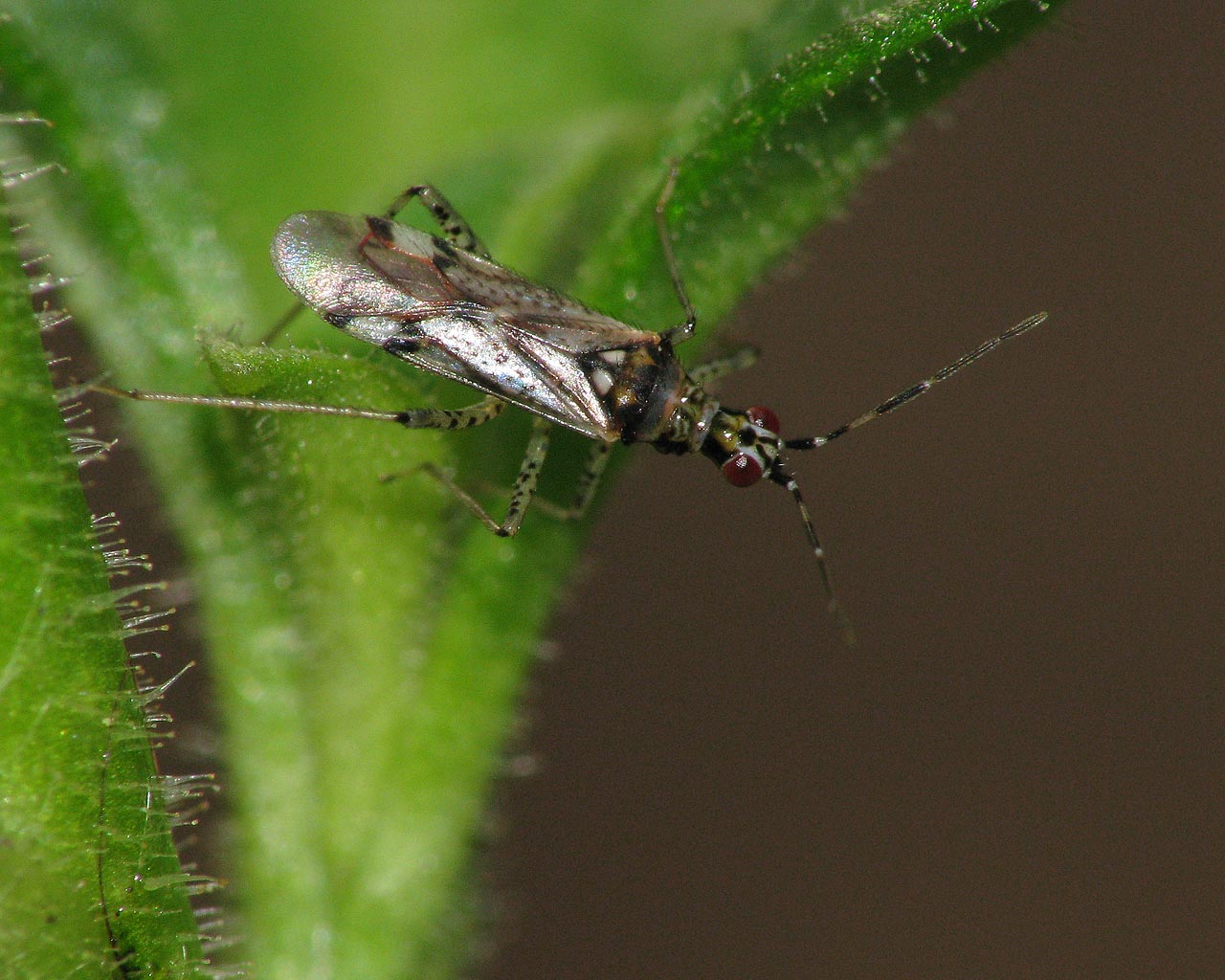
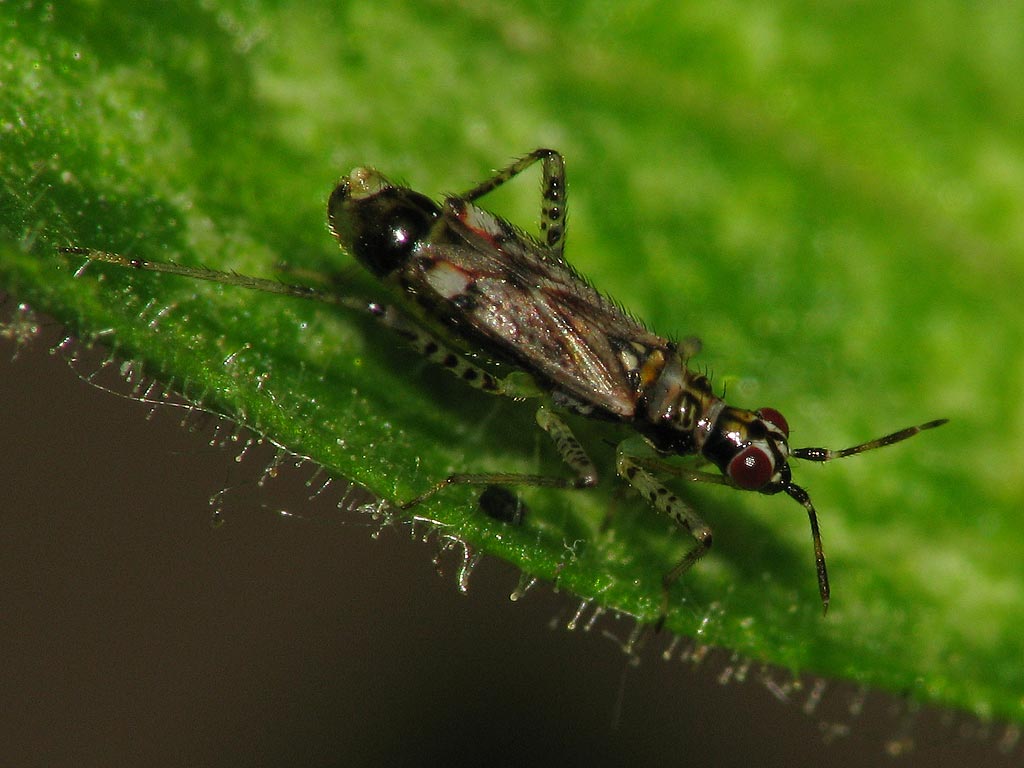
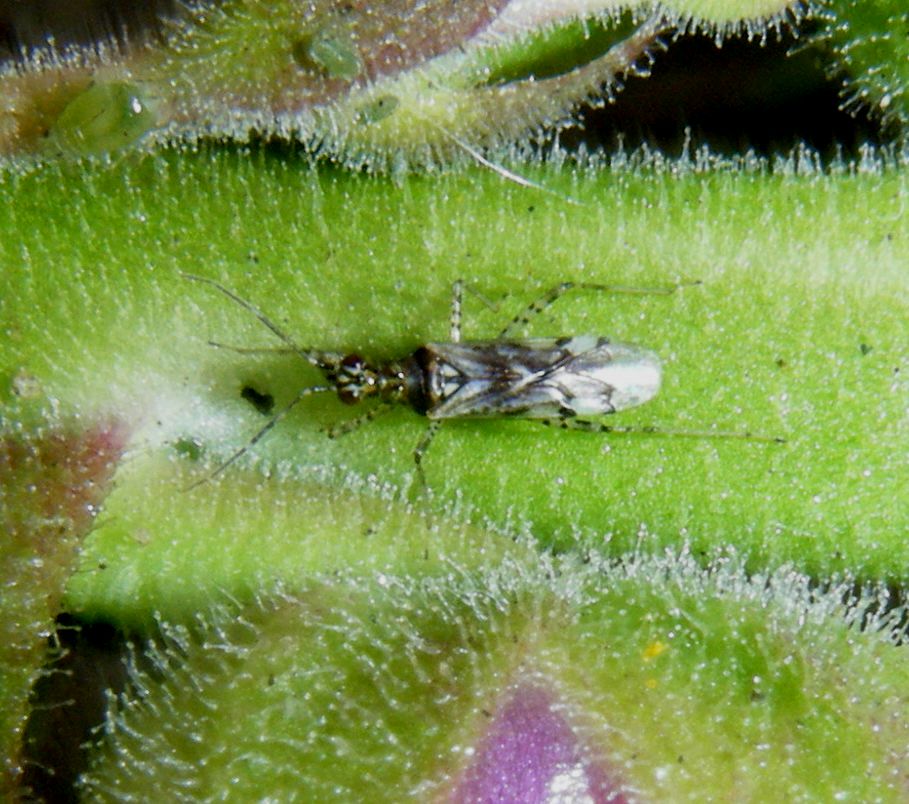
The rather coarse black pubescence arising from black spots on the dorsal surface helps to distinguish it from other UK Dicyphus species.

Detailed examination of the specimen is needed to identify the species. You must state the host-plant.
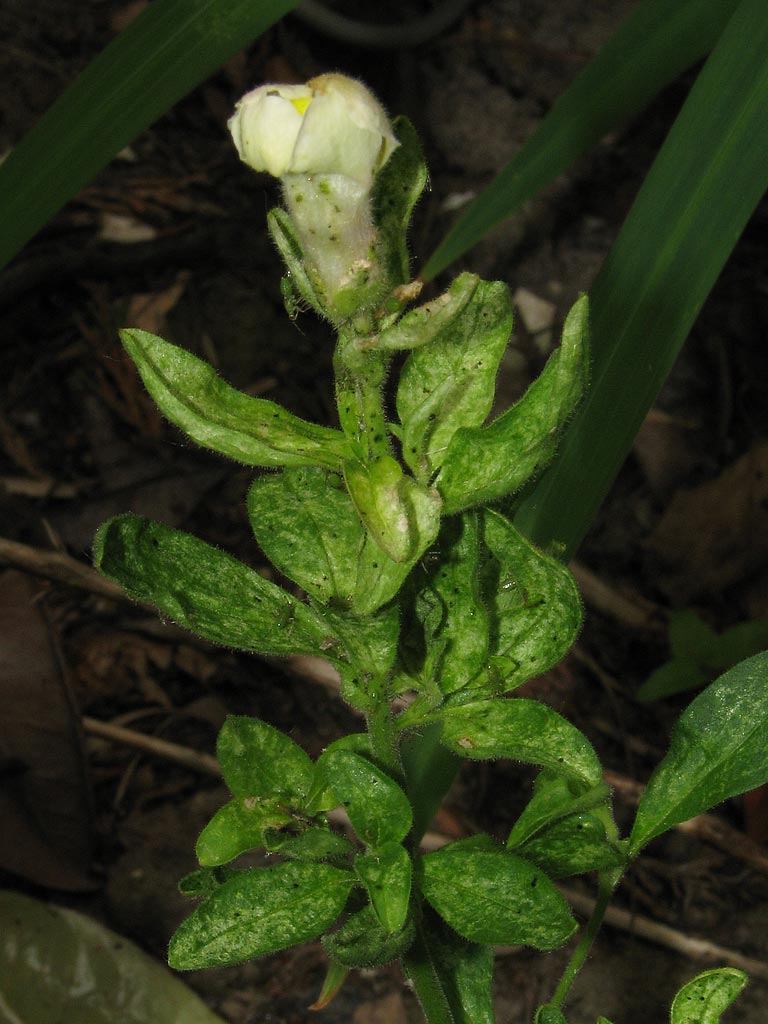
On Snap-dragon (Antirrhinum majus).
UK sightings have fallen between March and November so far, but adults and nymphs overwinter so it can be seen outside this range.
This bug seems to feed exclusively on Antirrhinums, using all parts of the plant, especially the flower spikes. It causes obvious feeding damage of white or yellow flecks when numbers are sufficient. Nymphs have only been seen on Antirrhinum majus but the adults show some dispersal to form new colonies and so may also be encountered elsewhere.
This Mirid bug has been spreading out across Europe from its original Western-Mediterranean range, probably with the help of cultivated Snap-dragons moving through the horticultural trade. It was first seen in the UK in 2007 and has already been found at numerous different sites across the country.
Infrequent in Leicestershire and Rutland.
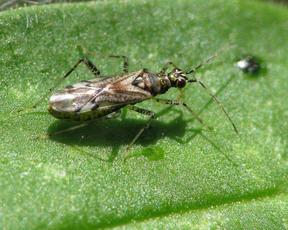 David Gould
Leicester
13 July 2008
3rd UK record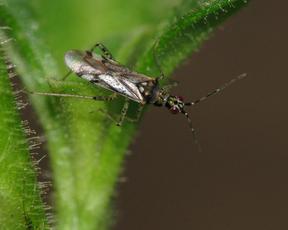 David Gould
Leicester Garden
15 November 2008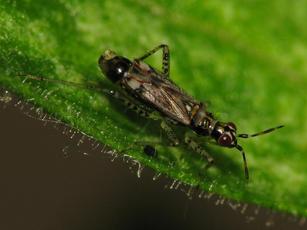 David Gould
Leicester
18 June 2009
brachypterous adult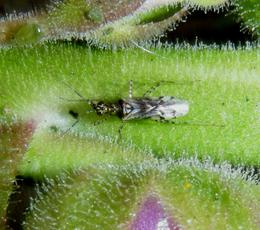 Graham Calow
Sharnford Road, Sapcote
13 July 2011
Leicestershire & Rutland Map
Enter a town or village to see local records
MAP KEY:
Yellow squares = NBN records (all known data)
Coloured squares = NatureSpot records: 2025+ | 2020-2024 | pre-2020
UK Map
Additional images