Wild Carrot
Wild Carrot - Daucus carota subsp. carota
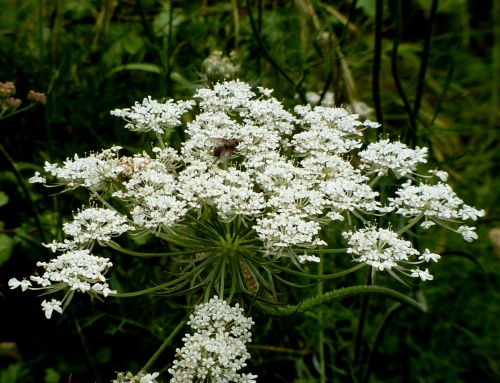
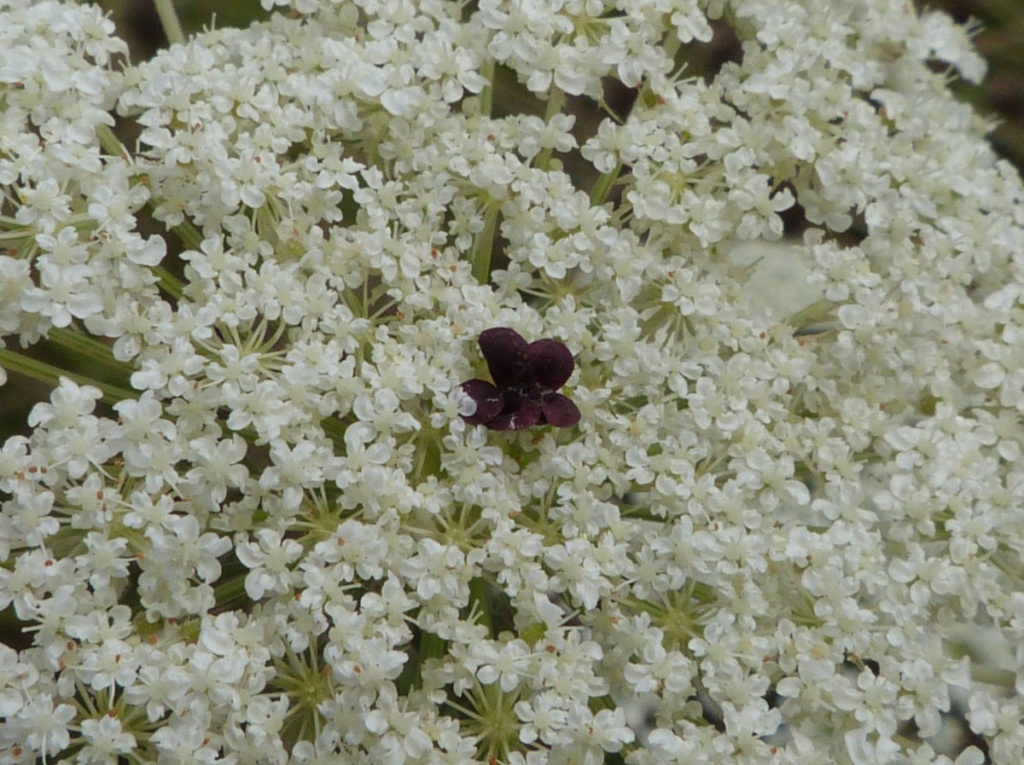
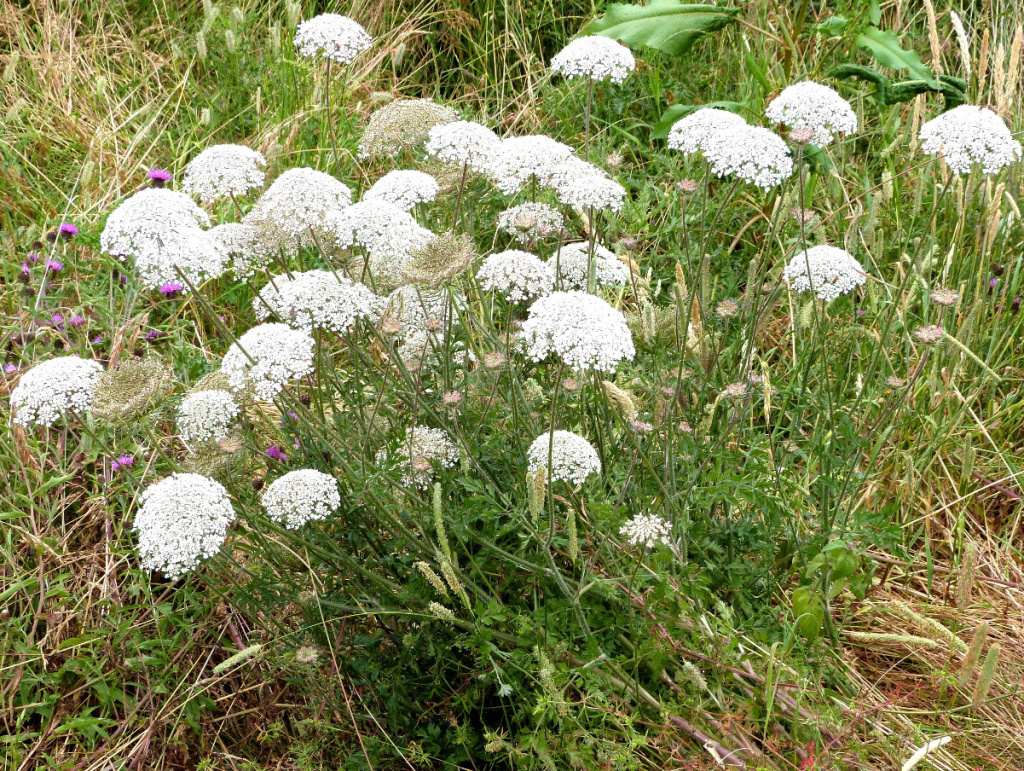
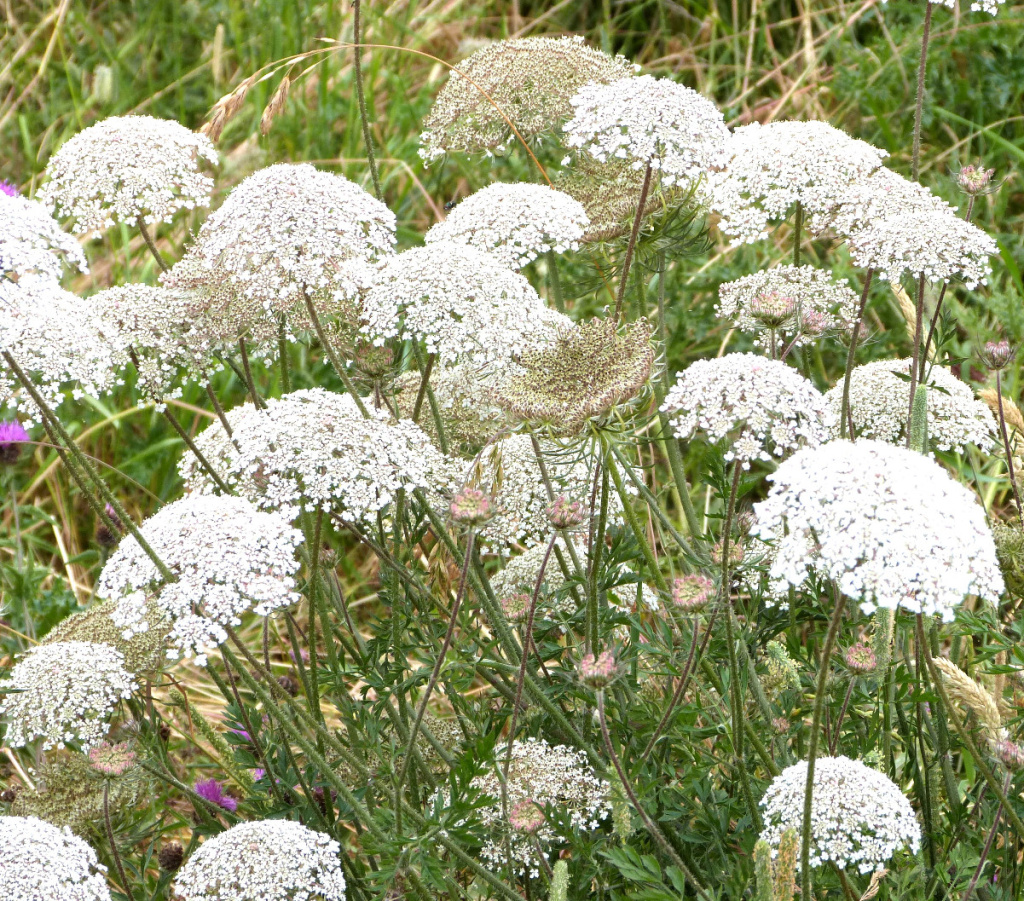
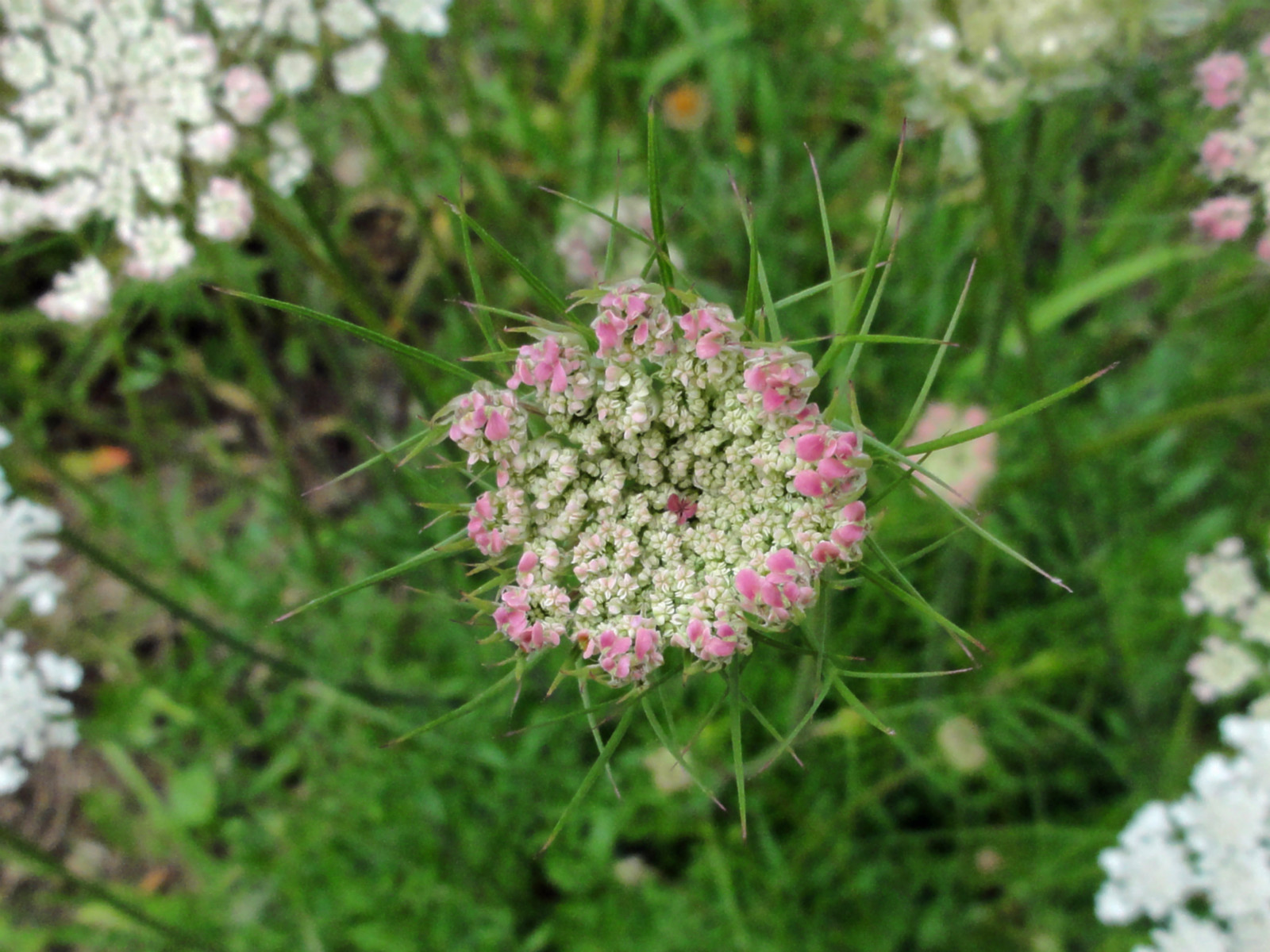
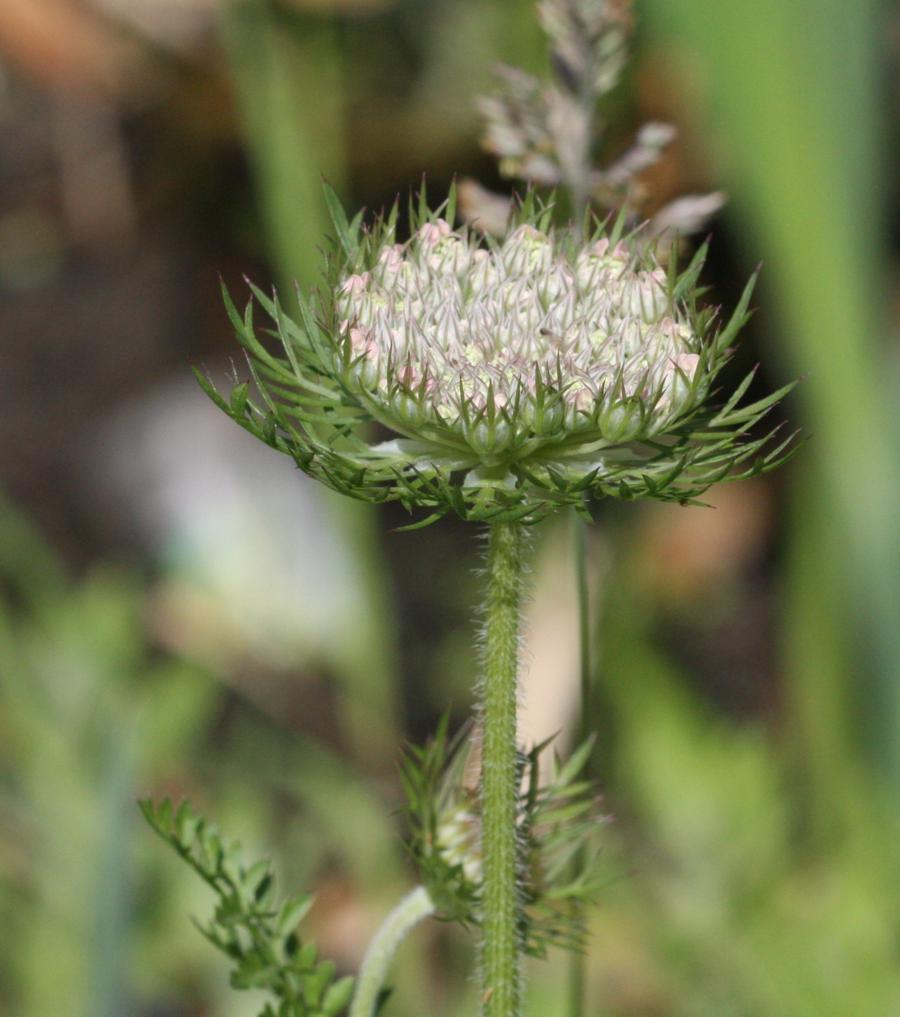
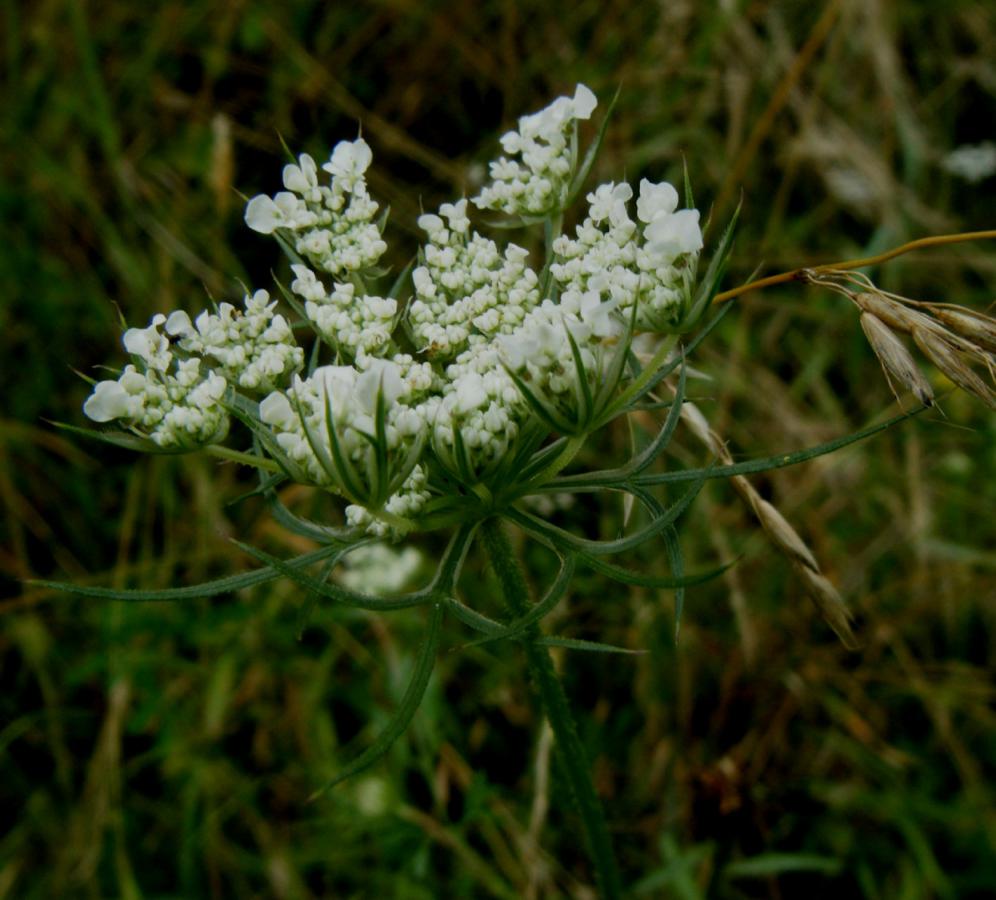
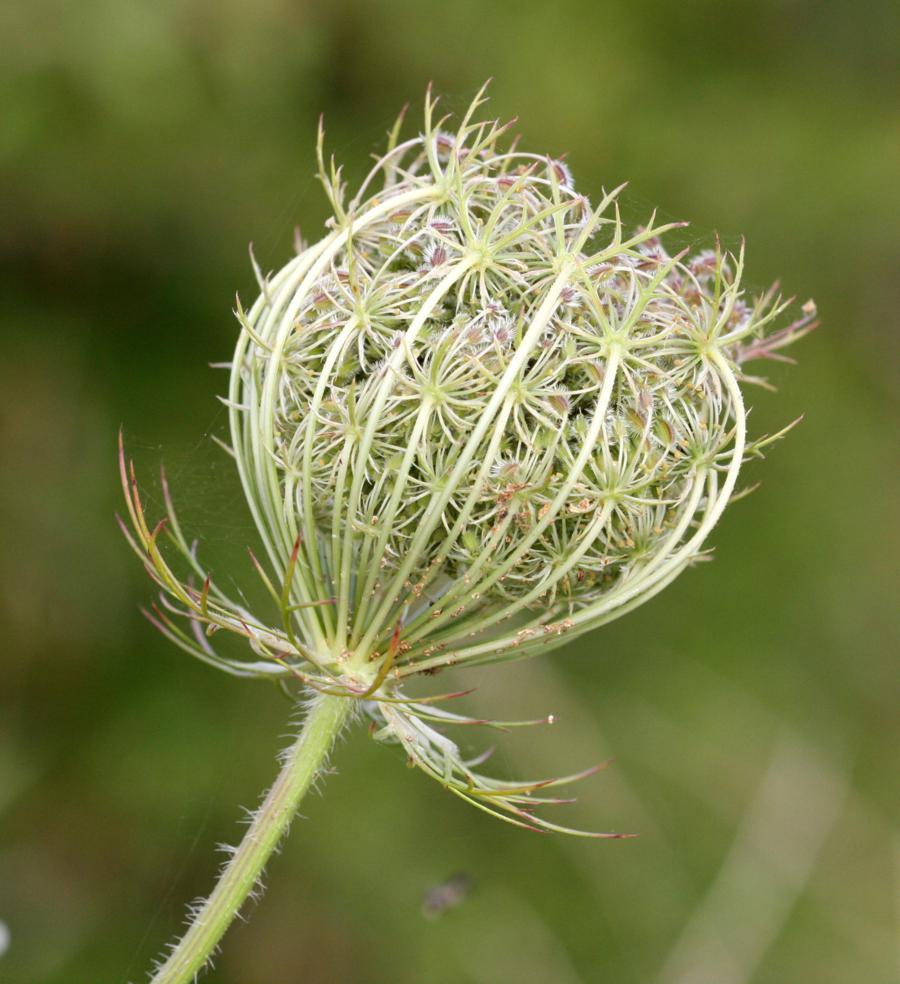
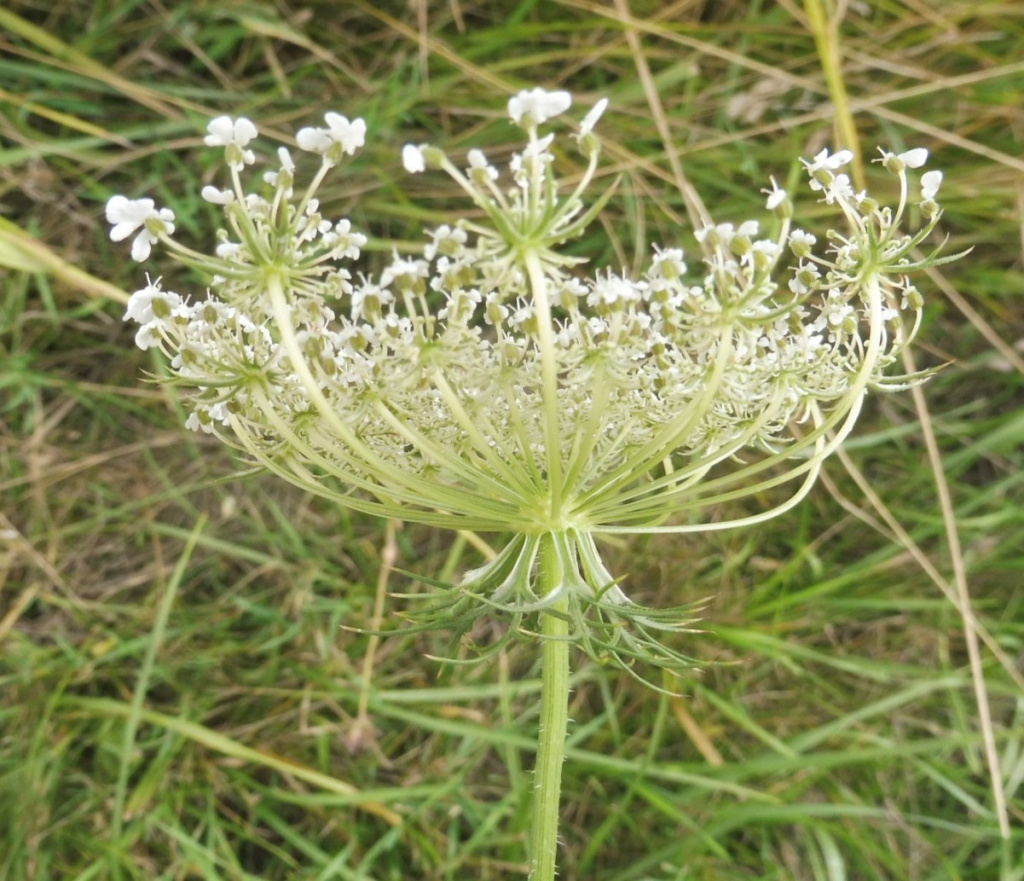
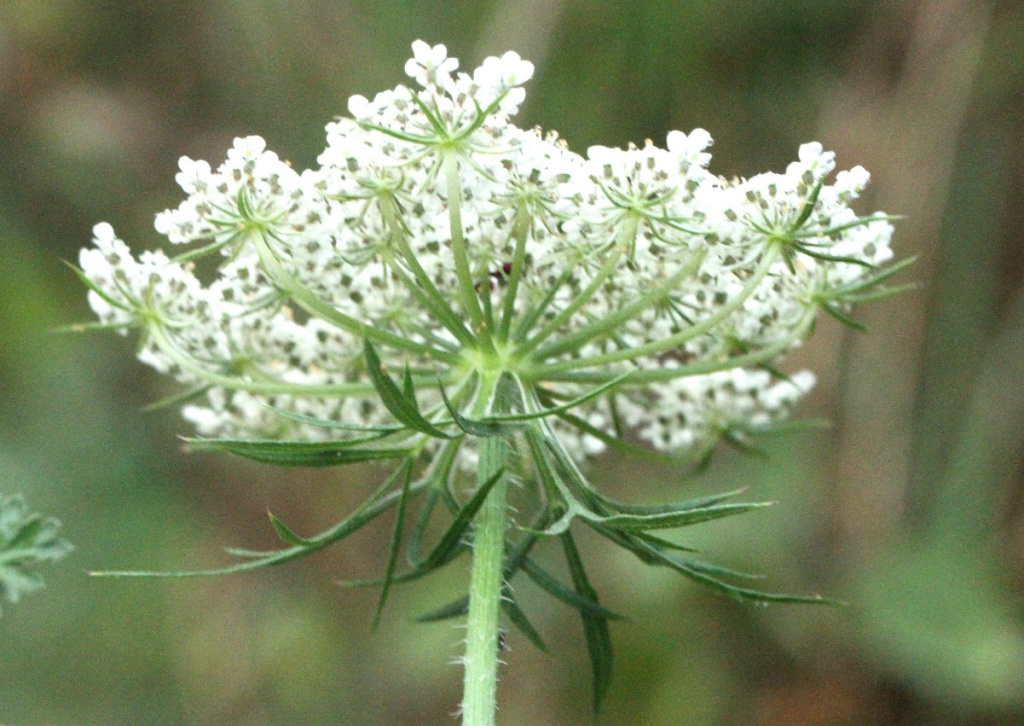
Short to tall plant, stem solid, often ridged. Leaves 2 or 3 pinnate feathery, with linear or lanceolate segments, the uppermost often bract like. Flowers white, the central one of the umbel sometimes purple, 2 mm, the umbels with numerous rays which become remarkably contracted in fruit. Bracts conspicuous, usually three lobed. Fruit with short spines. Tap root is white.

Bracts pinnately divided and appearing feathery; fruits flattened and with spiny ridges
Rough grassland, on well drained soils.
June to August.
Annual or biennial.
Fairly common in Britain.
Quite common in Leicestershire and Rutland. In the 1979 Flora survey of Leicestershire it was found in 178 of the 617 tetrads.
In the current Checklist (Jeeves, 2011) it is listed as Native, locally frequent
 Graham Calow
Jubilee Walk Leire
21 August 2012 Between Stoney Stanton Playing Fields and Stoney Cove (taken 31.7.2006)...JPG) Graham Calow
Graham Calow
Sapcote
31 July 2006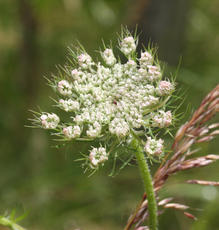 David Nicholls
Fosse Meadows
08 July 2011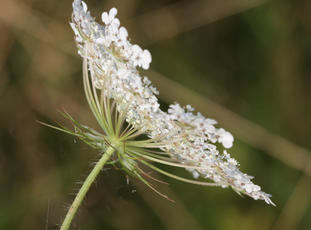 David Nicholls
Ullesthorpe Stewardship Farm
02 September 2011 Fosse Meadows Sharnford (Taken 25.7.2010),.JPG) Graham Calow
Graham Calow
Fosse Meadows, Sharnford
25 July 2010
Purple centre flower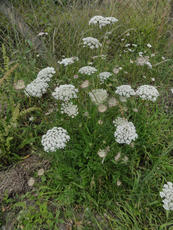 Peter Smith
Mountsorrel Quarry
15 July 2011
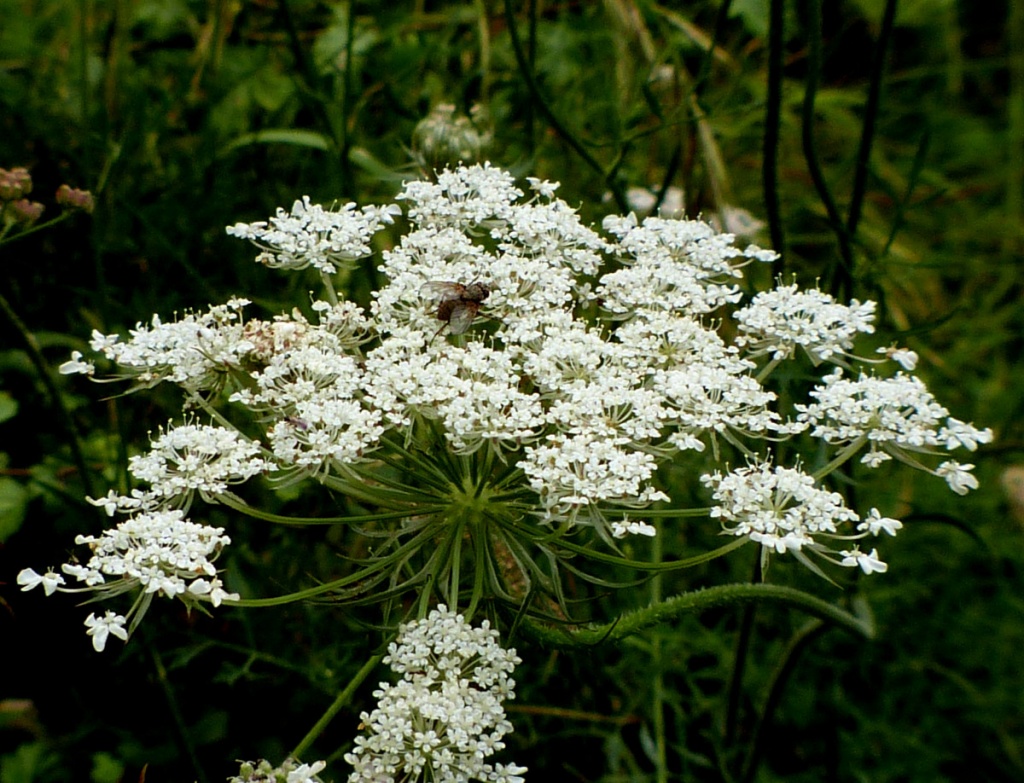
 Between Stoney Stanton Playing Fields and Stoney Cove (taken 31.7.2006)...JPG)
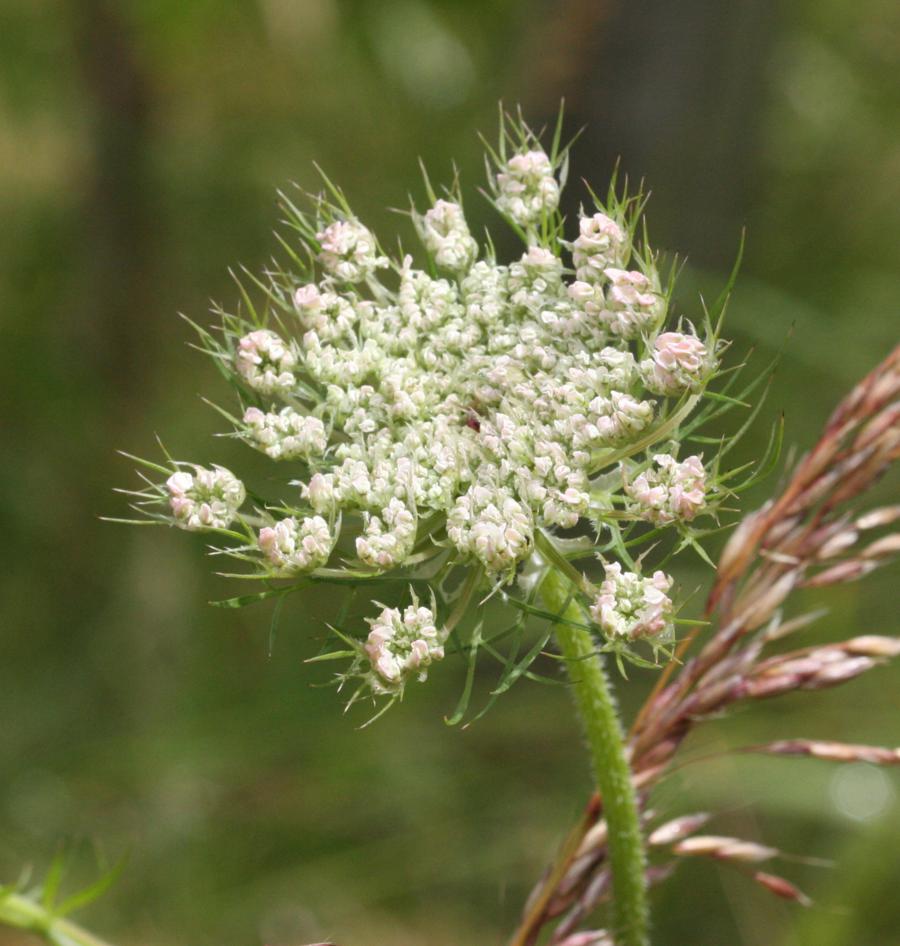
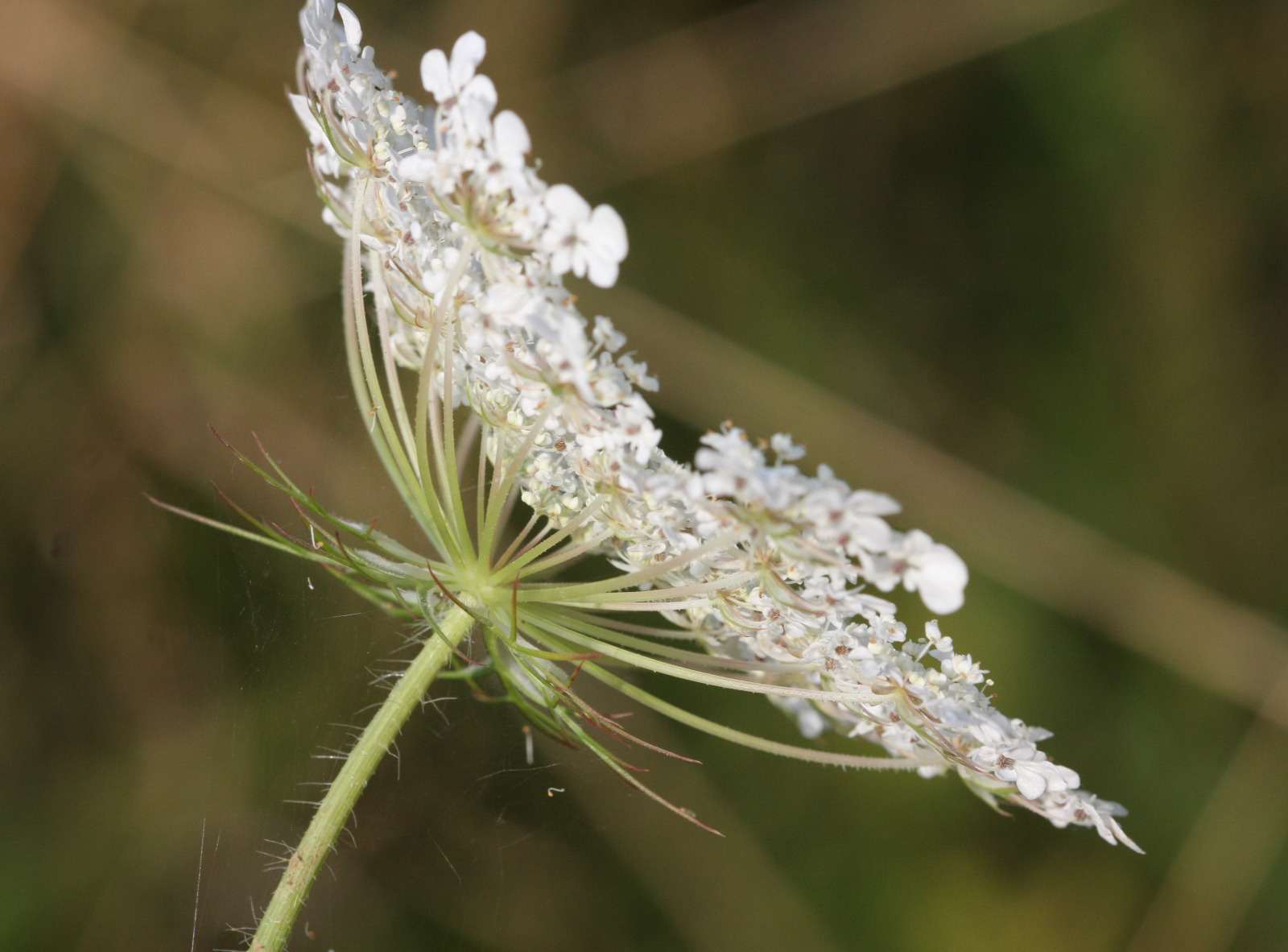
 Fosse Meadows Sharnford (Taken 25.7.2010),.JPG)
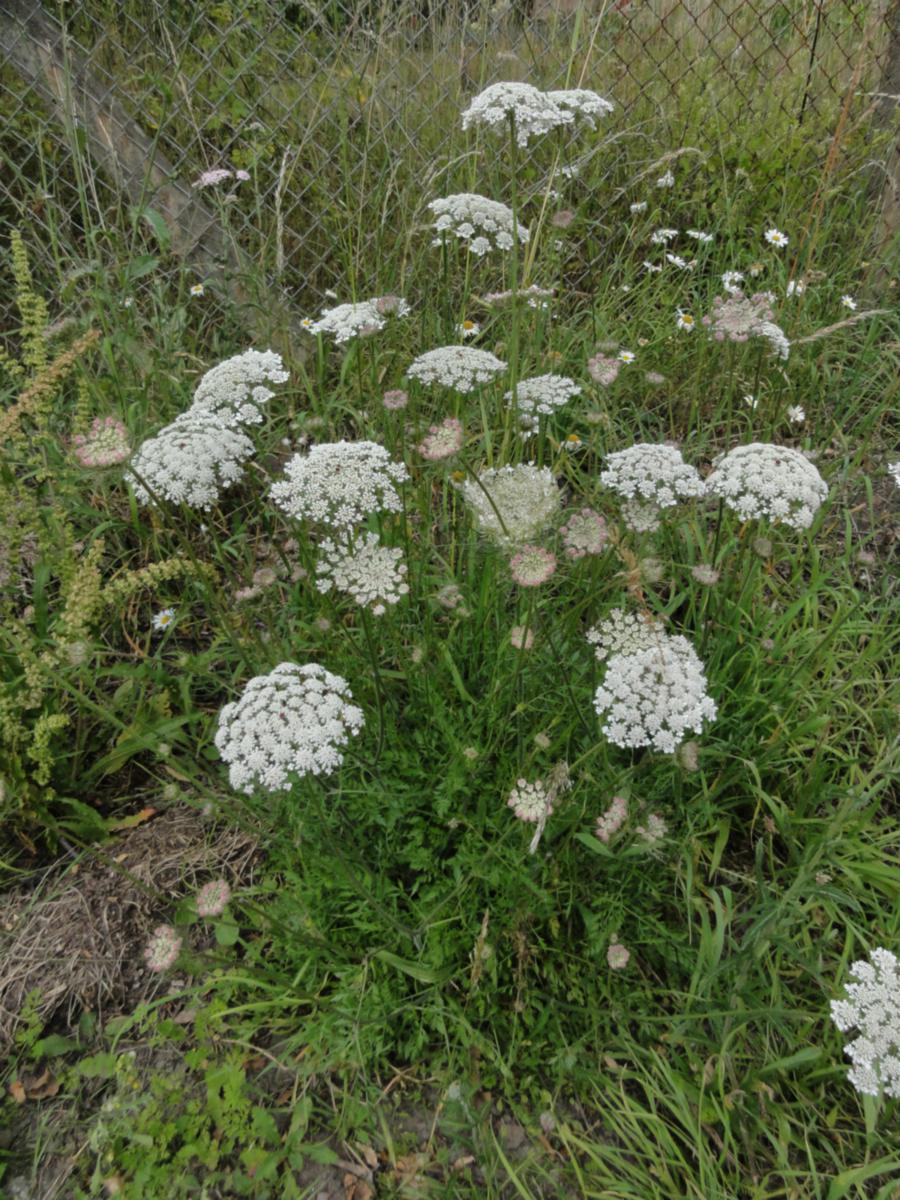
Leicestershire & Rutland Map
Enter a town or village to see local records
MAP KEY:
Yellow squares = NBN records (all known data)
Coloured squares = NatureSpot records: 2025+ | 2020-2024 | pre-2020
UK Map
Additional images
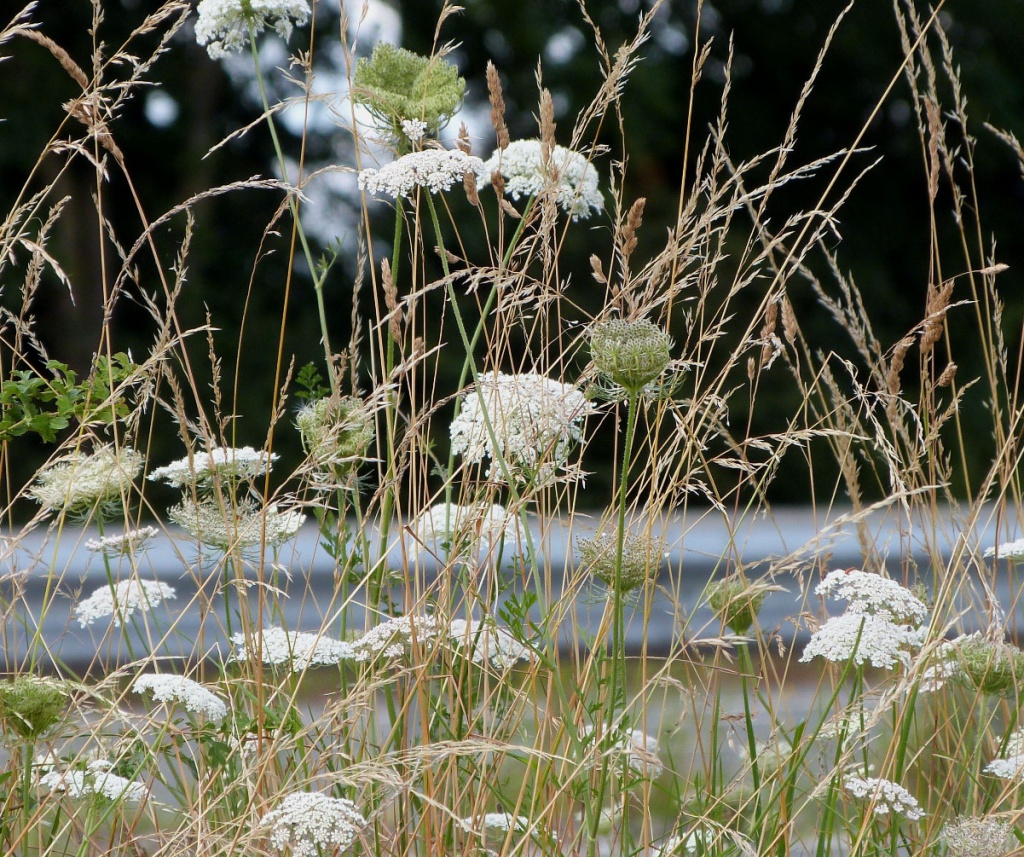
 Granitethorpe Sapcote SP 4957 9362 (taken 7.8.2008).JPG)
All NatureSpot records
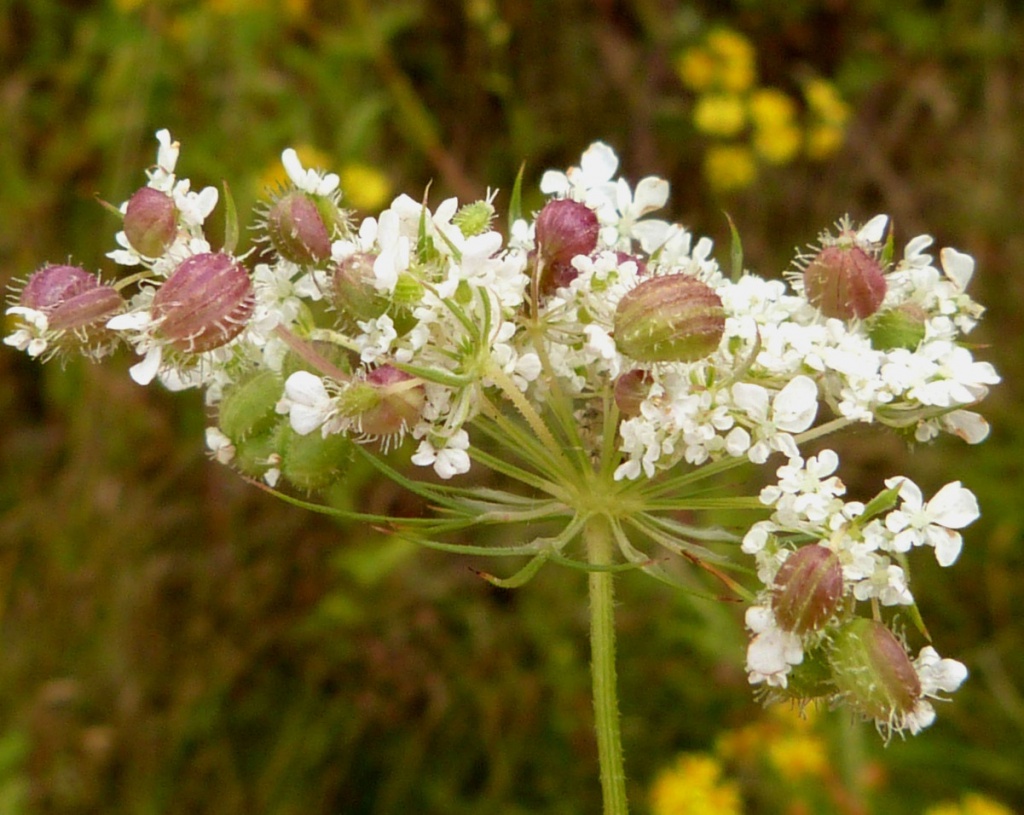
Kiefferia pericarpiicola
The larva of the midge Kiefferia pericarpiicola causes a striking gall to form primarily in the flowerheads of the host plant, which is usually Wild Carrot. The galls occur in clusters. Each gall starts off greenish-yellow and eventually turns bright purplish-red to brown; it is up to 5mm in diameter and contains a single orange larva of the midge.