Hedge Woundwort
Hedge Woundwort - Stachys sylvatica
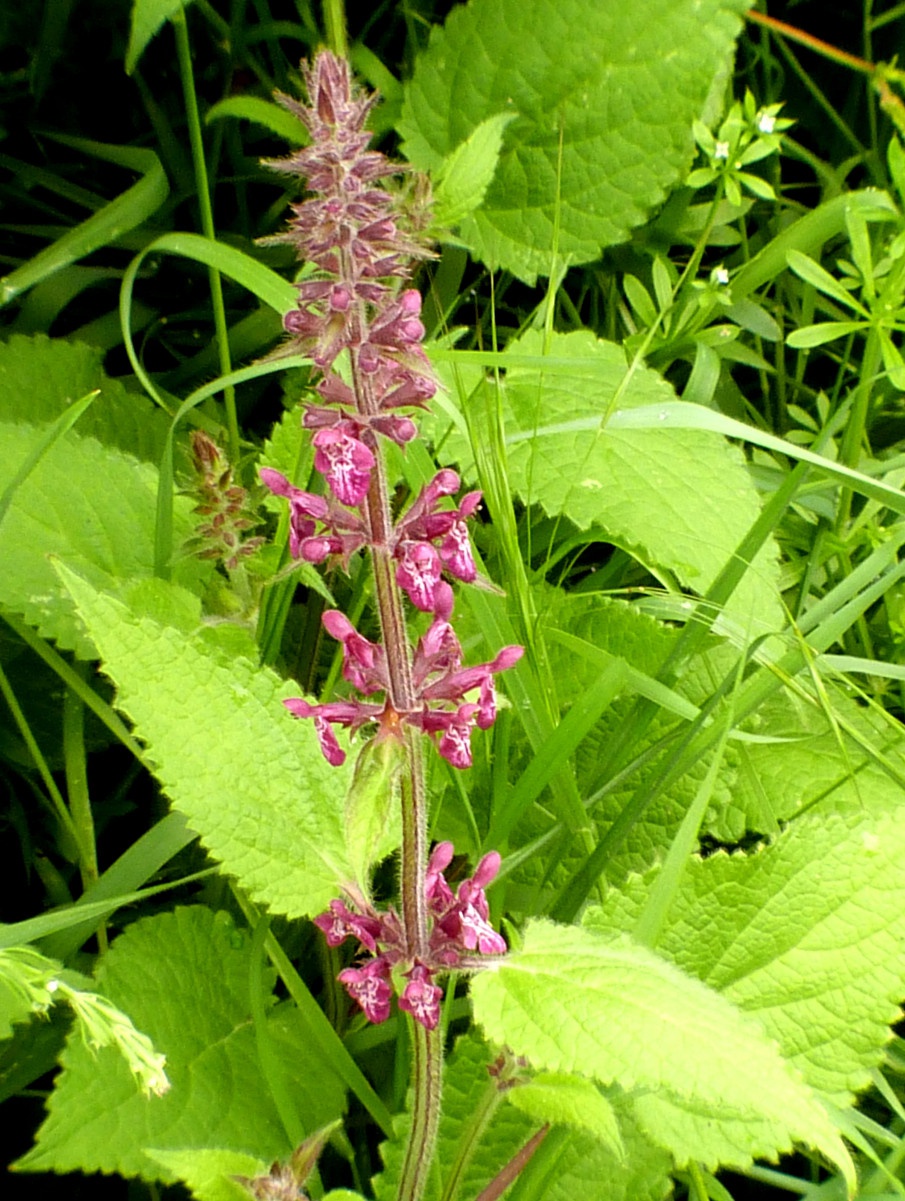
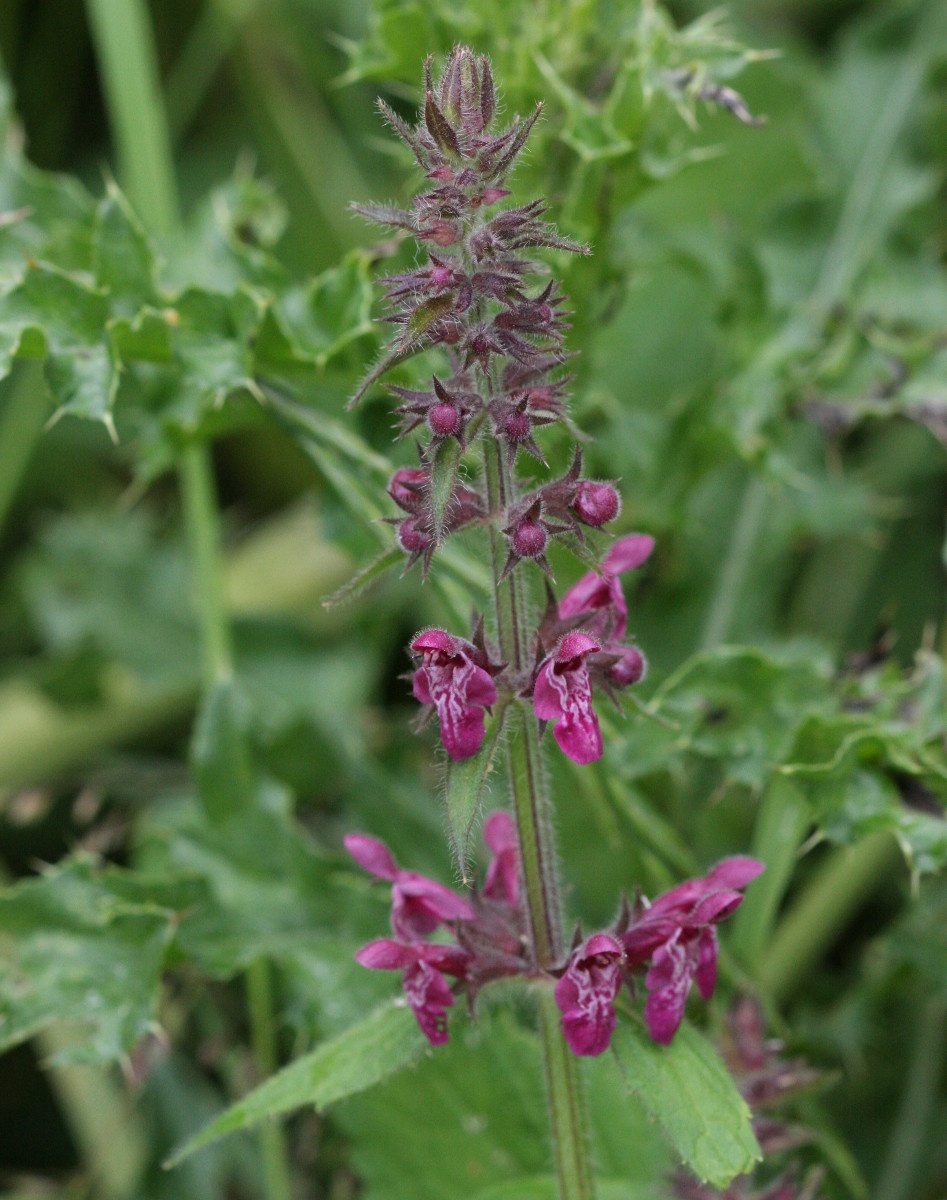
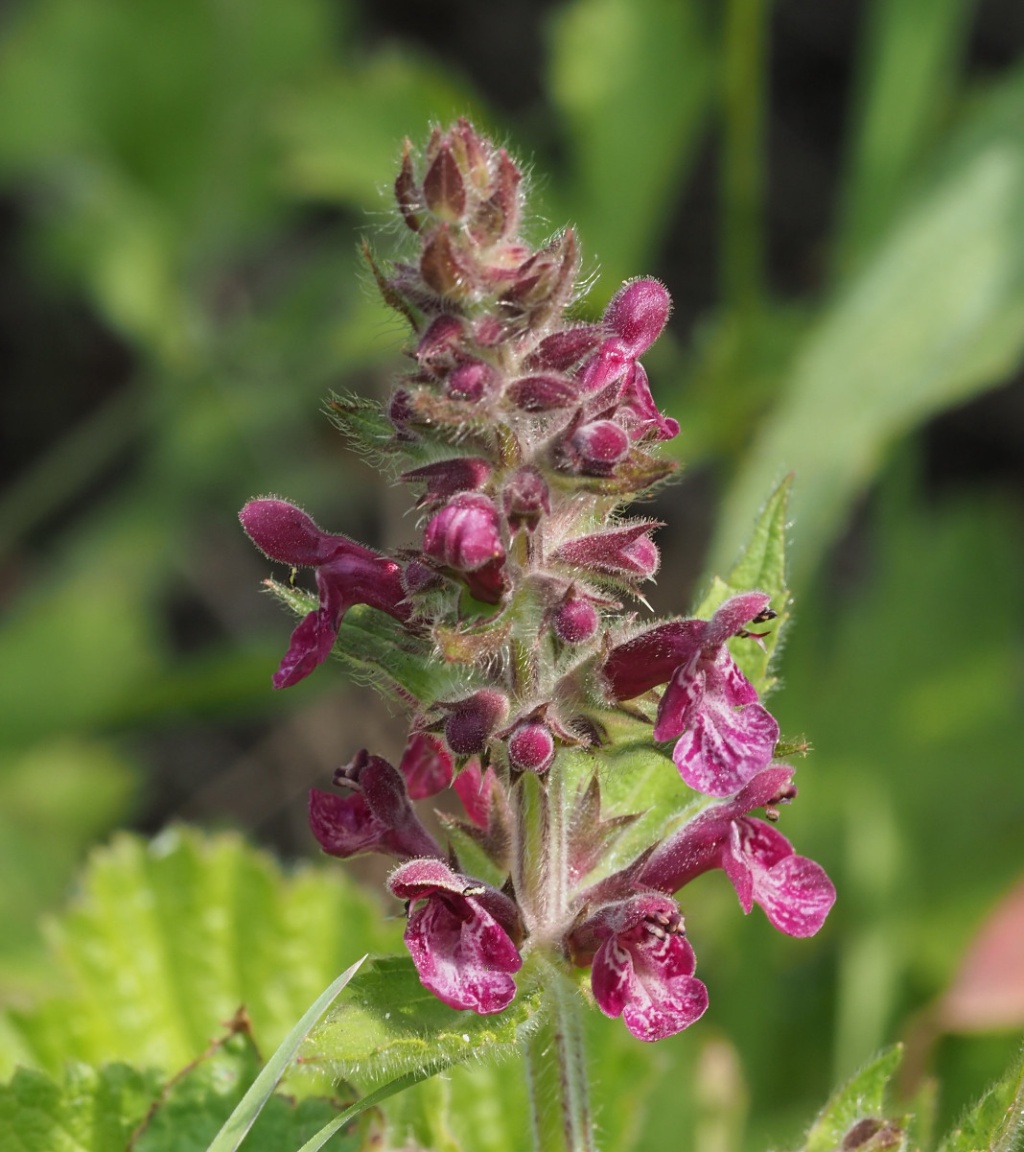
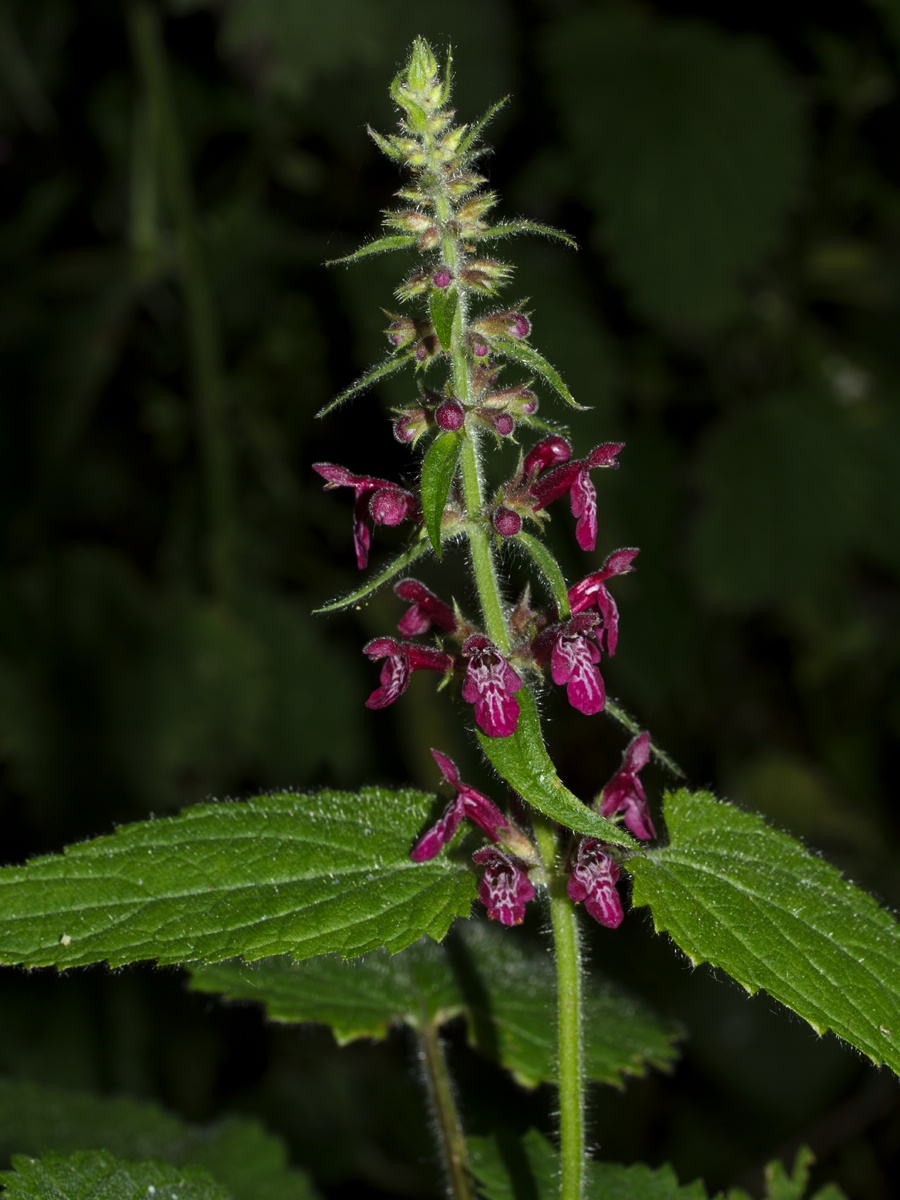
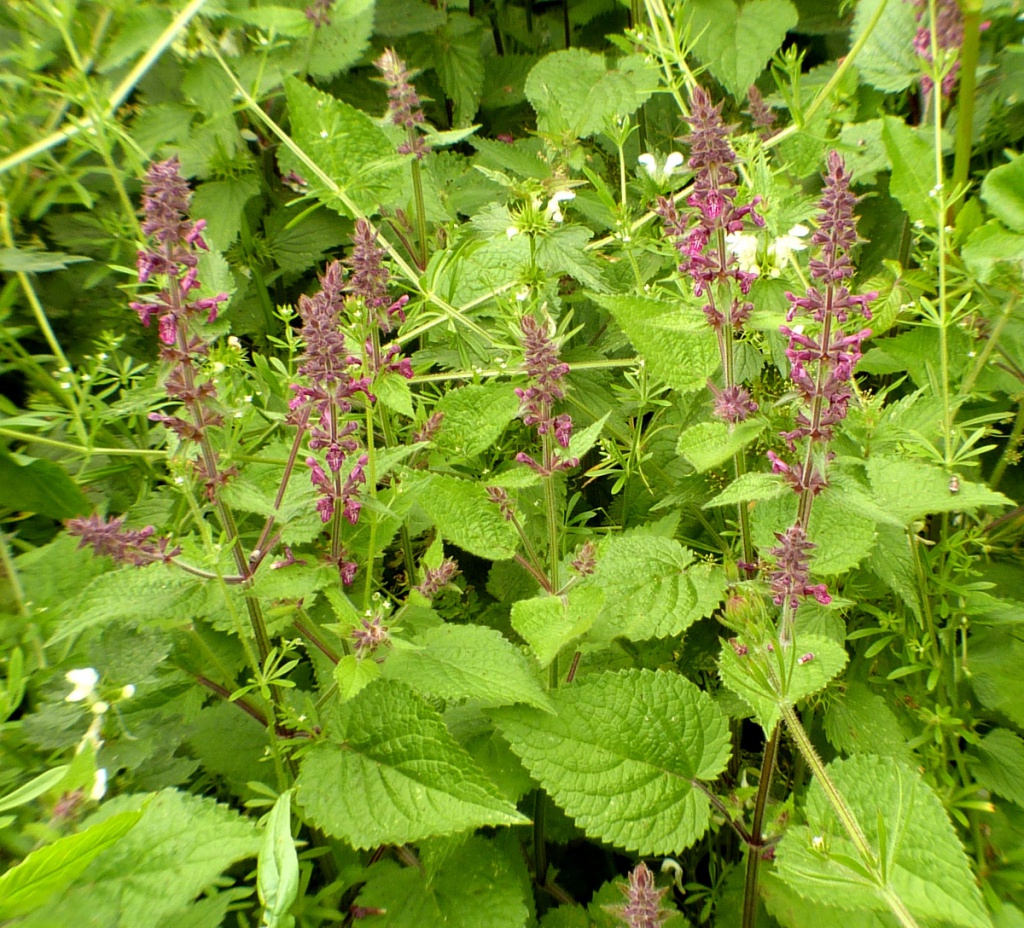
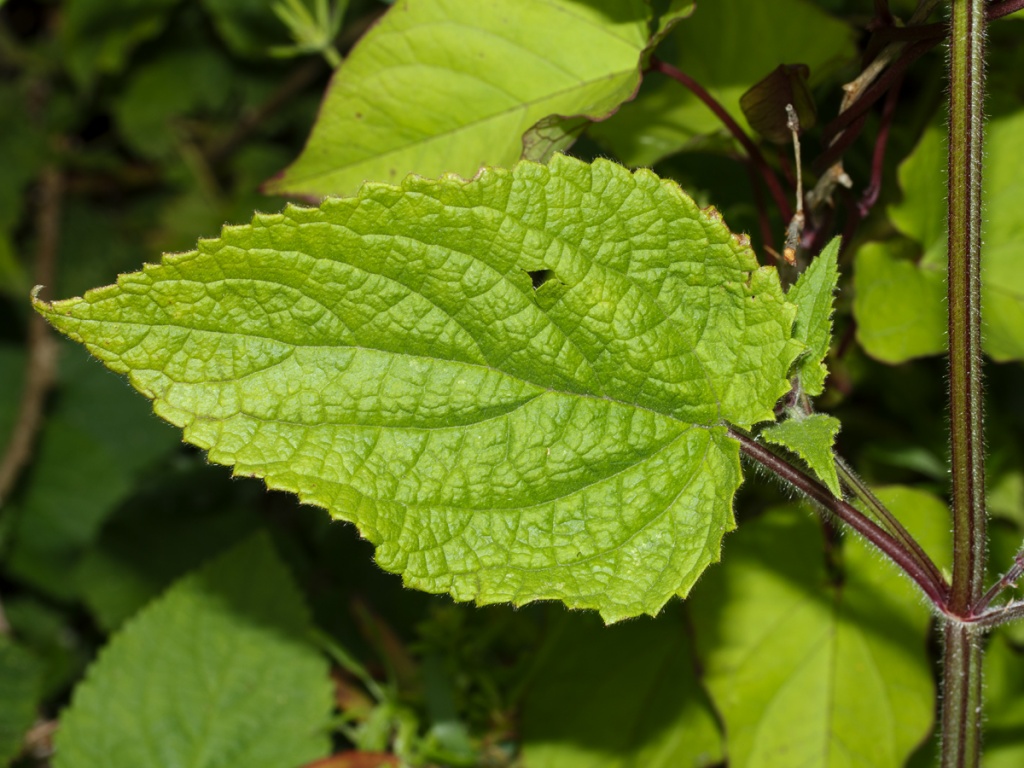
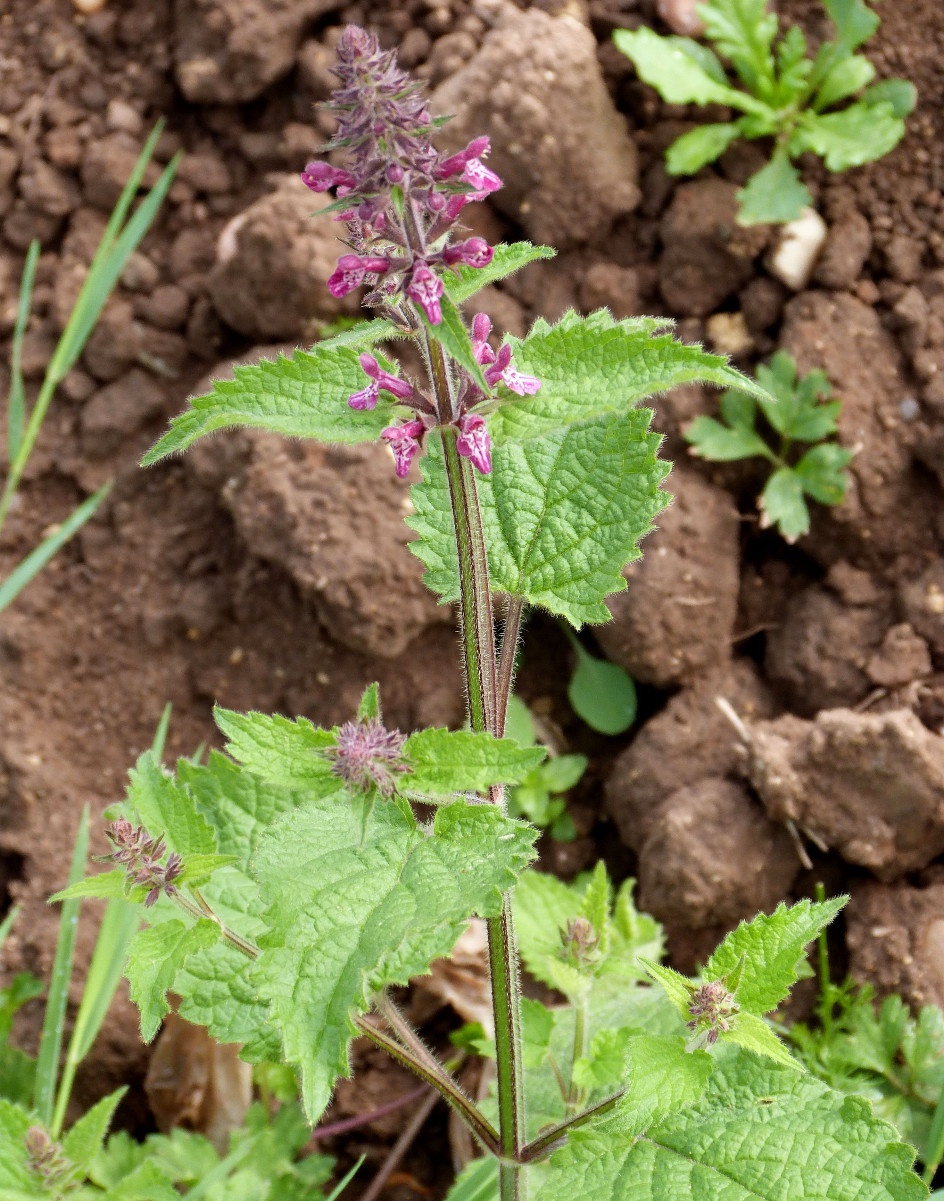
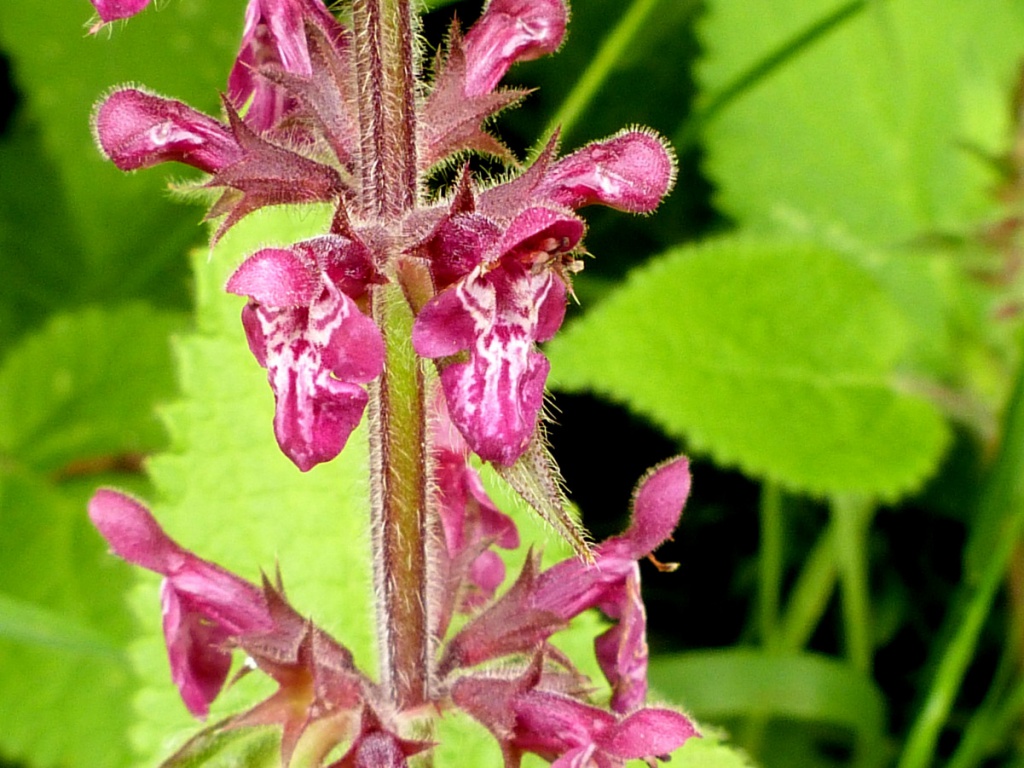
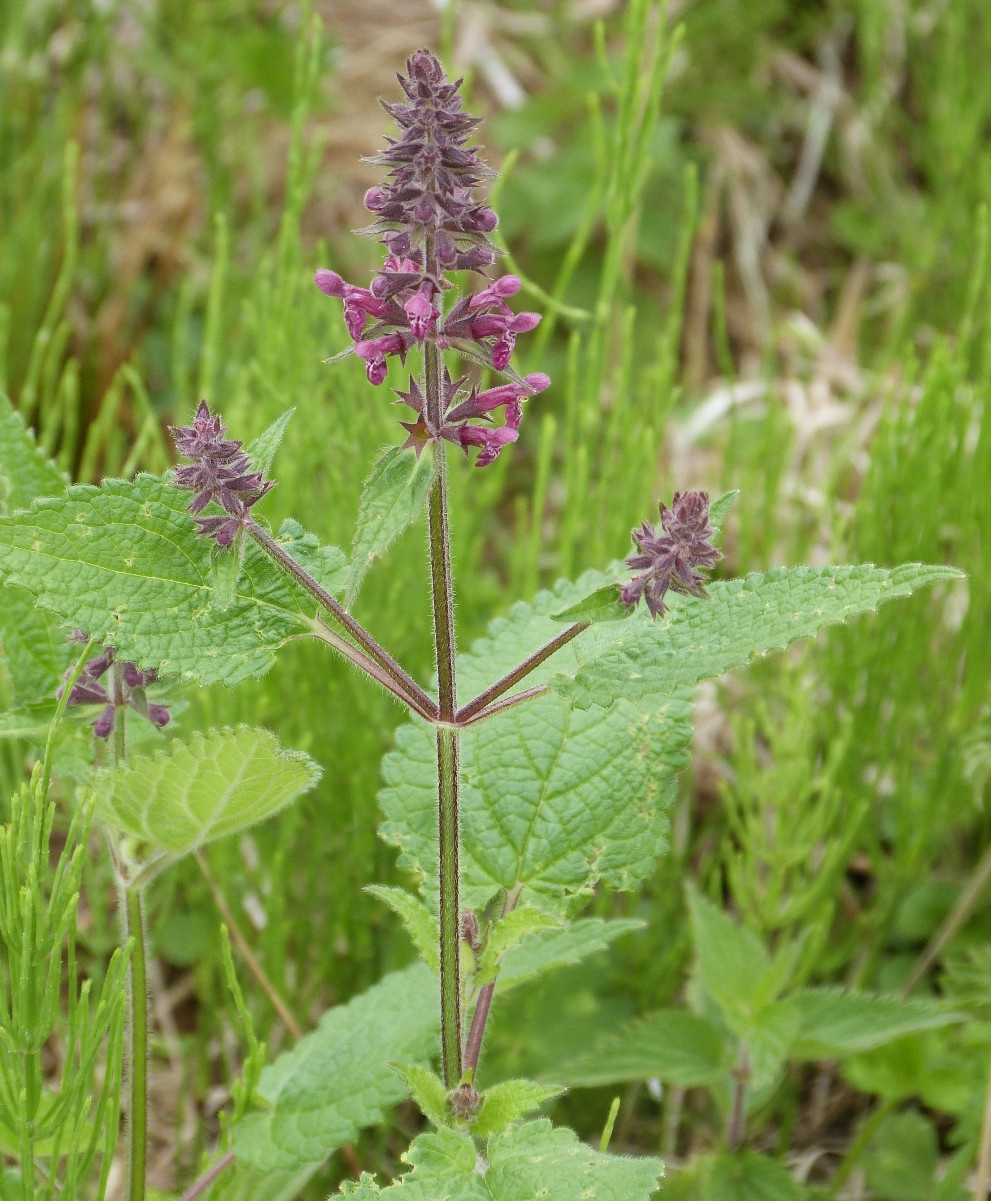
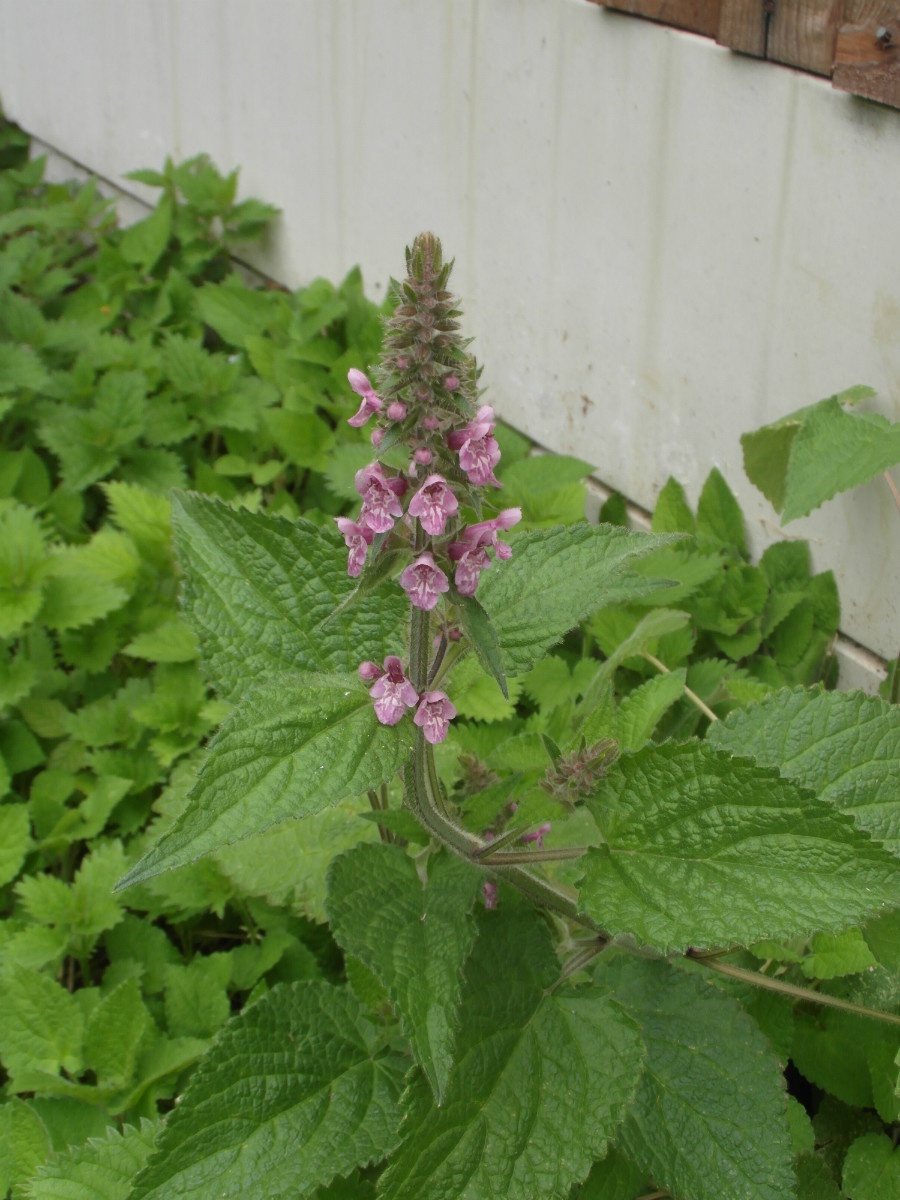
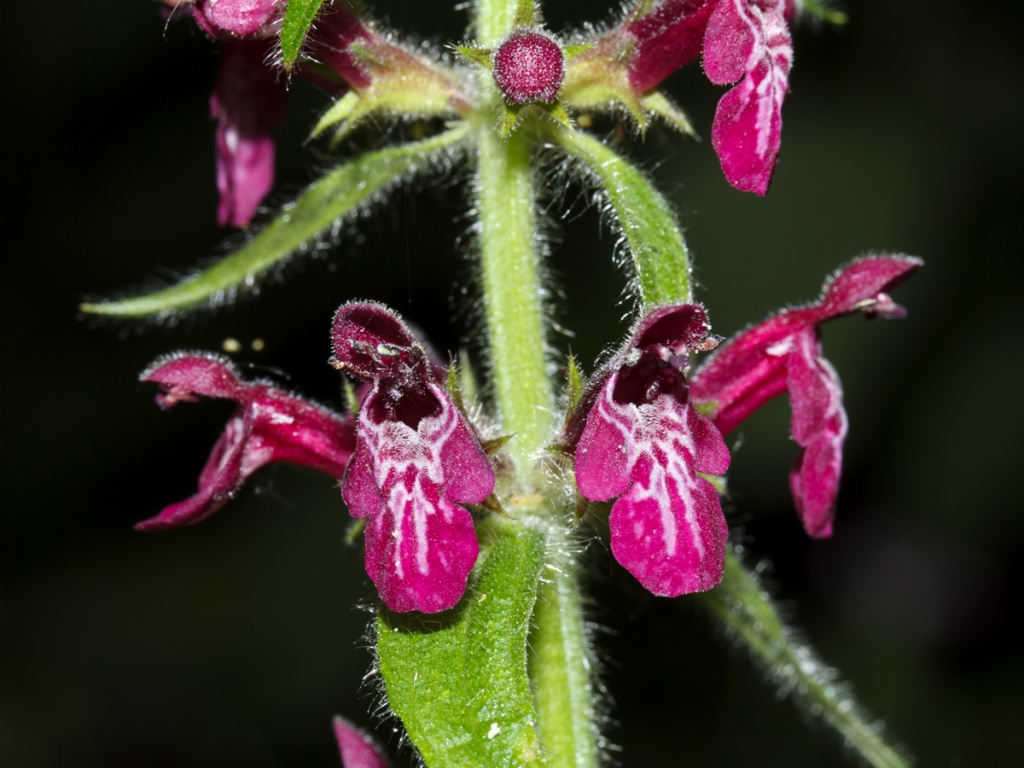
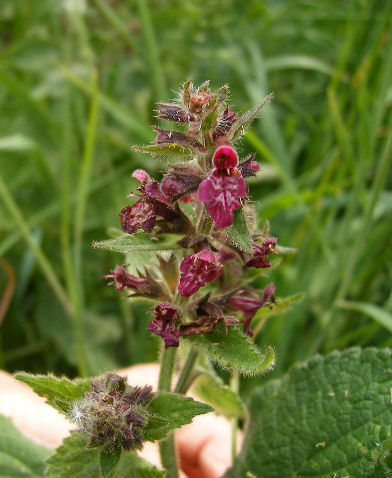
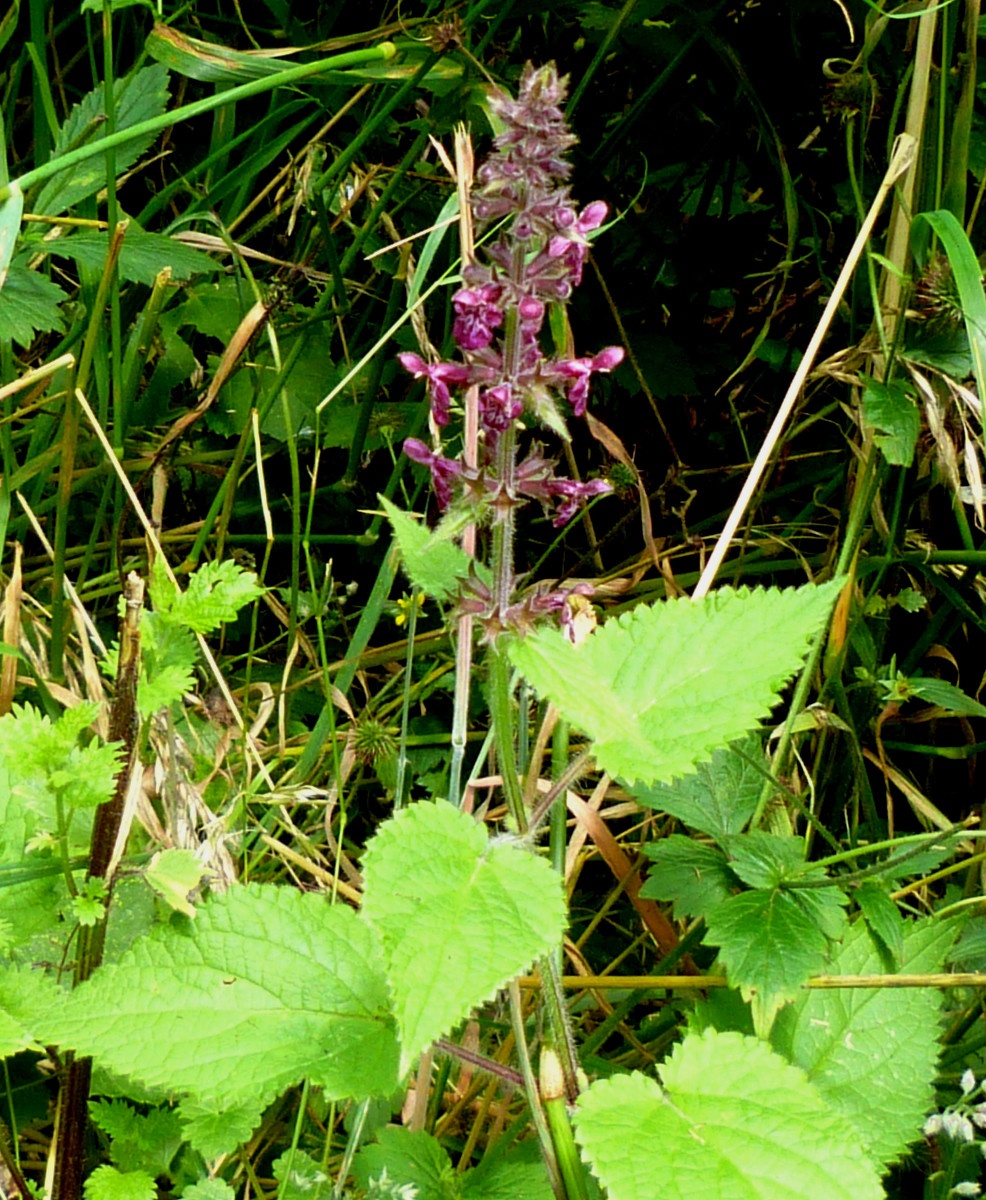
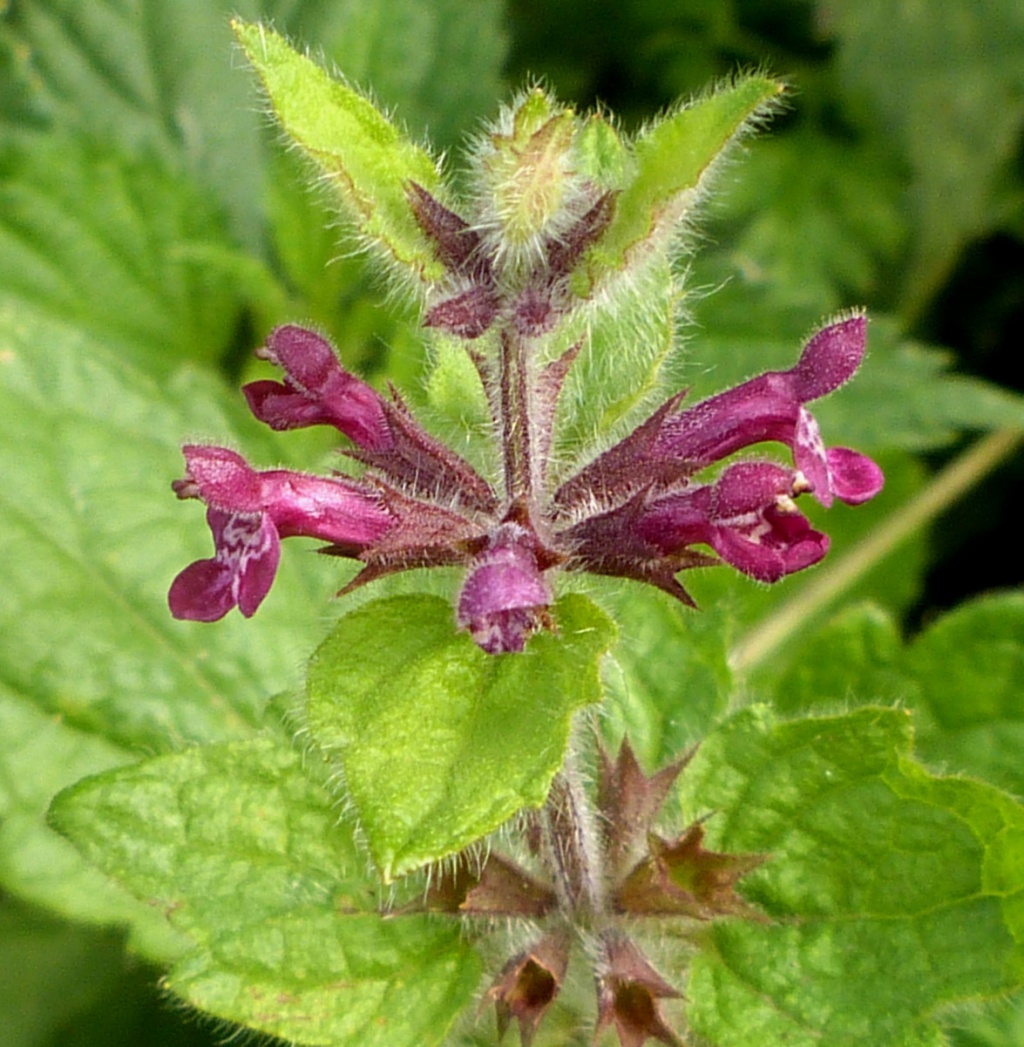
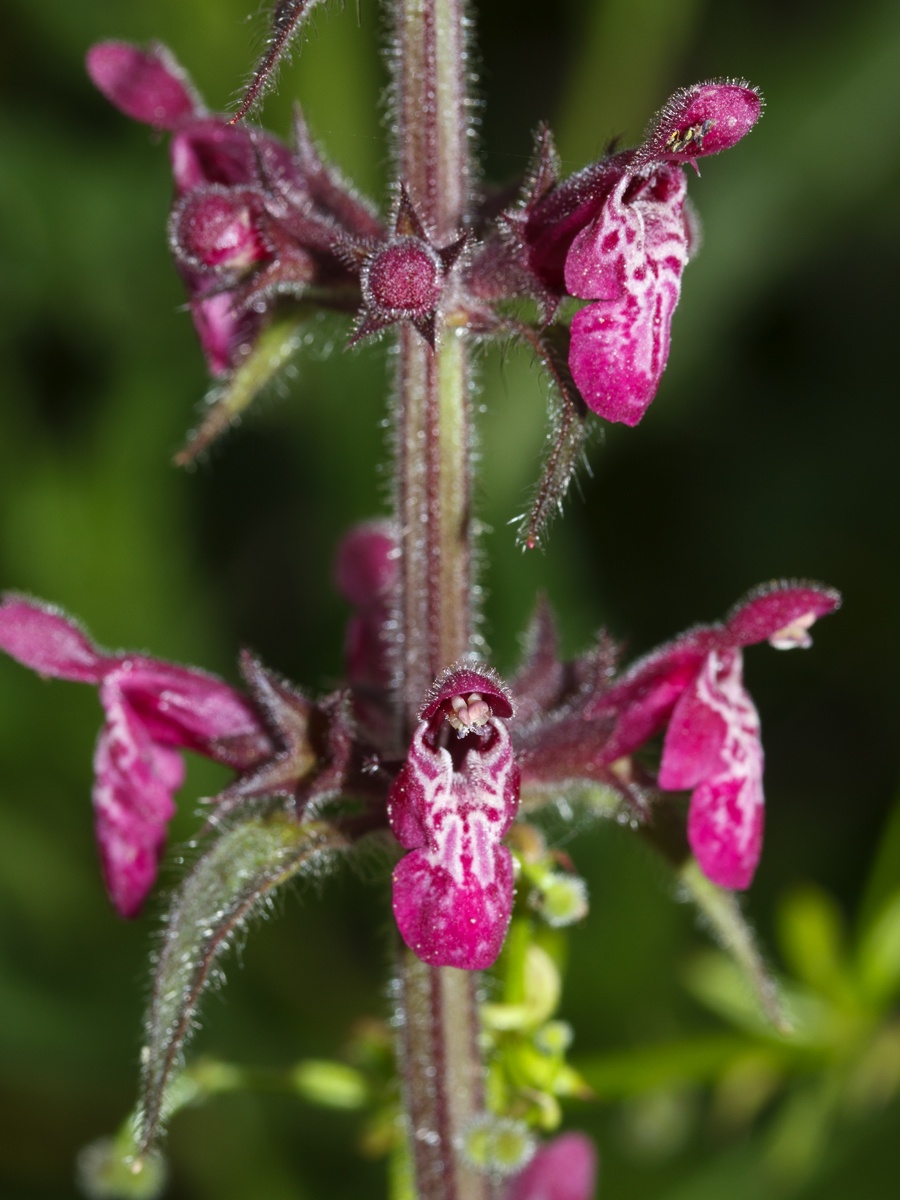
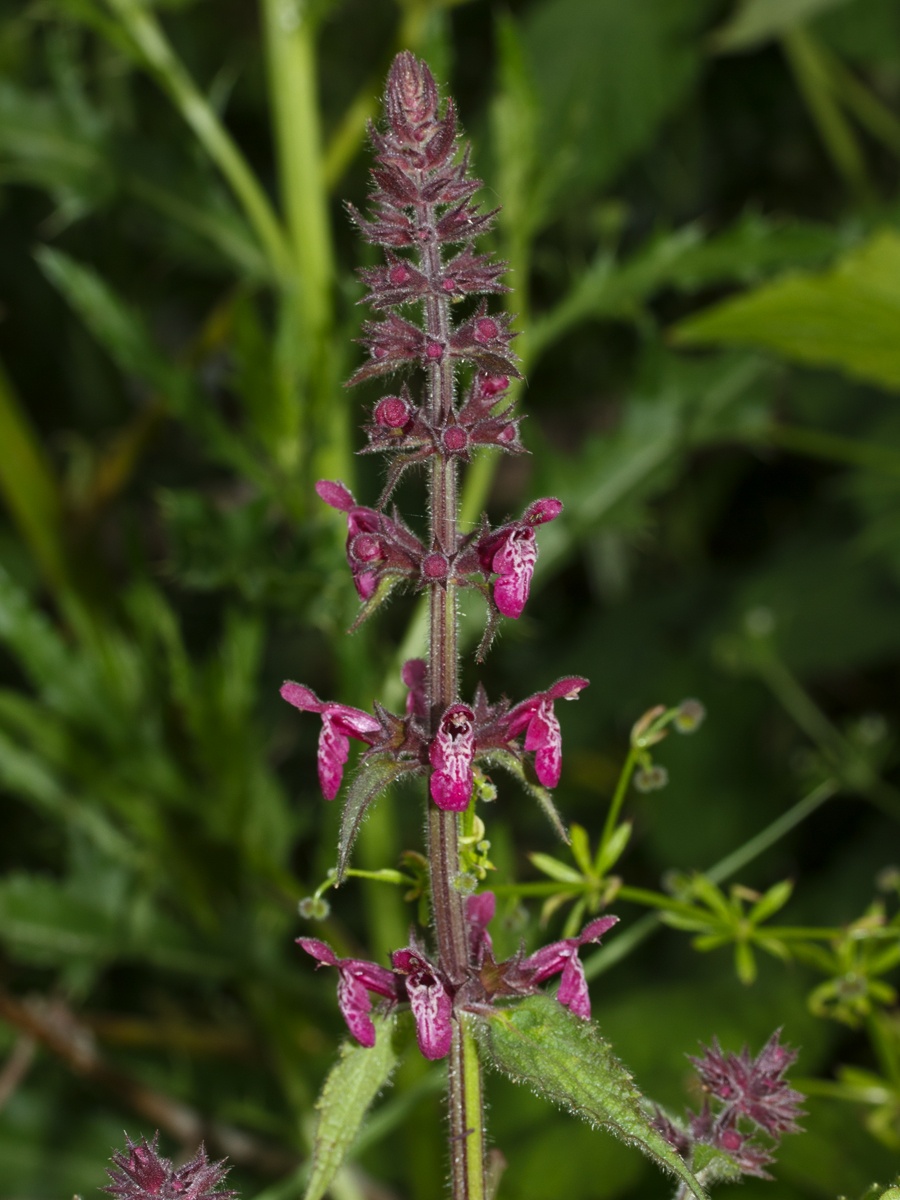
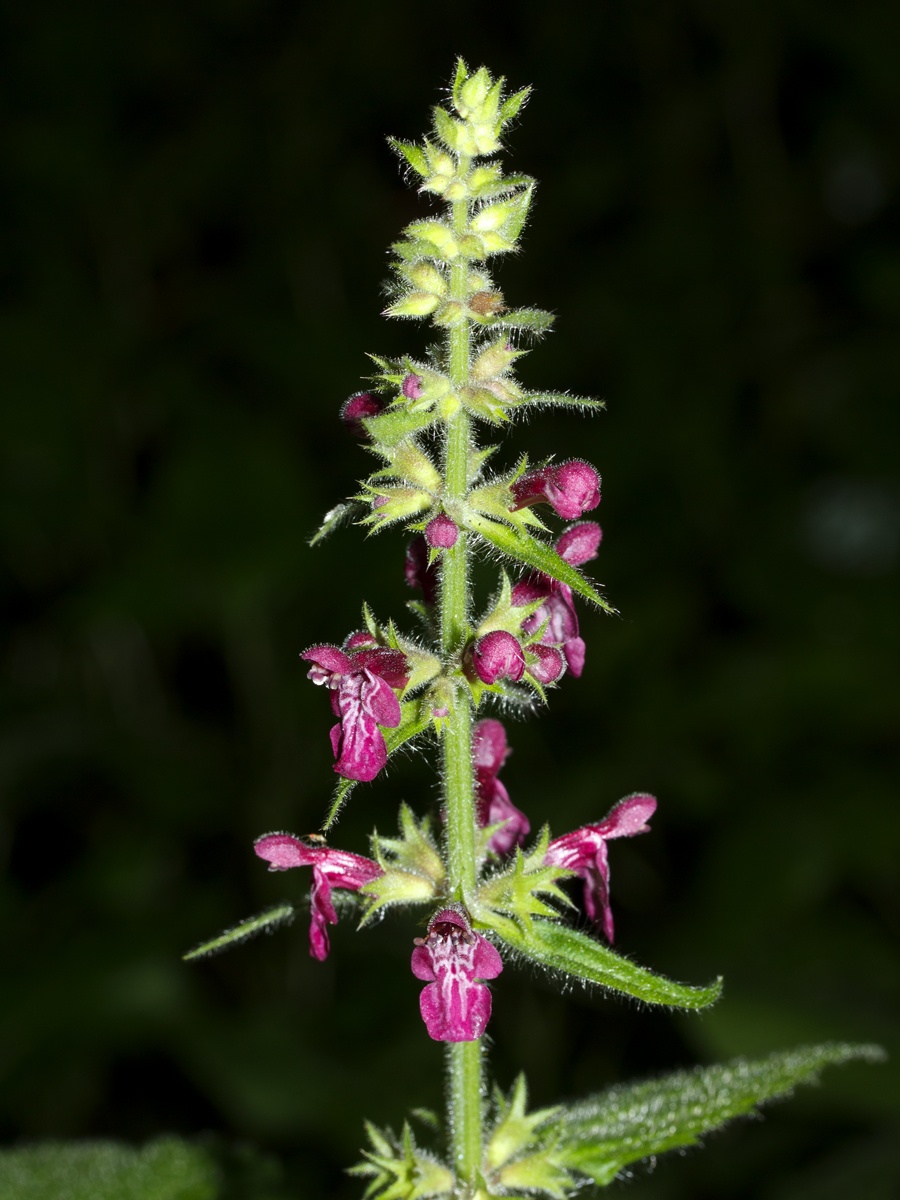
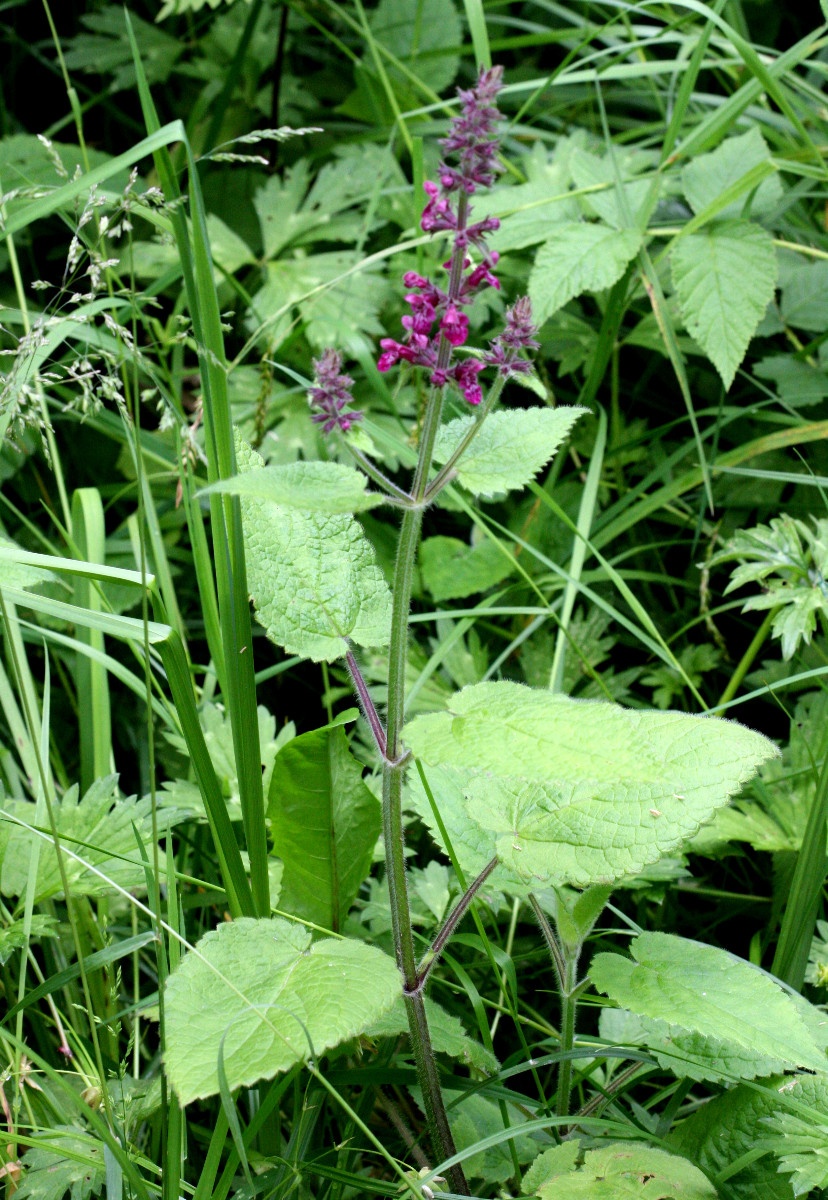
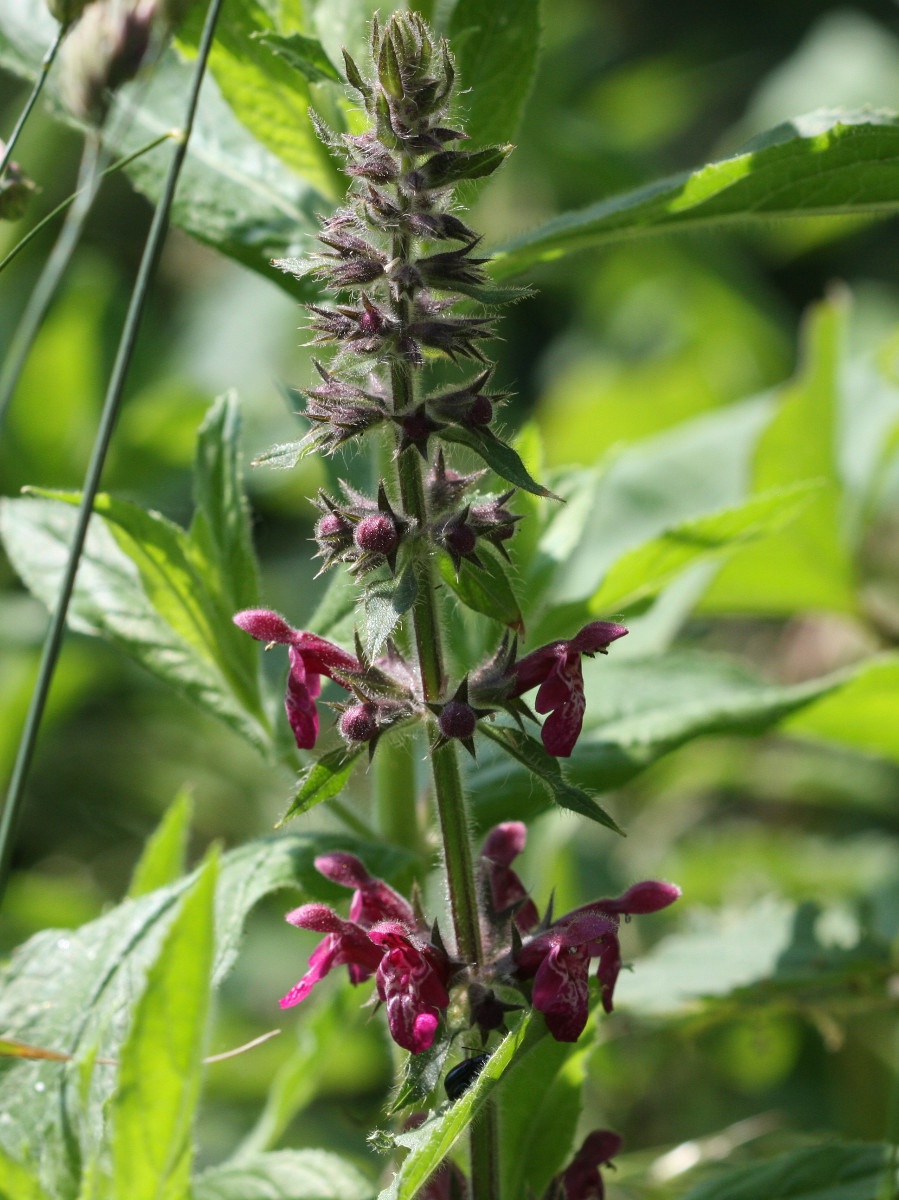
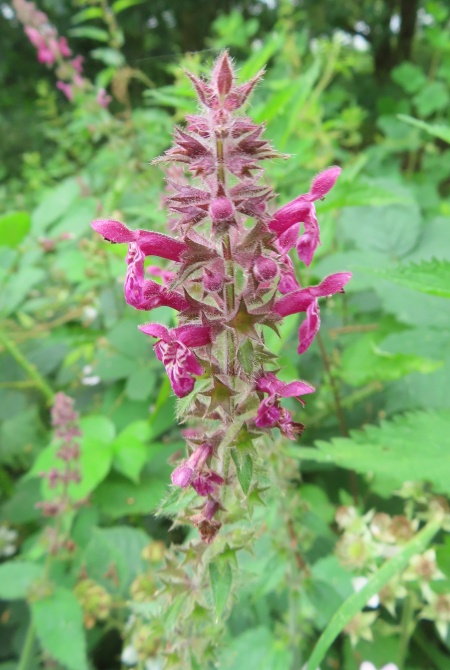
Medium to tall creeping plant to 1.2 metres with a rather unpleasant smell, stems erect, glandular hairy. Leaves heart shaped, slightly hairy, all stalked. Flowers dull dark purple red, with white markings, 13 to 18 mm long, hairy, the whorls forming an interrupted spike.

Hedgerows banks and ditches.
June to September.
Perennial.
Common throughout most of Britain except for the Scottish Highlands.
Common in Leicestershire and Rutland. In the 1979 Flora survey of Leicestershire it was found in 601 of the 617 tetrads.
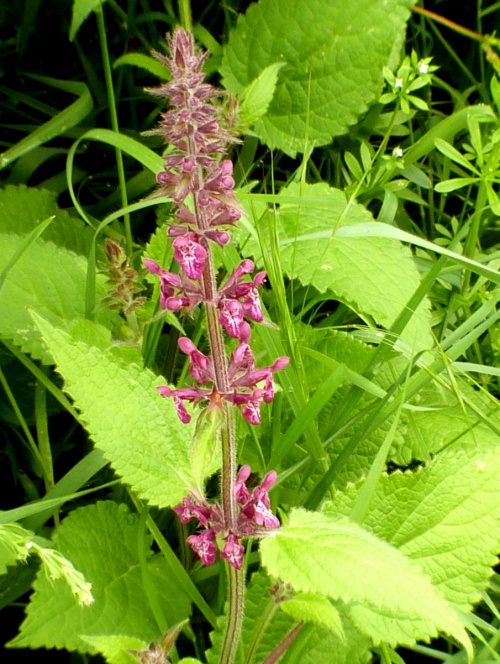 Graham Calow
Sapcote
29 May 2014 David Nicholls
Ratby
24 June 2012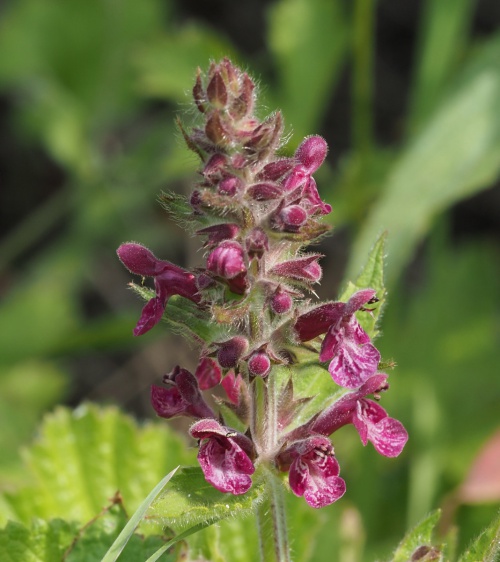 David Nicholls
North Kilworth, Station Rd Verge
17 June 2023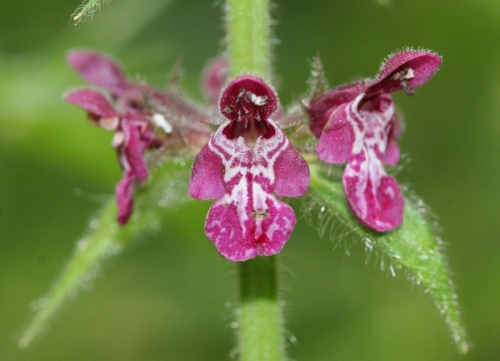 David Nicholls
Martinshaw Wood
05 July 2012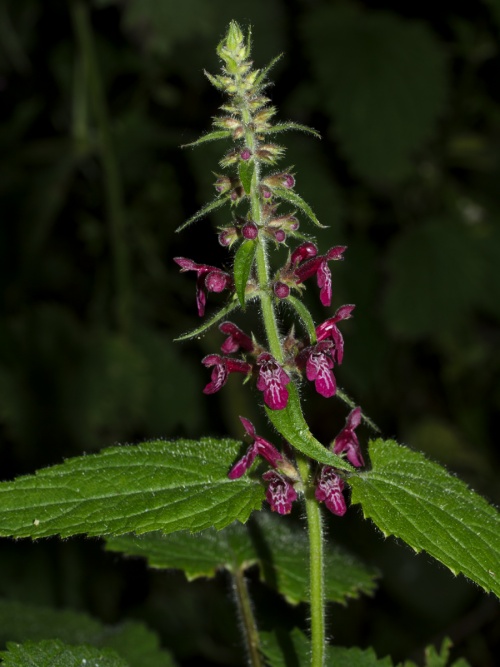 HAPeacock
The Orchards
26 June 2012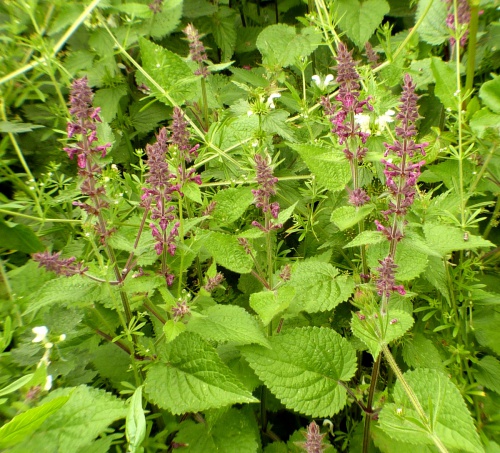 Graham Calow
Sapcote
24 June 2013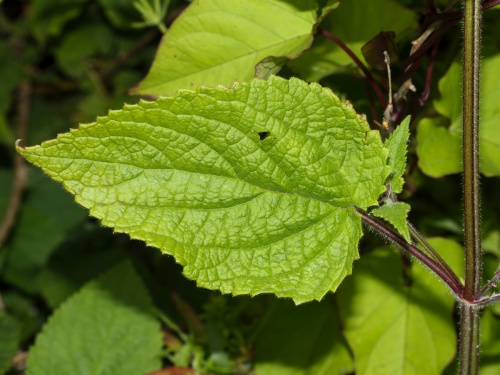 HAPeacock
City Farm - Sheep Field Path
26 June 2012

Leicestershire & Rutland Map
Enter a town or village to see local records
MAP KEY:
Yellow squares = NBN records (all known data)
Coloured squares = NatureSpot records: 2025+ | 2020-2024 | pre-2020
UK Map
Additional images
 Near the 'Wash Pit' Sapcote SP 4849 9364 (taken 14.6.2006).JPG)
. Green Lane Sapcote SP 4860 9318 (taken 13.7.2008).JPG)




All NatureSpot records

Amauromyza morionella
The larva of the Agromyzid fly Amauromyza morionella mines the leaves of various Stachys and Lamium species. The frass is conspicuous in the mine and the mine is initially linear, then develops into a white blotch, often enveloping the early mine.

Amauromyza (Cephalomyza) labiatarum
The larva of the Agromyzif fly Amauromyza labiatarum mines the leaves of various plants including Dead-nettles and Woundworts, producing a mine with a narrow gallery leading to a largish blotch on the upper surface. Frass is green and indistinct in the gallery - small grains may be seen at the gallery edge.
Wachtliella stachydis
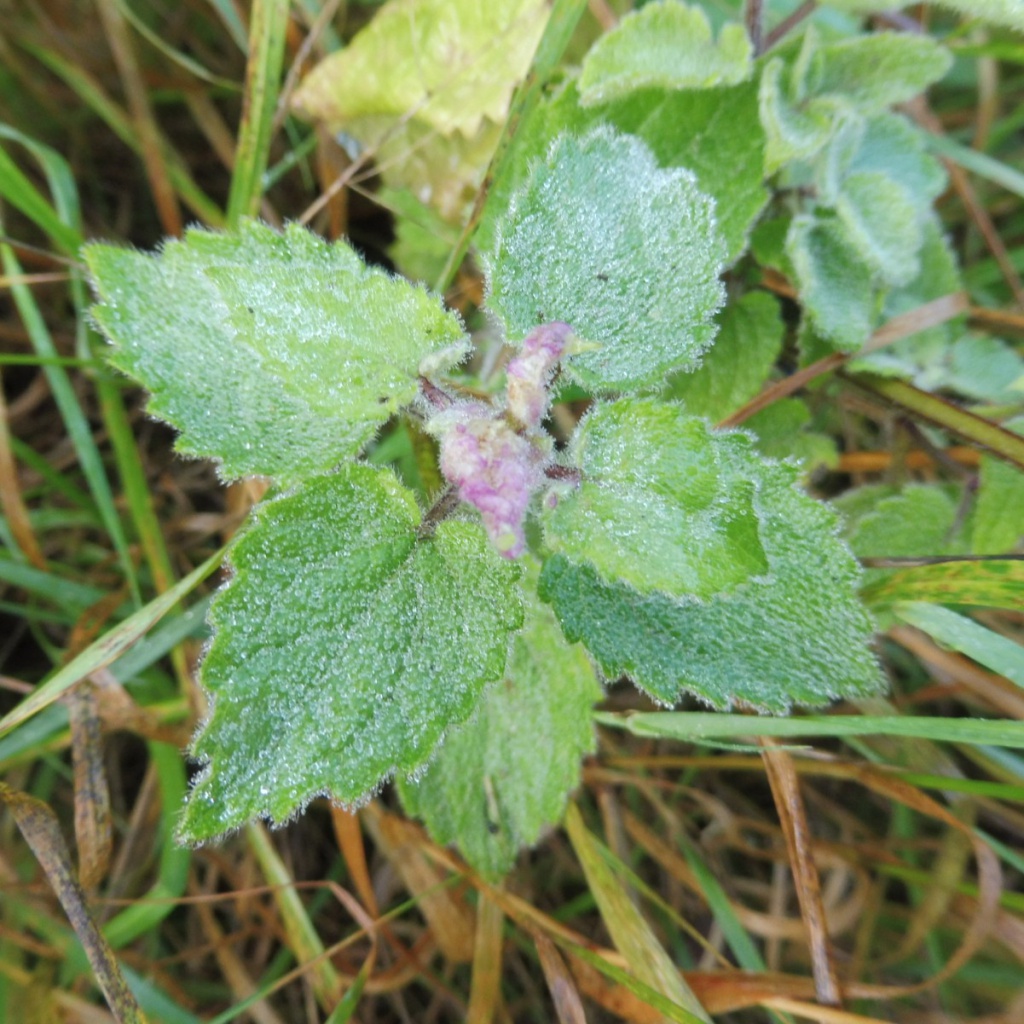
The larva of the gall midge Wachtliella stachydis causes galls on Hedge Woundwort or Betony. Shoot-tip leaves are curled, thickened and often yellowed. The flowerbuds remain closed with enlarged calyces, and are more hairy than usual.. Larvae inside are orange when mature, white when young.