Clustered Dock
Clustered Dock - Rumex conglomeratus
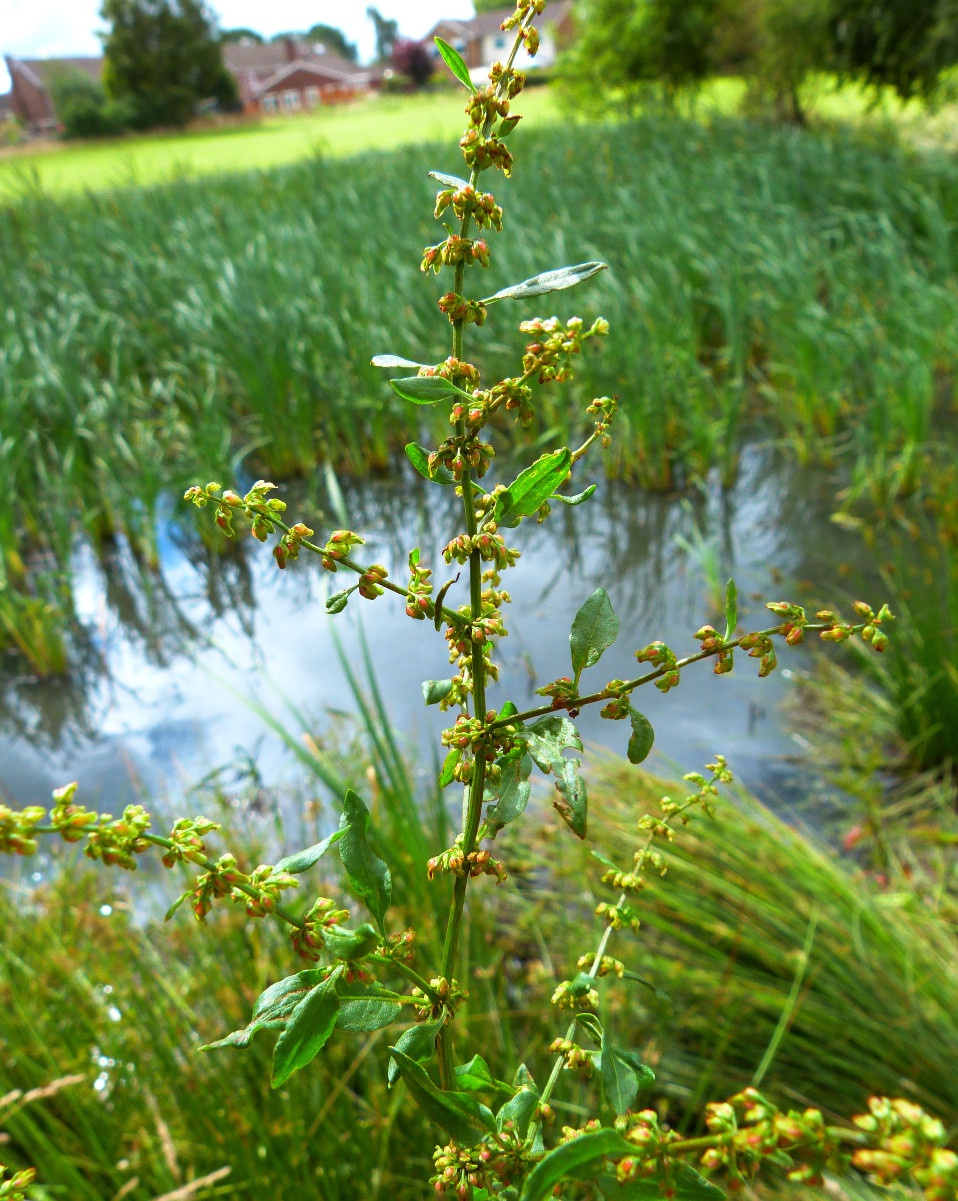
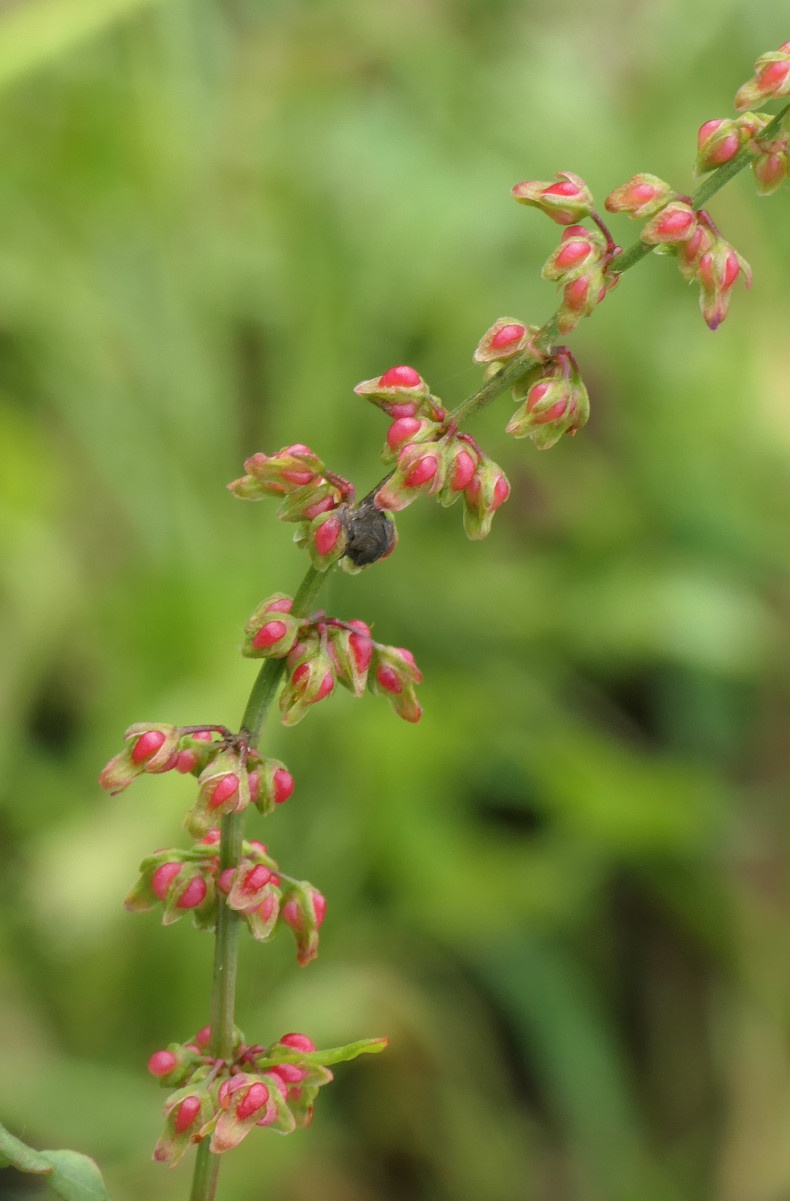
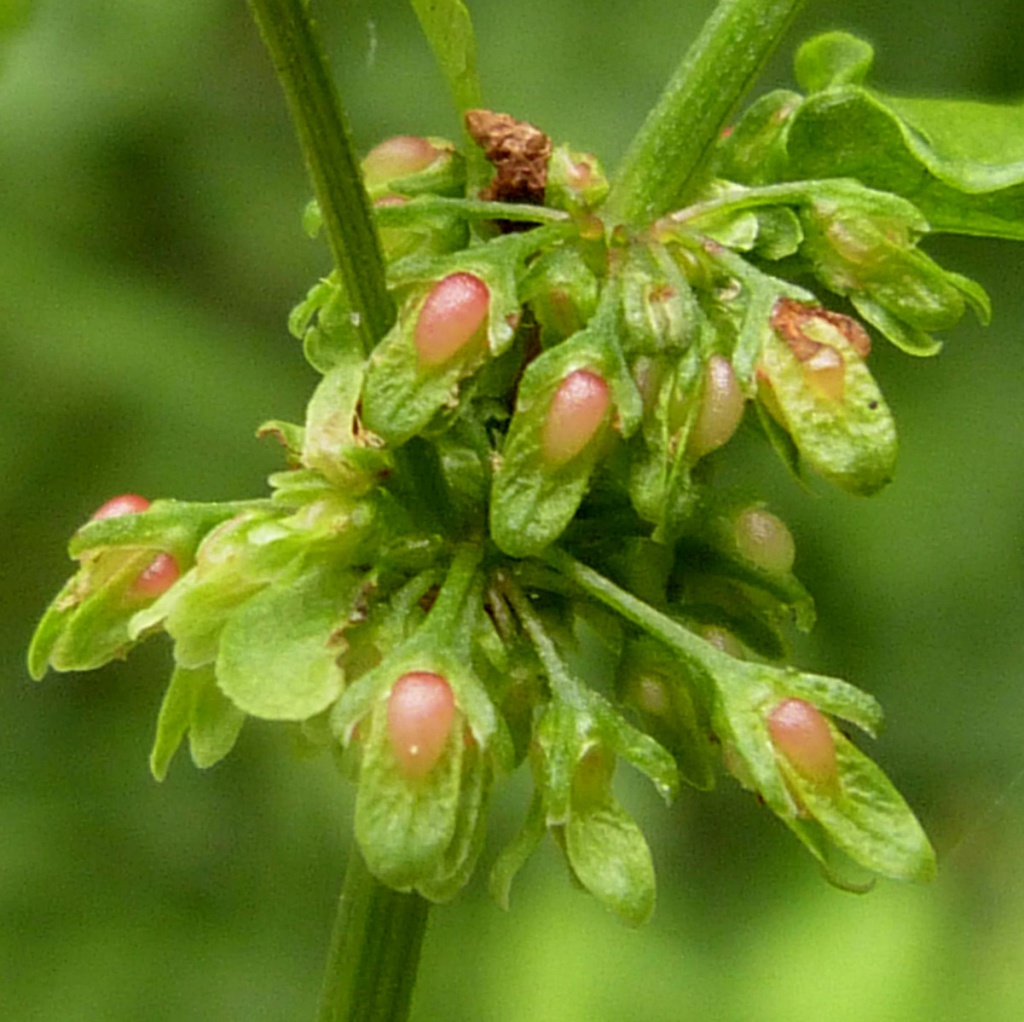
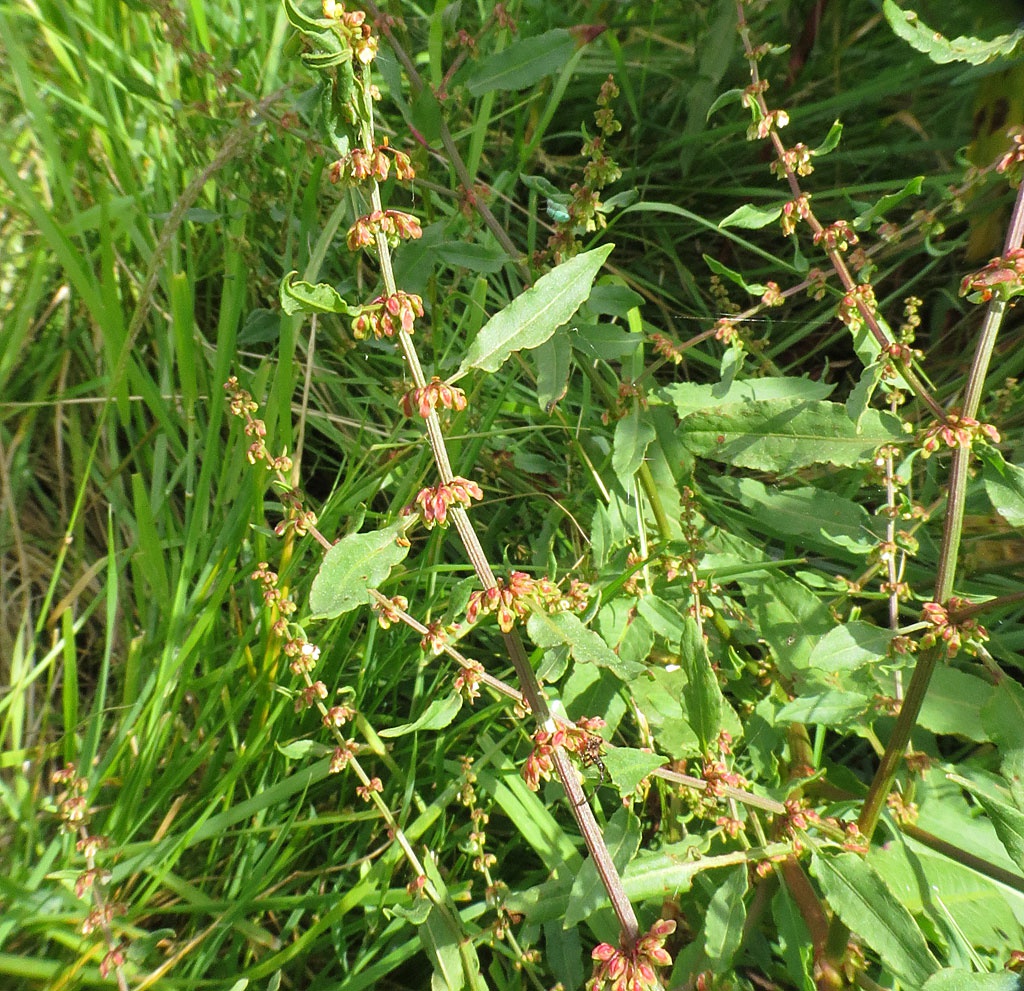
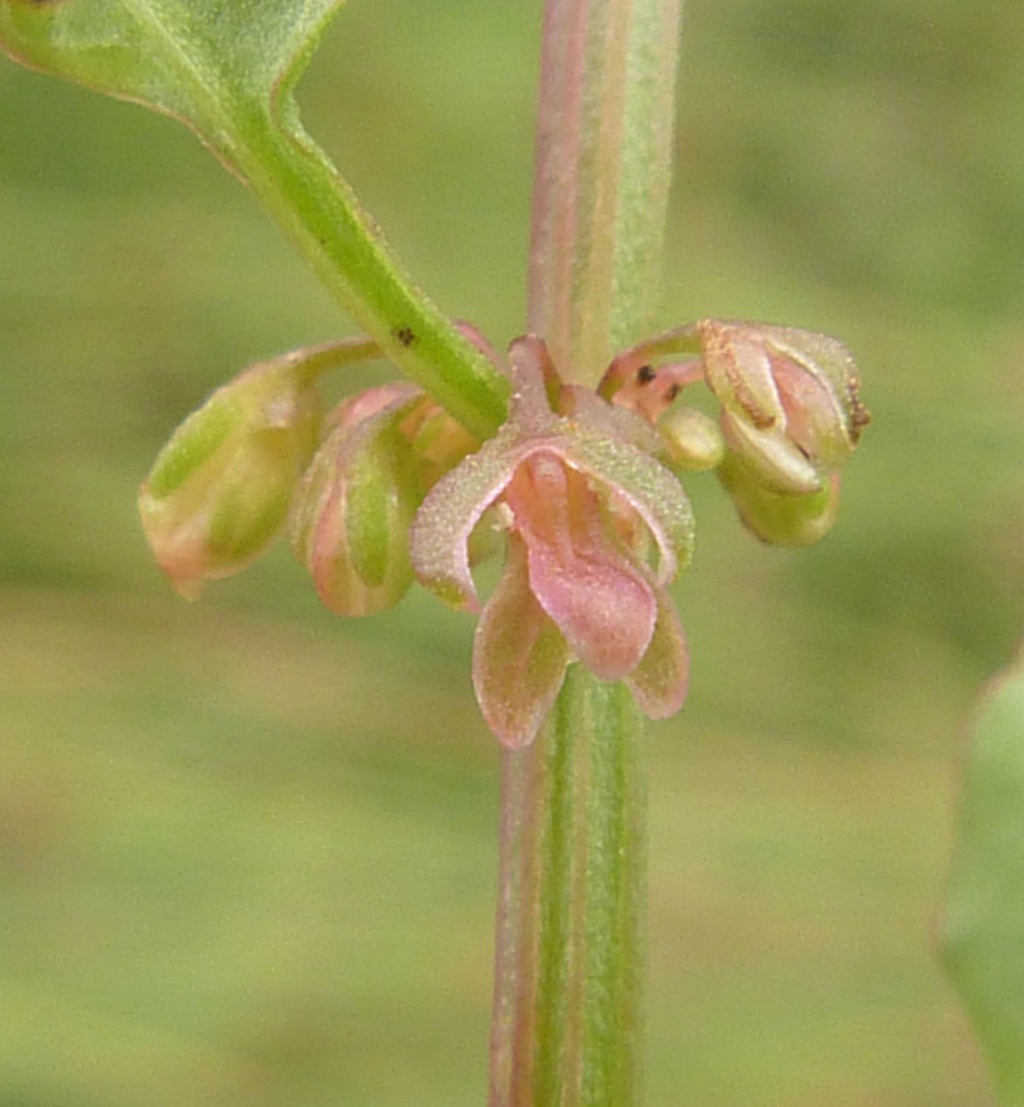
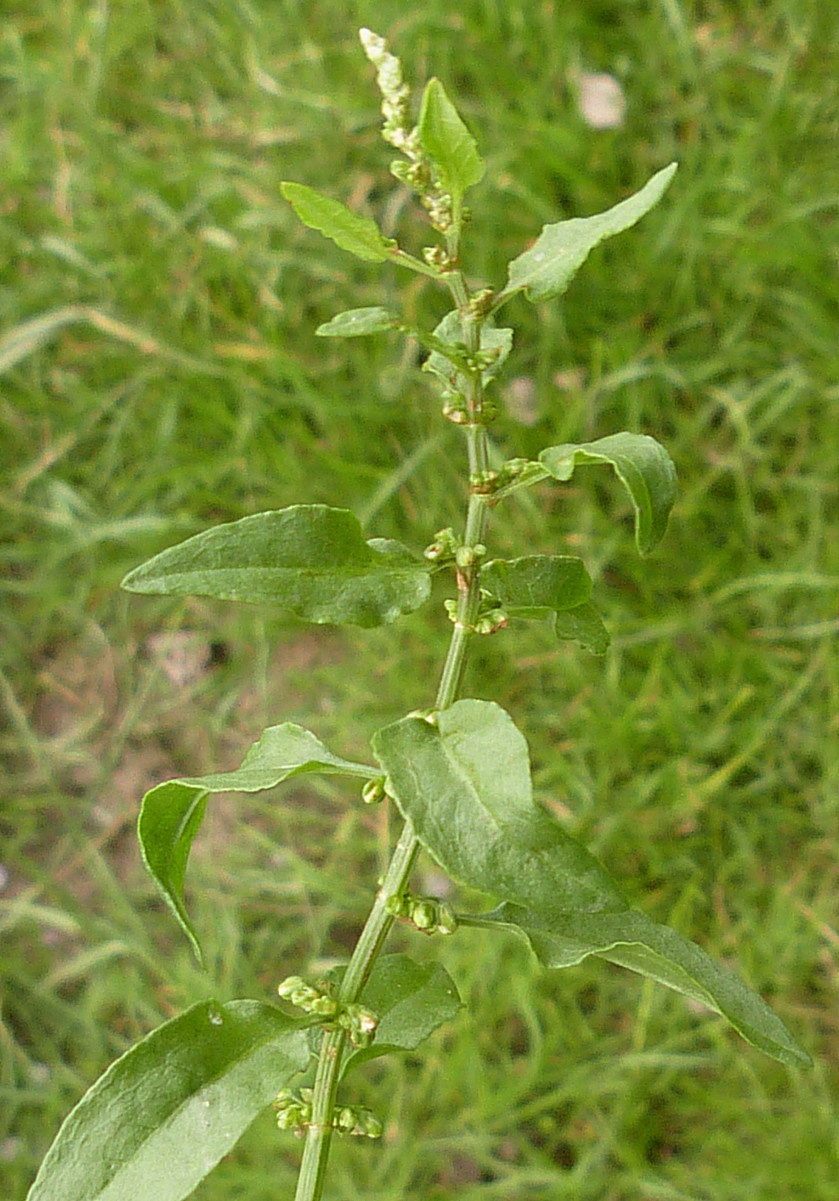
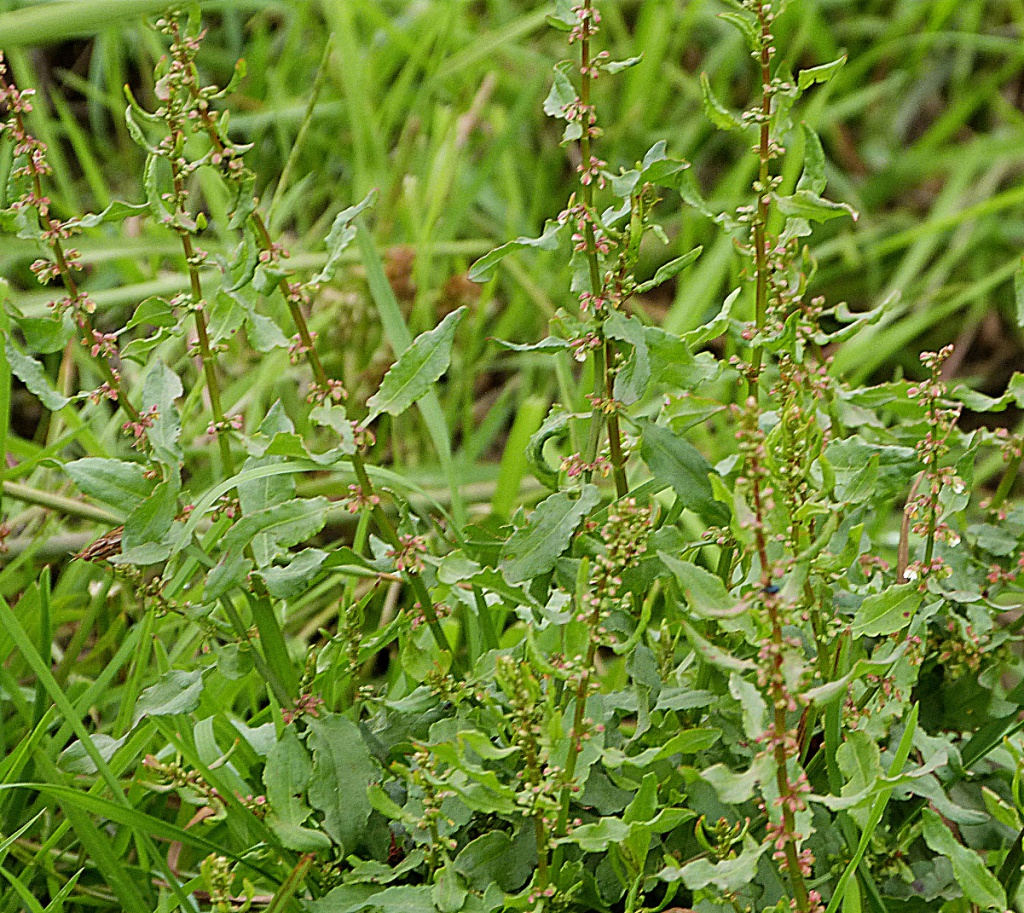
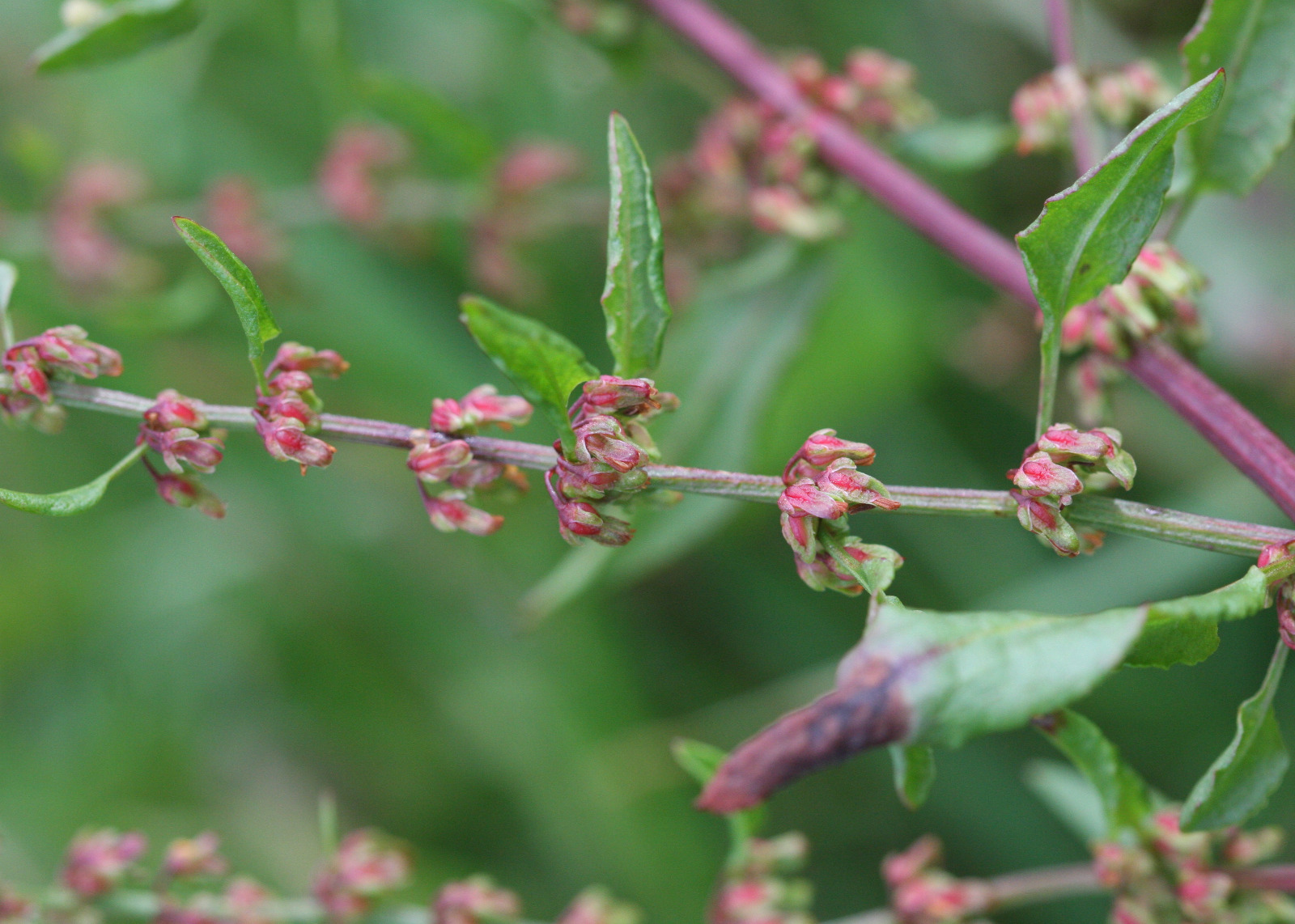
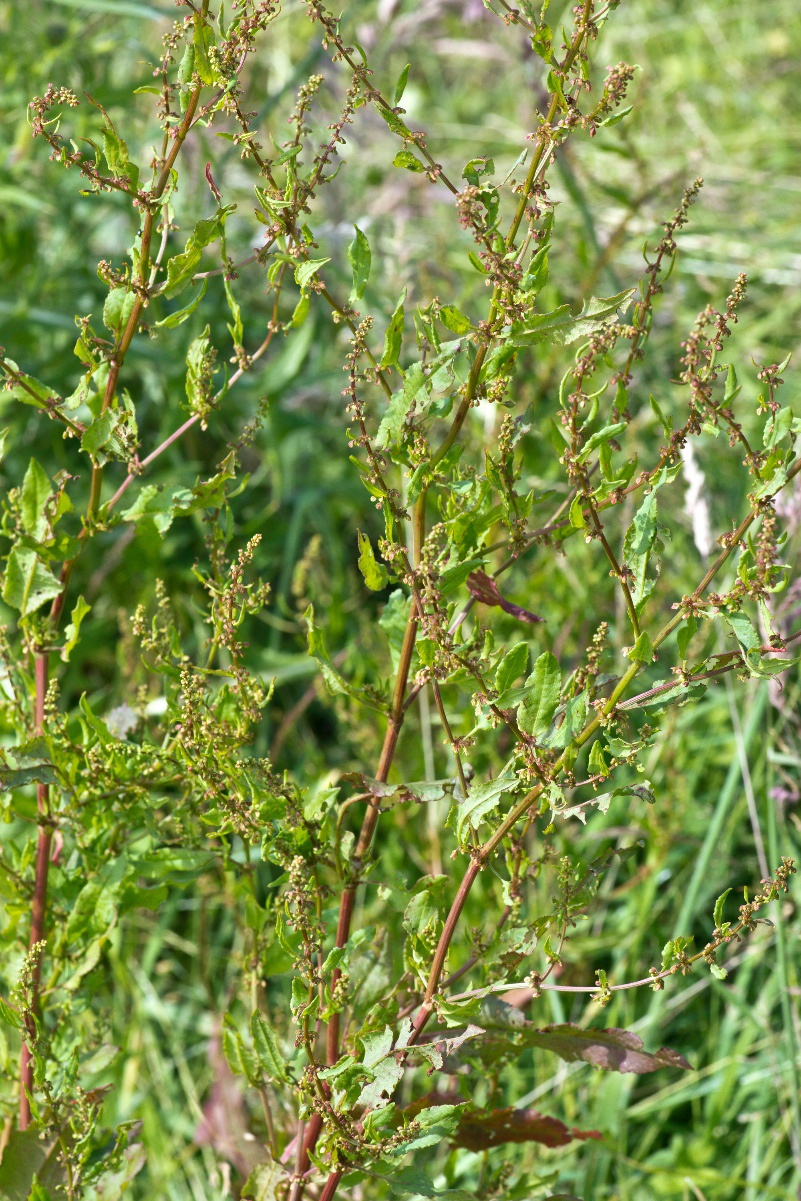
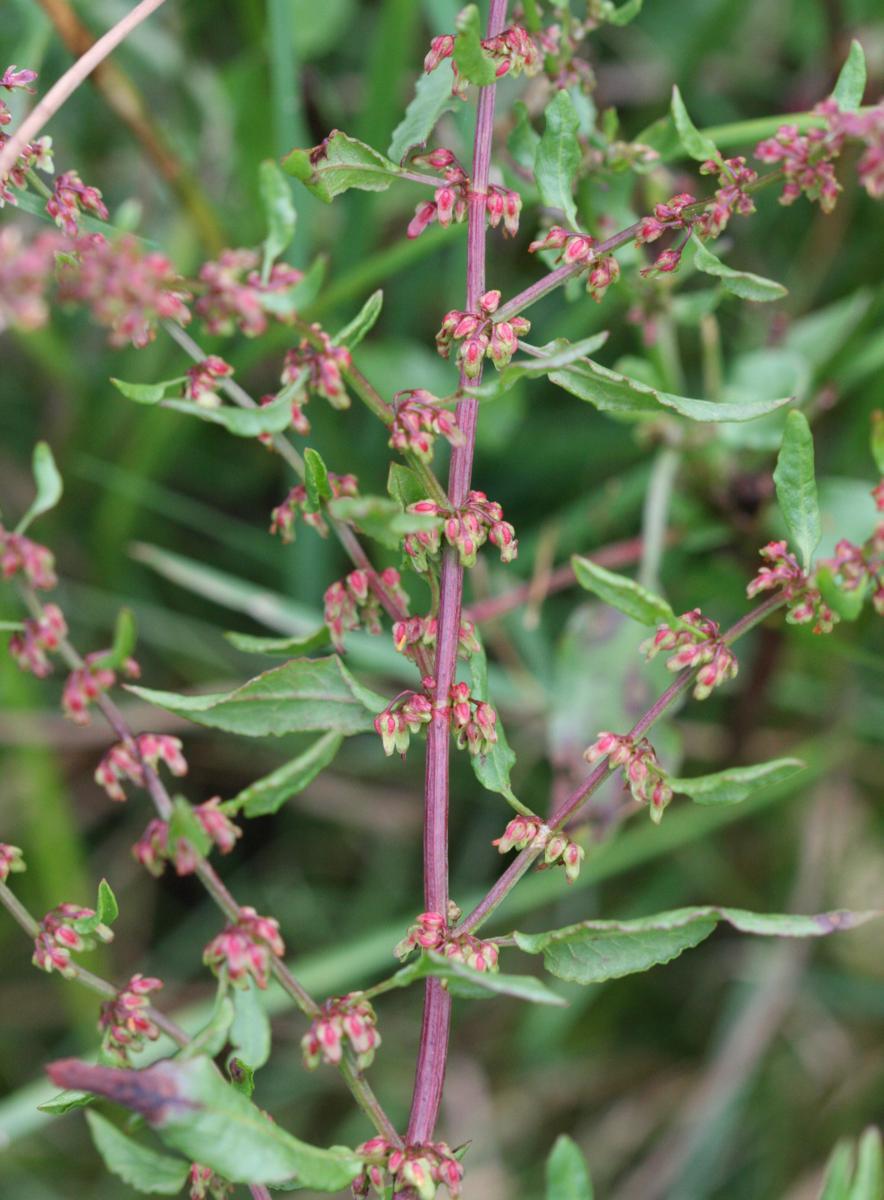
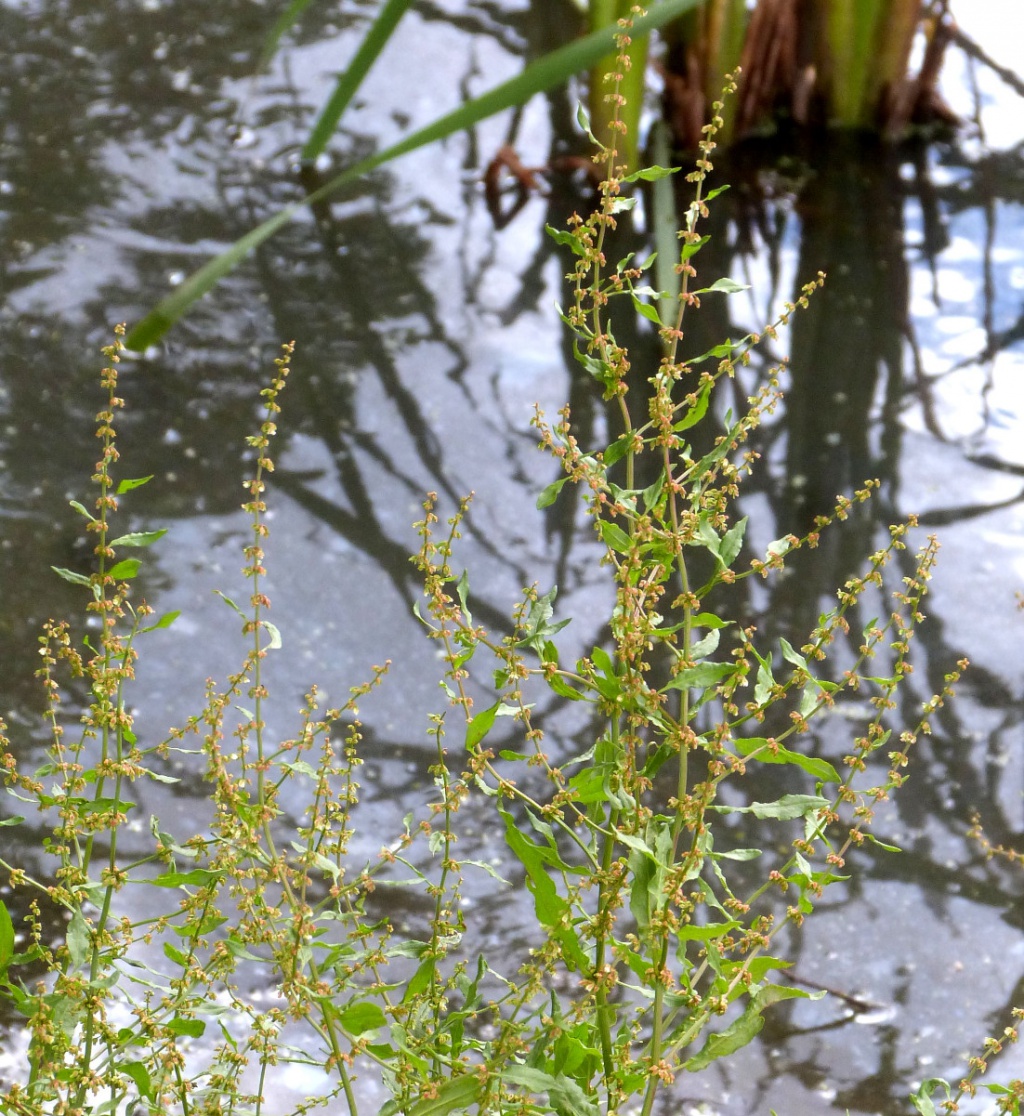
Medium to tall erect plant. Stems zig-zagged, leaves oblong, round at base, long stalked (as long as leaf blade); the upper leaves narrower and pointed. The flowers in rather distant clusters, forming a much branched panicle. Flowering branches leafy, almost to the top. Fruit valves oval, untoothed all swollen.

all 3 tubercles well-developed, tubercles oblong and smooth
The fruits have a central part, triangular in cross-section, with three membraneous valves surrounding a small, hard 'tubercle'. The shape and arrangement of valves and tubercles is diagnostic, and close-up photos of fruits and leaves/general habit is needed.
Damp grassy habitats, marshy meadows, ditches and stream banks.
June to October.
Perennial.
Found throughout Britain, but more local in the north and in Wales
Common in Leicestershire and Rutland. In the 1979 Flora survey of Leicestershire it was found in 384 of the 617 tetrads.
In the current Checklist (Jeeves, 2011) it is listed as Native, Frequent
http://www.kenadams.org.uk/esb/Docks.htm
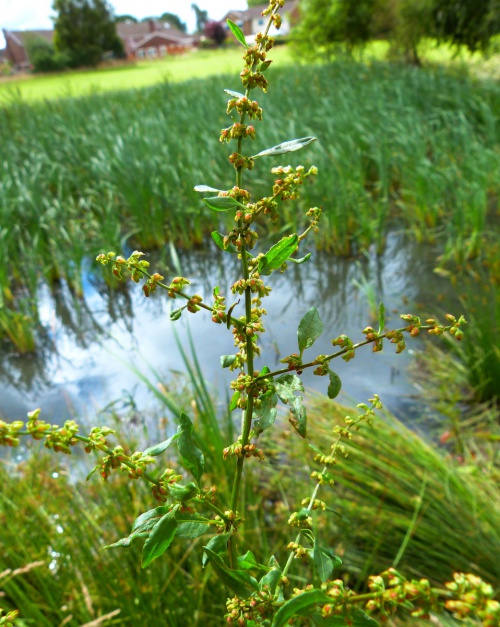 Graham Calow
Sapcote, near 'The Washpit'
11 July 2020
specimen examined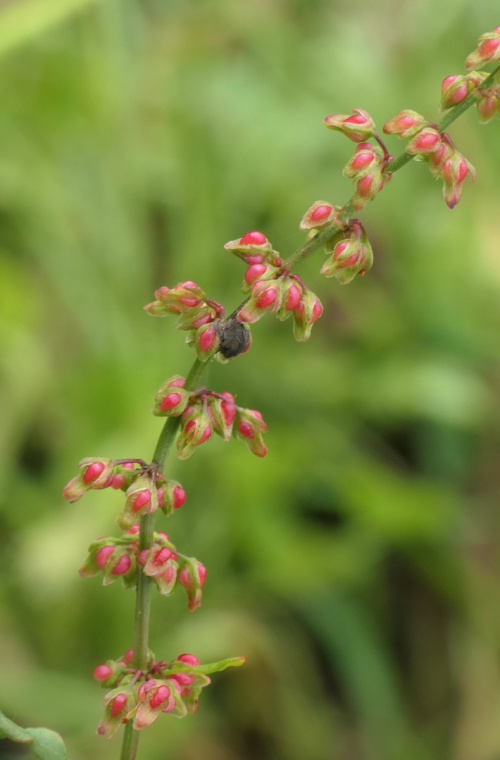 David Nicholls
Witherley, field 603
18 July 2019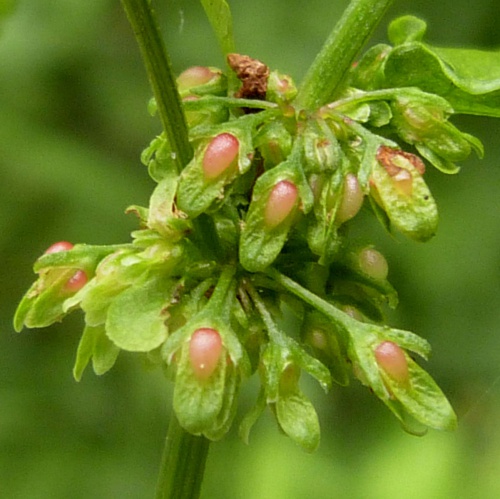 Graham Calow
High Cross Road, Claybrooke Magna
11 July 2016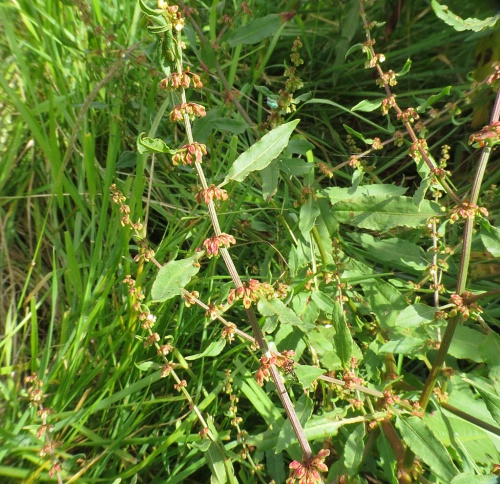 David Gould
Croft Pasture
26 June 2014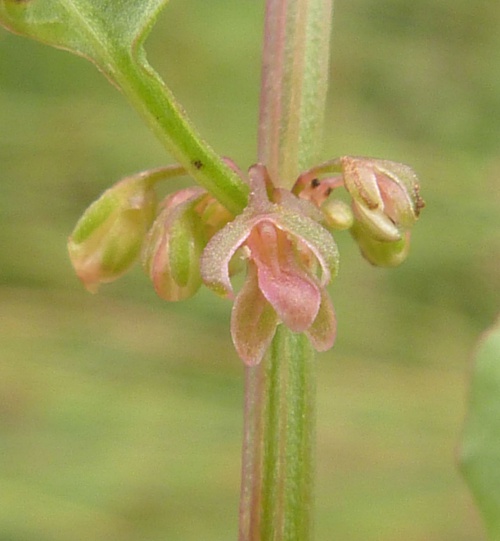 Graham Calow
Near Thurlaston, field off Croft Lane
07 July 2020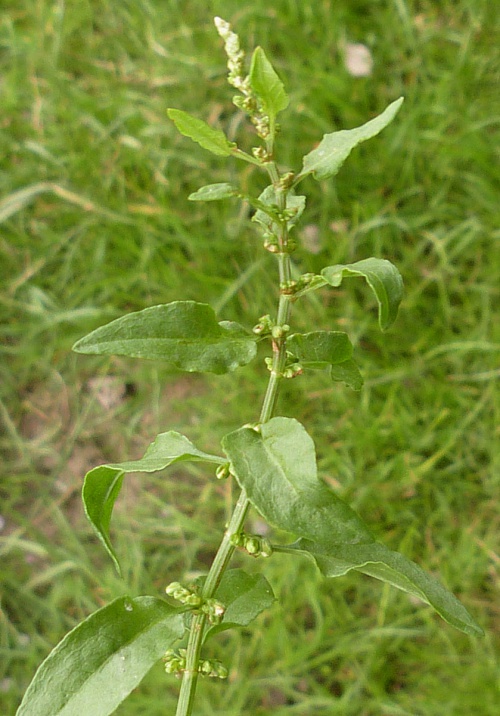 Graham Calow
Near Thurlaston, field off Croft Lane
07 July 2020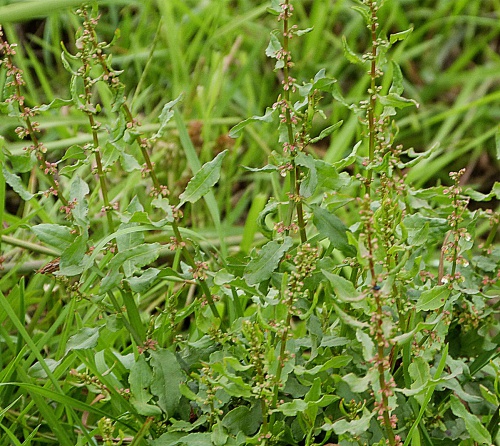 Graham Calow
Near Thurlaston, field off Croft Lane
07 July 2020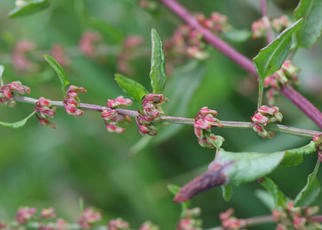 David Nicholls
Lea Meadows
07 July 2011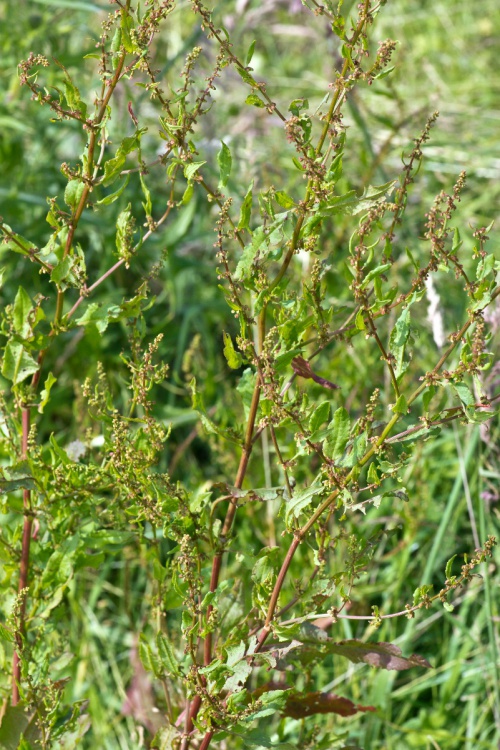 AJ Cann
The Spearwort Fields
02 July 2016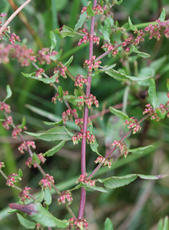 David Nicholls
Lea Meadows
07 July 2011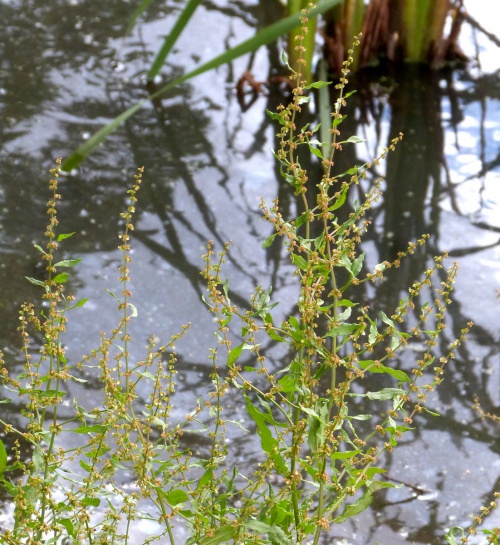 Graham Calow
Sapcote, near 'The Washpit'
11 July 2020
specimen examined
Leicestershire & Rutland Map
Enter a town or village to see local records
MAP KEY:
Yellow squares = NBN records (all known data)
Coloured squares = NatureSpot records: 2025+ | 2020-2024 | pre-2020
UK Map
Additional images
No additional images available for this species.
All NatureSpot records
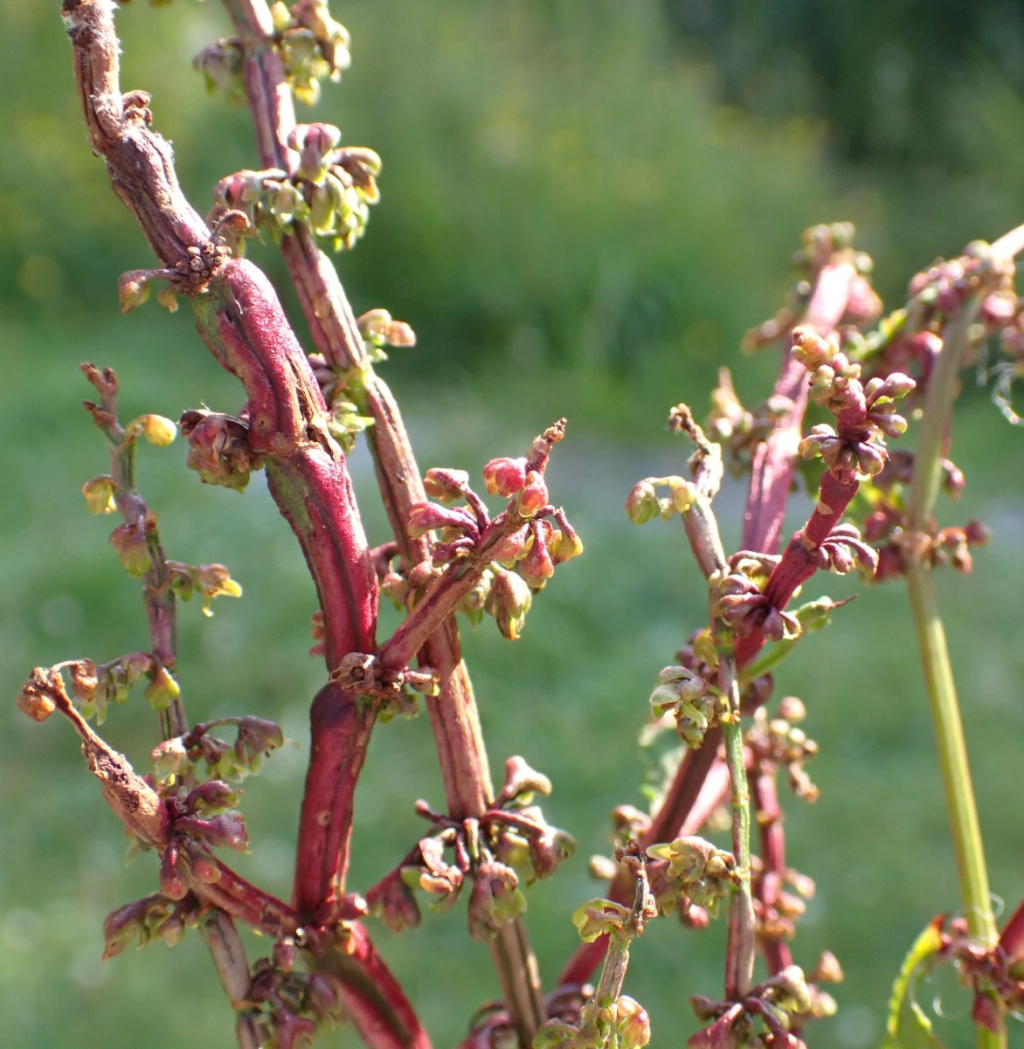
Microbotryum parlatorei
The fungus Microbotryum parlatorei affects Docks (Rumex species) causing galls in stems, petioles and midribs, often with distortion and swelling of infected parts, which eventually rupture revealing the dark-violet dusty spore-mass.
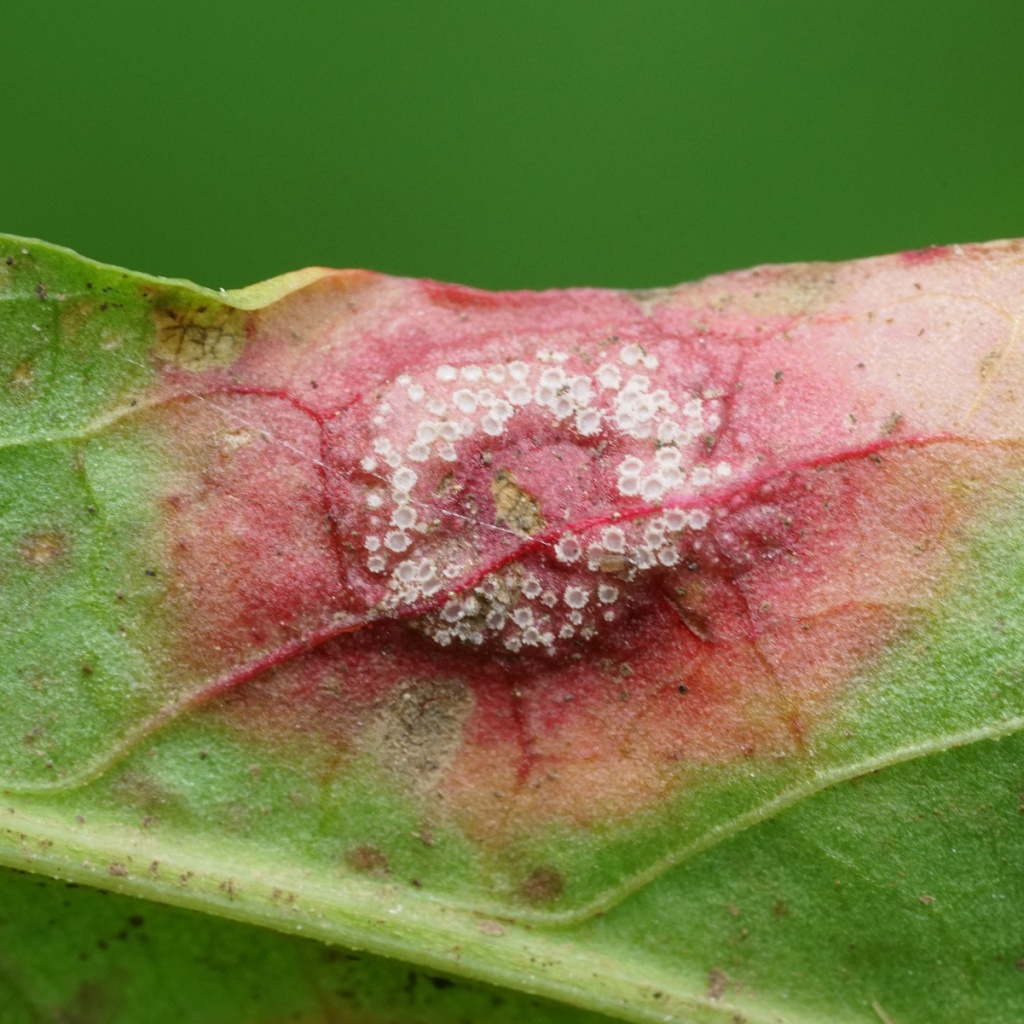
Puccinia phragmitis
The fungus Puccinia phragmitis causes galls on the alternate host, Docks (Rumex) species and Rhubarb (Rheum) causing reddish purple blotches bearing aecia.