Wild Strawberry
Wild Strawberry - Fragaria vesca
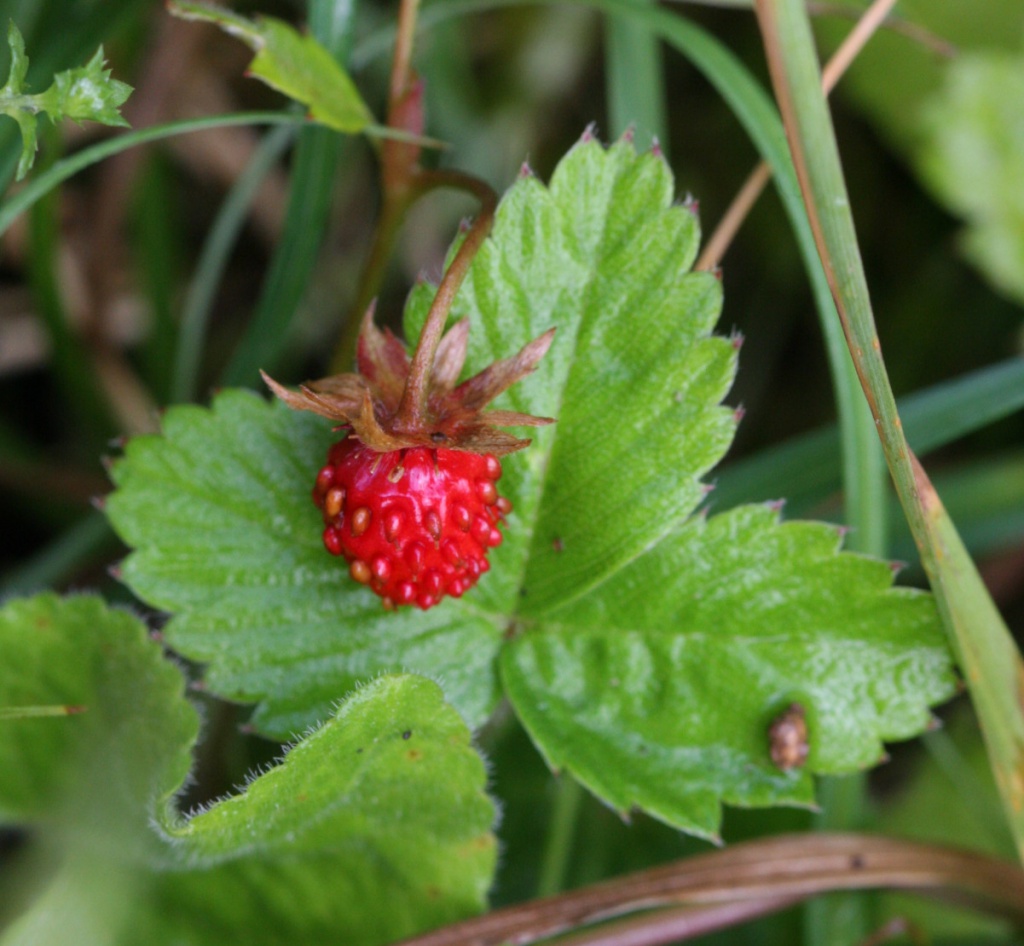
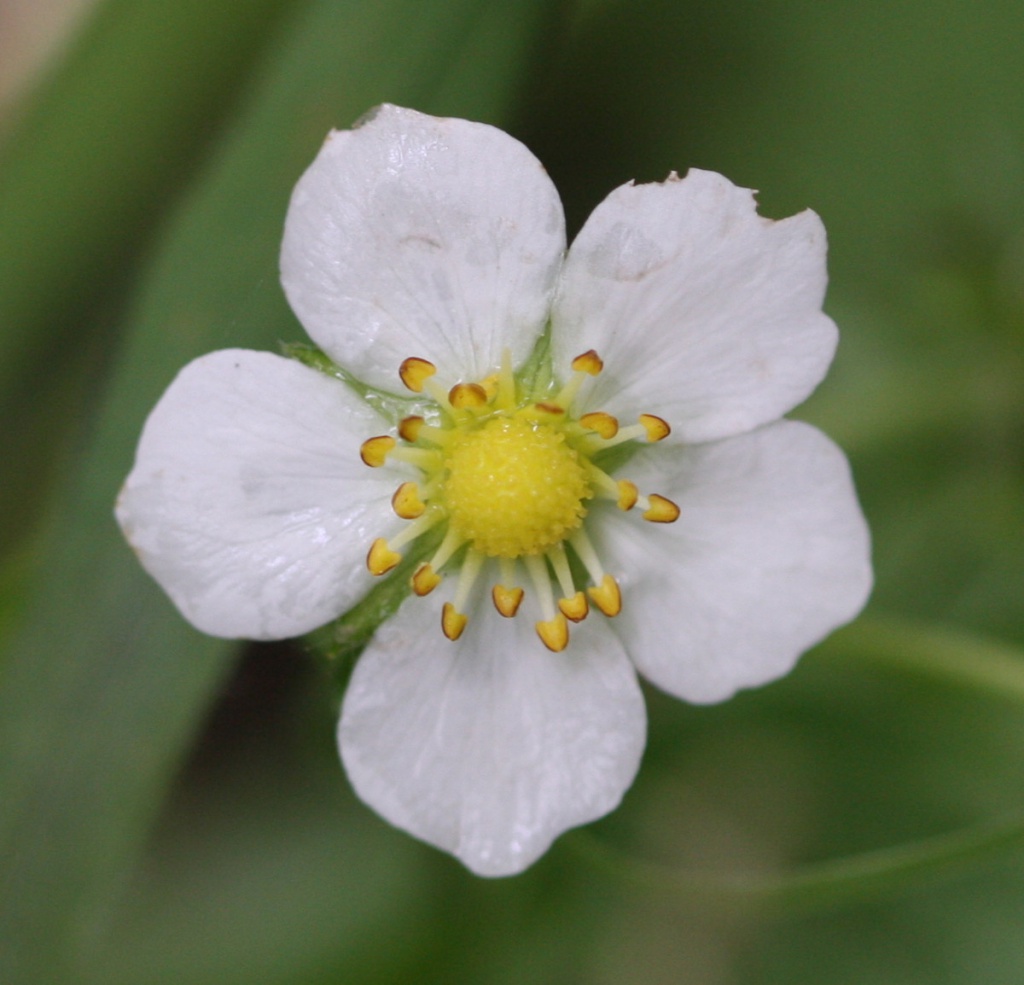
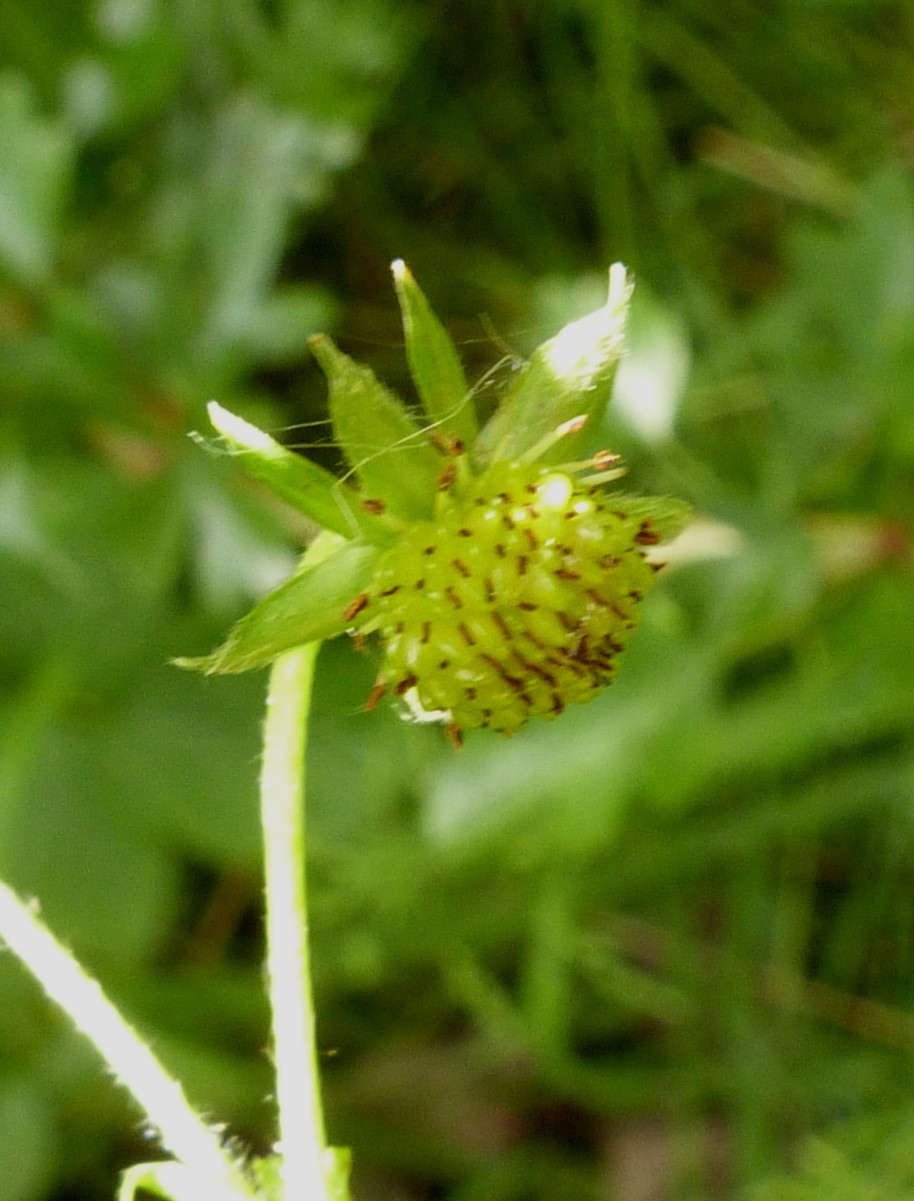
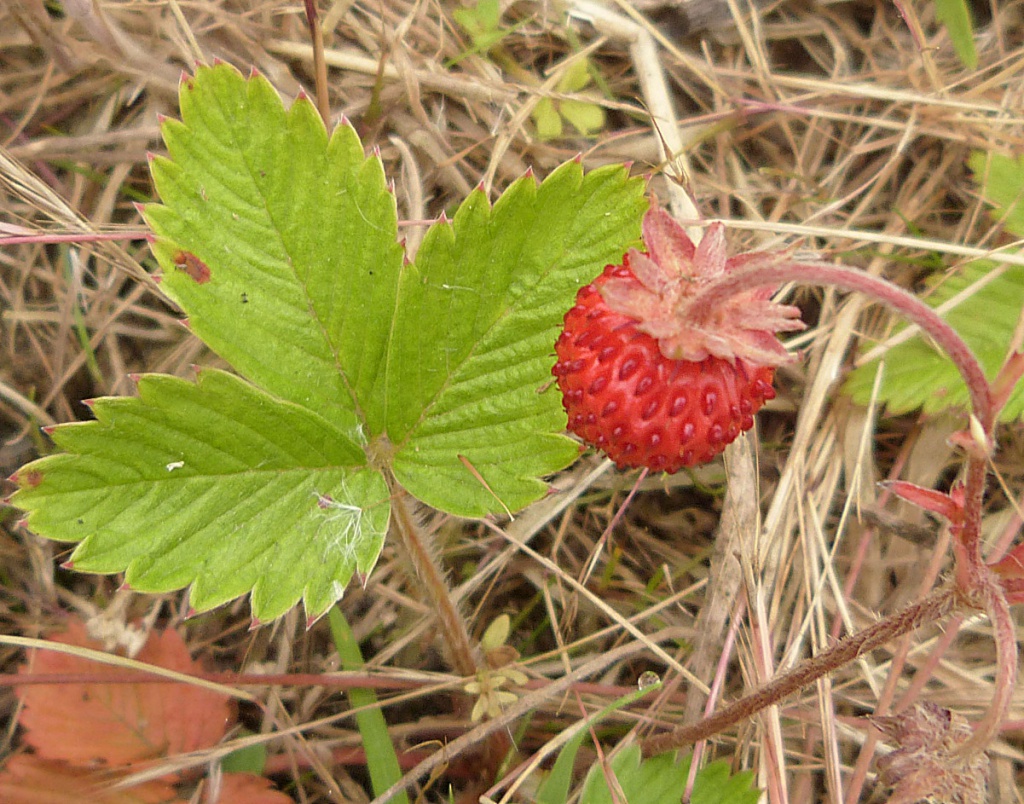
Low to short plant with long rooting runners. Leaves in basal tufts, trifoliate, with bright green oval toothed leaflets. Flowers white, 12 to 18 mm in lax clusters, scarcely exceeding the leaves. Strawberry small with deflexed sepals.
Barren Strawberry (Potentilla sterilis) has grey-green leaves with the terminal tooth shorter than those either side

Terminal tooth of leaflet similar size to those either side
Photo of flowers and leaves (+ fruit if present)
Dry habitats, old railways, roadsides.
April to July.
Perennial.
Fairly frequent throughout Britain.
Fairly frequent in Leicestershire and Rutland. In The Flora of Leicestershire (Primavesi & Evans 1988) it was found in 118 of the 617 tetrads.
It has a national threat level, and therefore would qualify under this criterion for inclusion in the Rare Plant Register - however, it is often planted and escaping from cultivation. For this reason, it is not on the current RPR (Hall & Woodward, 2022), but is listed as 'data deficient' because it is not clear whether records are of introduced/escaped plants or natives.
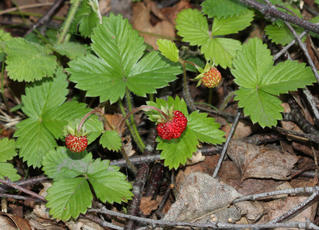 David Nicholls
New Lount
09 June 2011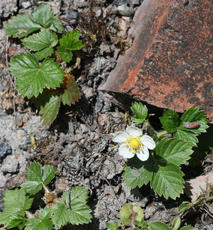 David Nicholls
New Lount
09 June 2011 David Nicholls
Bloody Oaks Quarry
08 July 2016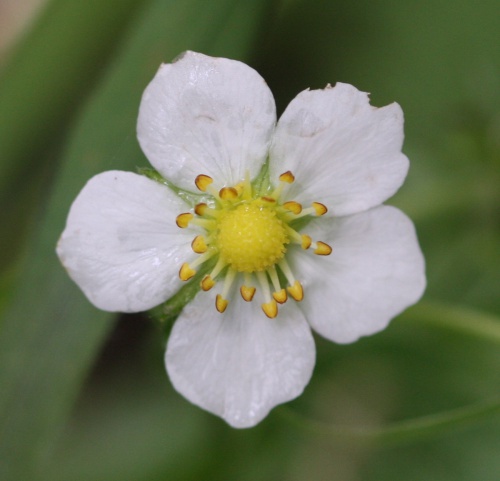 David Nicholls
The Brand, Woodhouse
15 June 2013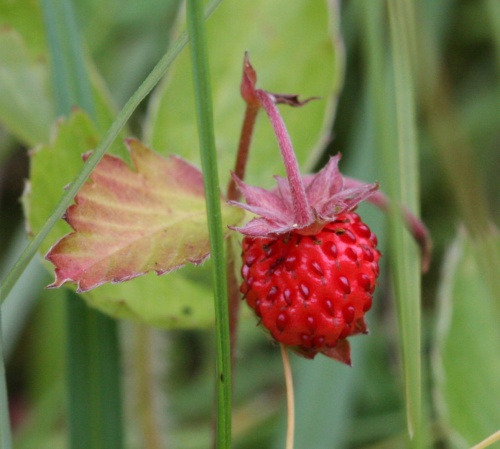 David Nicholls
Bloody Oaks
02 July 2015 David Nicholls
New Lount Nature Reserve
13 May 2016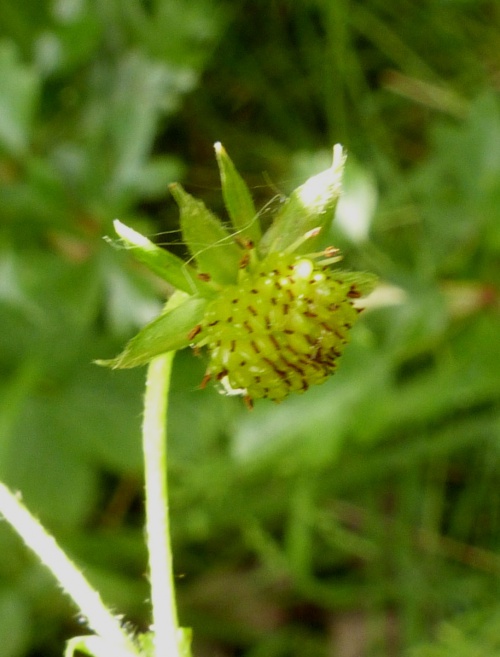 Graham Calow
Jubilee Walk, Leire
05 June 2014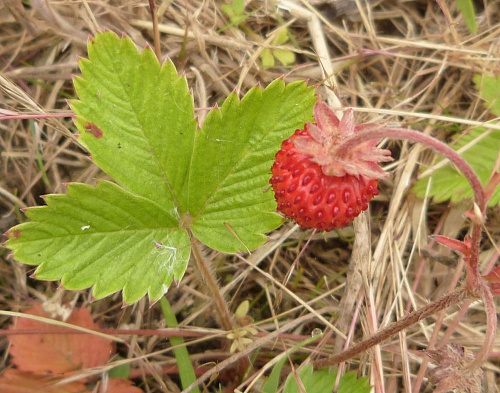 Graham Calow
Path near Huncote Road, Stoney Stanton
23 June 2016




Leicestershire & Rutland Map
Enter a town or village to see local records
MAP KEY:
Yellow squares = NBN records (all known data)
Coloured squares = NatureSpot records: 2025+ | 2020-2024 | pre-2020
UK Map
Additional images
No additional images available for this species.
All NatureSpot records
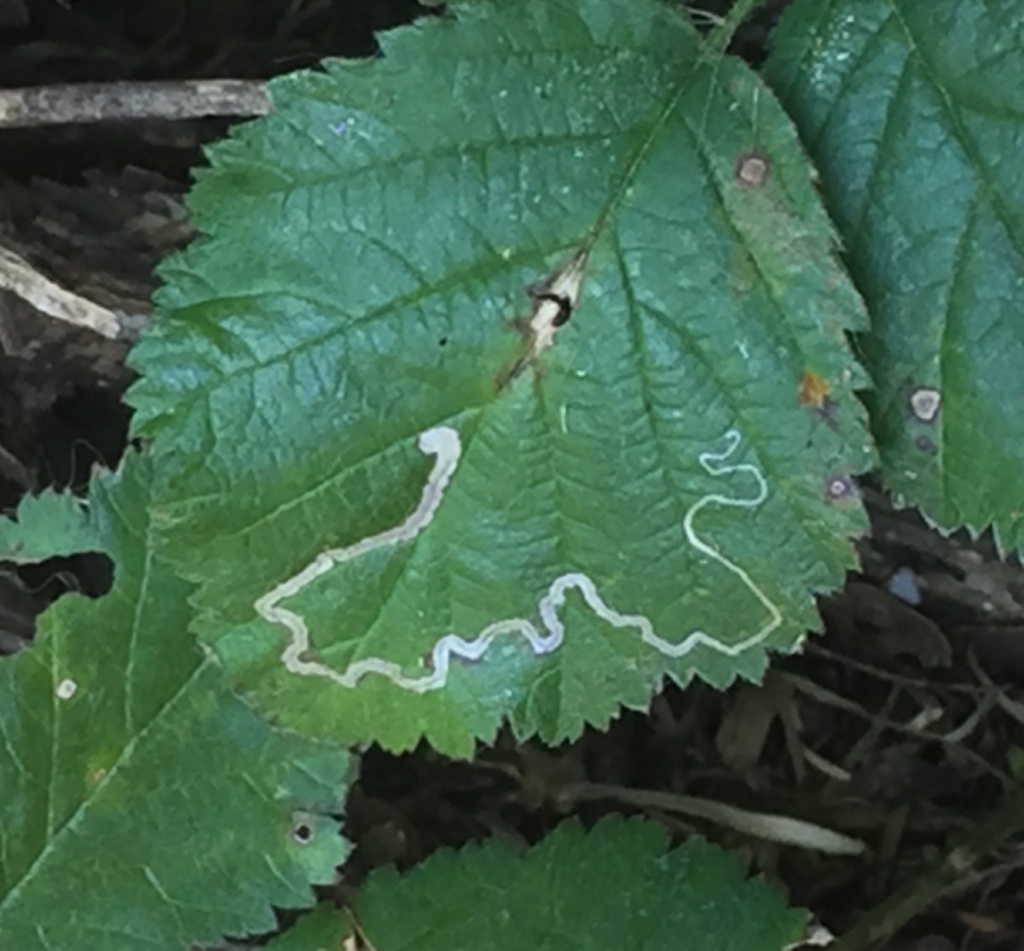
Stigmella aurella
There are a number of moths in the Stigmella genus and most look very similar. However their caterpillars feed on various plants creating leafmines that can help with identification. Stigmella aurella specialises on Bramble and the long, thin leafmines can be very common and are even recognisable in winter when they become white.
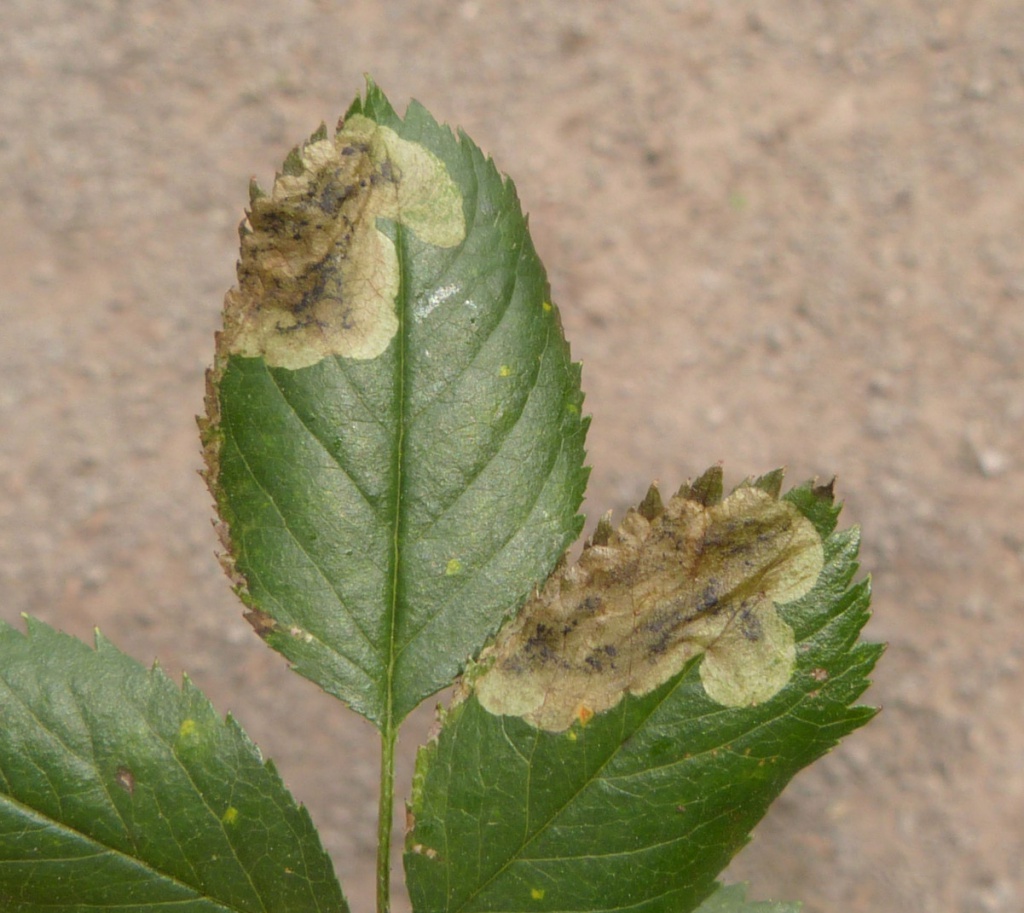
Agromyza sulfuriceps
The larva of the Agromyzid fly Agromyza sulfuriceps mines the leaves of various species in the Rosaceae family including Roses, Meadowsweet, Strawberry, Silverweed, Cinquefoil, Raspberry and Burnets. The mine starts as a long corridor, its initial part often along the leaf margin or a thick vein. Rather suddenly the corridor widens into a broad blotch. The corridor contains much frass, often in two distinct patches or lines.