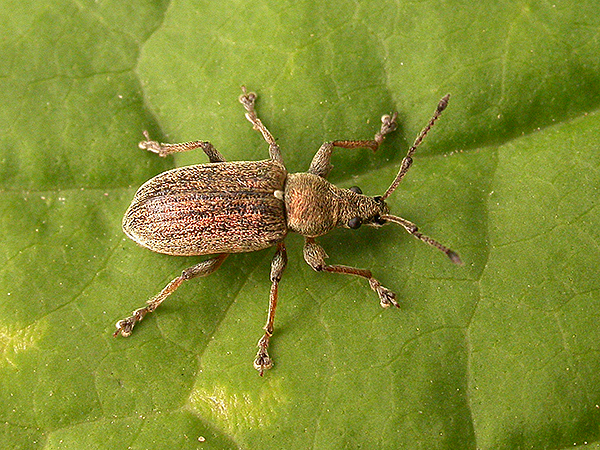
Phyllobius glaucus
Phyllobius glaucus
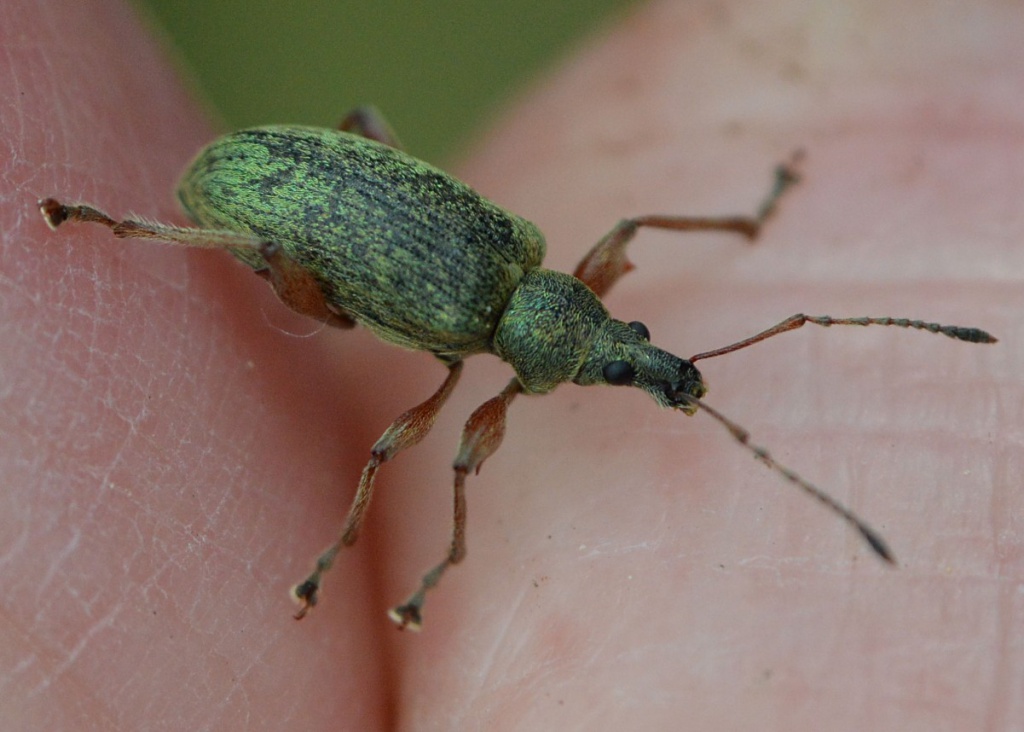
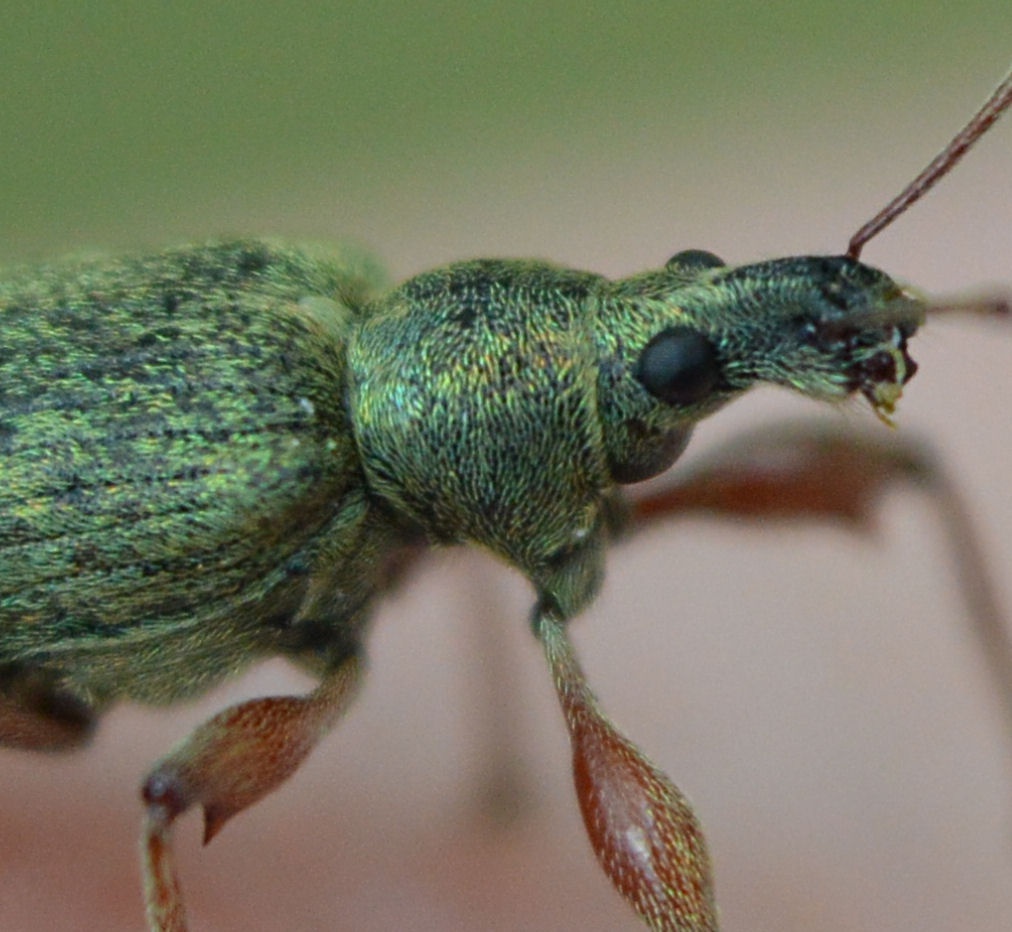
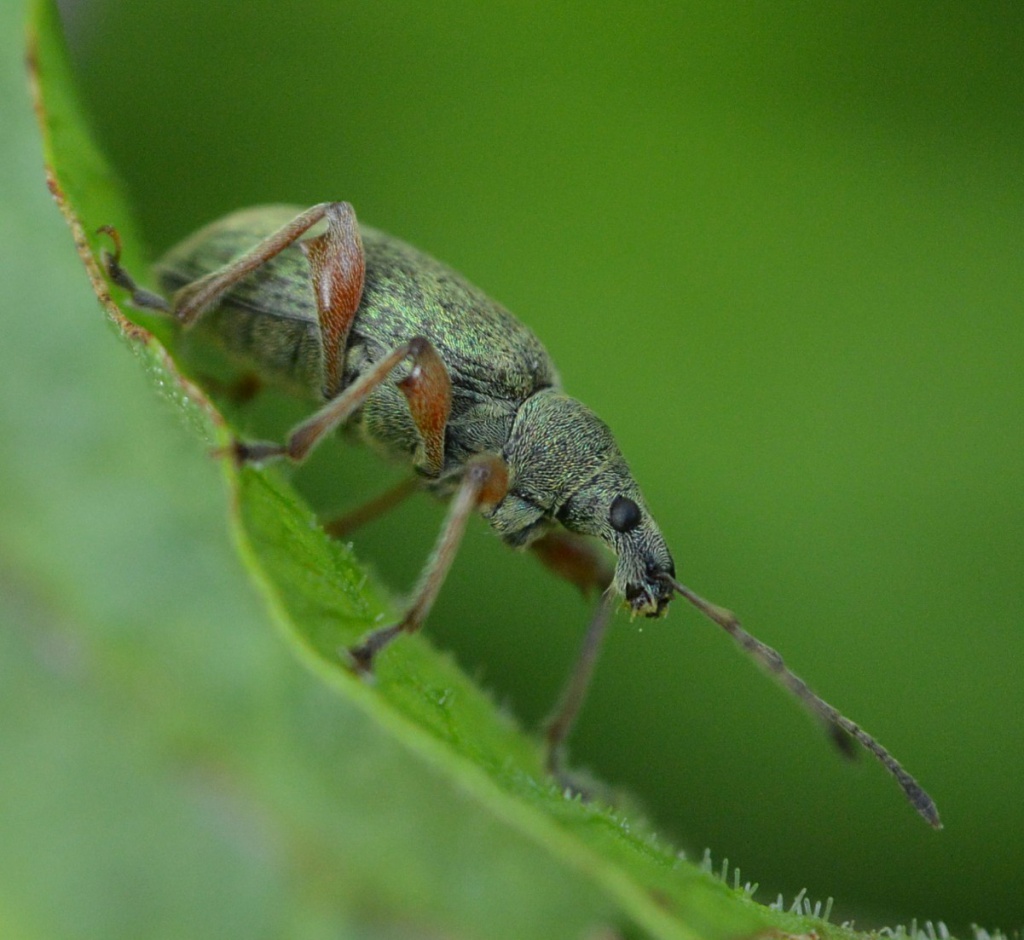
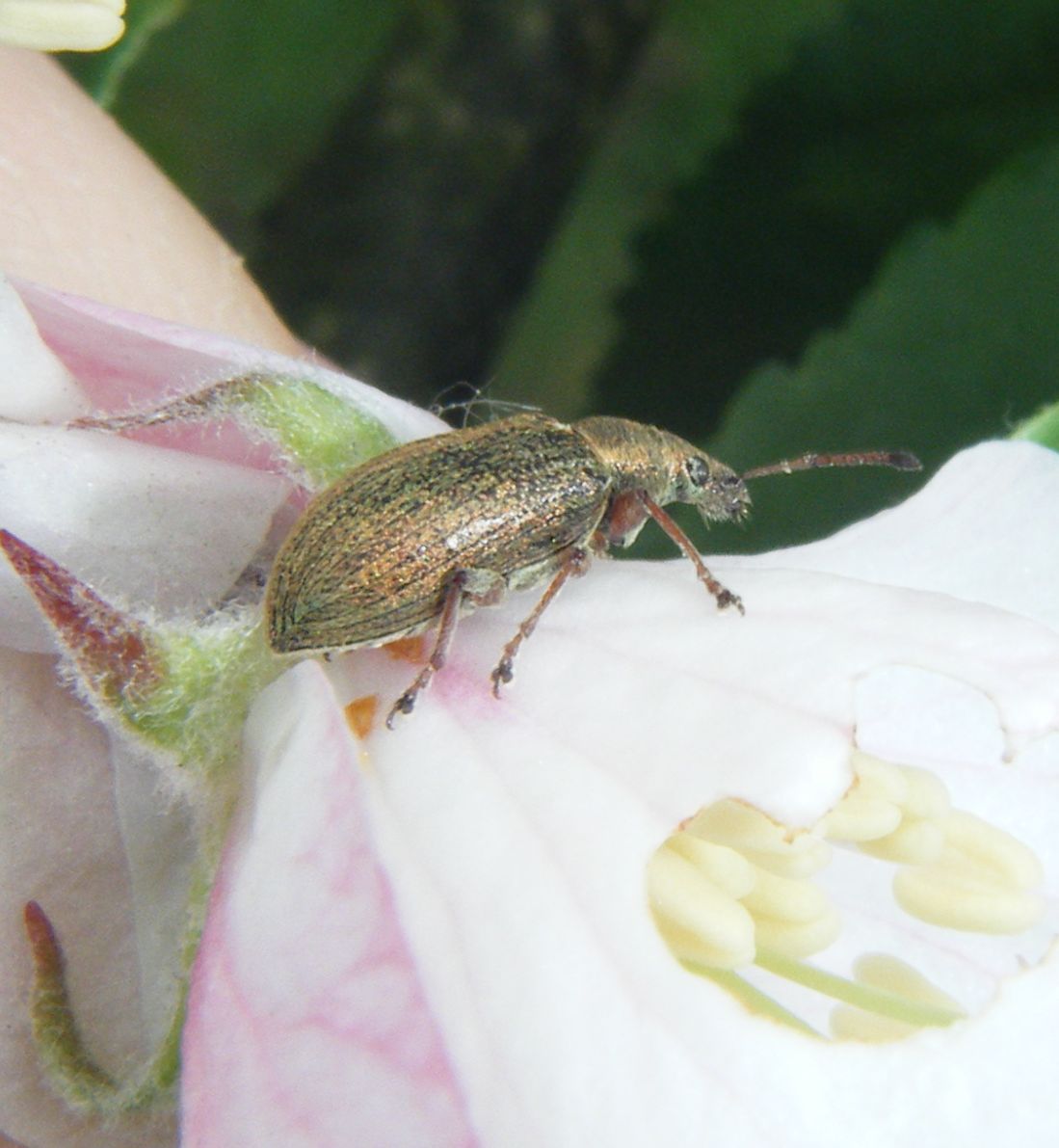
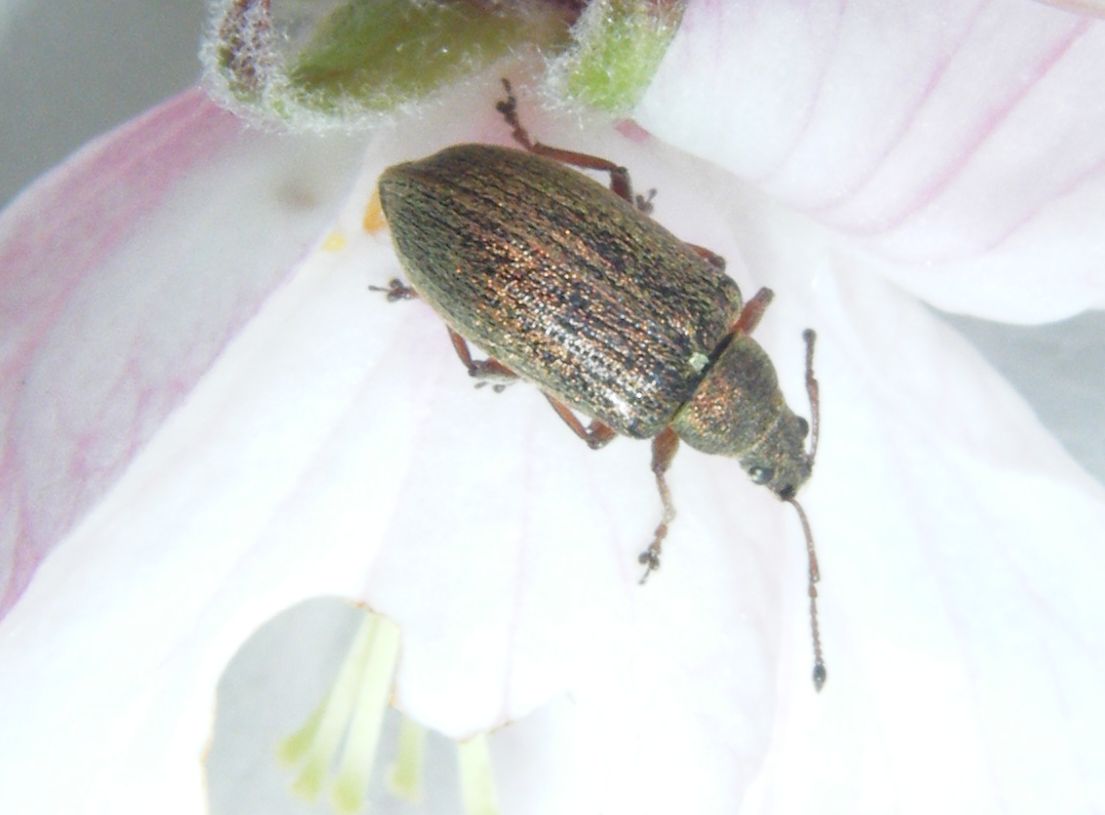
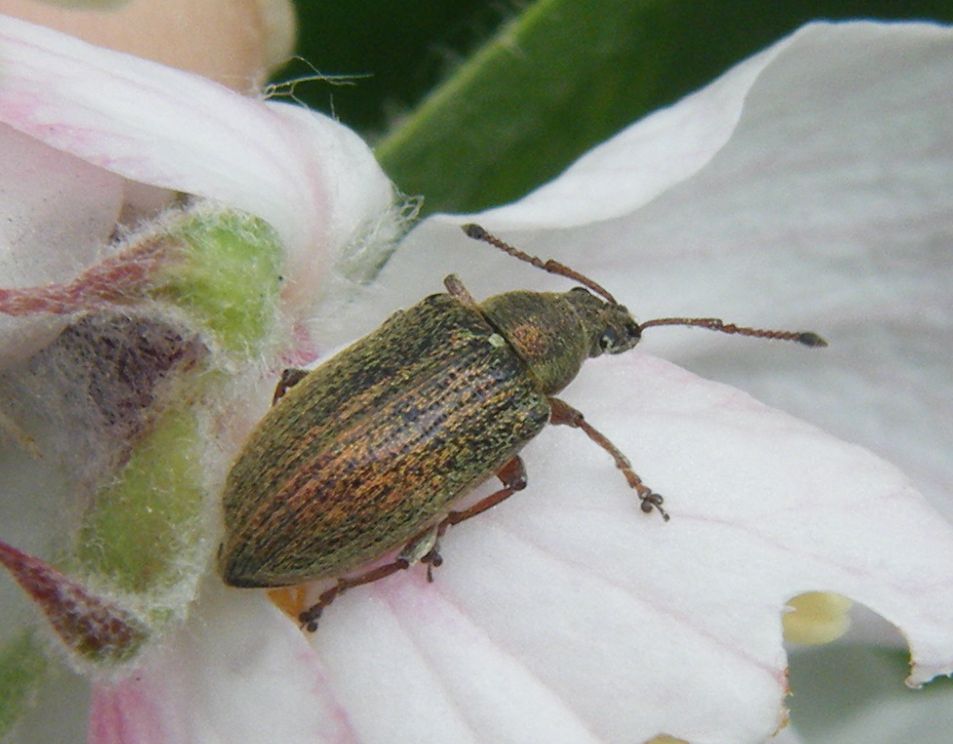
7.5 to 10 mm. A large weevil, similar to P. pomaceus but the femora are pale and its scales are pointed.
See our ID Aid below.

Phyllobius is a genus of broad-nosed weevils that are commonly found on low herbage and in trees during spring and summer. Most are covered in metallic green scales that give them a very attractive appearance. There are 9 species and most look similar but they can be separated by carefully comparing the range of features shown in the table below, either under a binocular microscope or with a x20 hand-lens.
Phyllobius weevils can be distinguished from the similar genus Polydrusus by looking where the antennae emerge from the rostrum. In Phyllobius the antennae emerge from the top whilst in Polydrusus they are positioned at the side. When looking directly down on the beetle it is usually clear to see.
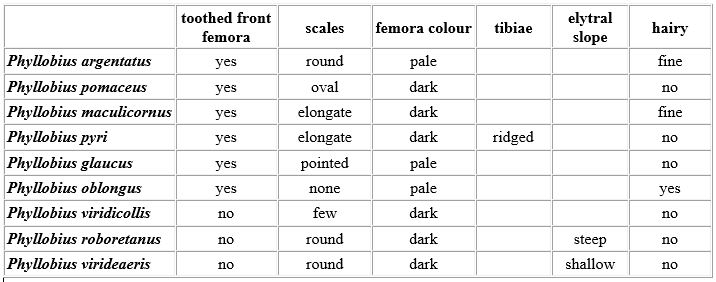
Unless identified by a recognised expert, photographic evidence is required and the specimen should be examined with a microscope. In the comments box, state the key or ID method used. Note the beetle's size and describe the identifying characters. It is advisable to retain the specimen in case further checks are needed.
An arboreal species, favouring Alder but found on a wide range of trees.
Late April to late June in the south and even later in the north.
Although of local occurrence this species is widespread and may be common where found, there are records throughout England but the highest density is from across Wales.
Occasional in Leicestershire and Rutland.
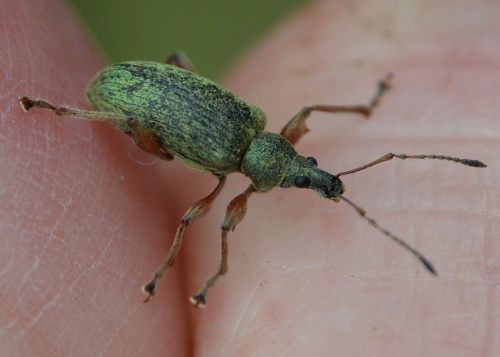 Barbara Cooper
Ulverscroft NR
10 May 2018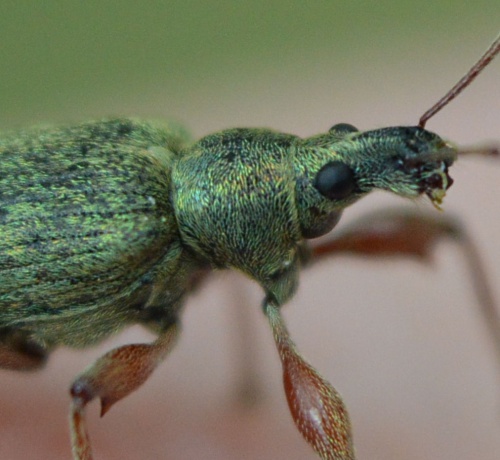 Barbara Cooper
Ulverscroft NR
10 May 2018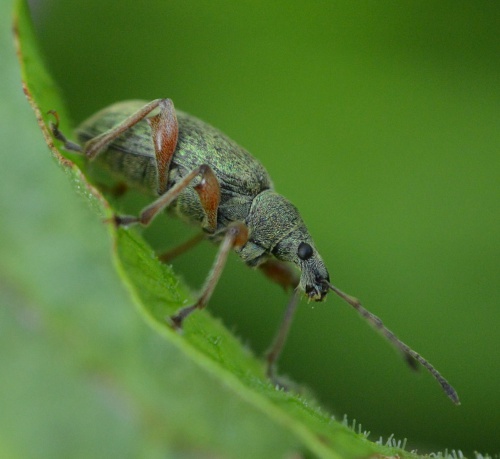 Barbara Cooper
Ulverscroft NR
10 May 2018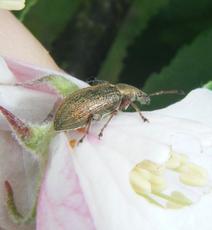 Graham Calow
Stoney Stanton
29 April 2011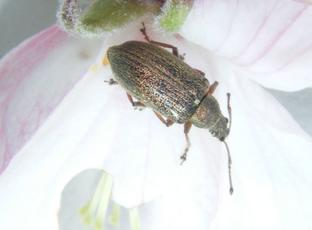 Graham Calow
Stoney Stanton
29 April 2011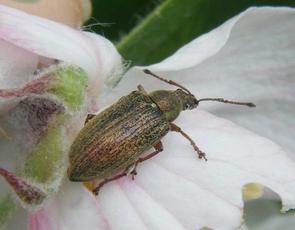 Graham Calow
Stoney Stanton
29 April 2011
Leicestershire & Rutland Map
Enter a town or village to see local records
MAP KEY:
Yellow squares = NBN records (all known data)
Coloured squares = NatureSpot records: 2025+ | 2020-2024 | pre-2020
UK Map
Additional images