Panzer's Nomad Bee
Panzer's Nomad Bee - Nomada panzeri
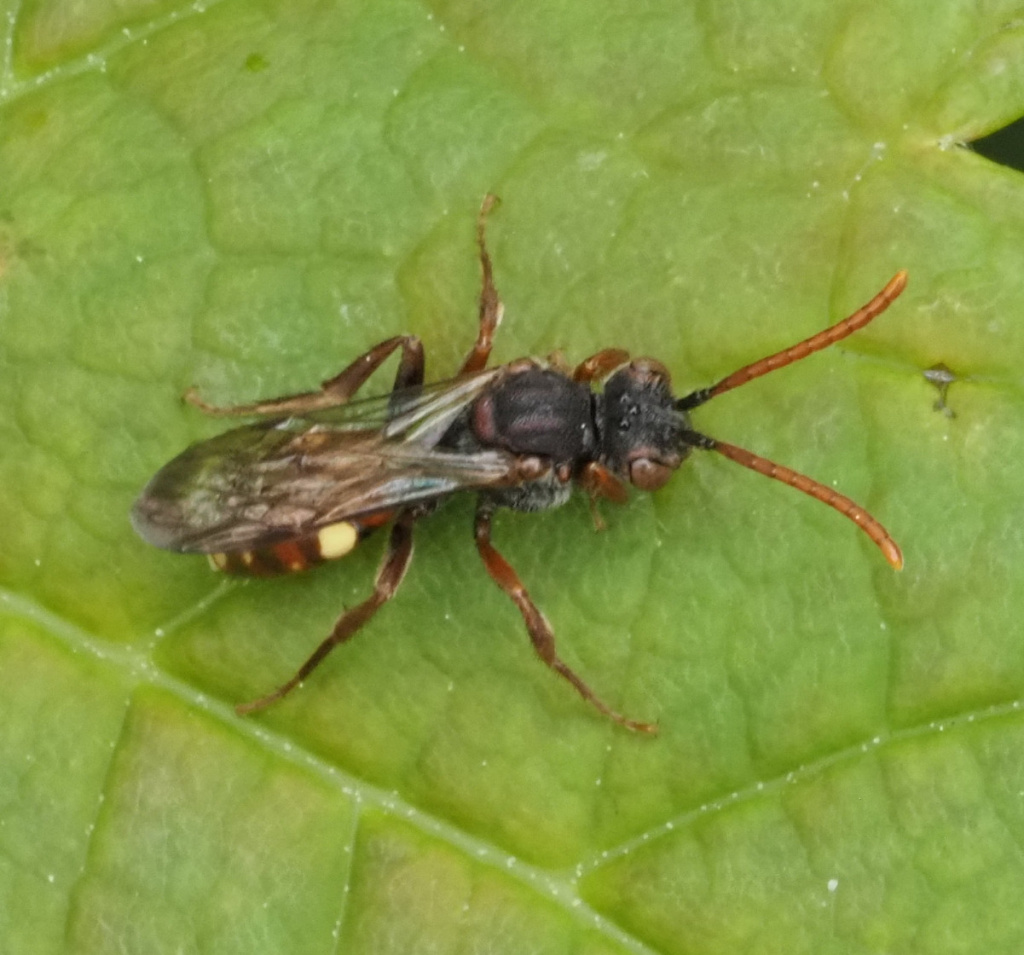
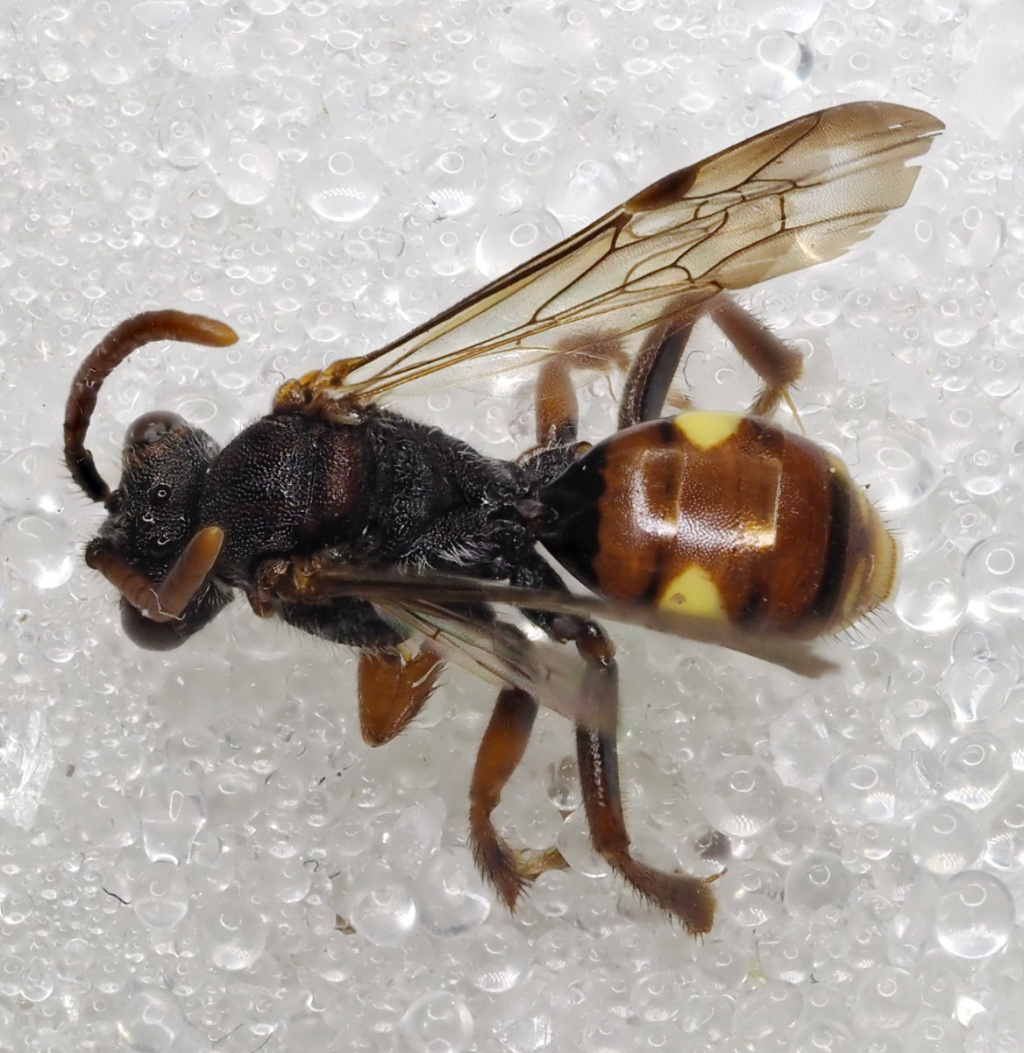
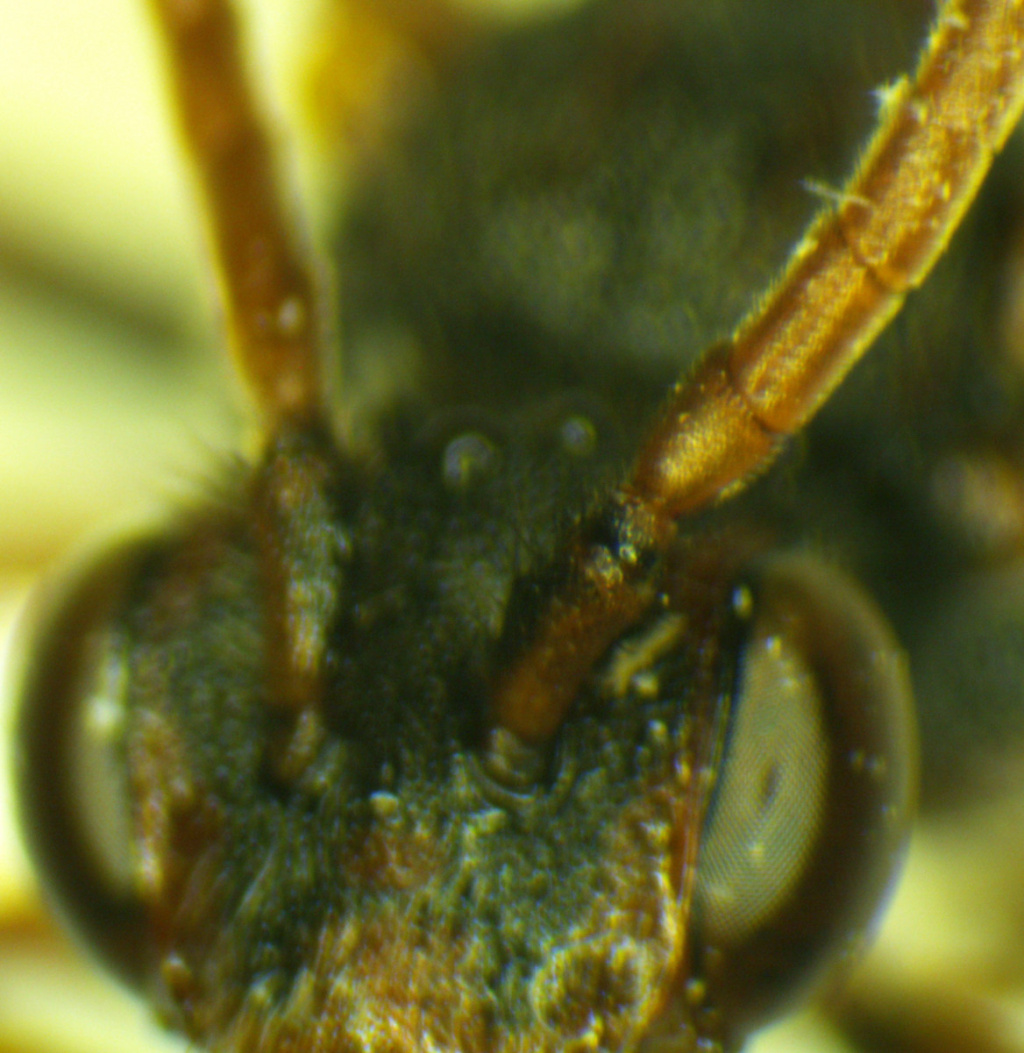
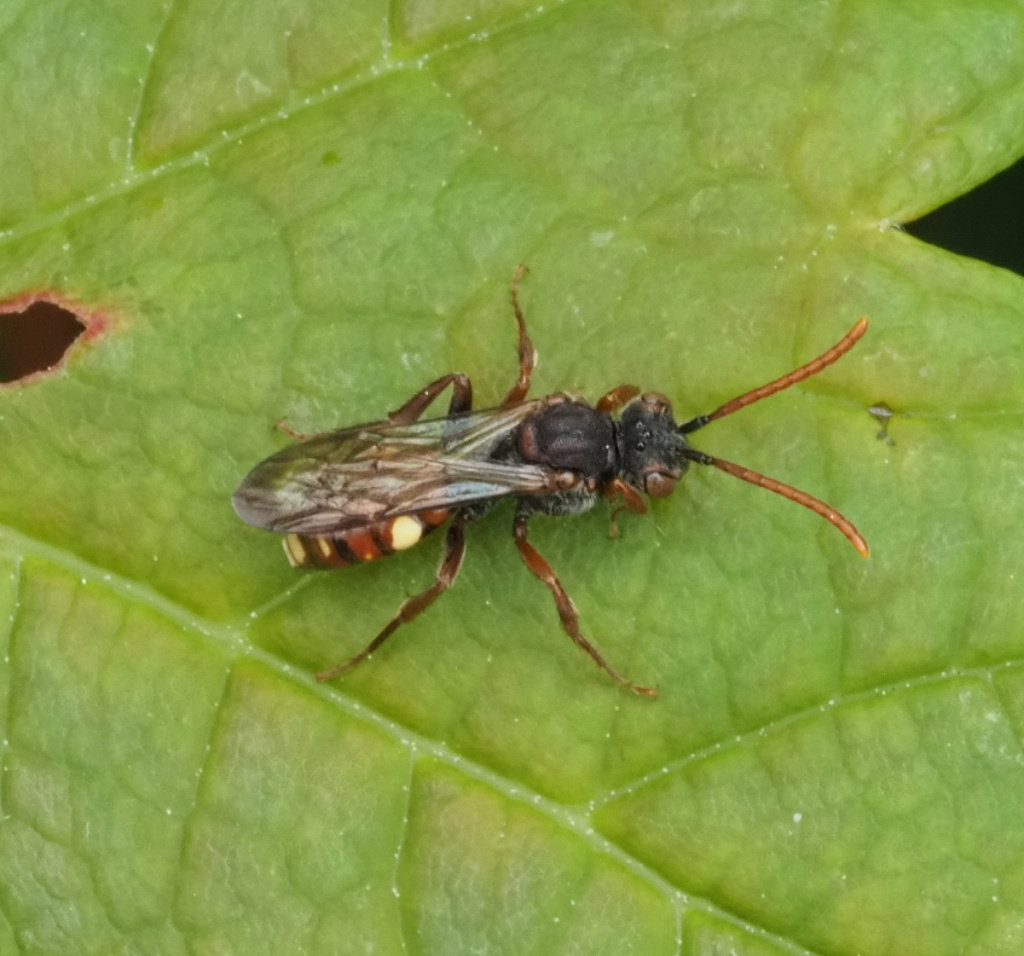
A medium-sized red, black and yellow nomad bee that closely resembles N. flava. Females are generally darker looking, with darker wing margins, plus silvery (rather than yellowish) hairs on the propodeum, hind coxae and sides of the thorax. The antennae are slightly shorter, and the outstanding bristly hairs on the face are blackish rather than yellowish. The hind face of the propodeum is often extensively red-marked. Males average smaller and darker-looking than flava. The fringe of hairs beneath the mid femora is longer - about as long as the greatest width of the femur (only half as long in flava) but some males are very difficult to separate.
Nomada flava.

Most solitary bees and wasps are difficult to identify, and can rarely be identified from photos taken in the field. All red-rated records should include a photo, or set of photos, showing the key characters, which may require the specimen. Please include a face shot, side, top and wings. Note whether male or female, explain how the specimen met the key characters and the key used. We will accept records identified by a recognised local or national expert, or that have been identified via the BWARS’ Facebook noting the name of the person/organisation identifying the record (e.g. ‘Stuart Roberts, BWARS Facebook’).
More strongly associated with woodland and moorland than Nomada flava.
Adults of N. panzeri fly from late March to June or July, peaking later in the north, especially where N. fucata is the host.
A cleptoparasite of some of the larger spring-flying Andrena bees.
Nomada panzeri is recorded over much of Britain. It is more frequent than Nomada flava in northern regions but less so in the south.
Status in Leicestershire and Rutland not known.
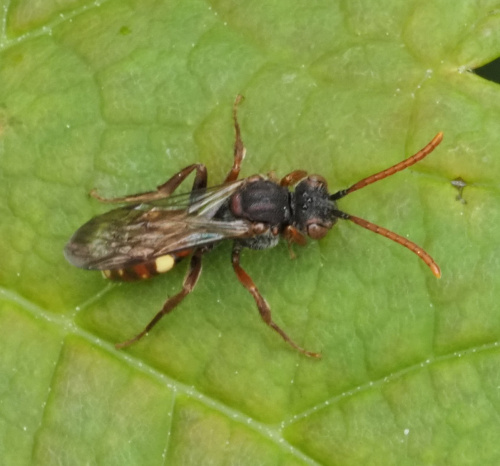 David Nicholls
Bloody Oaks Quarry NR
07 June 2023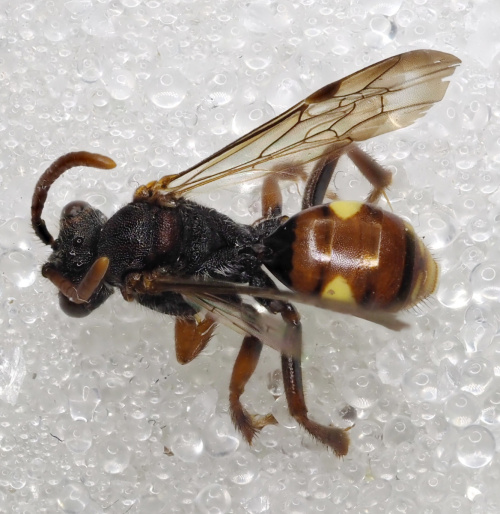 David Nicholls
Bloody Oaks Quarry NR
07 June 2023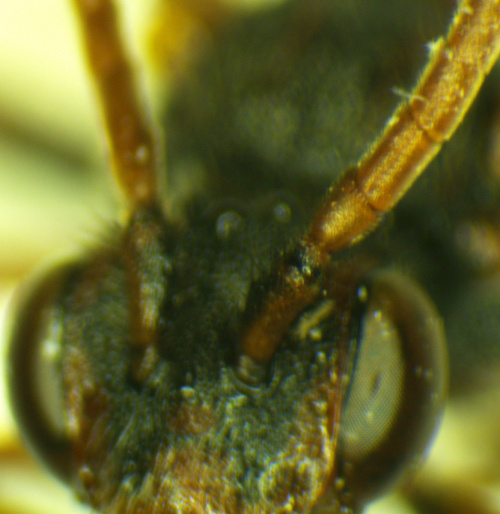 David Nicholls
Bloody Oaks Quarry NR
07 June 2023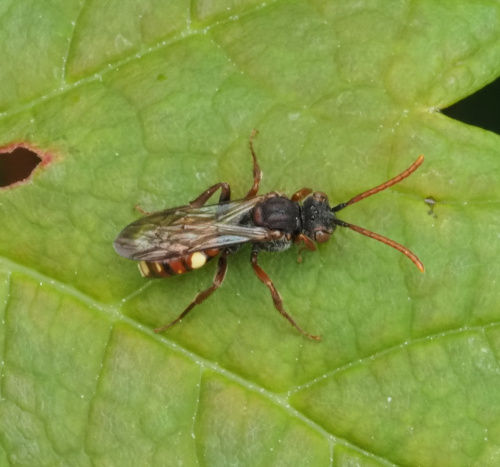 David Nicholls
Bloody Oaks Quarry NR
07 June 2023
Leicestershire & Rutland Map
Enter a town or village to see local records
MAP KEY:
Yellow squares = NBN records (all known data)
Coloured squares = NatureSpot records: 2025+ | 2020-2024 | pre-2020
UK Map
Additional images
No additional images available for this species.