Tartarian Honeysuckle
Tartarian Honeysuckle - Lonicera tatarica
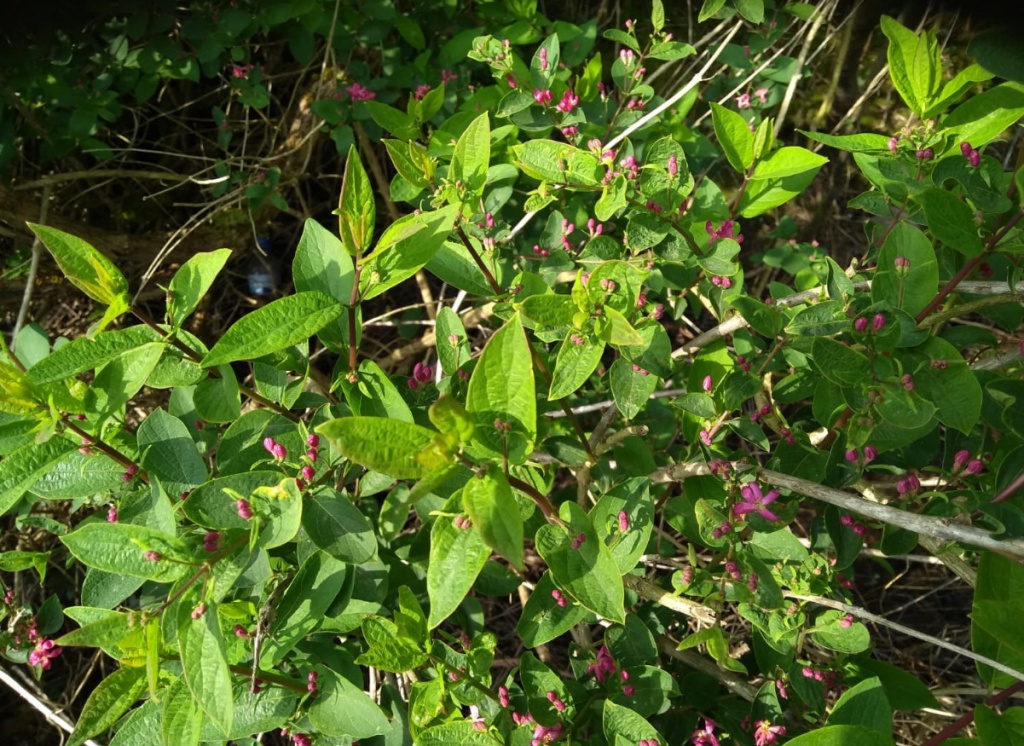
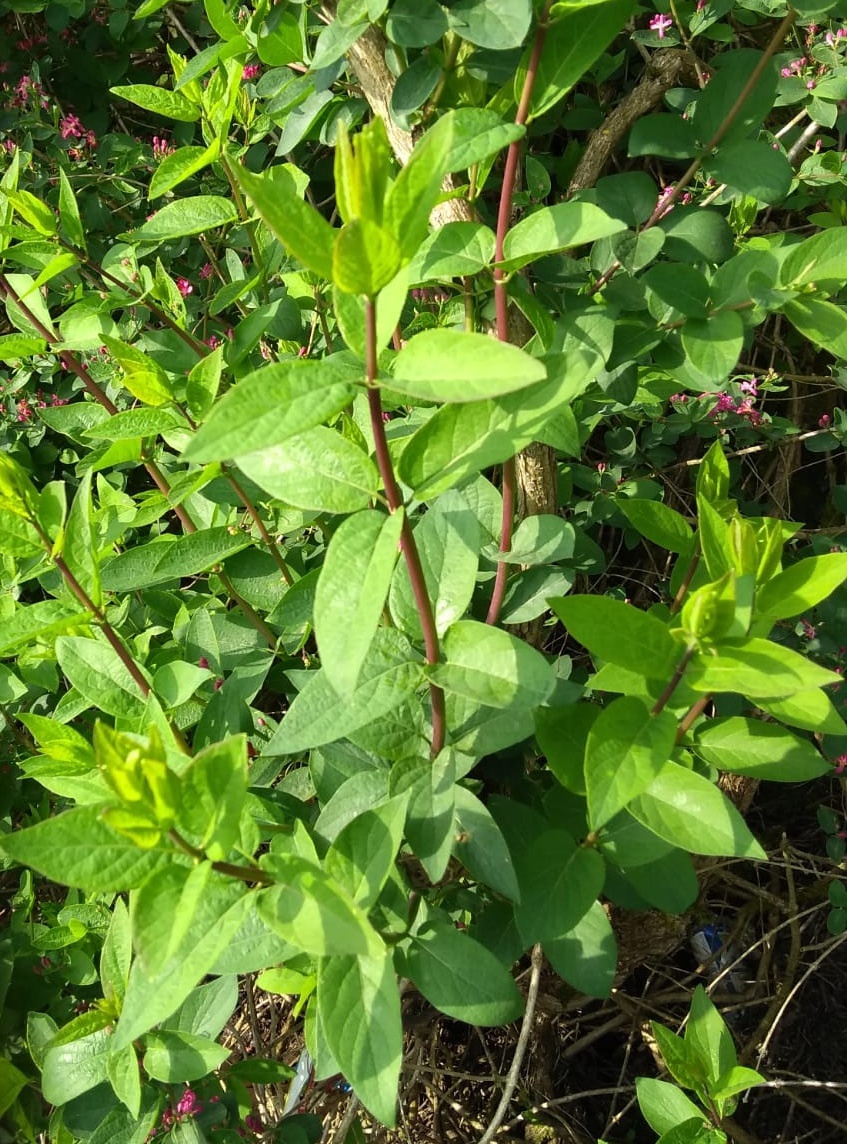
A bushy, deciduous shrub to 2 m tall with pairs of oval, mid- to dark green untoothed leaves 3 to 6 cm long. It has the usual tubular honeysuckle flowers usually borne in pairs, and which are about 1.5 cm long with their stamens and styles protruding They are often pink or reddish pink in colour, although may be paler. The flowers are followed by red berries borne in pairs.

Unless identified by a recognised expert, a photo is required. If the photo doesn't show the key ID features then in the comments box describe the size and identifying characters you have observed.
Occurs as an escape from cultivation, either as a throw out or bird-sown in hedges and rough ground where it can establish and become naturalised.
Flowers borne in late spring and early summer.
Deciduous shrub.
Widespread scattered records in Britain.
Rarely recorded in the wild in Leicestershire and Rutland.
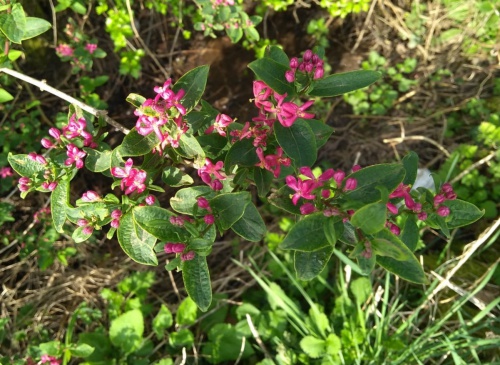 David Nicholls
Bagworth Heath, road verge
11 April 2020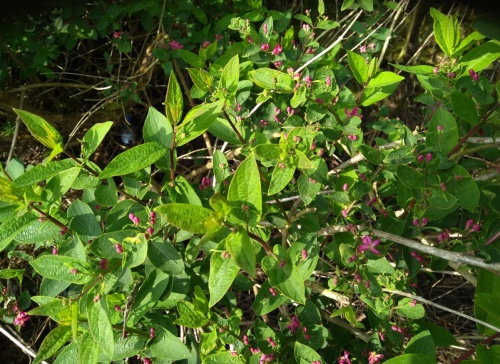 David Nicholls
Bagworth Heath, road verge
11 April 2020 David Nicholls
Bagworth Heath, road verge
11 April 2020

Leicestershire & Rutland Map
Enter a town or village to see local records
MAP KEY:
Yellow squares = NBN records (all known data)
Coloured squares = NatureSpot records: 2025+ | 2020-2024 | pre-2020
UK Map
Additional images
No additional images available for this species.
All NatureSpot records

Rhopalomyzus lonicerae
The primary host of thie aphid Rhopalomyzus lonicerae is Honeysuckle, where is lives within a gall-like, crumpled leaf in spring. The secondary host are grasses, especially Phalaris. It is a small, pale creamy aphid, the body length of the adult aptera is 2.0 to 2.6 mm.