Ground-elder
Ground-elder - Aegopodium podagraria
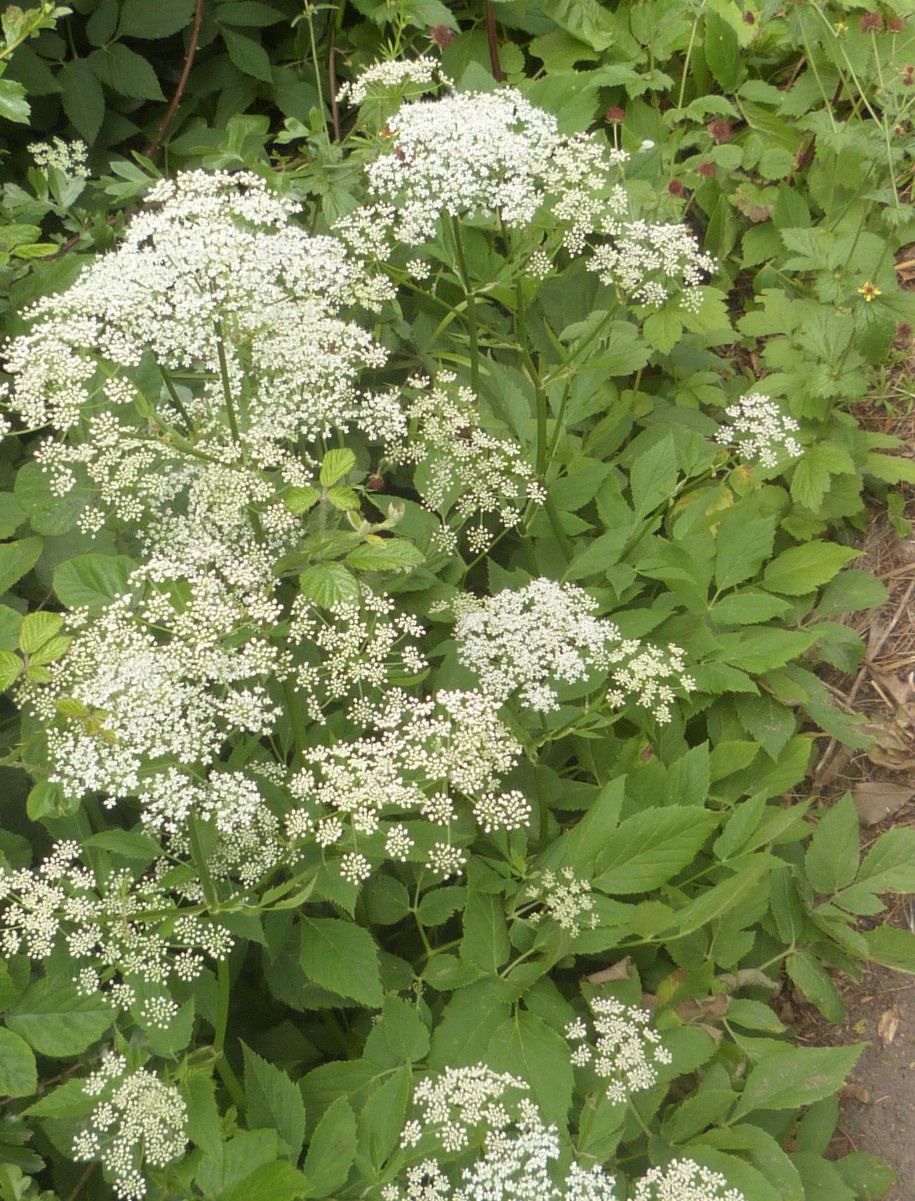
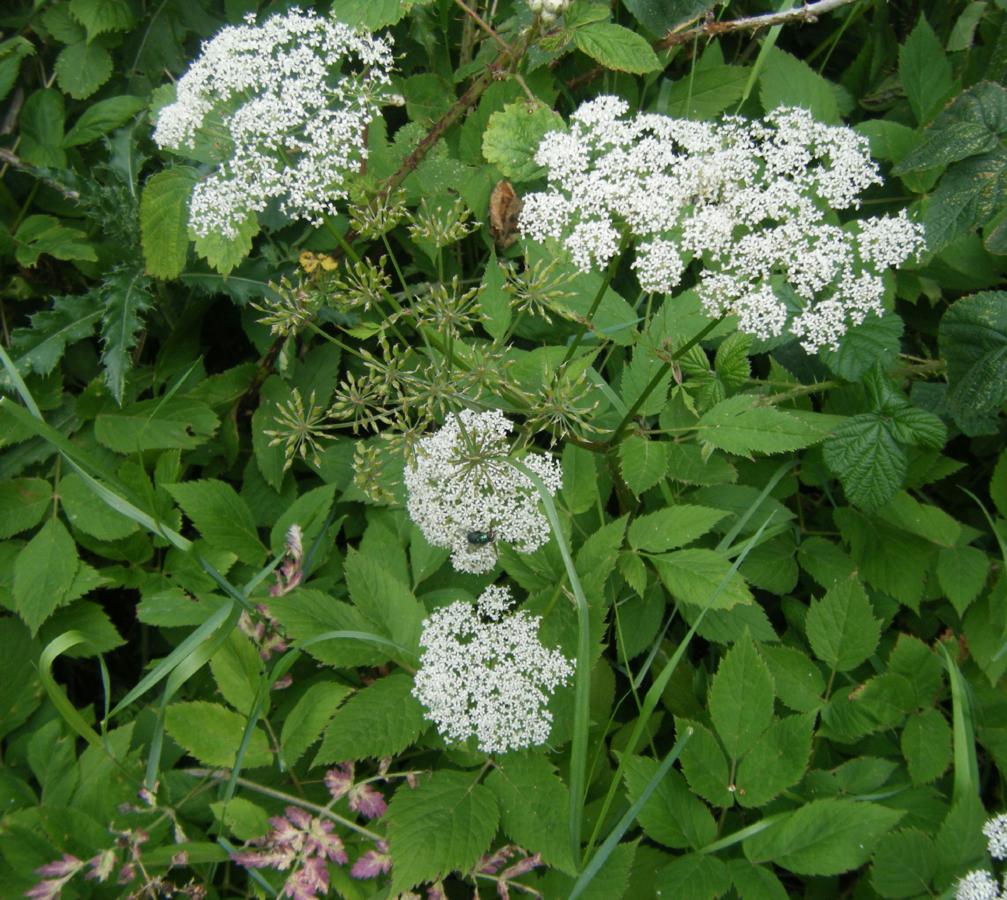
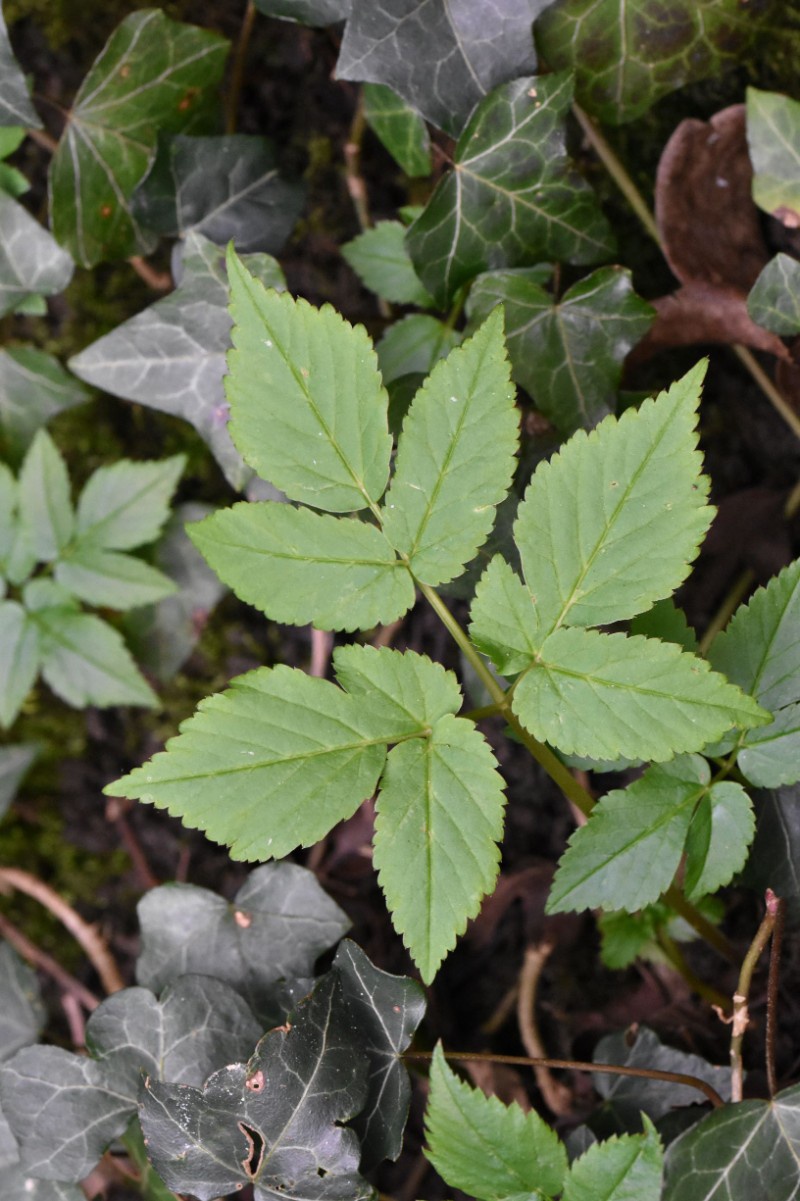
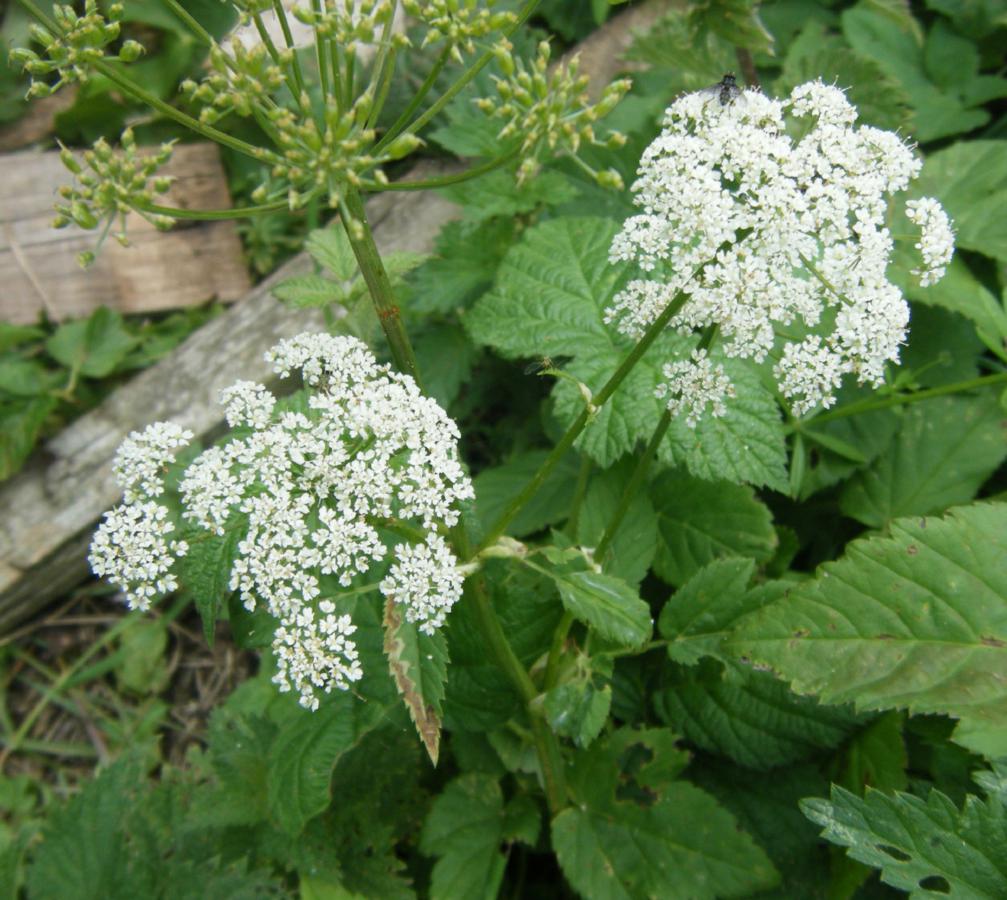
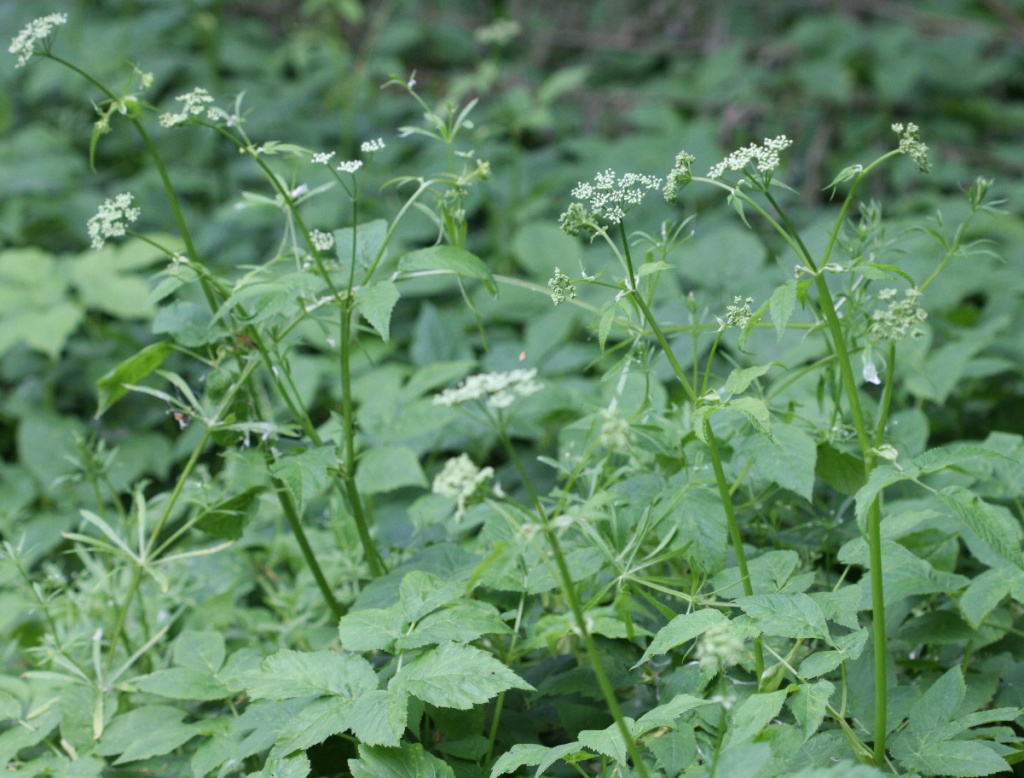
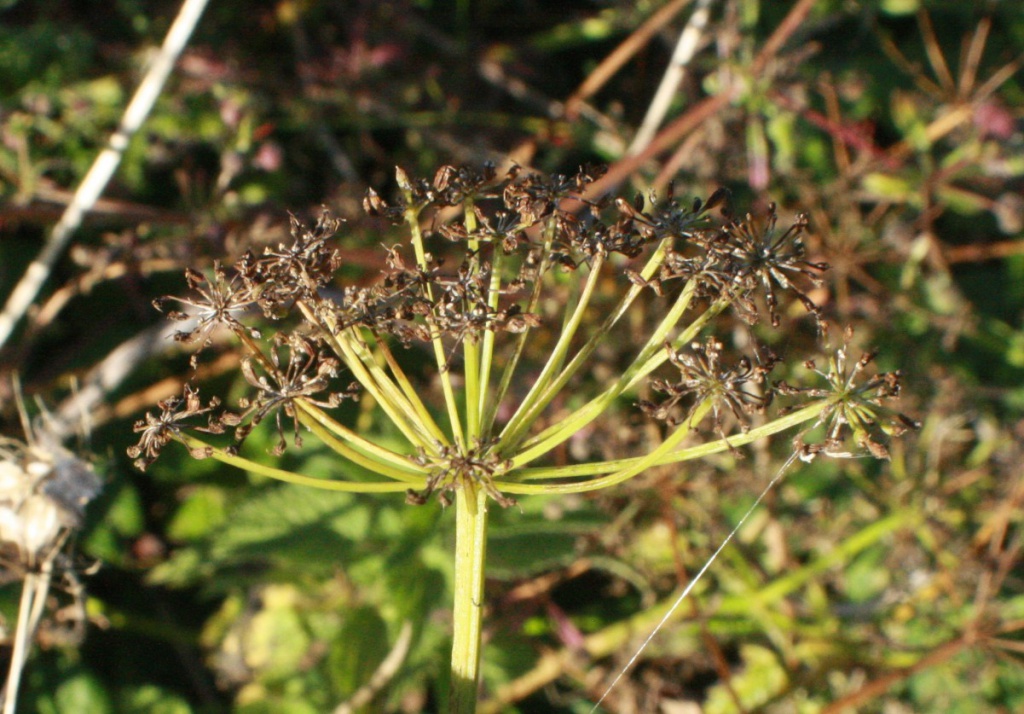
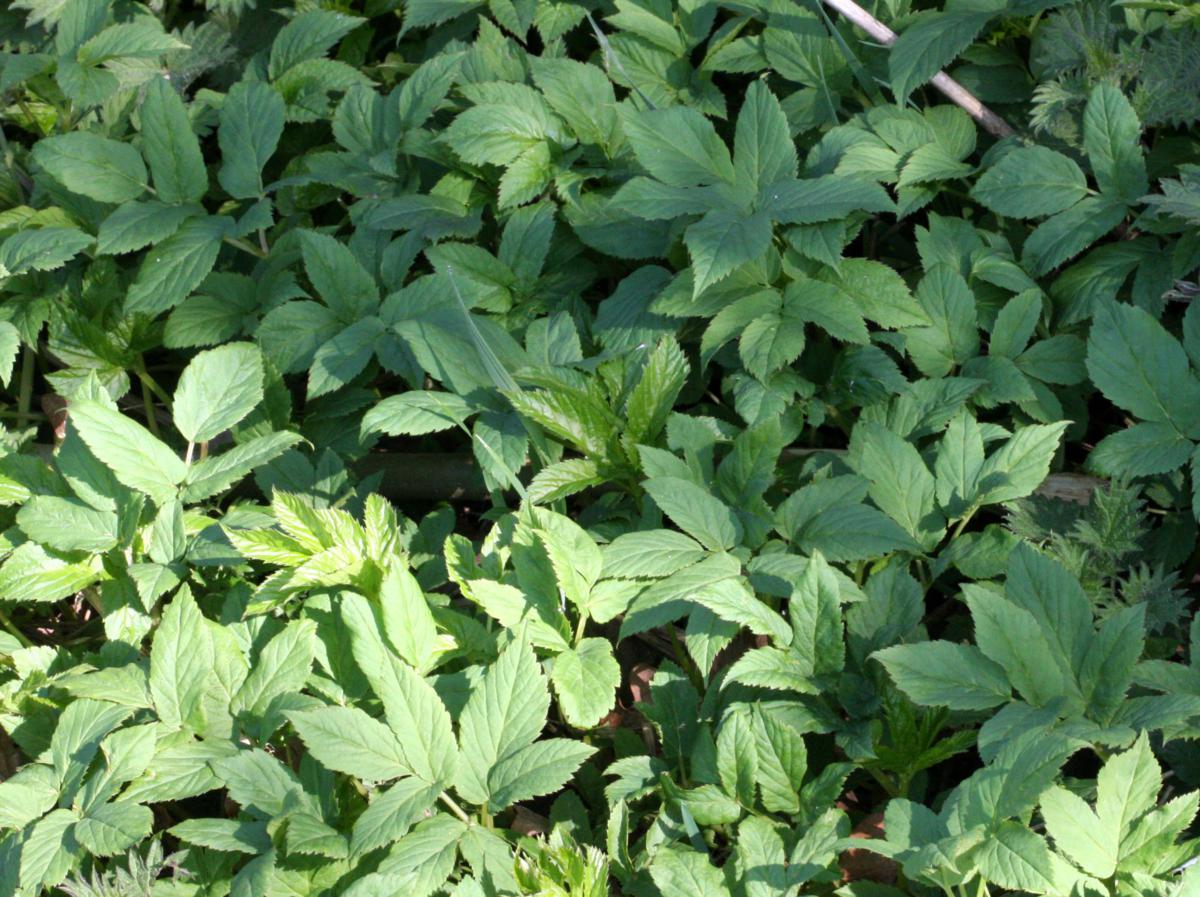
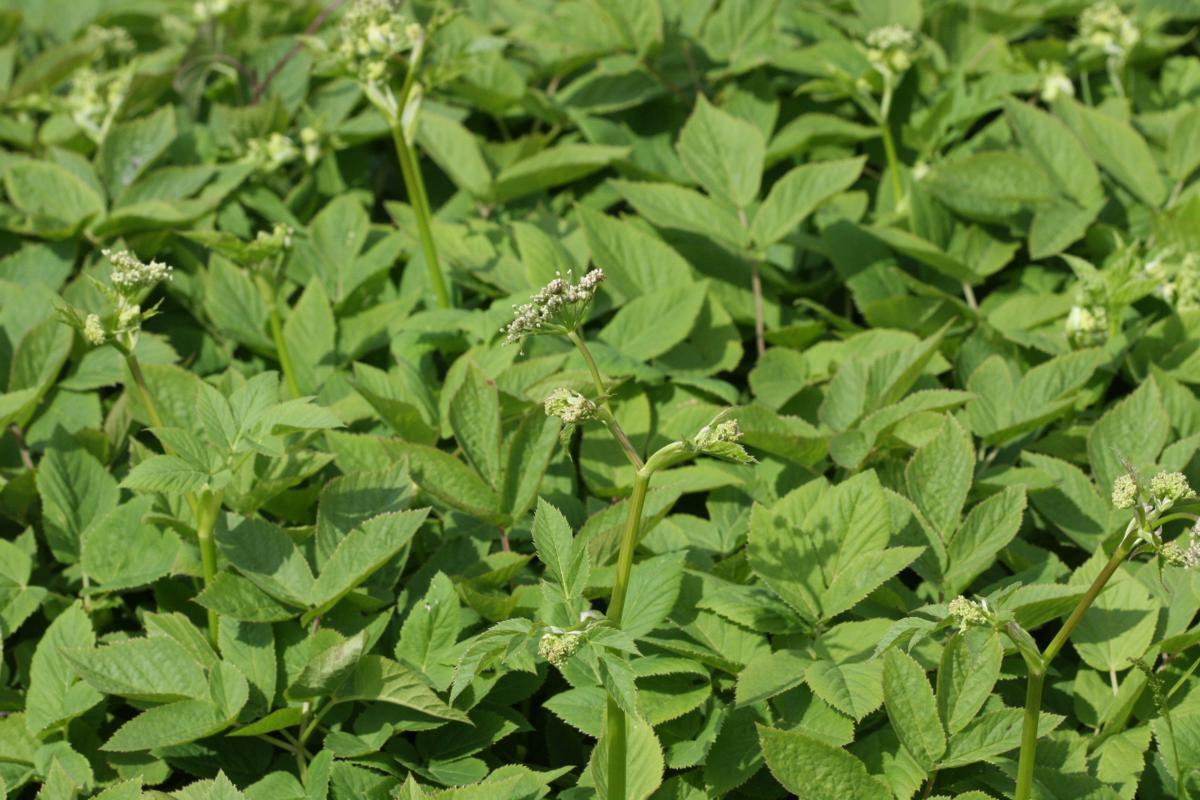
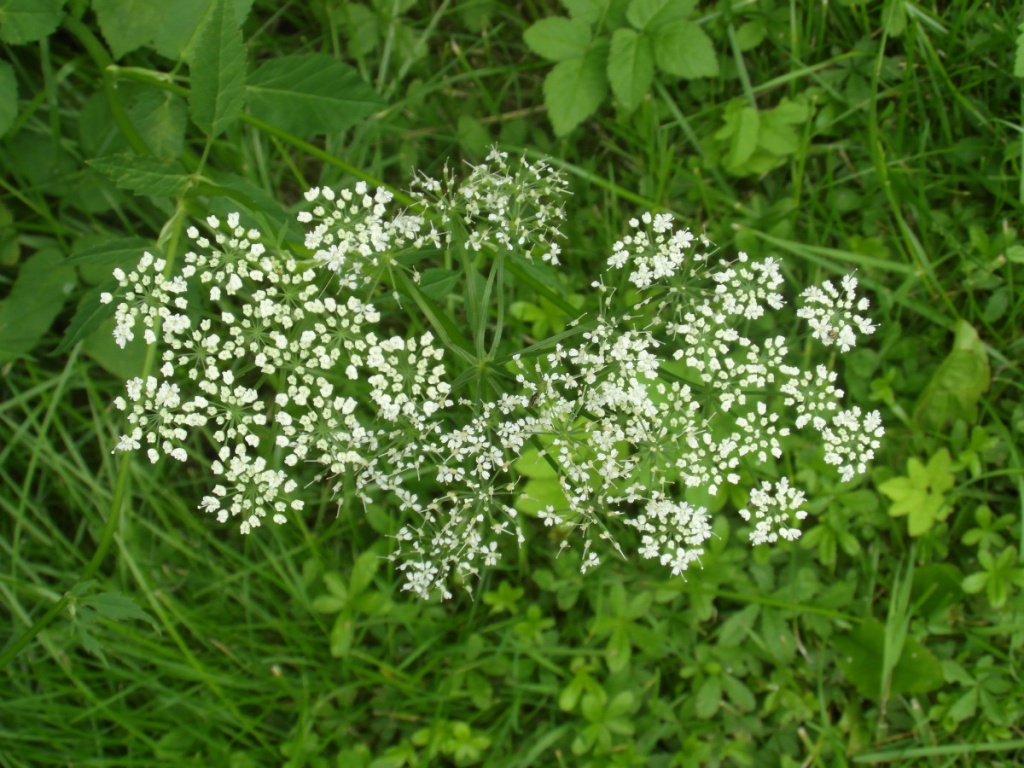
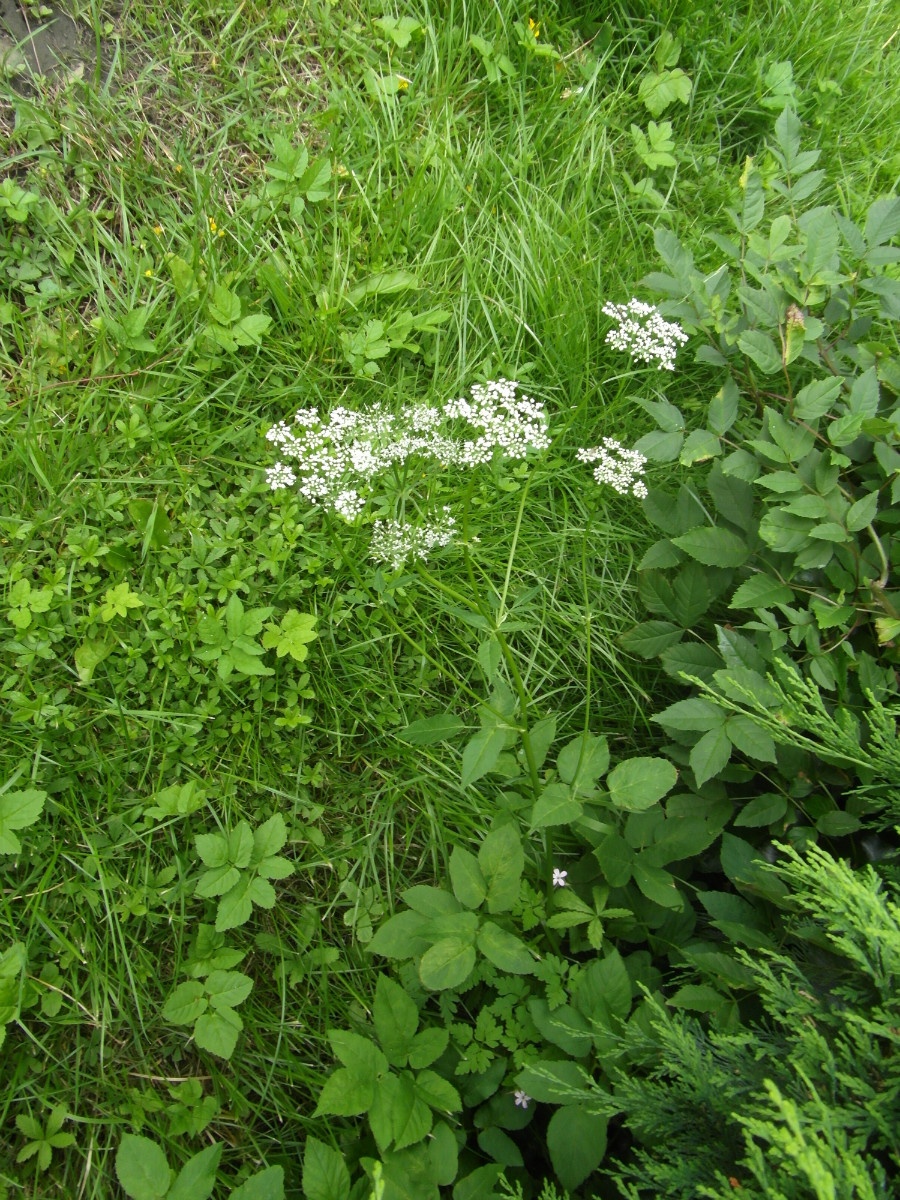
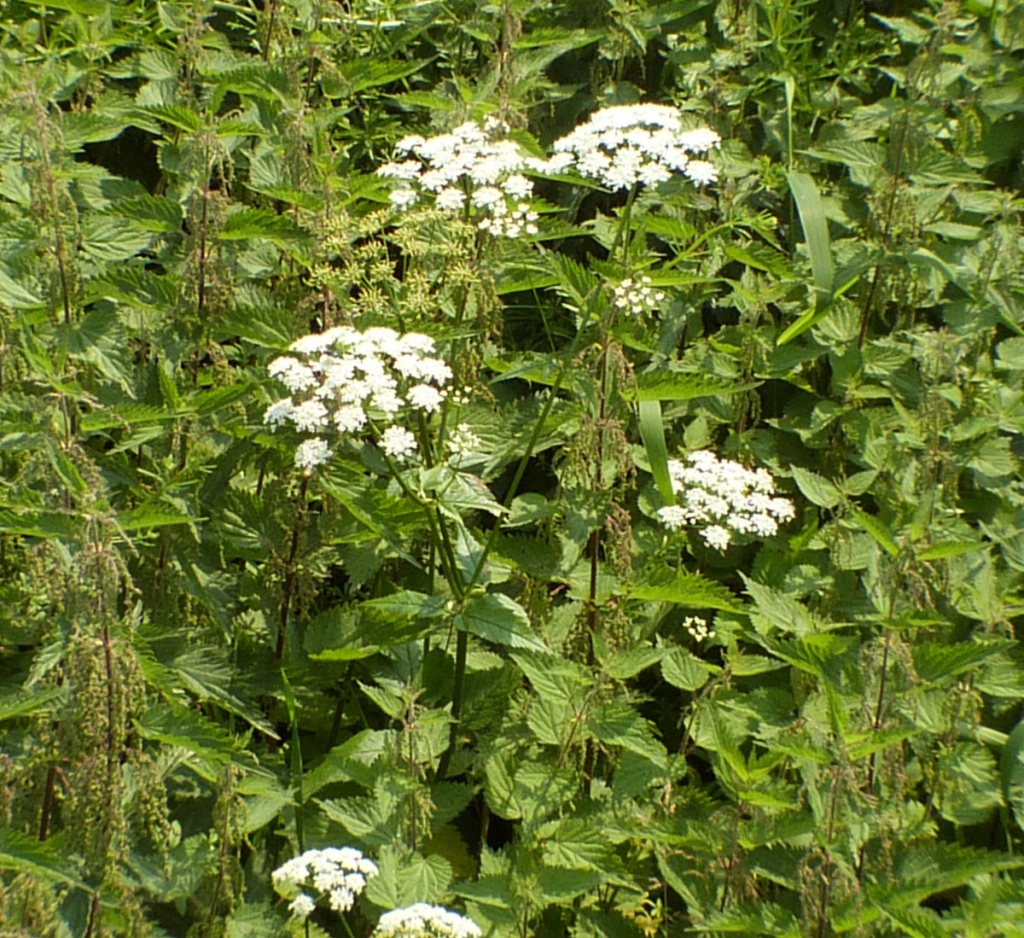
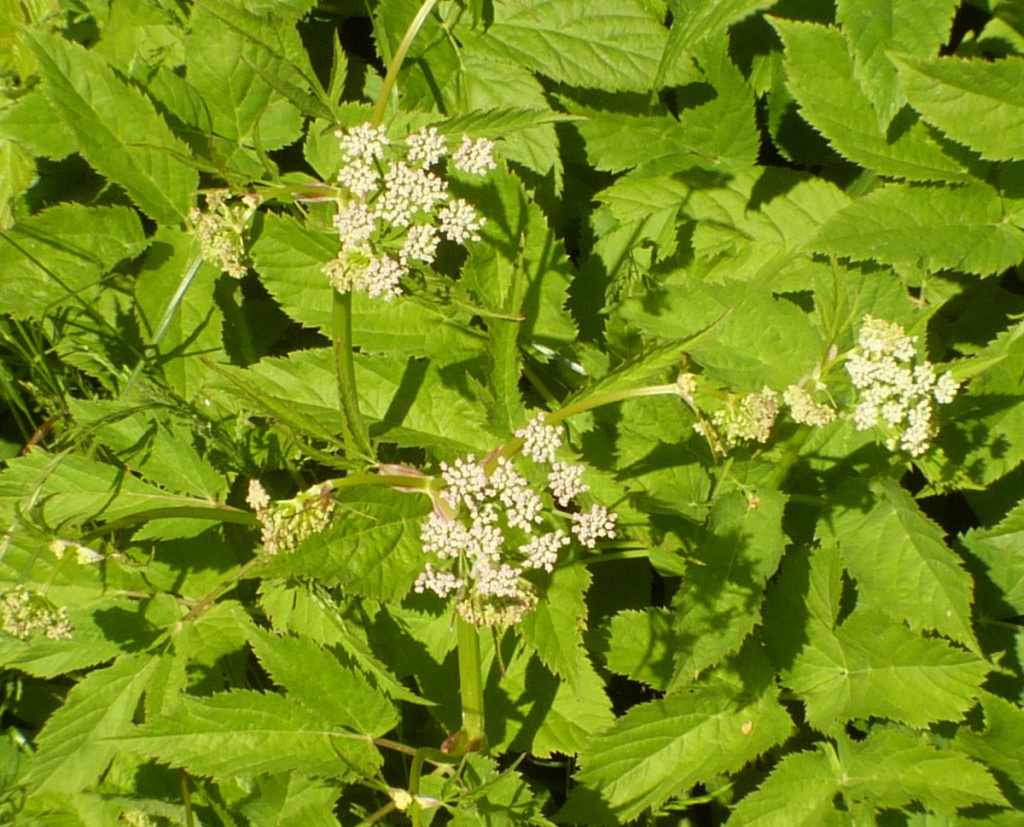
Vigorous medium to tall rhizomatous plant that is often patch forming. Toothed uppermost leaves are paired and have three toothed leaflets and short, inflated stalks. Flowers white 2 to 3 mm in umbels of 2 to 6 cm each umbel having 10 to 20 rays.

Cultivated land and gardens, shady places.
May to August.
Perennial.
Common throughout Britain except the west of Scotland.
Common (and sometimes invasive) in Leicestershire and Rutland. In the 1979 Flora survey of Leicestershire it was found in 459 of the 617 tetrads.
In the current Checklist (Jeeves, 2011) it is listed as Alien (archaeophyte), frequent
 Sharnford Road Sapcote SP 4912 9318 (taken 15.6.2007).JPG) Graham Calow
Graham Calow
Sapcote
15 June 2007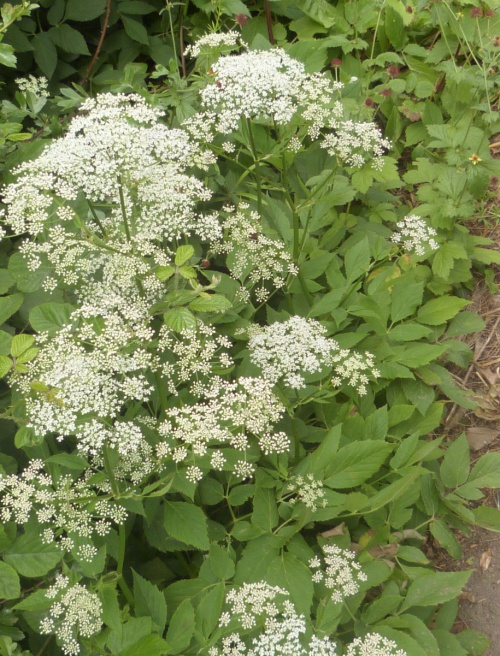 Graham Calow
Frolesworth
16 June 2015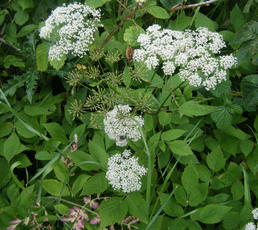 Graham Calow
Broughton Astley
24 June 2011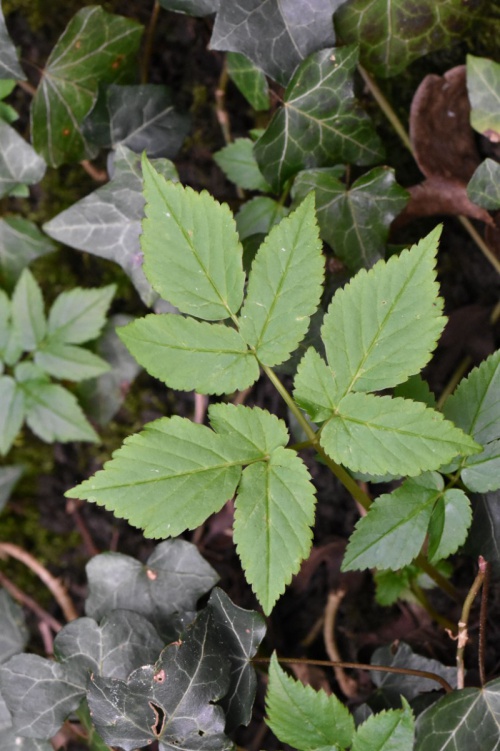 stepgray4
Wymeswold Woodland
25 March 2021
 Sharnford Road Sapcote SP 4912 9318 (taken 15.6.2007).JPG)
Leicestershire & Rutland Map
Enter a town or village to see local records
MAP KEY:
Yellow squares = NBN records (all known data)
Coloured squares = NatureSpot records: 2025+ | 2020-2024 | pre-2020
UK Map
Additional images
All NatureSpot records

Phytomyza angelicastri
The larva of the Agromyzid fly Phytomyza angelicastri mines the leaves of Wild Angelica and Ground Elder. This can be a variable leafmine though often linear, following the leaf margin but sometimes creating a blotch mine on the upper leaf surface.
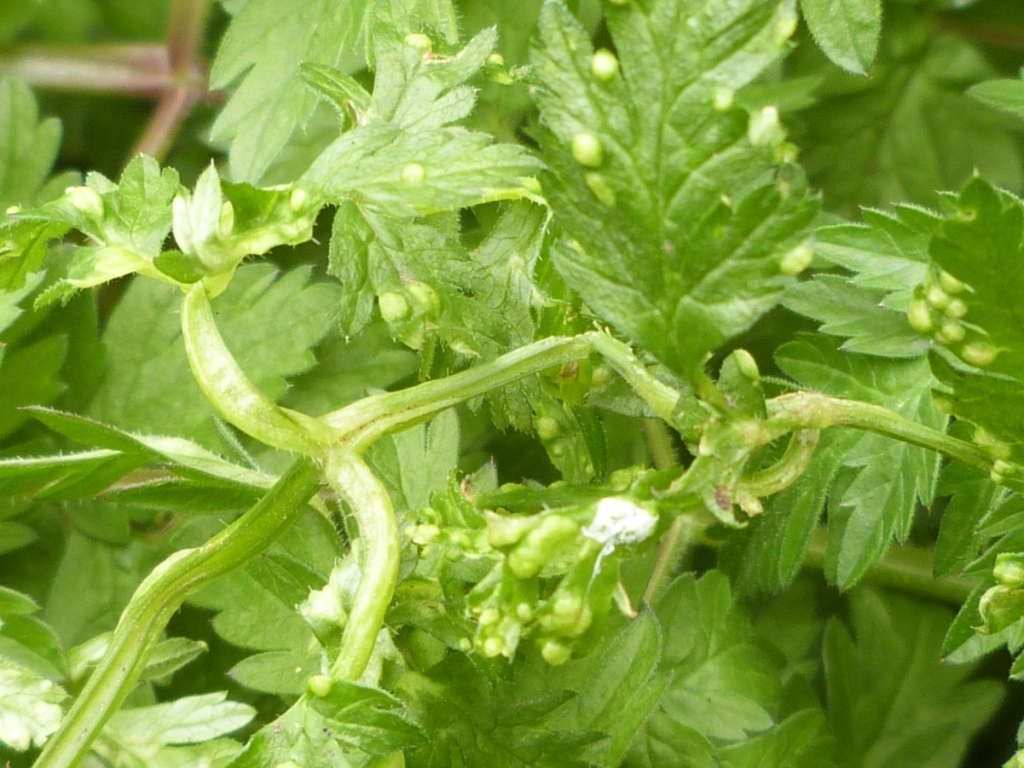
Protomyces macrosporus
The fungus Protomyces macrosporus causes galls of stem or leaf of various umbellifers including Ground-elder and Cow Parsley.
Puccinia aegopodii
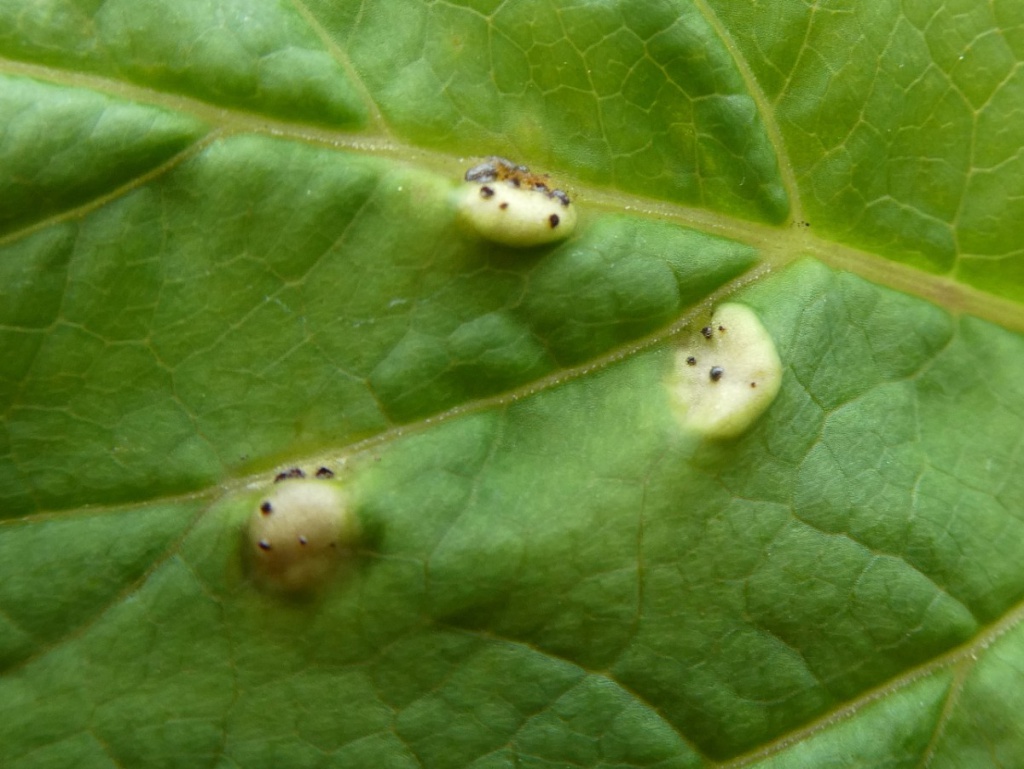
The clustered telia of the fungus Puccinia aegopodii cause galls on the undersides of leaves of Ground-elder. Uredinia, aecia and spermogonia are not produced.