Large Striped Flea Beetle
Large Striped Flea Beetle - Phyllotreta nemorum
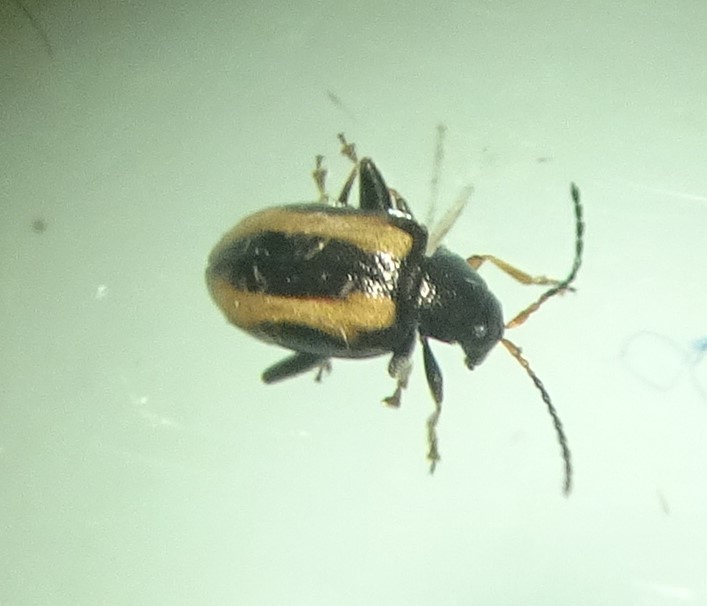
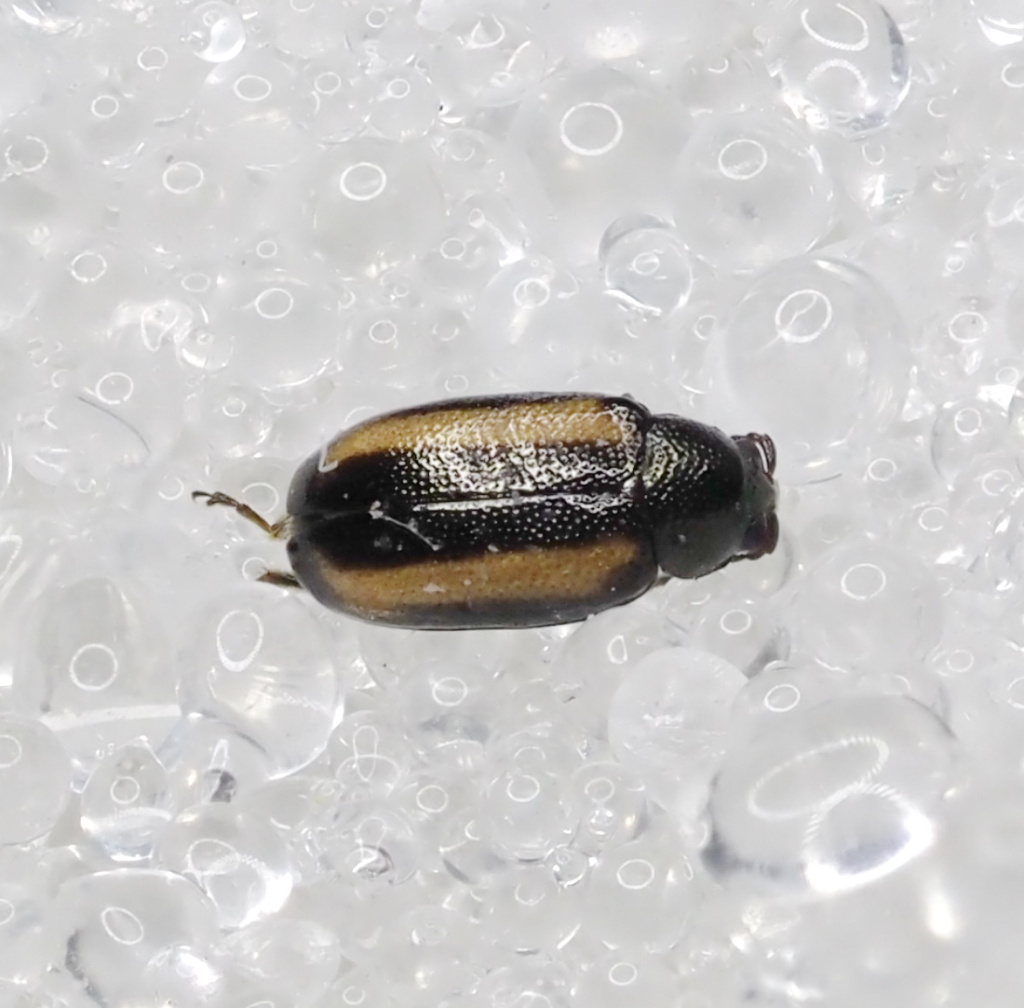
2.5-3mm. The black elytra are marked with broad pale yellow longitudinal stripes that are roughly parallel in shape. Pronotum is black. Antennae are pitchy brown to black. All tibia are unicoloured - dark brown to black. The hind tarsi can be pale.

- 2.5-3mm
- black elytra with 2 broad pale yellow longitudinal stripes that are roughly parallel in shape
- pronotum black.
- antennae not distinctly bicoloured (may have few segments slightly paler)
- all tibia are unicoloured - dark brown to black (only the hind tarsi are generally pale)
It is a pest of brassicas including turnips, the adults feeding mainly on seedlings, leaving them riddled with holes. For this reason it is often found in agricultural fields where brassicas are grown, but also in gardens etc.
Spring to late autumn when the adults hibernate.
Adults hibernate and emerge in spring to breed and lay their eggs. The larvae tunnel in leaves and become new adults in the autumn.
Fairly common and widespread in England and Wales, but fewer records from Scotland.
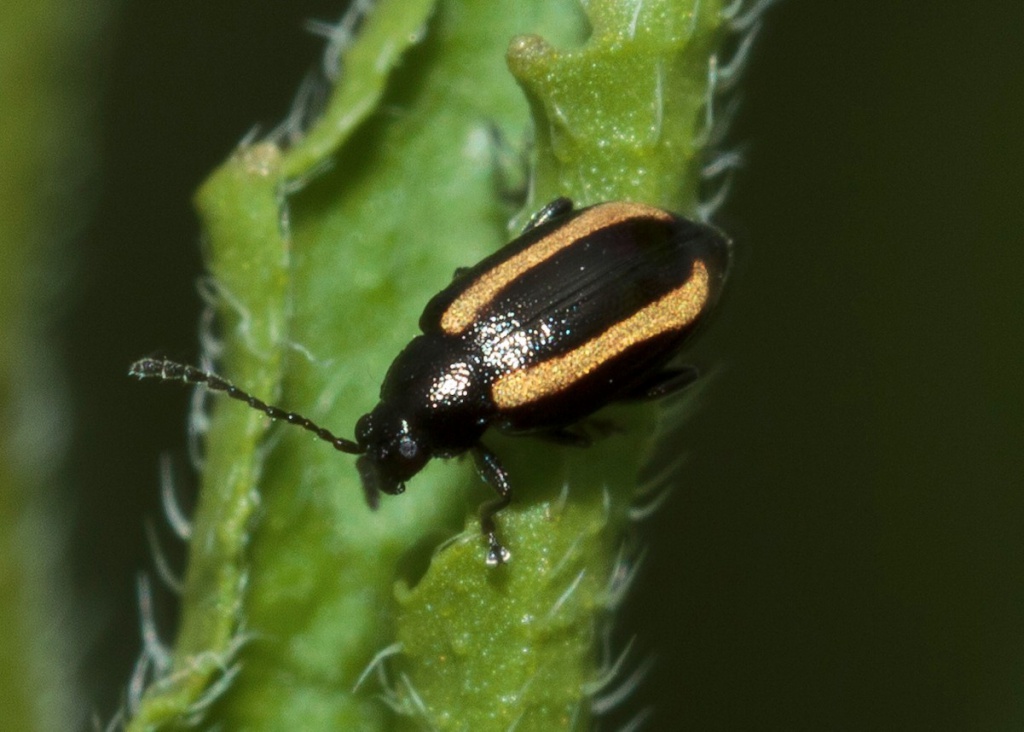
Occasional in Leicestershire and Rutland.
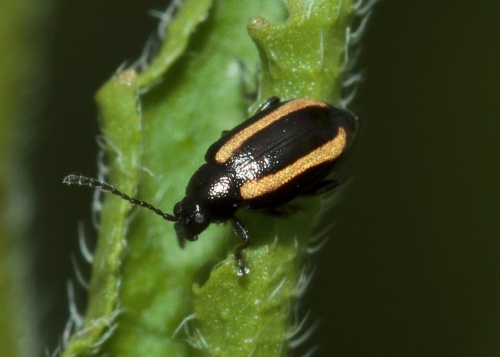 HAPeacock
Groby Road Allotments
25 June 2015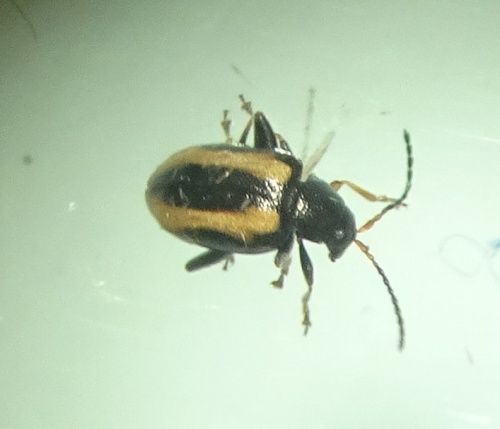 Hazel Graves
Loughborough Garden
09 July 2023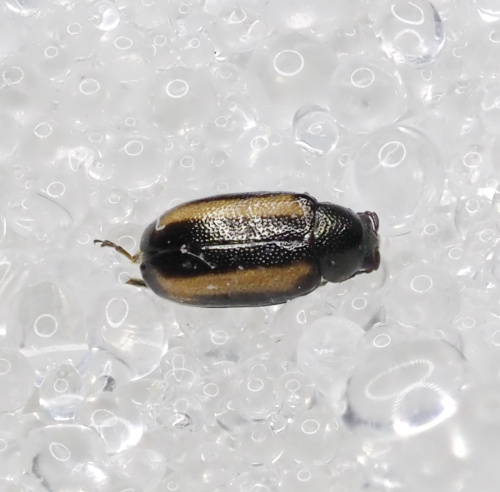 David Nicholls
Martinshaw Wood, Ratby
29 April 2024
Leicestershire & Rutland Map
Enter a town or village to see local records
MAP KEY:
Yellow squares = NBN records (all known data)
Coloured squares = NatureSpot records: 2025+ | 2020-2024 | pre-2020
UK Map
Additional images
No additional images available for this species.