Winter-cress
Winter-cress - Barbarea vulgaris
Medium to tall hairless plant. Basal leaves with 2 to 5 pairs of lateral lobes, uppermost leaves unlobed, toothed. Flowers bright yellow, 7 to 9 mm, in often branched racemes. Buds hairless, fruit 15 to 30 mm stiffly erect.
other Barbarea; other yellow crucifers

Basal leaves pinnate; seed-pods appressed (folded up against stem); upper leaves simple or lobed < halfway to midrib; flower-buds glabrous
General photo of plant in habitat; details of basal and stem leaves.
Water margins, damp meadows and ditches.
May to August.
Biennial or perennial.
Fairly common throughout Britain especially in the south-east.
Fairly common in Leicestershire and Rutland. In the 1979 Flora survey of Leicestershire it was found in 393 of the 617 tetrads.
In the current Checklist (Jeeves, 2011) it is listed as Native, occasional
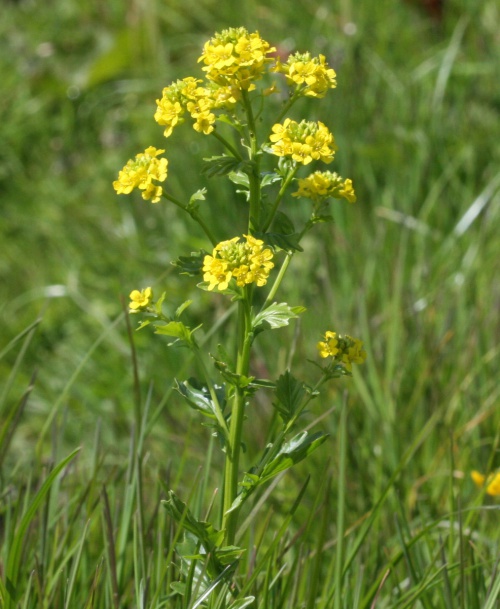 David Nicholls
Croft Pasture
09 May 2014 Graham Calow
Frolesworth
11 May 2015 David Nicholls
Croft Pasture
09 May 2014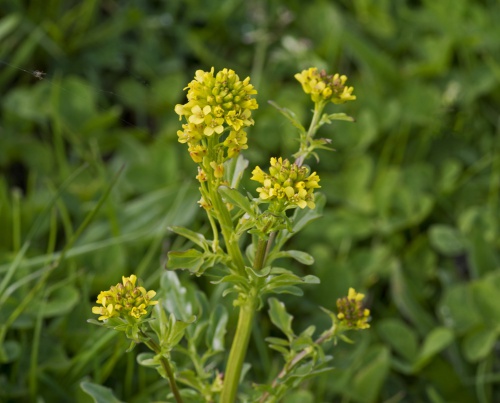 AJ Cann
Merry's Meadows
26 April 2015 River Soar behind Ramsdale Farm Sapcote SP 4974 9237 (taken 10.5.2006)...JPG) Graham Calow
Graham Calow
River Soar, Sapcote
10 May 2006


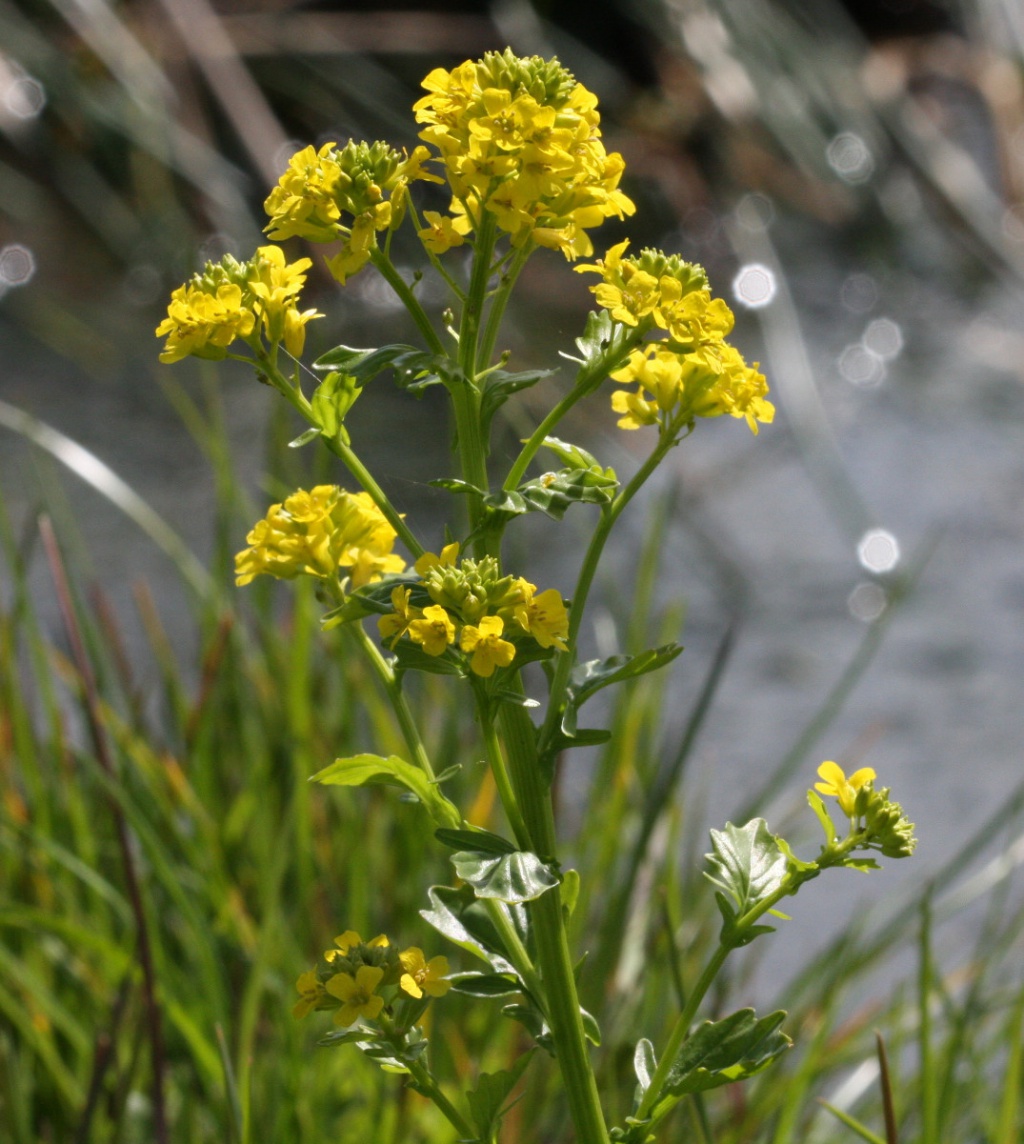

 River Soar behind Ramsdale Farm Sapcote SP 4974 9237 (taken 10.5.2006)...JPG)
Leicestershire & Rutland Map
Enter a town or village to see local records
MAP KEY:
Yellow squares = NBN records (all known data)
Coloured squares = NatureSpot records: 2025+ | 2020-2024 | pre-2020
UK Map
Additional images
No additional images available for this species.
All NatureSpot records
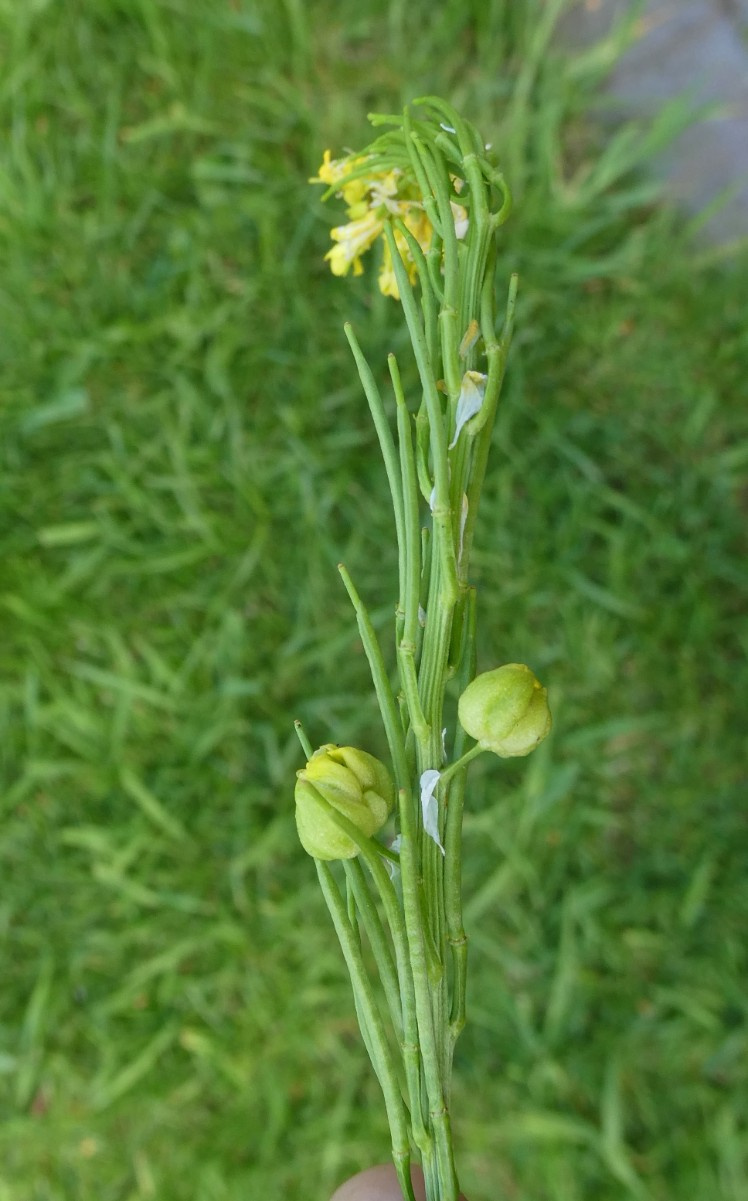
Dasineura sisymbrii
A gall caused by the larva of the gall midge Dasineura sisymbrii is found on various crucifers, including Winter-cress) and Hedge-mustard. Flower buds and parts of the inforescence swollen, soft and spongy. Orange larvae or orange pupae in papery white cocoons inside.