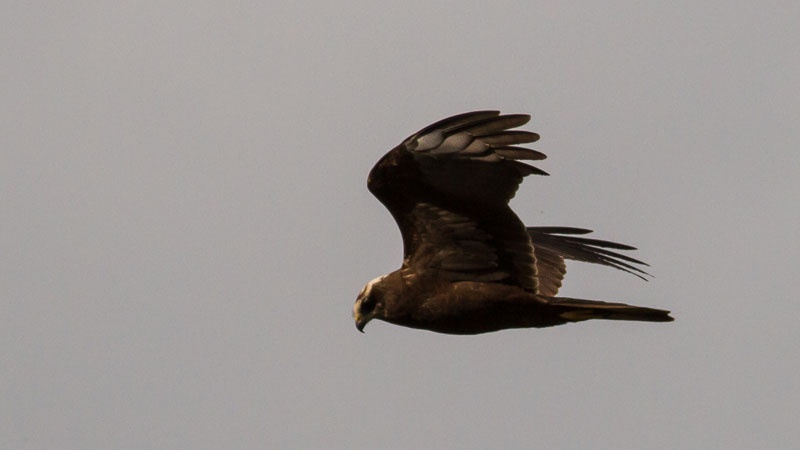
Marsh Harrier
Marsh Harrier - Circus aeruginosus
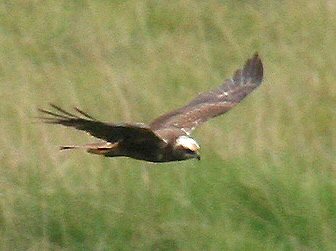
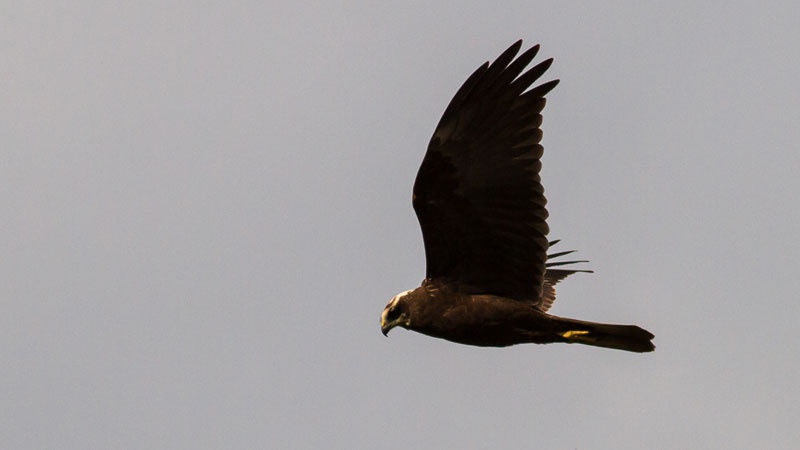
The largest of the harriers, it can be recognised by its long tail and light flight with wings held in a shallow 'V'. It is distinguishable from other harriers by its larger size, heavier build, broader wings and absence of white on the rump. The adult male is largely brown with grey on the wings and tail. Females are larger than males and have obvious creamy heads and cream forewings. Juveniles also have creamy head.

Seen over reed beds and marshes, as well as farmland near wetlands.
Birds are back in their breeding areas by April and leave in September and October.
Seen on passage in VC55 from February to October
Feeds on small birds and mammals.
Mainly found in eastern and south-east England, with some in the north-west, south-west and Scotland. Its future in the UK is now more secure than at any time during the last century but historical declines and subsequent recovery means it is an Amber List species.
Uncommon passage migrant in Leicestershire & Rutland.
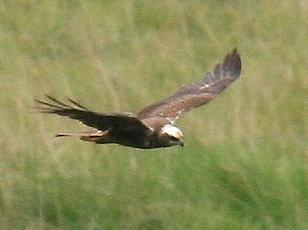 Tim Caldicott
Rutland Water, Egleton NR
10 May 2005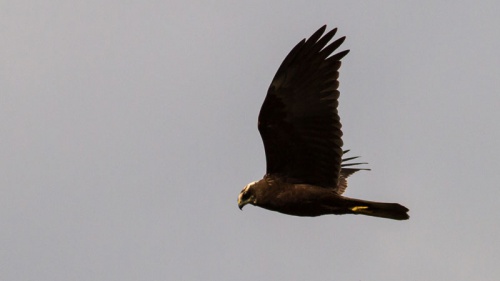 Rod Baker
Rutland Water
30 September 2014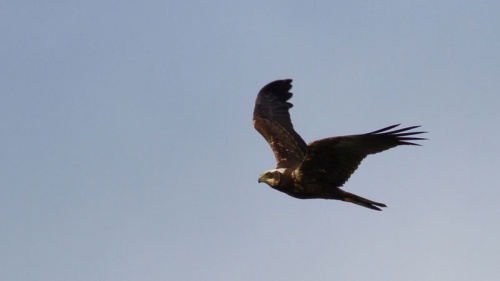 Rod Baker
Rutland Water
25 October 2014

Leicestershire & Rutland Map
Enter a town or village to see local records
MAP KEY:
Yellow squares = NBN records (all known data)
Coloured squares = NatureSpot records: 2025+ | 2020-2024 | pre-2020
UK Map
Additional images