Large Bindweed
Large Bindweed - Calystegia silvatica
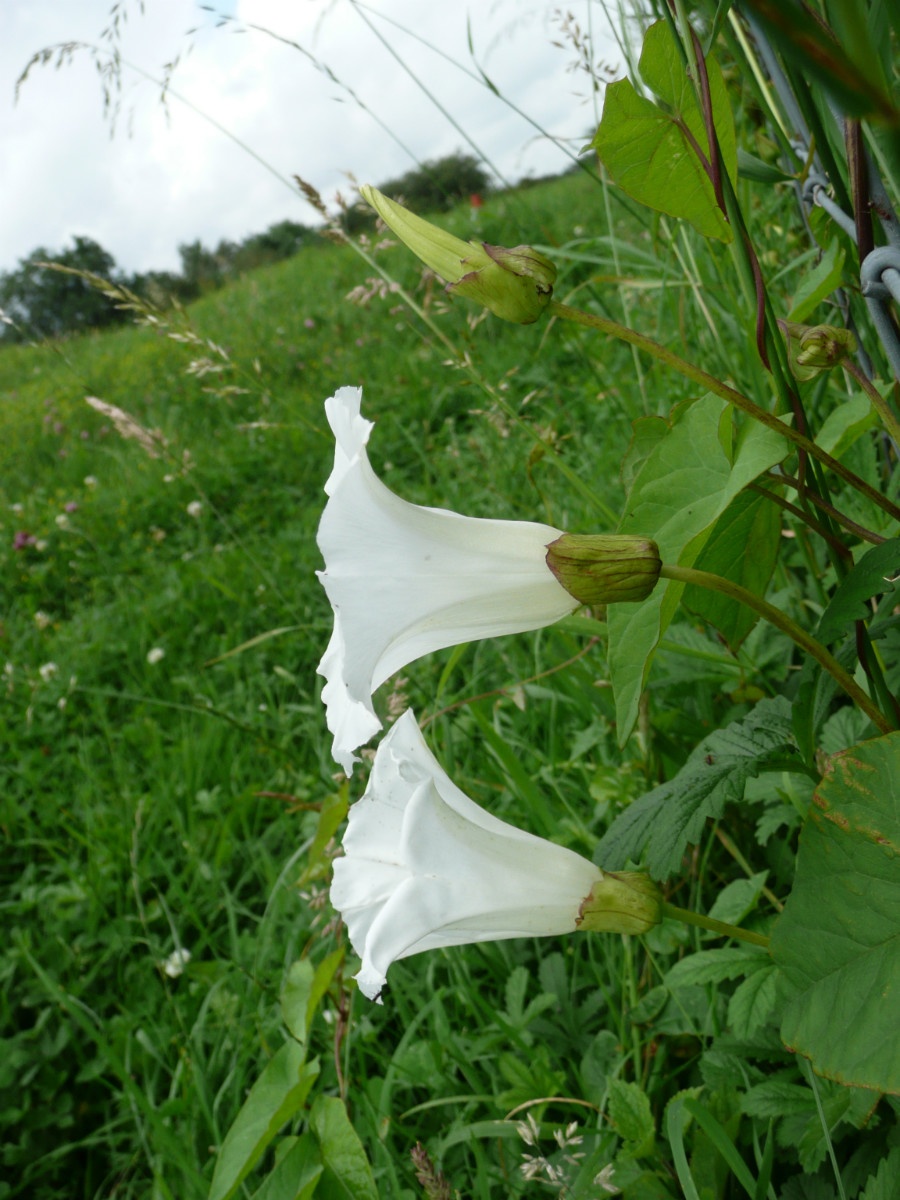
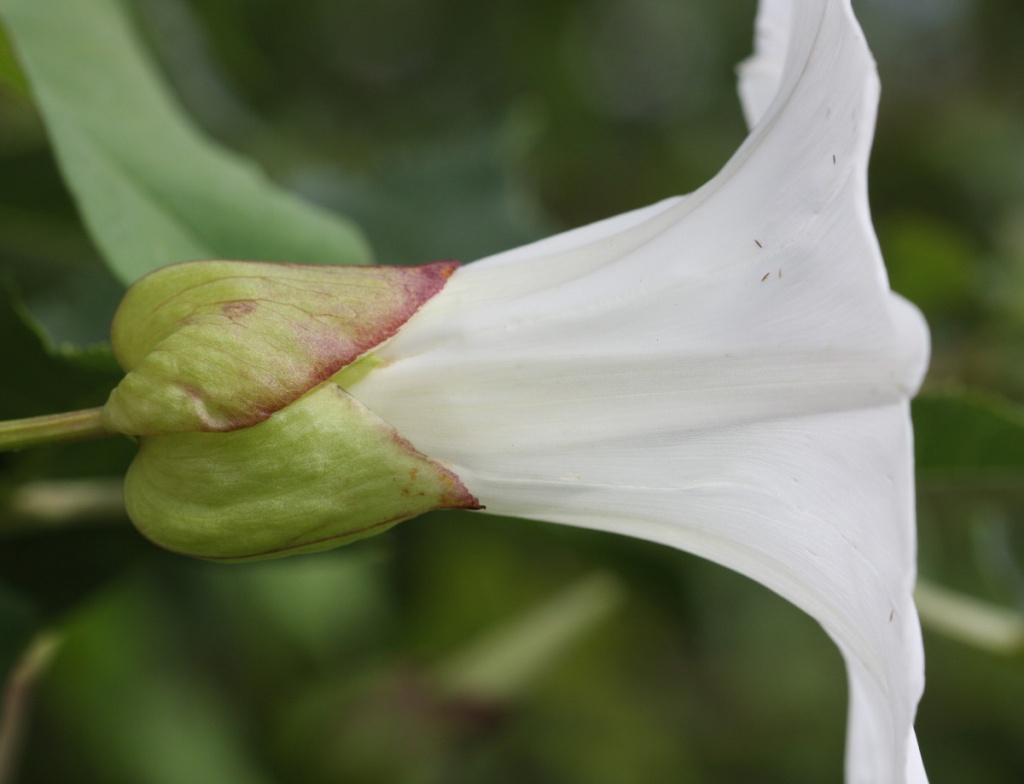
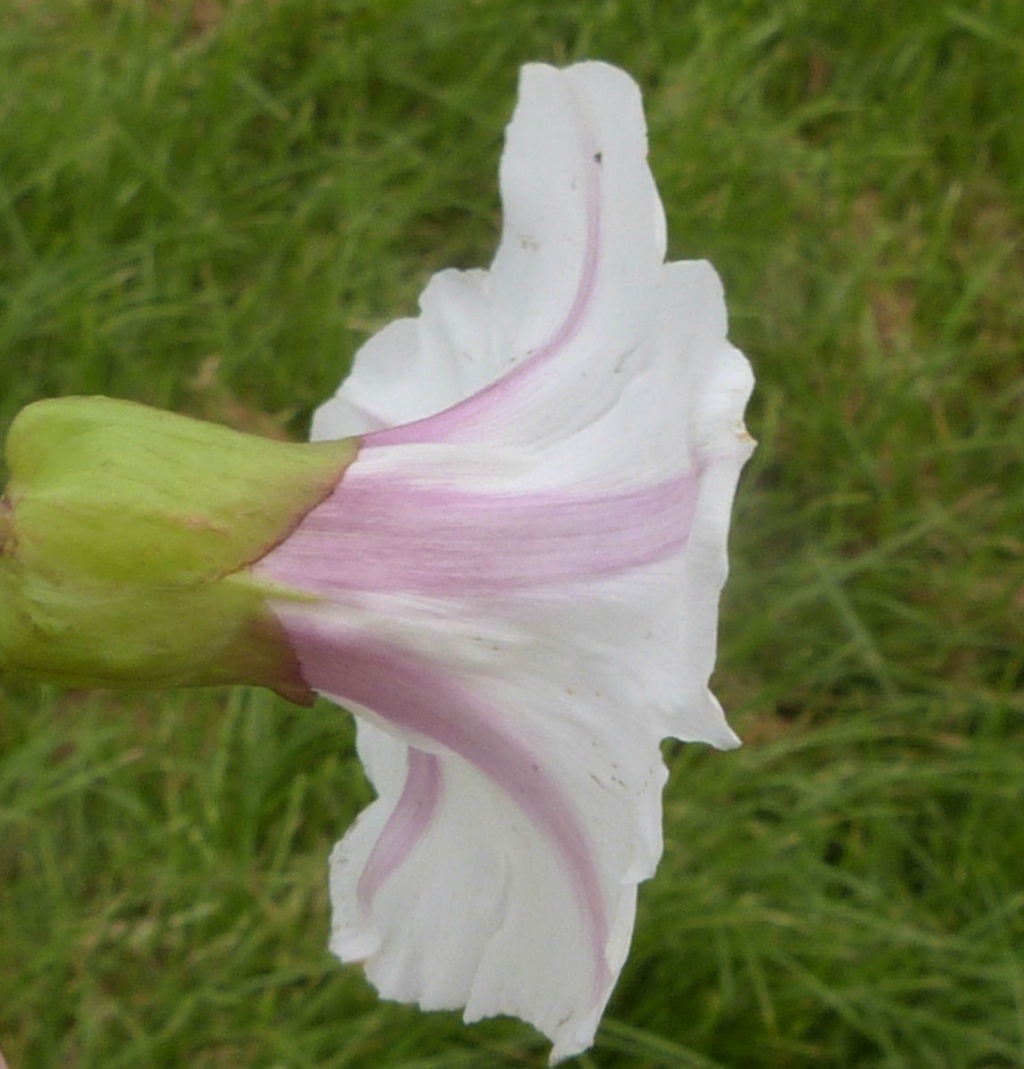
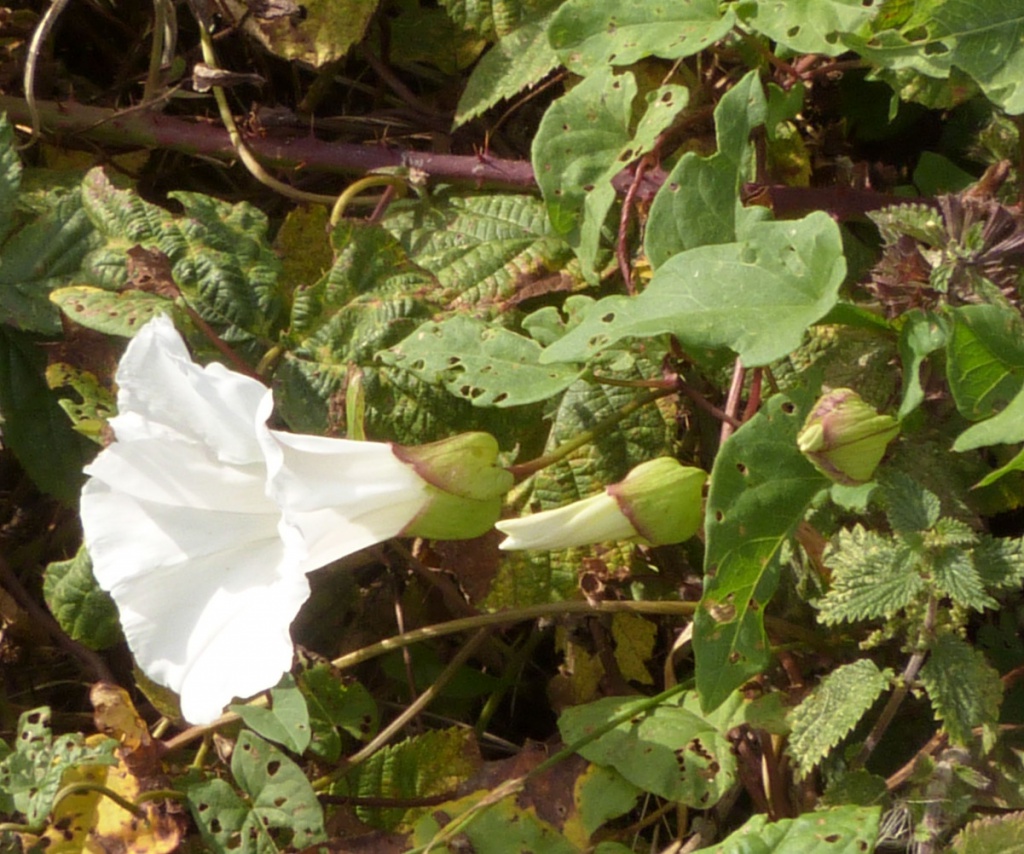
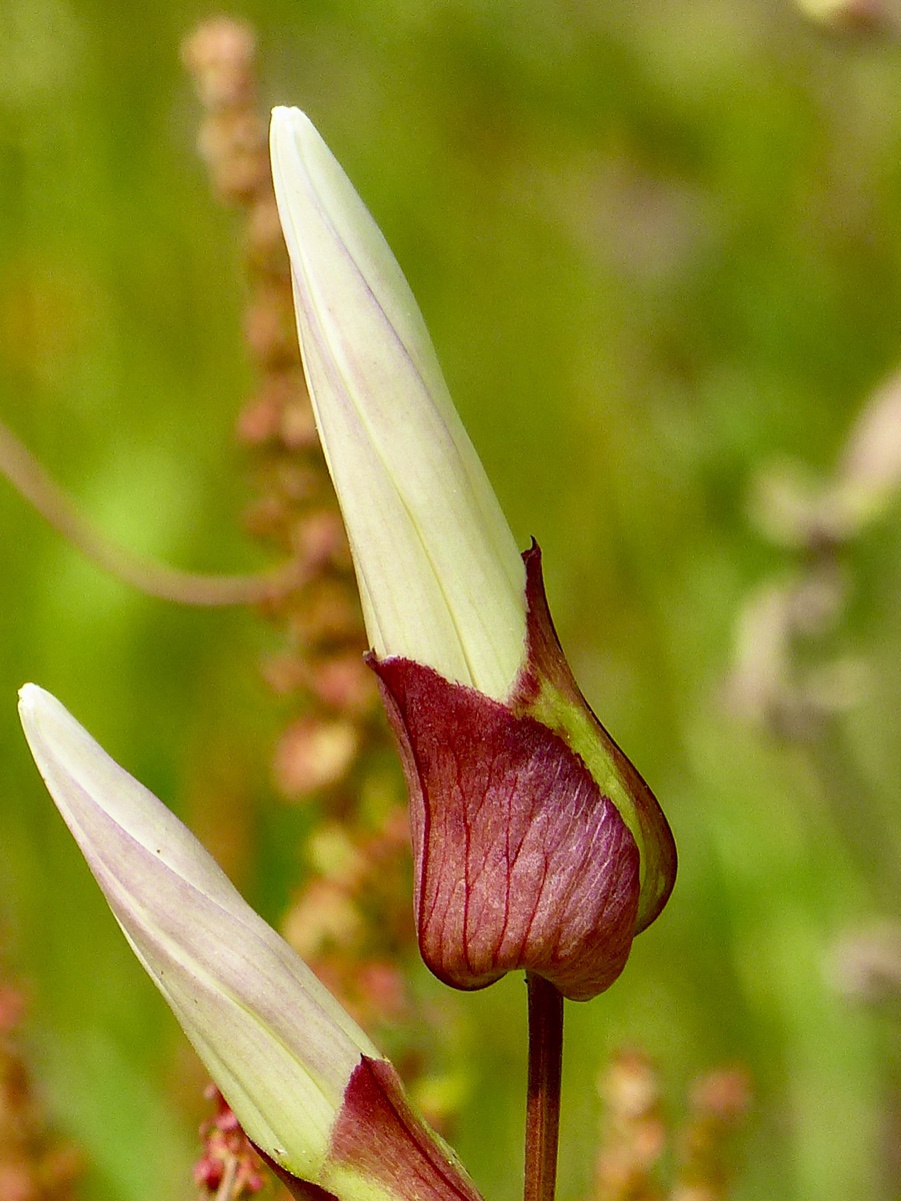
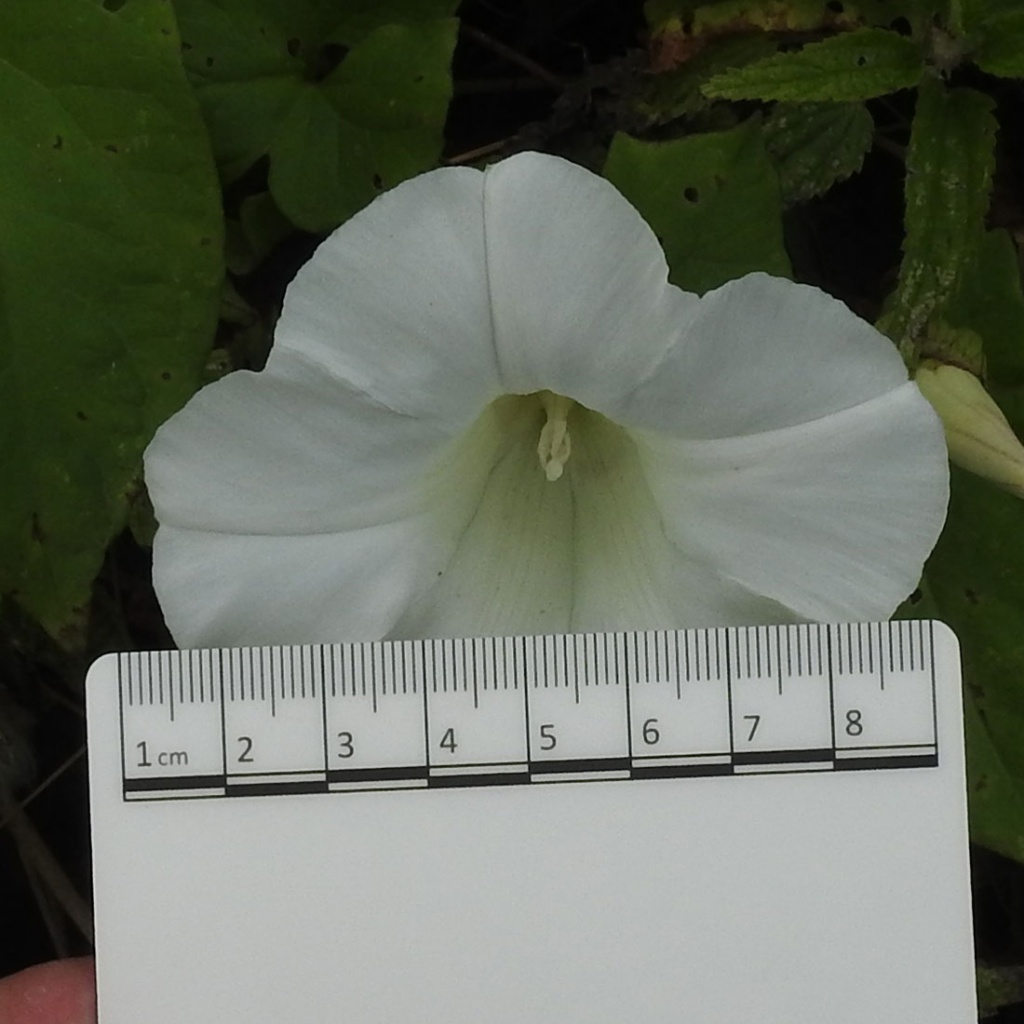
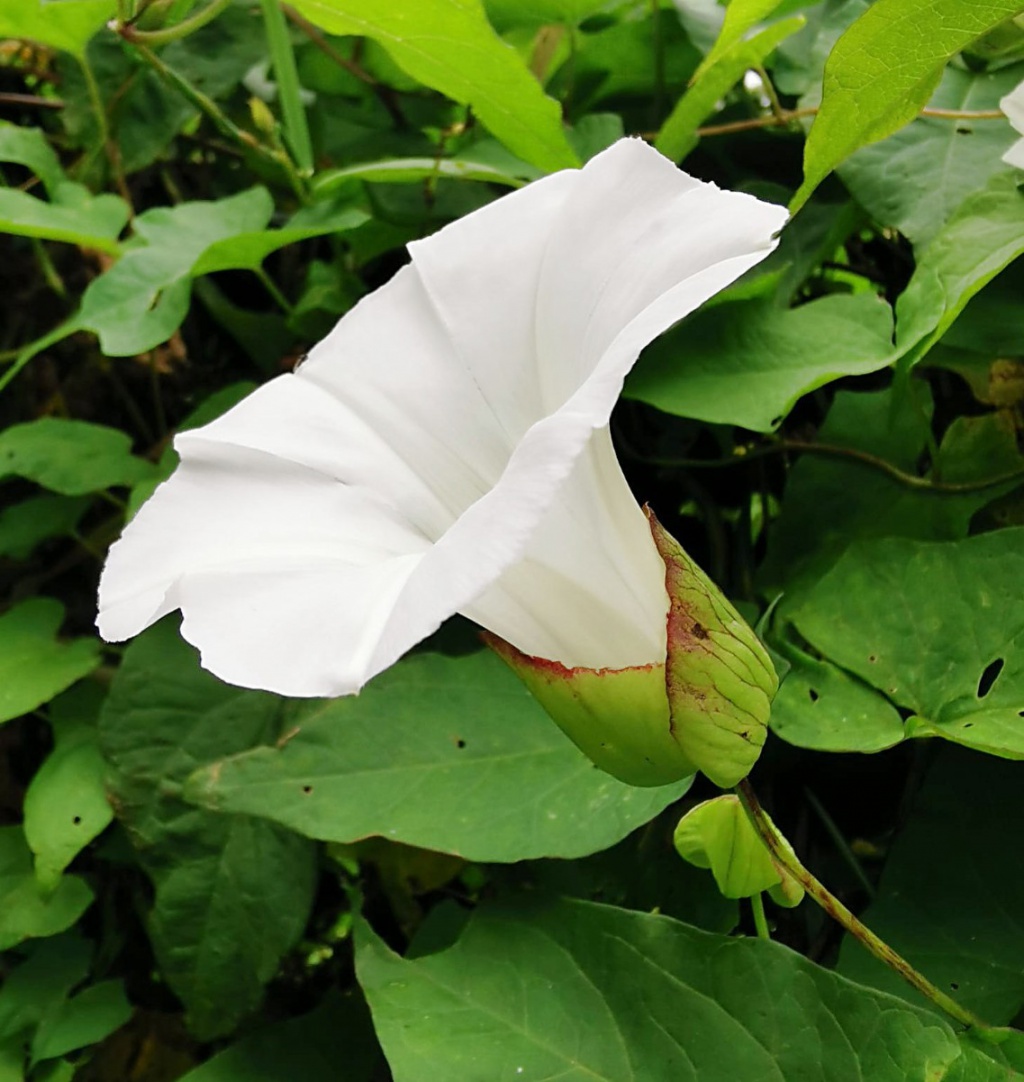
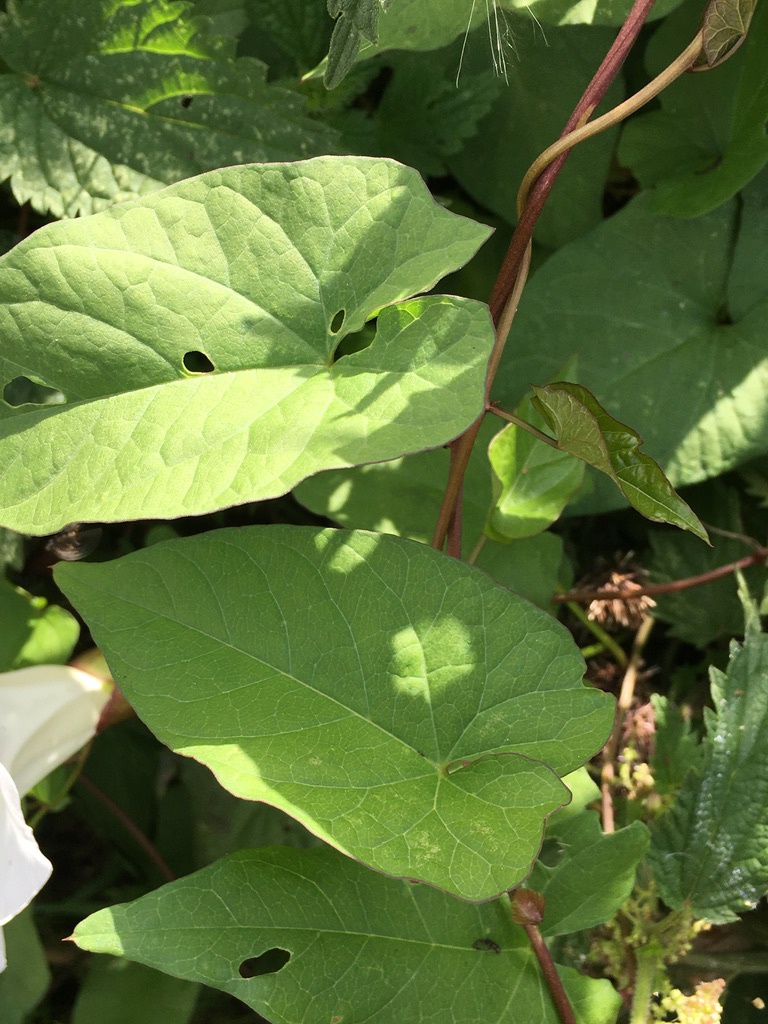
Vigorous climbing and twining plant. Flowers white 50 to 90 mm sometimes striped with pale pink. Bracteoles widely overlapping and pouched at the base, mostly or completely obscuring sepals beneath. There is a form of the Great Bindweed called 'quinquepartita' where the trumpet shaped corolla is deeply 5 lobed.
Hedge Bindweed (Calystegia sepium)

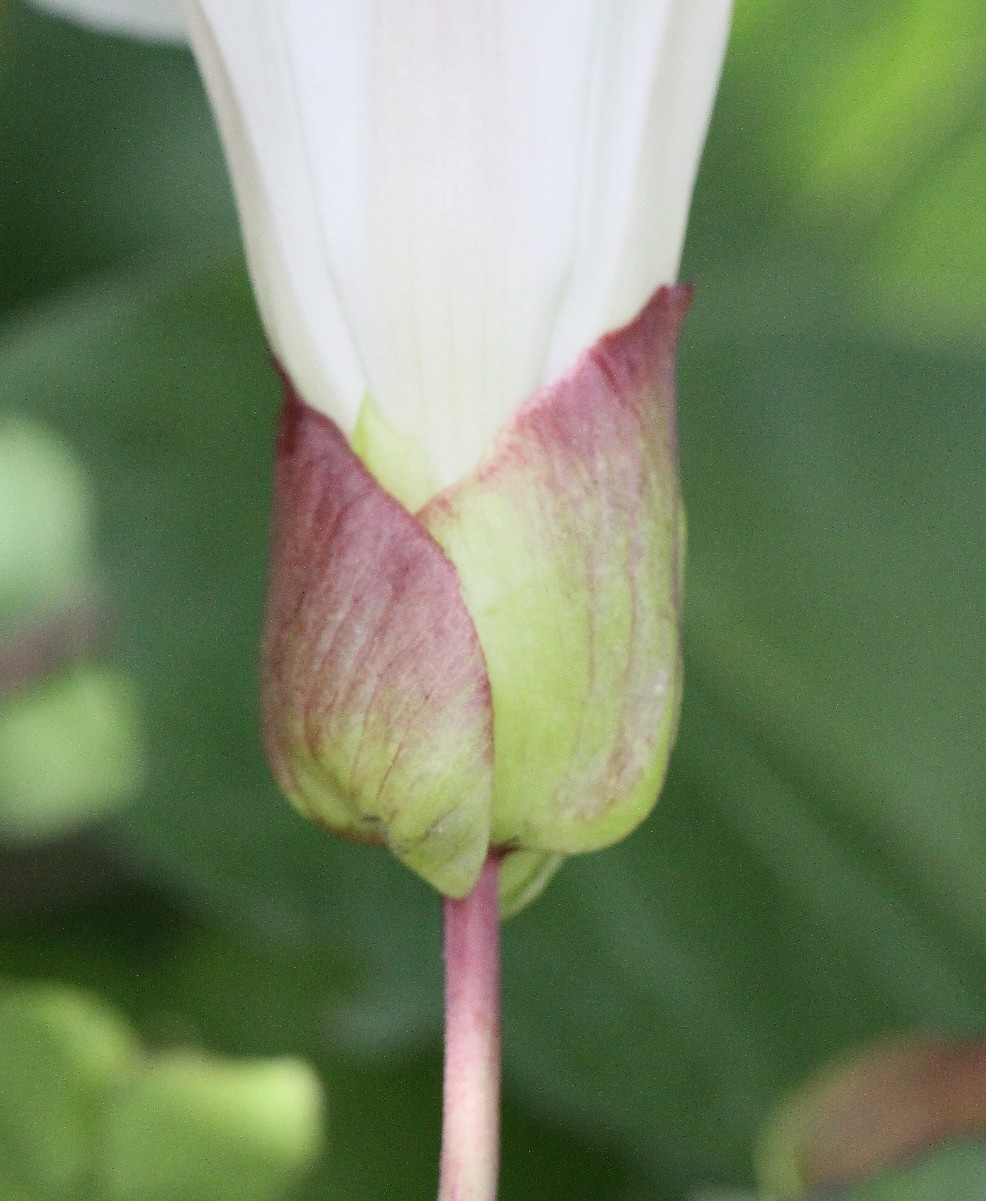
Bracteoles strongly overlapping so the sepals beneath are completely or nearly obscured
A side-on photograph, showing overlapping bracteoles
Hedgerows, around buildings and waste places.
July to September.
Perennial.
Common and widespread throughout most of Britain.
Common in Leicestershire and Rutland. In the 1979 Flora survey of Leicestershire it was found in 323 of the 617 tetrads.
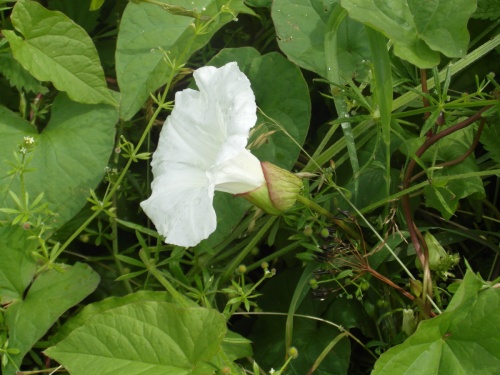 Alan Semper
Harby, Waltham La verge
05 July 2012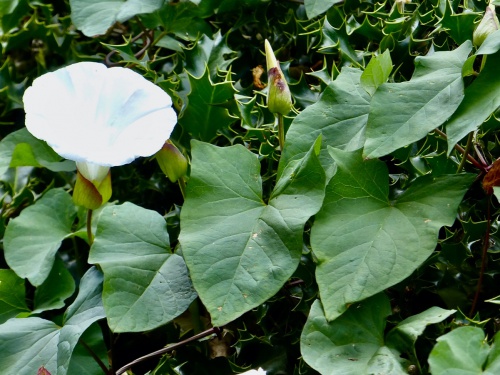 Ken Charity
Woodhouse.Rushey Lane.
20 July 2020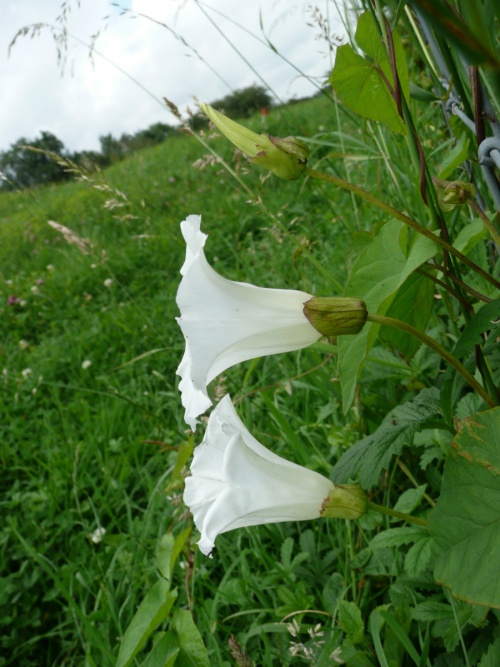 Barbara Cooper
Clawson Hill
08 July 2012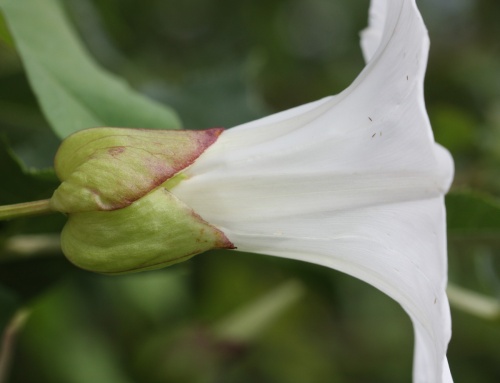 David Nicholls
Burroughs Road, Ratby
18 August 2012
ssp. disjuncta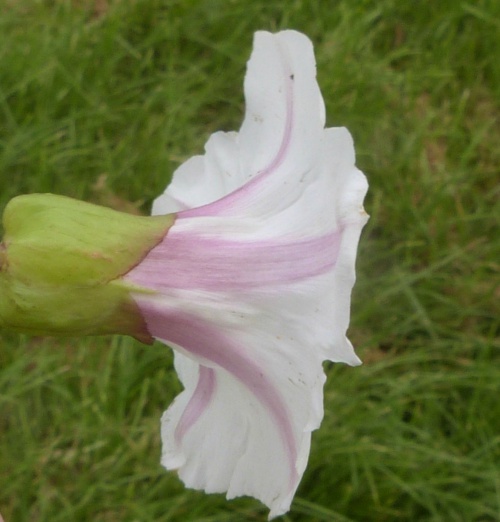 Graham Calow
Land off Devitt Way, Broughton Astley
16 June 2017
Unusual form with narrow pink stripes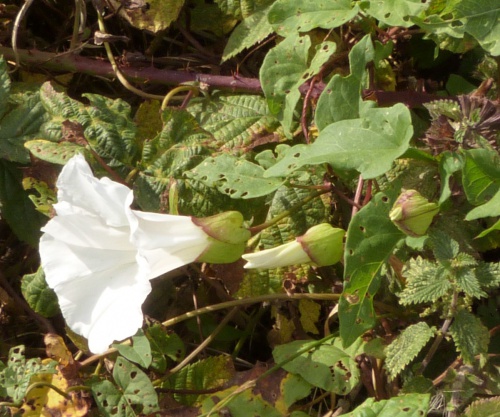 Graham Calow
Stoney Stanton
09 September 2016
Leicestershire & Rutland Map
Enter a town or village to see local records
MAP KEY:
Yellow squares = NBN records (all known data)
Coloured squares = NatureSpot records: 2025+ | 2020-2024 | pre-2020
UK Map
Additional images
All NatureSpot records
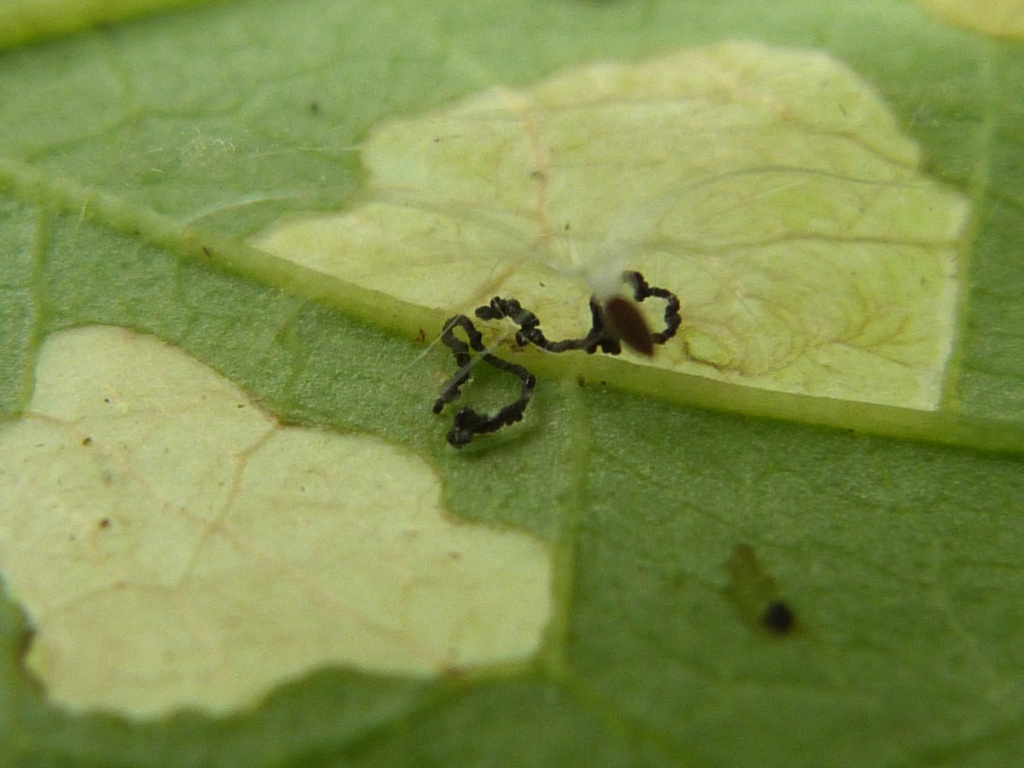
Bedellia somnulentella
The larvae of the moth Bedellia somnulentella feed on Bindweed and related species, initially in an inconspicuous narrow and very contorted gallery. The egg is oval, not round as with Stigmella species. Later instars leave the gallery and feed in a transparent blotch mine. The rear end of the larva sticks out of the undersurface of the leaf, and threads of frass hang beneath the mine, caught in a loose net of silk. Early instar larvae from the galleries are whitish; later instars have purplish spots and markings.