Great Mullein
Great Mullein - Verbascum thapsus
Medium to tall, soft greyish, or whitish woolly plant to 2 metres, though often less. Flowers yellow 12 to 35 mm in dense woolly spike like raceme, occasionally branched below.
Several other Mulleins with white-woolly stems and leaves have been recorded in VC55

This is a difficult genus, compounded by a large number of hybrids, and garden escapes that may become established briefly in the wild.
Upper and middle stem leaves are decurrent. The 3 upper stamens are reniform (kidney-shaped) and the two lower are decurrent; the style is capitate (with a knob-like stigma)
A photograph of the whole plant, and details of flowers.
Waste ground, scrub, roadsides and rough grassland.
June to August.
Biennial.
Common in England and Wales scarcer elsewhere.
Fairly frequent in Leicestershire and Rutland. In the 1979 Flora survey of Leicestershire it was found in 132 of the 617 tetrads.
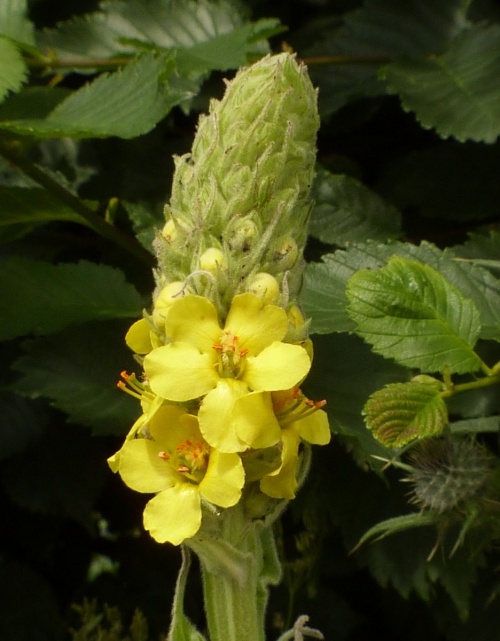 Graham Calow
Sapcote
03 July 2013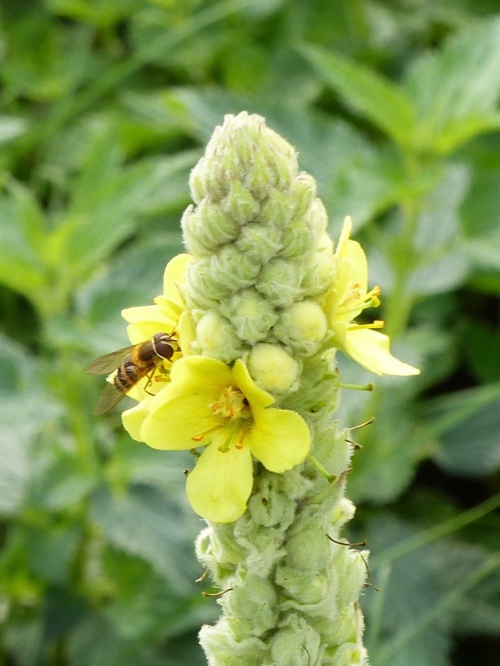 Ken Charity
Bloody Oaks Quarry
29 August 2018 Graham Calow
Springwell Lane, near Whetsone
29 July 2016 Waste Ground behind 'The Limes' Sapcote SP 4816 9347 (taken 14.6.2006).JPG) Graham Calow
Graham Calow
Sapcote
14 June 2006
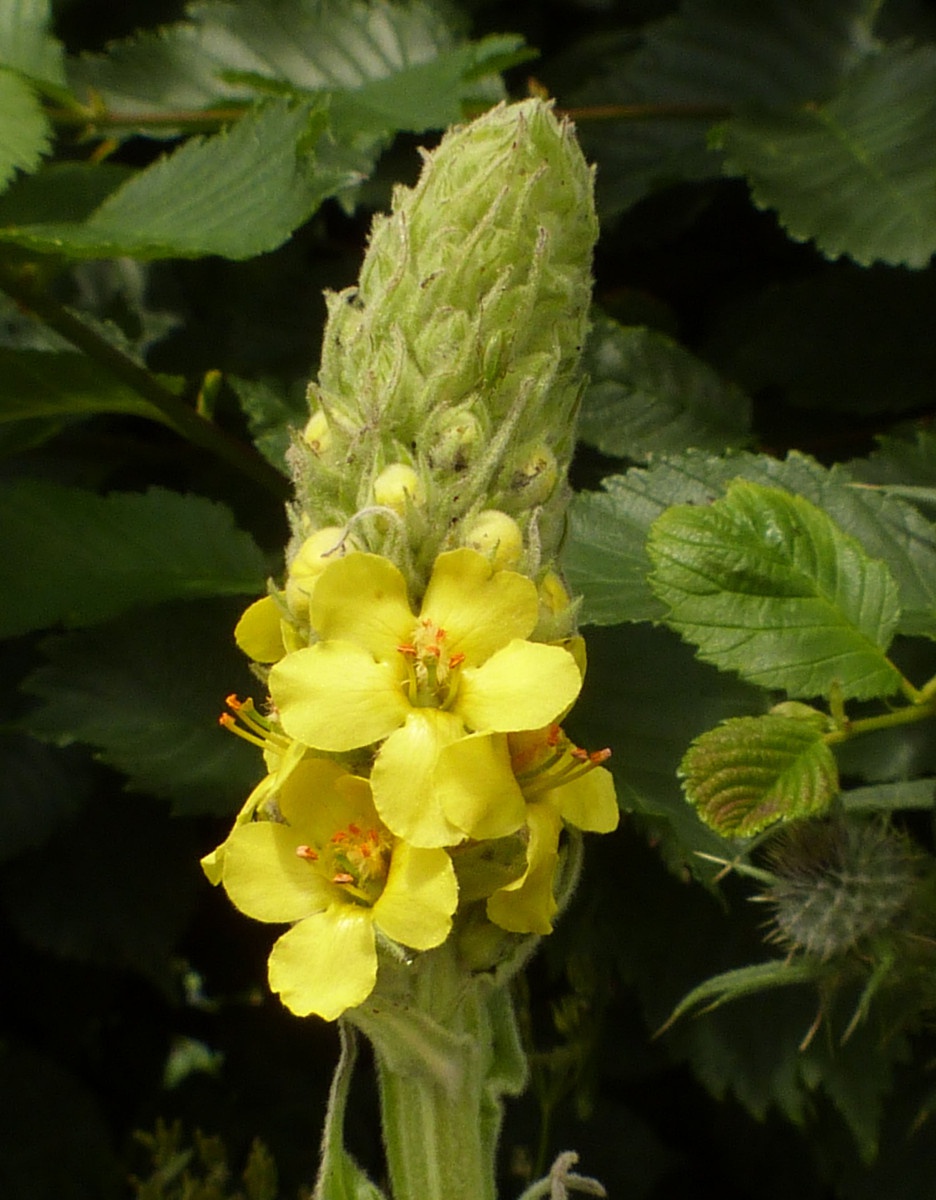
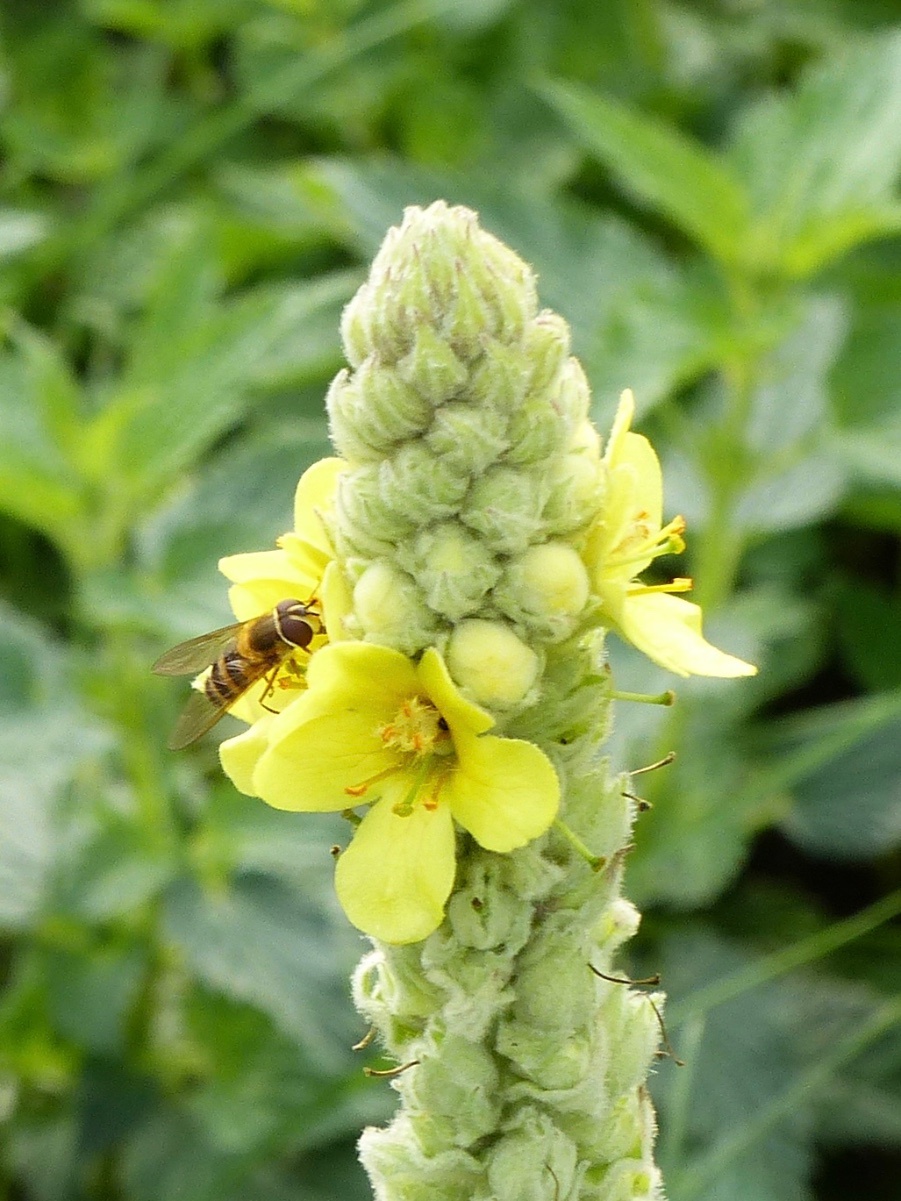
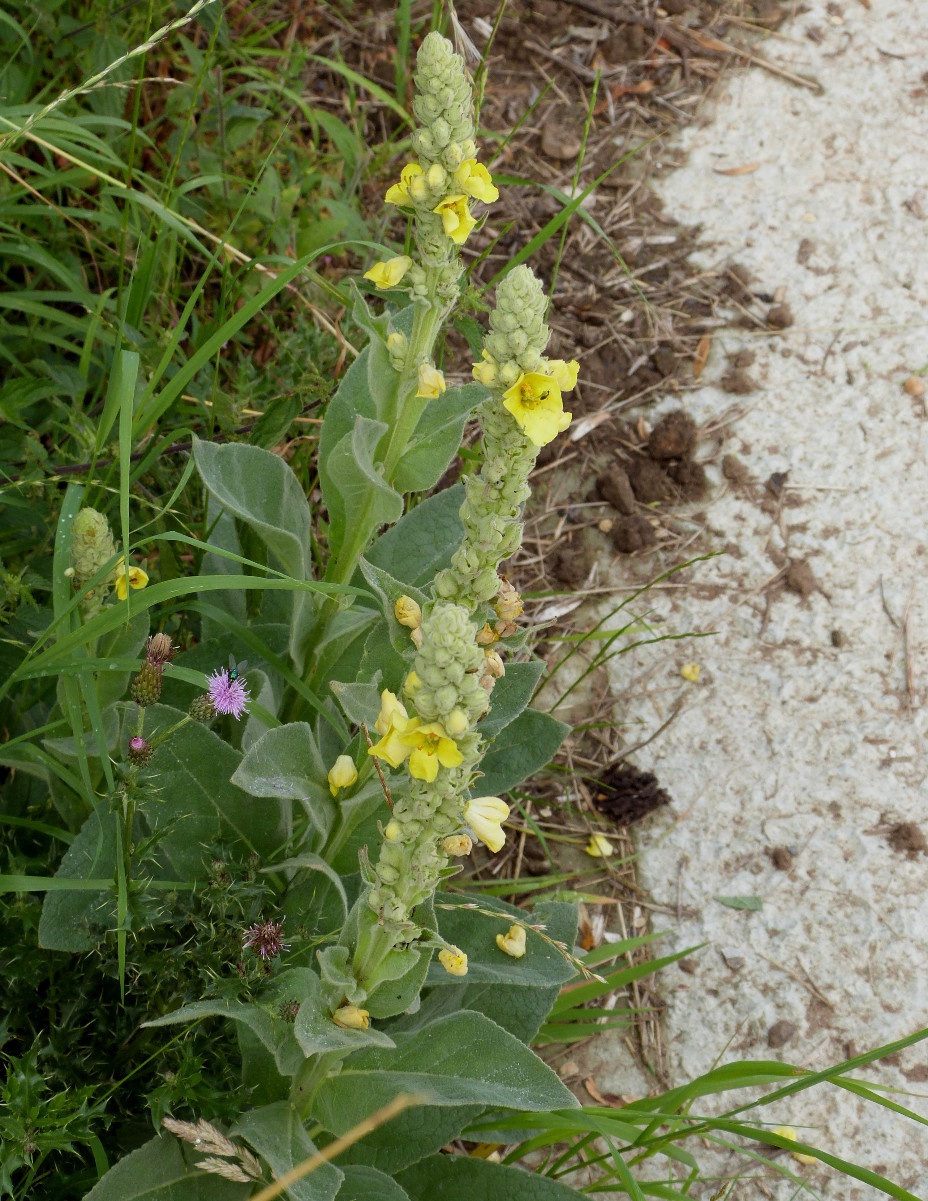
 Waste Ground behind 'The Limes' Sapcote SP 4816 9347 (taken 14.6.2006).JPG)
Leicestershire & Rutland Map
Enter a town or village to see local records
MAP KEY:
Yellow squares = NBN records (all known data)
Coloured squares = NatureSpot records: 2025+ | 2020-2024 | pre-2020
UK Map
Additional images
No additional images available for this species.
All NatureSpot records
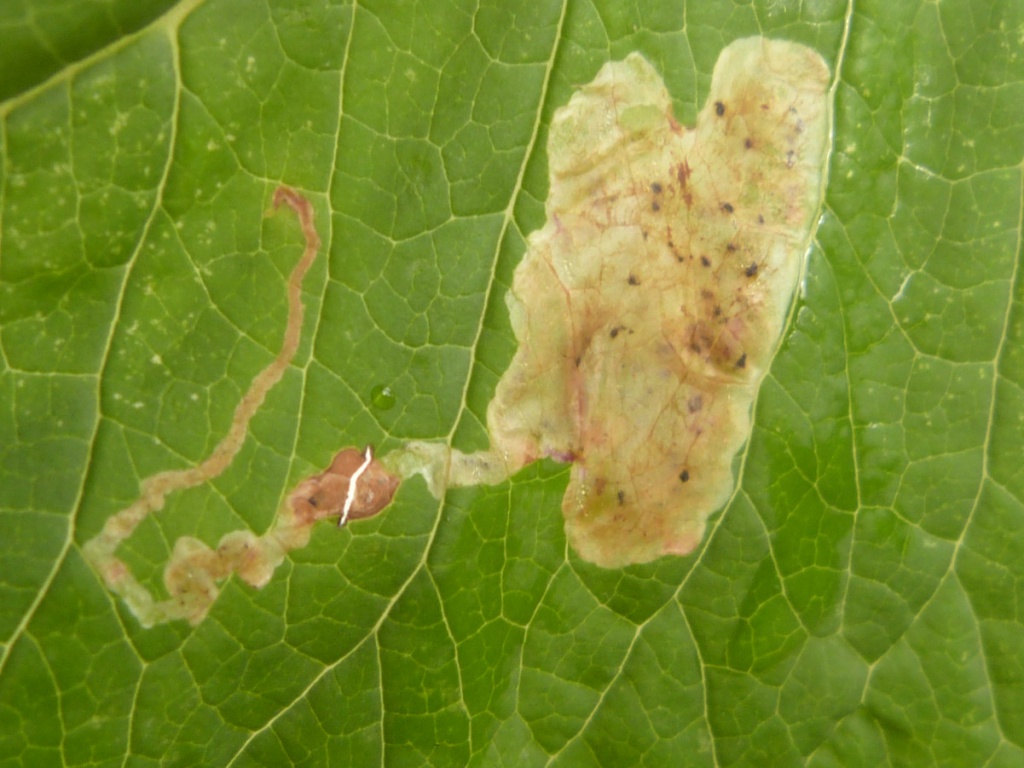
Amauromyza (Cephalomyza) verbasci
The larva of the Agromyzid fly Amauromyza verbasci causes a blotch mine on the upper surfaces of the leaves of Mullein, Common Figwort and Butterfly-bush. The mine is pale initially but turns brown later. Frass in sizeable dispersed grains.