Blue Water-speedwell
Blue Water-speedwell - Veronica anagallis-aquatica
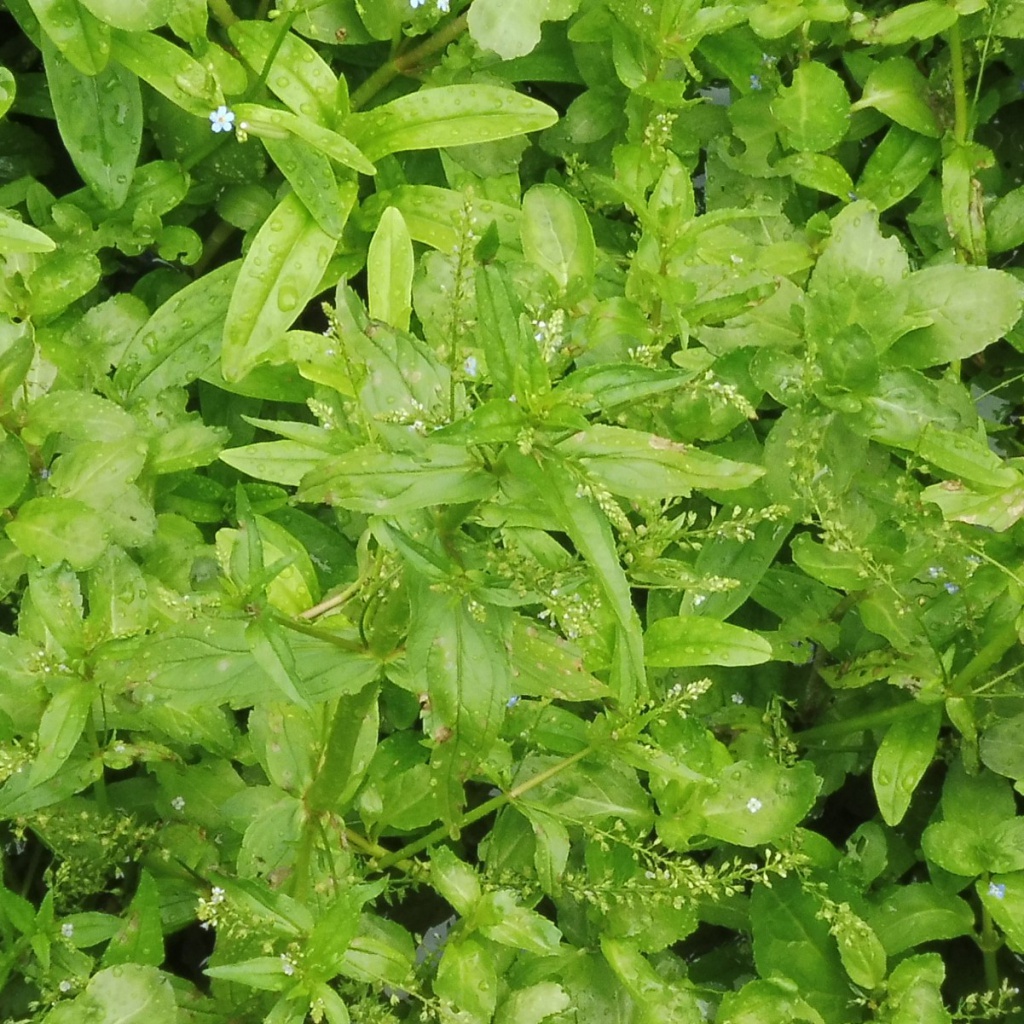
A plant of medium height with erect, often stout stems, sometimes much branched. Leaves linear to linear lanceolate, all unstalked. It is very similar to the more frequent Pink Water-speedwell but the flowers are bluer. The two species do hybridise, so care is needed with identification.
Veronica catenata

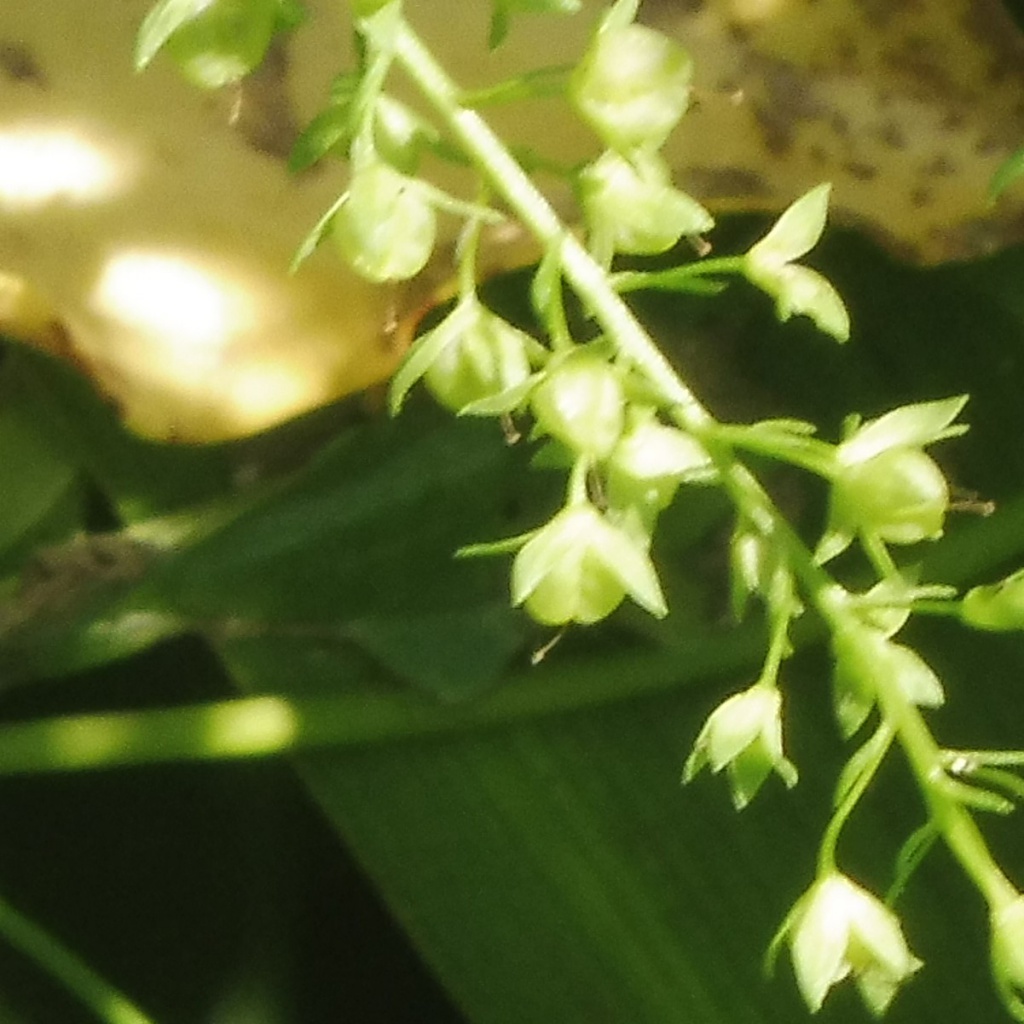
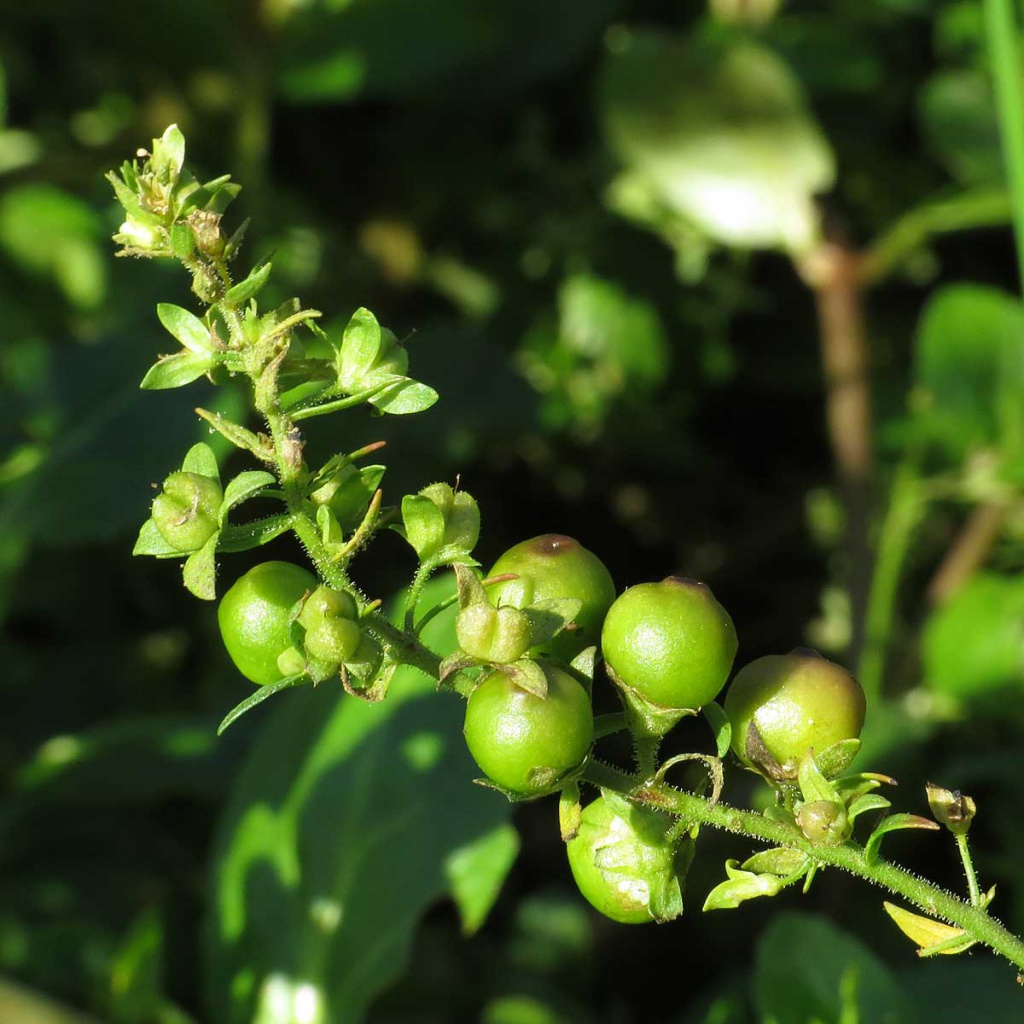
Check the capsule - V anagallis-aquatica = more or less round, not or shallowly notched at apex; V catenata = capsule wider than long and deeply notched at apex. In fruit, V anagallis-aquatica has pedicels that are usually pointing up at more than right-angles; V catenata has pedicels at right-angles to stem
Unless identified by a recognised expert, a photo is required. If the photo doesn't show the key ID features then in the comments box describe the size and identifying characters you have observed.
Found on fertile substrates by rivers, streams and ponds, in ditches and in flooded clay- and gravel-pits. It grows as a vegetative plant submerged in shallow water, or as a flowering emergent, or as a terrestrial plant in marshy habitats and disturbed ground at the water`s edge.
It is occasionally introduced around new drainage and SUDS ponds as a component of wildflower seed-mixes for aquatic plant margins
In flower during June, July and August.
Annual - reproduction is by seed and by rooted stem fragments.
Widespread and fairly frequent in much of Britain.
Near scarce in Leicestershire and Rutland. Occasionally introduced in wildflower seed-mixes. In the Flora of Leicestershire (Primavesi and Evans 1988) it was found in 8 of the 617 tetrads.
It the current checklist (Jeeves, 2011) it is listed as scarce.
It was on the 2011 VC55 Rare Plant Register (Jeeves, 2011) but does not meet the criteria for the current RPR (Hall and Woodward, 2022)
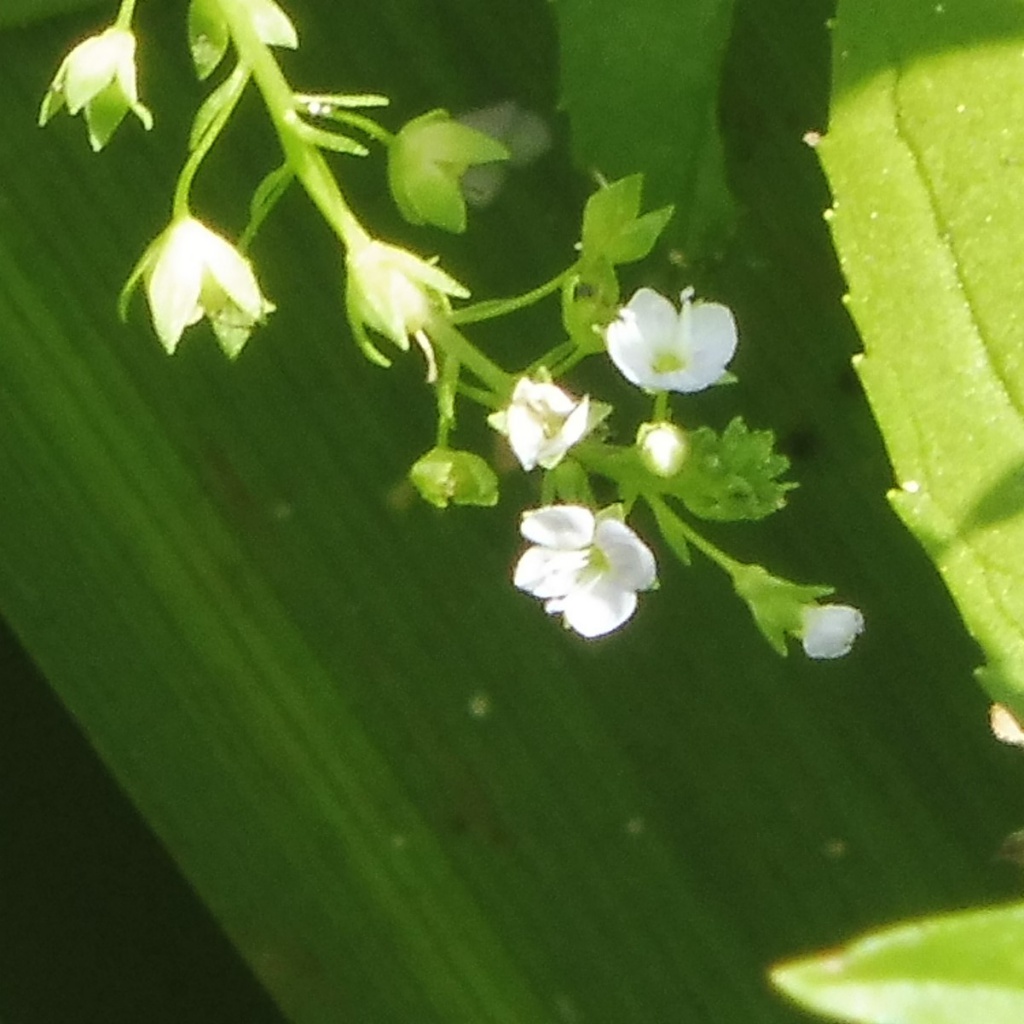
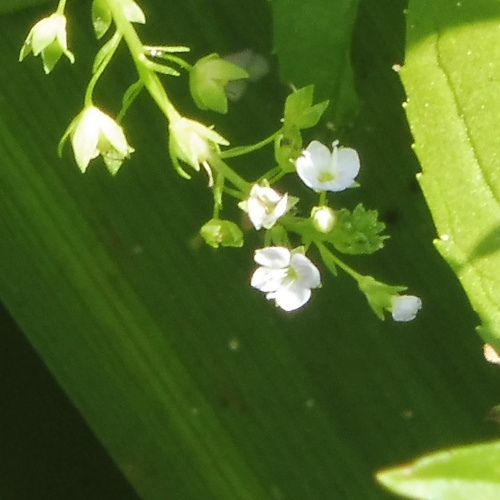 martindgrimes
Great Casterton South of River
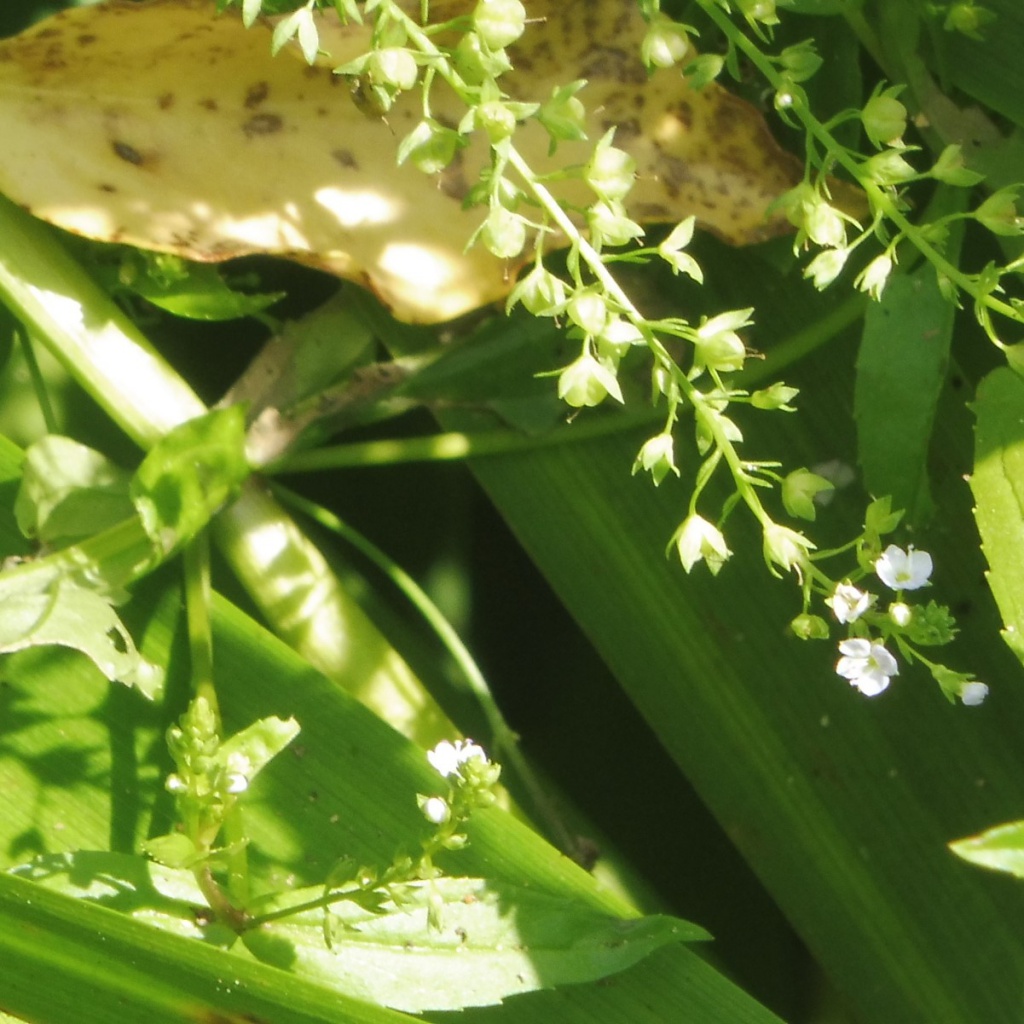
12 August 2019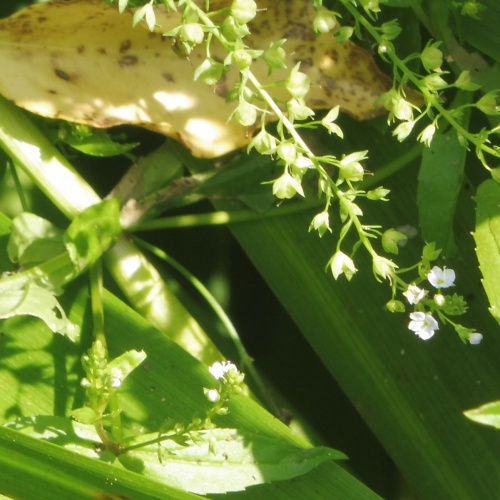 martindgrimes
Great Casterton South of River
12 August 2019
Leicestershire & Rutland Map
Enter a town or village to see local records
MAP KEY:
Yellow squares = NBN records (all known data)
Coloured squares = NatureSpot records: 2025+ | 2020-2024 | pre-2020
UK Map
Additional images
All NatureSpot records
Gymnetron villosulum
The larvae feed within galls formed in the seed-capsules of water speedwells, usually Pink Water-speedwell, but also Blue Water-speedwell and Brooklime.