Buckthorn
Buckthorn - Rhamnus cathartica
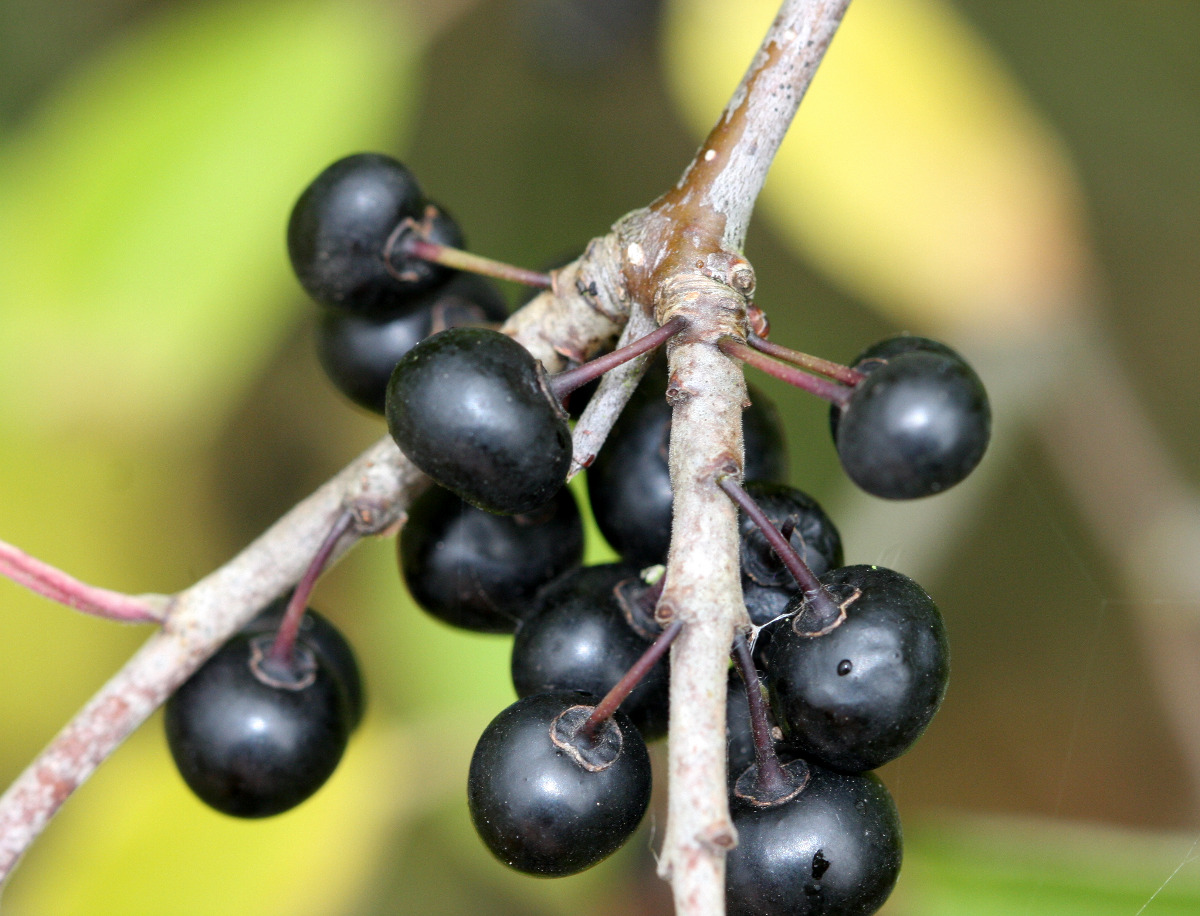
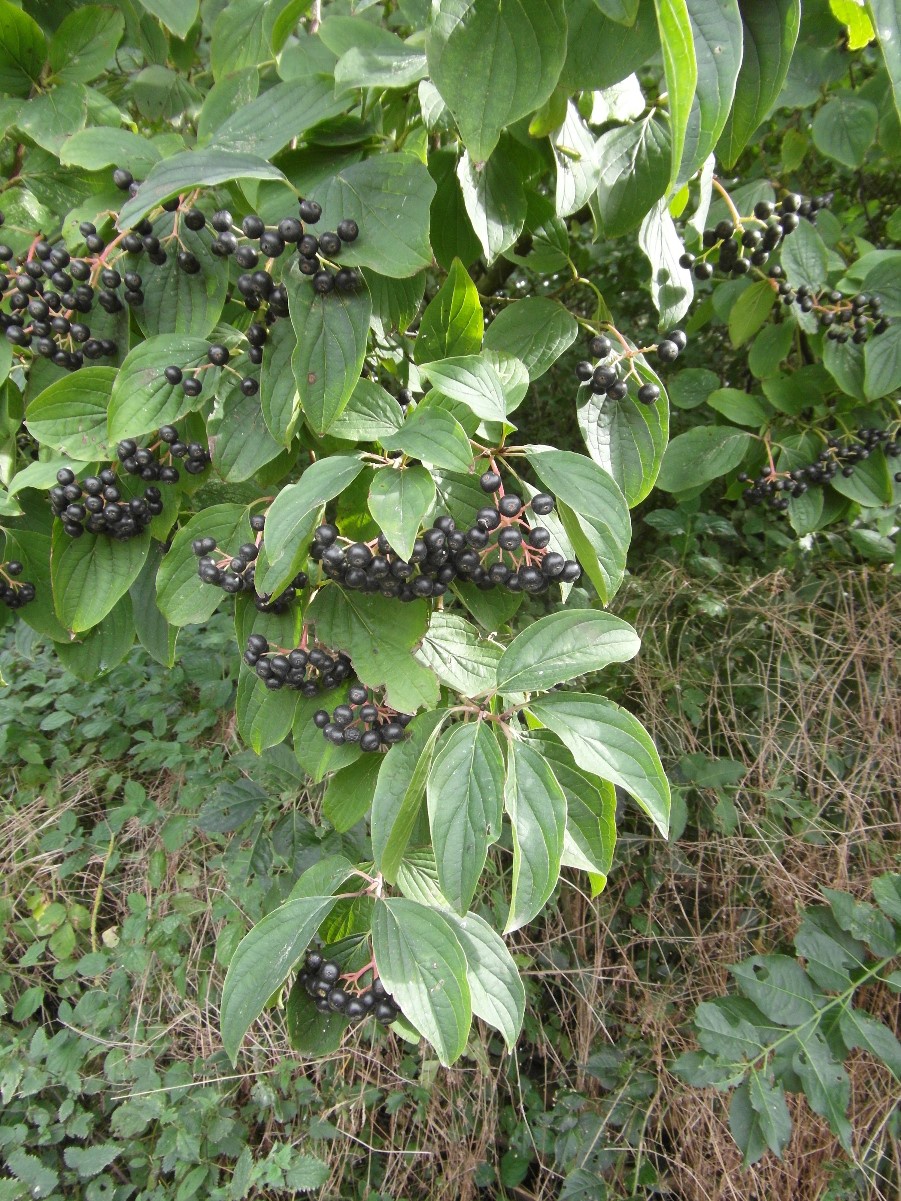
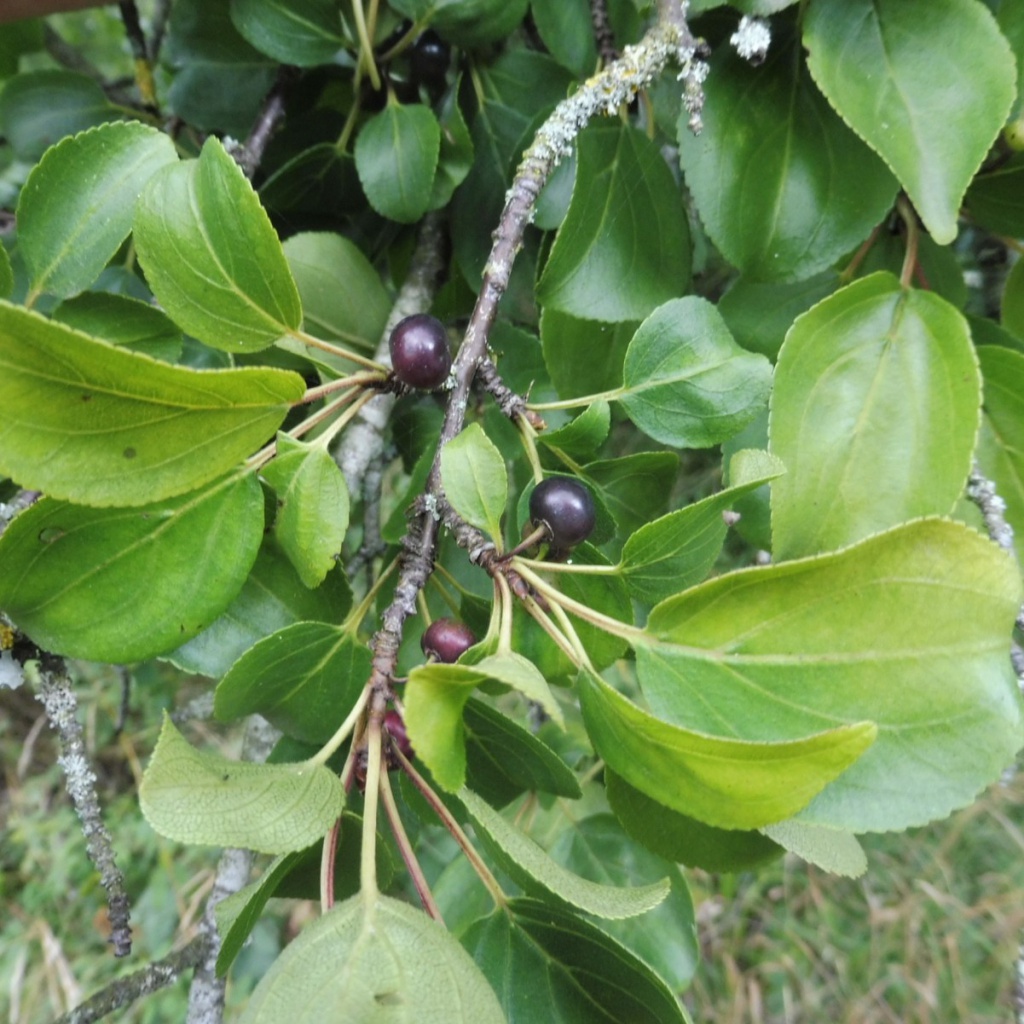
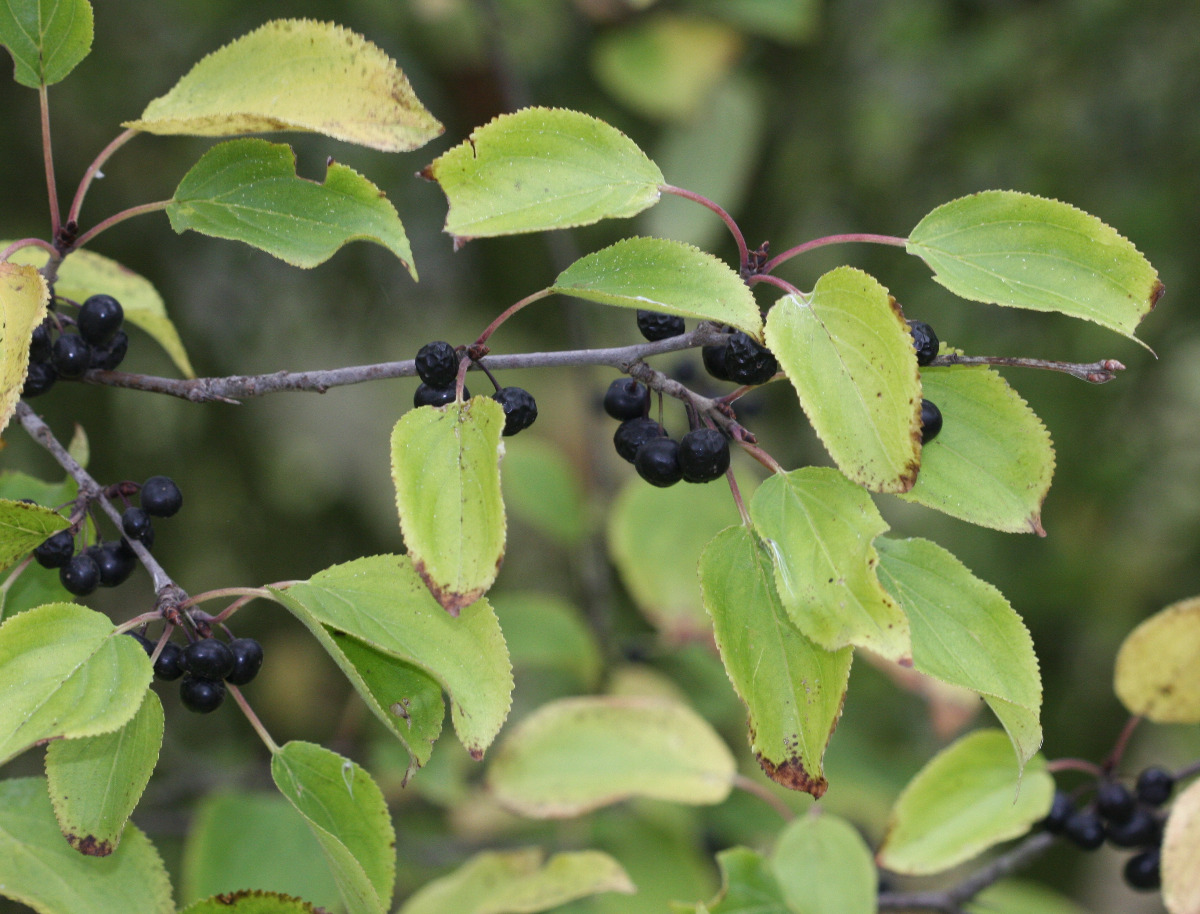
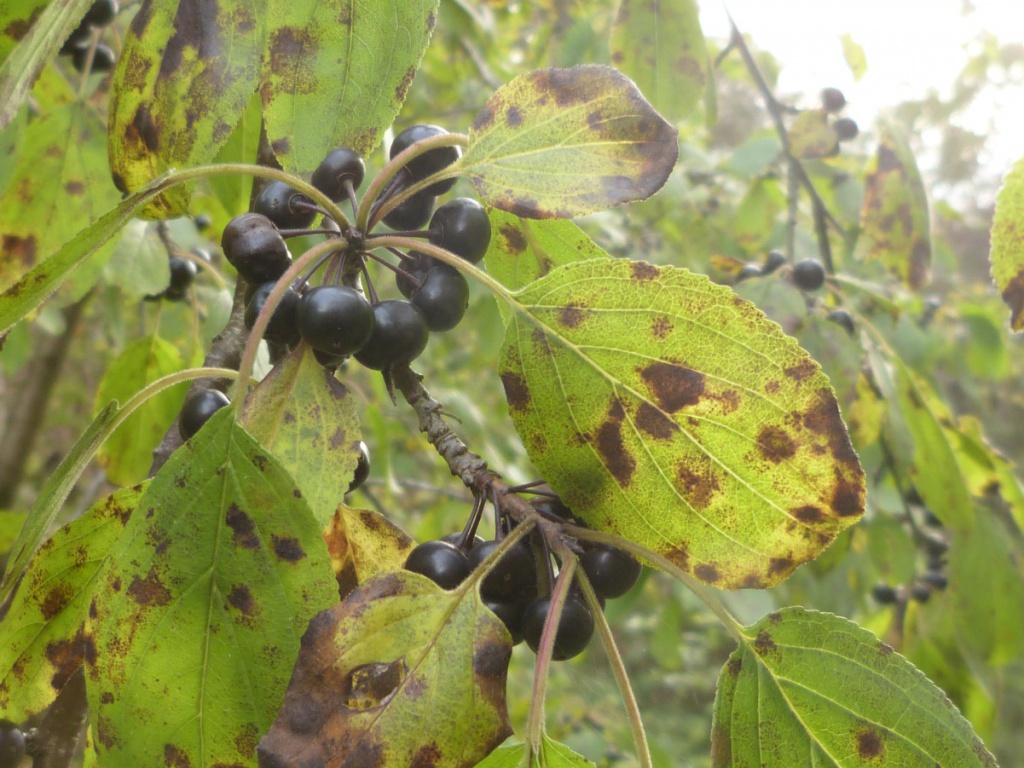
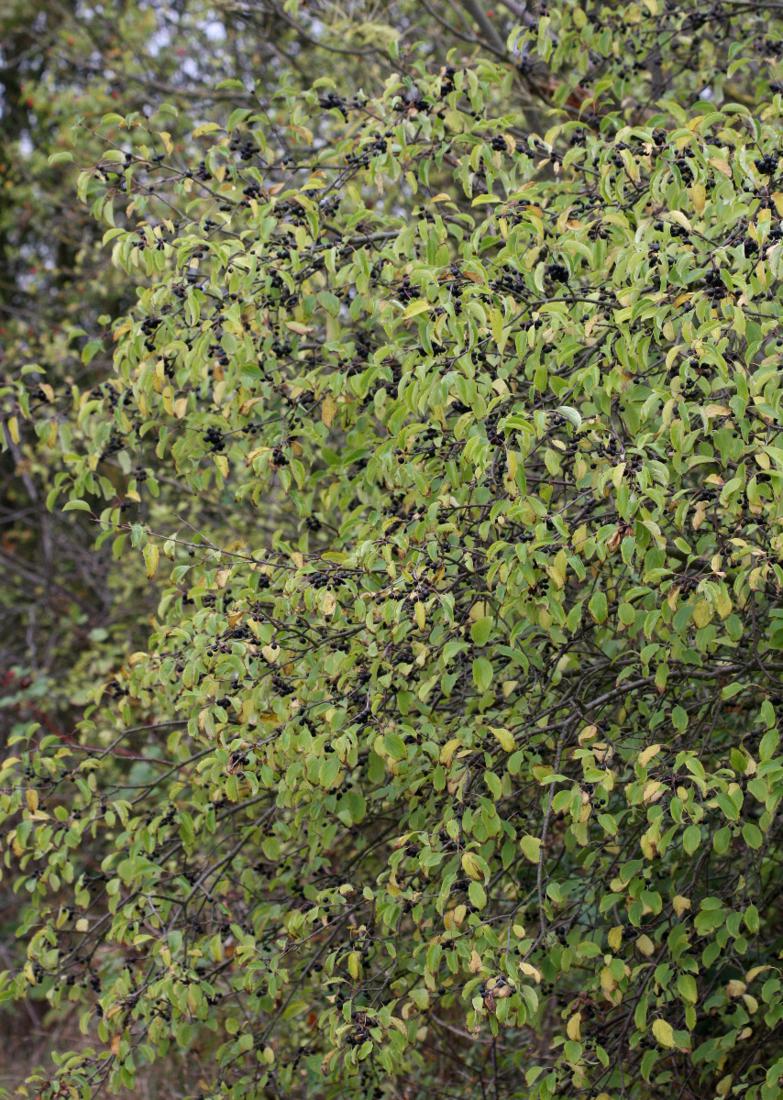
Shrub or small tree to 6 metres. Old branches ending in a spine tip. Leaves oval, opposite or clustered, long stalked and toothed. Flowers greenish 3 to 4 mm in dense clusters arising from the older branches or solitary. The male and female flowers on separate plants. Berries black when ripe.

Woodland scrub and hedgerows.
May and June.
Deciduous.
Fairly frequent in England but much less so in Scotland and Wales.
Fairly frequent in Leicestershire and Rutland. In the 1979 Flora survey of Leicestershire it was found in 233 of the 617 tetrads.
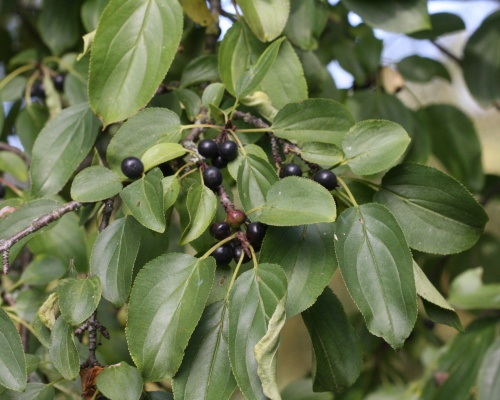 David Nicholls
Watermead Country Park
27 September 2013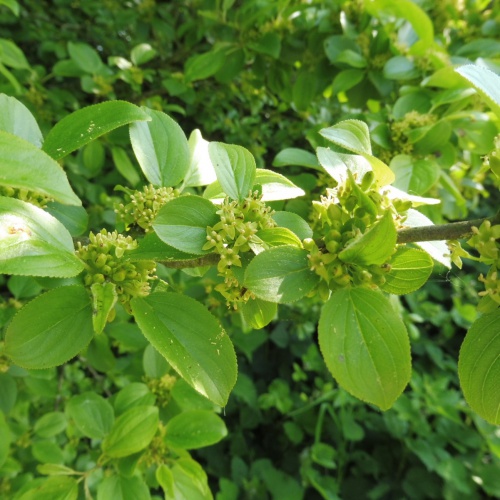 martindgrimes
Egleton NR
25 May 2017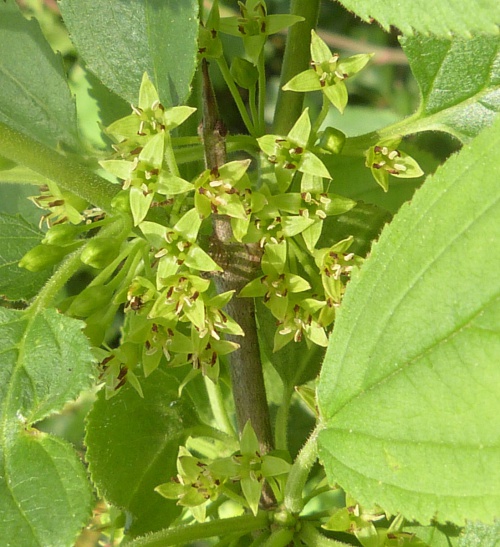 Graham Calow
Wykin
07 June 2015
in flower Hedge near Back Brook on Fosse Sapcote SP 4989 9244 (taken 11.7.2008).JPG) Graham Calow
Graham Calow
Sapcote
11 July 2006
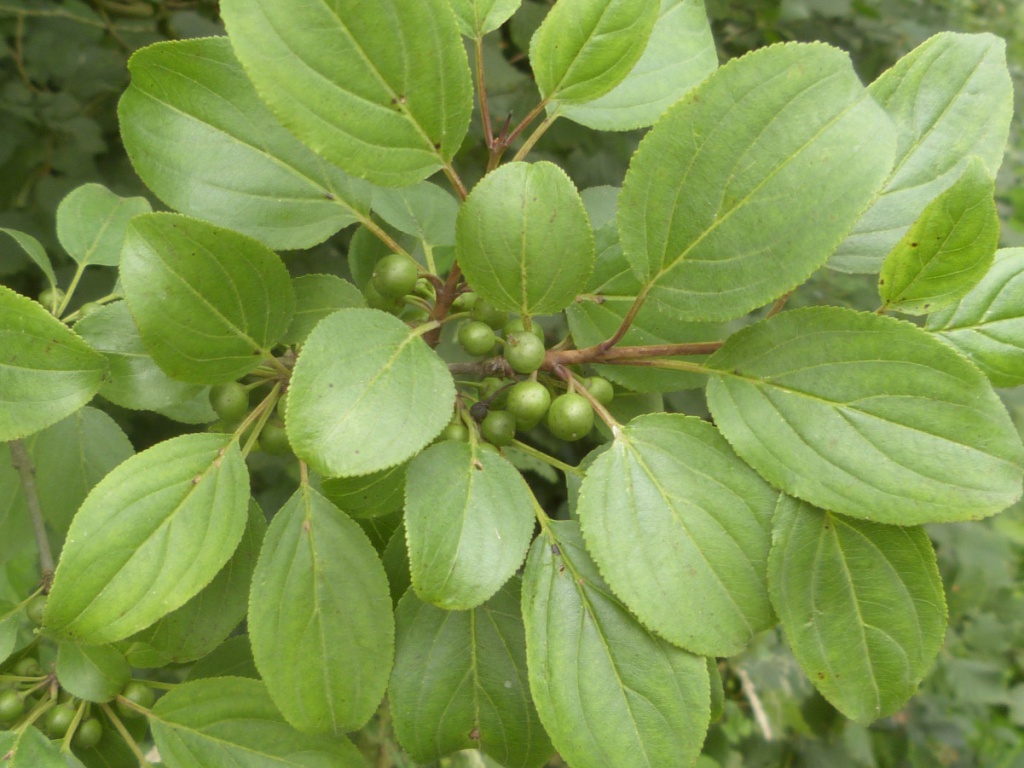
In fruit - unripe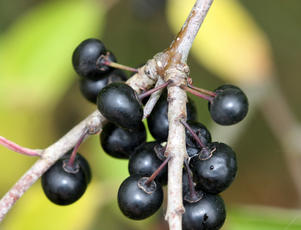 David Nicholls
Cossington
11 October 2011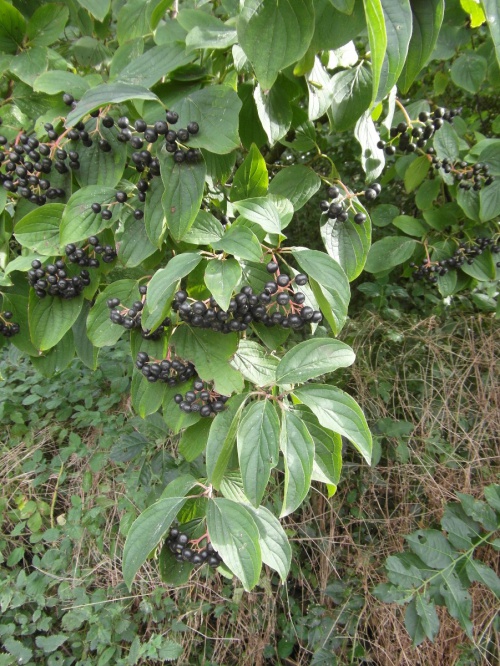 Alan Semper
Harby Nature Reserve
24 September 2016
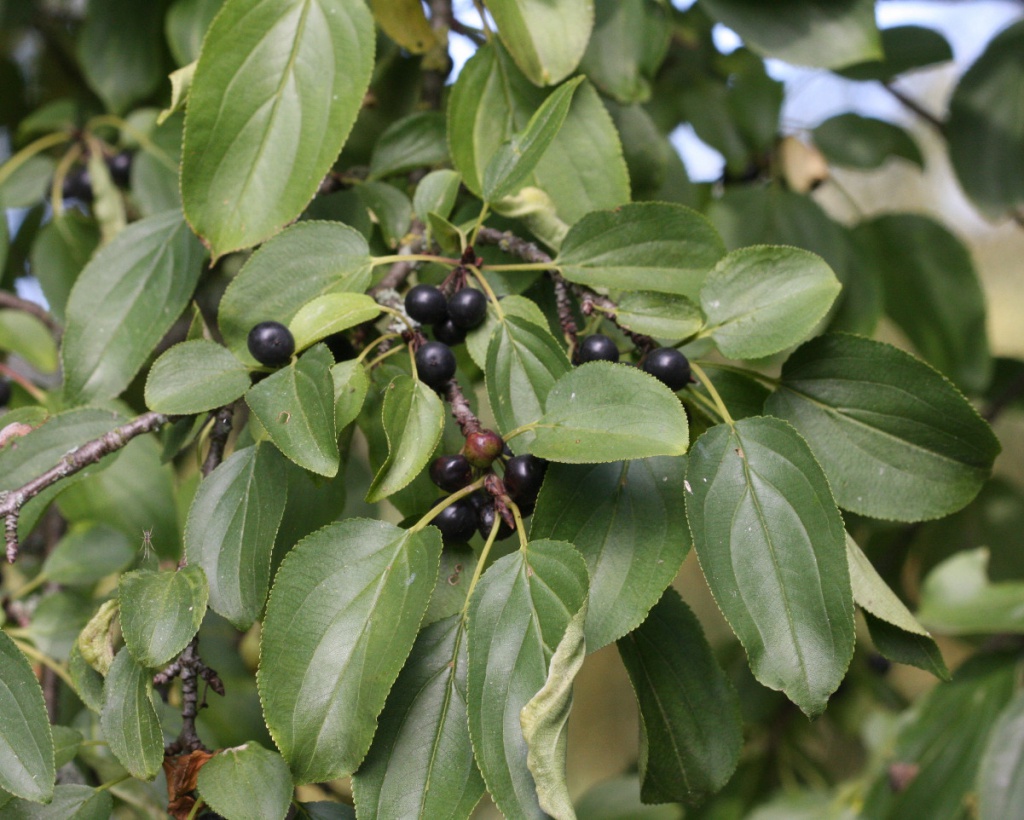
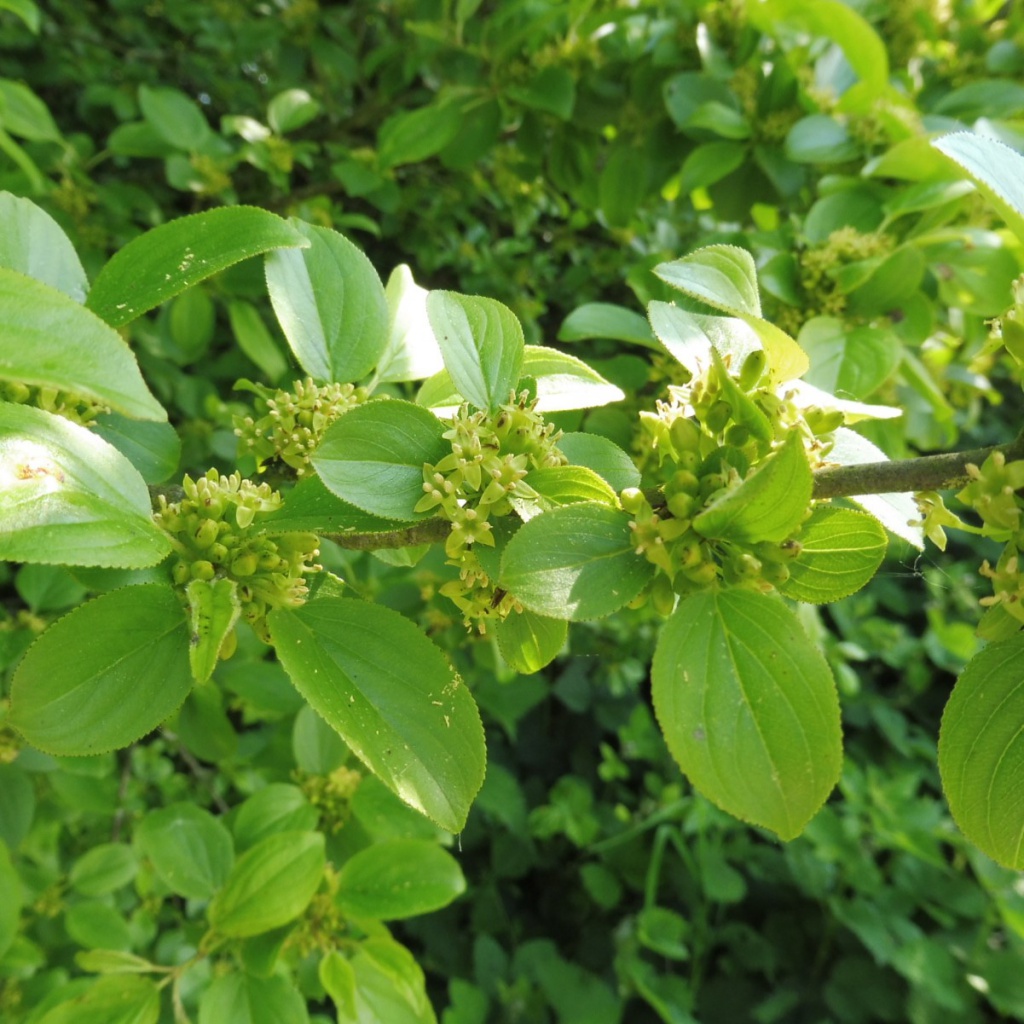
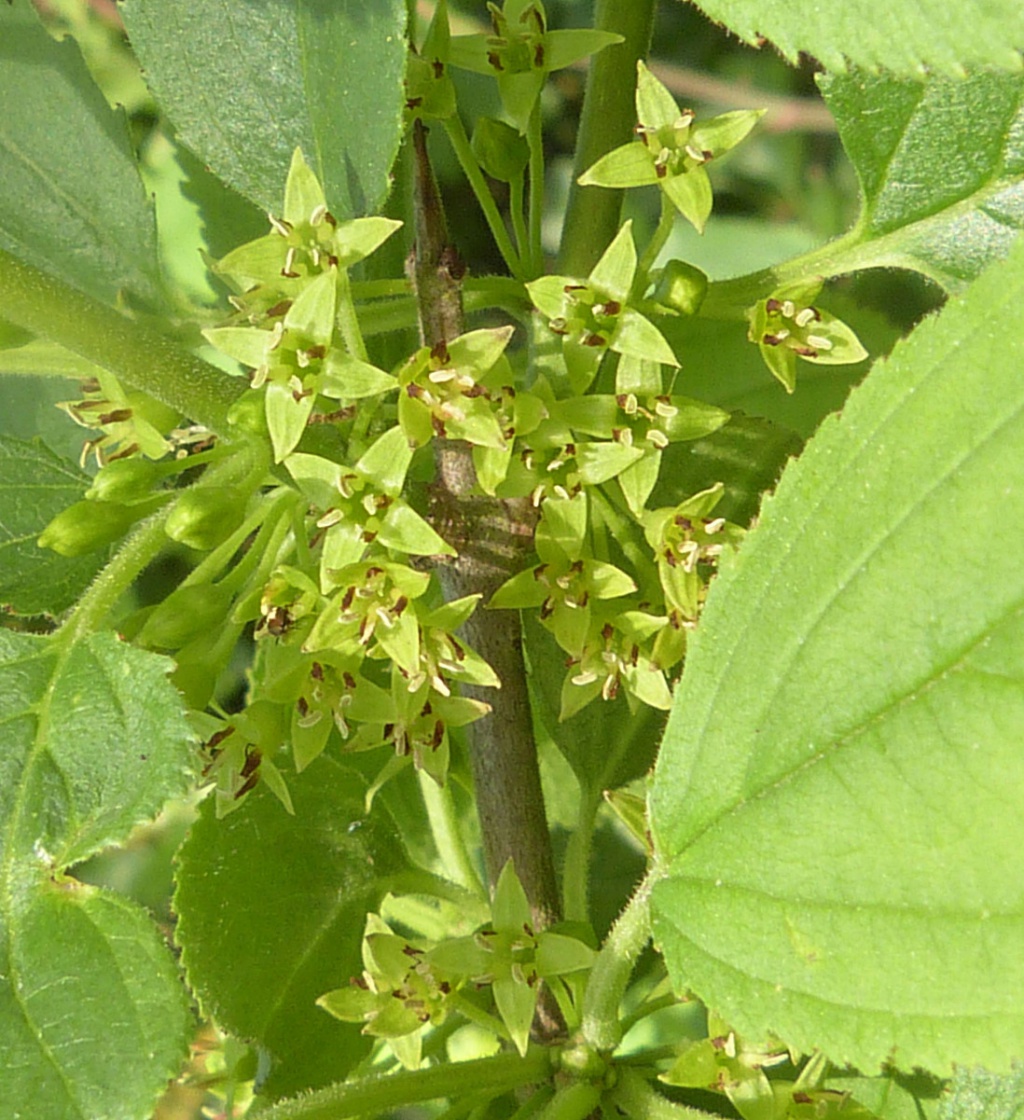
 Hedge near Back Brook on Fosse Sapcote SP 4989 9244 (taken 11.7.2008).JPG)
Leicestershire & Rutland Map
Enter a town or village to see local records
MAP KEY:
Yellow squares = NBN records (all known data)
Coloured squares = NatureSpot records: 2025+ | 2020-2024 | pre-2020
UK Map
Additional images
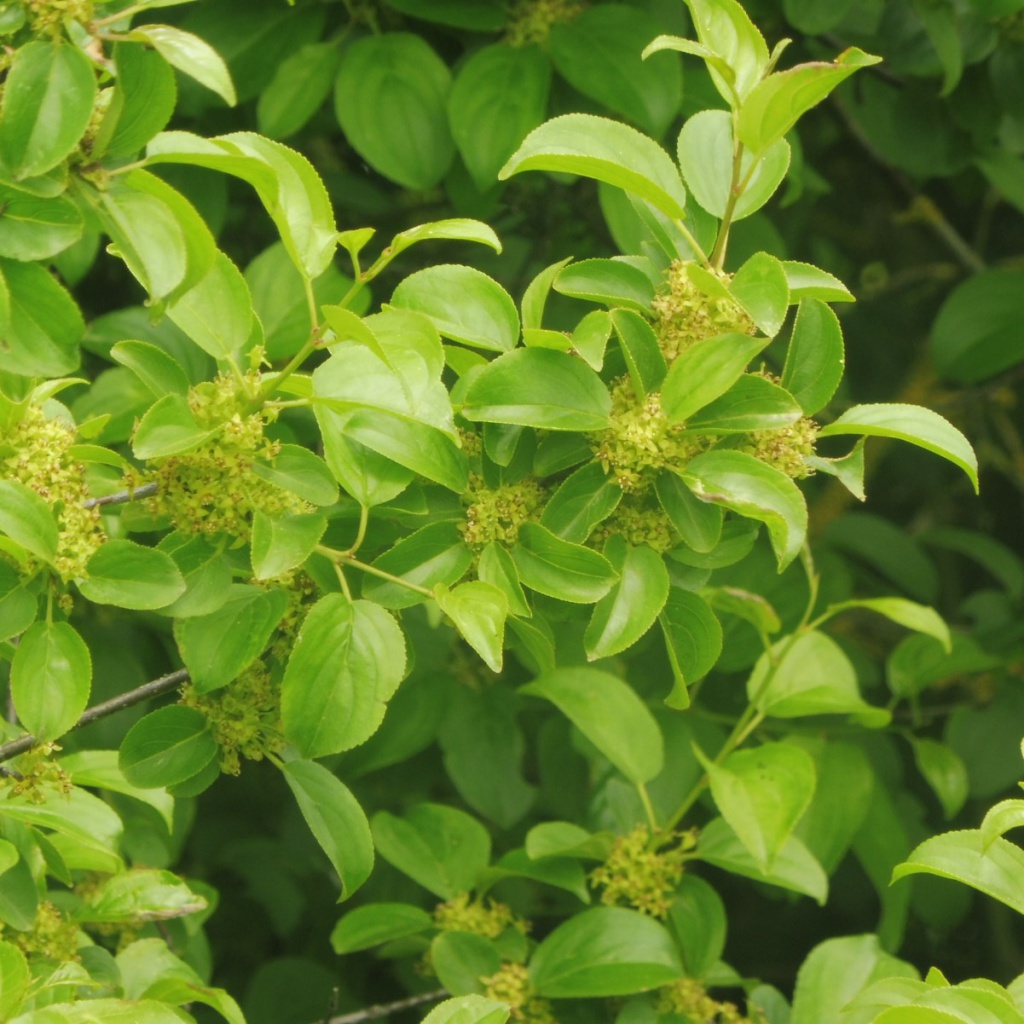
 Hedge near Back Brook on Fosse Sapcote SP 4989 9244 (taken 7.6.2006).JPG)
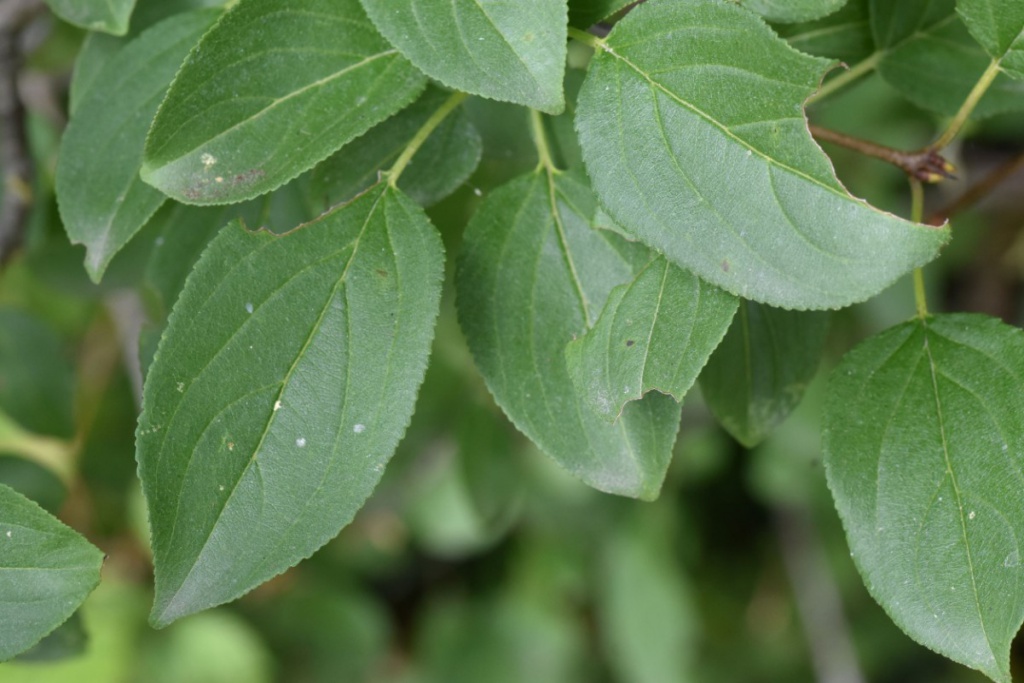
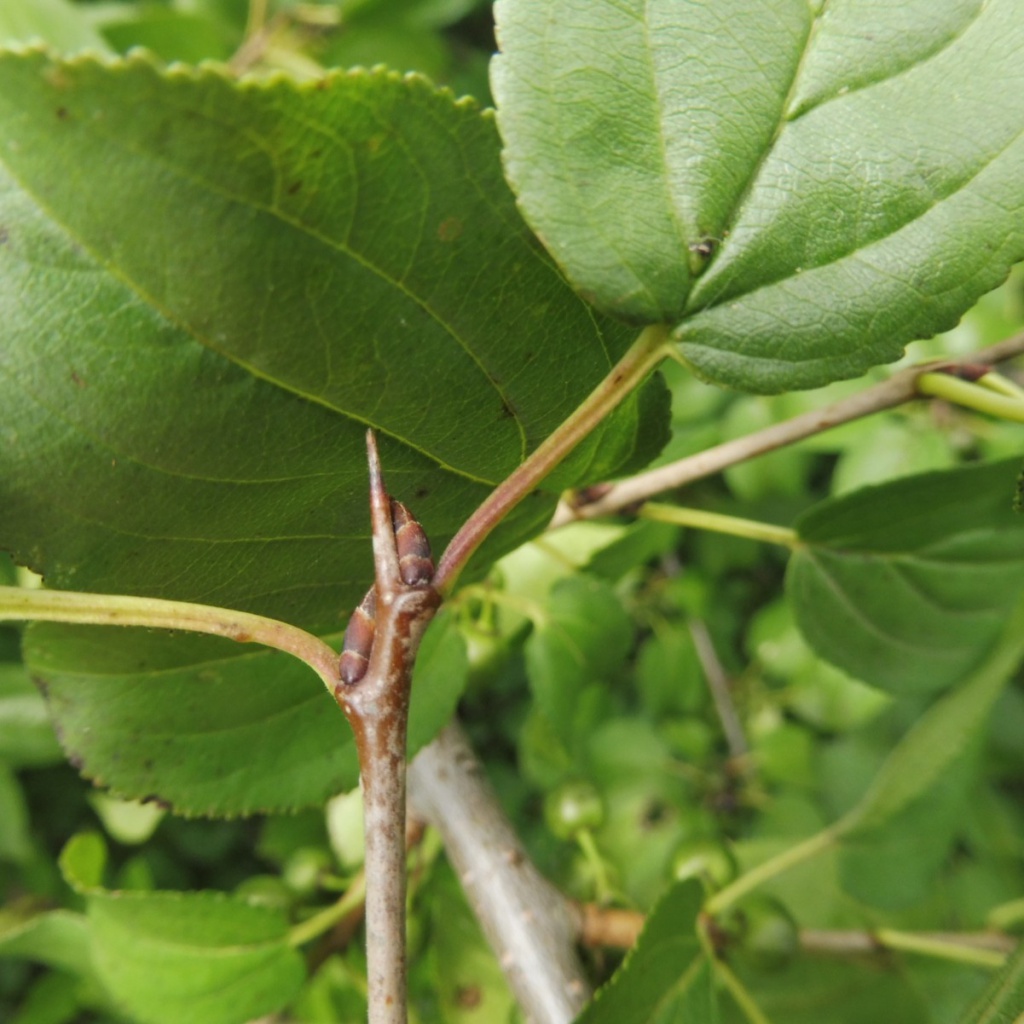
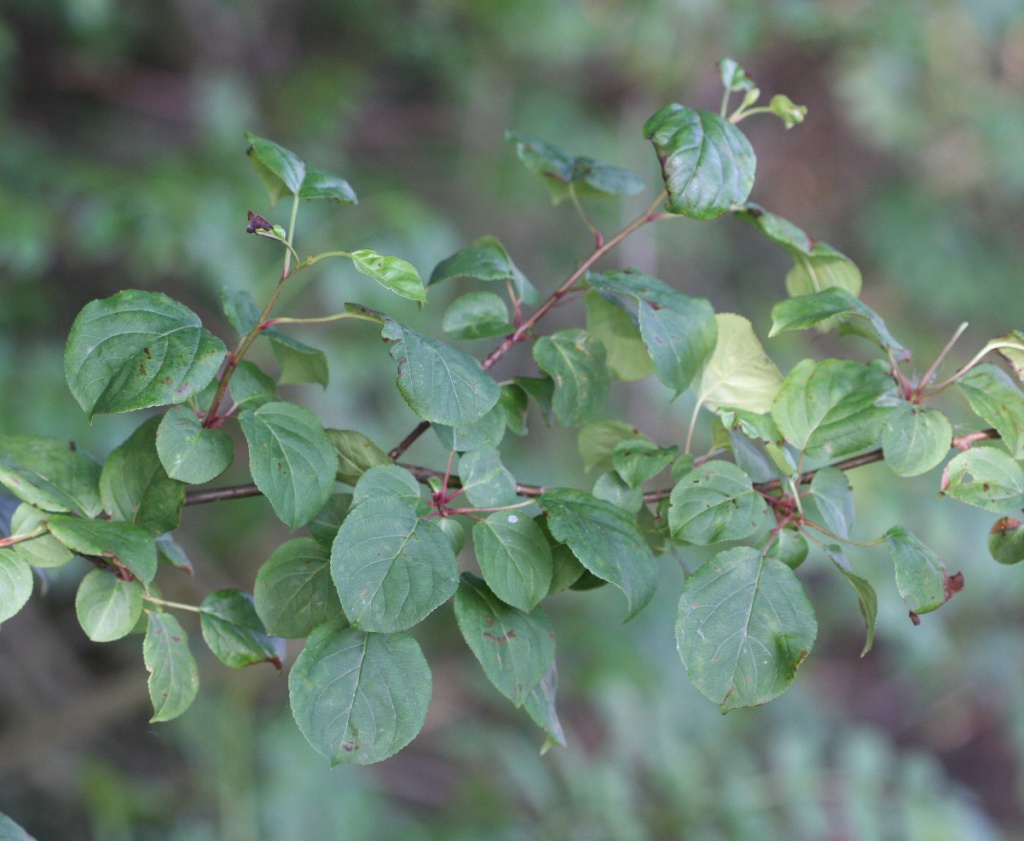
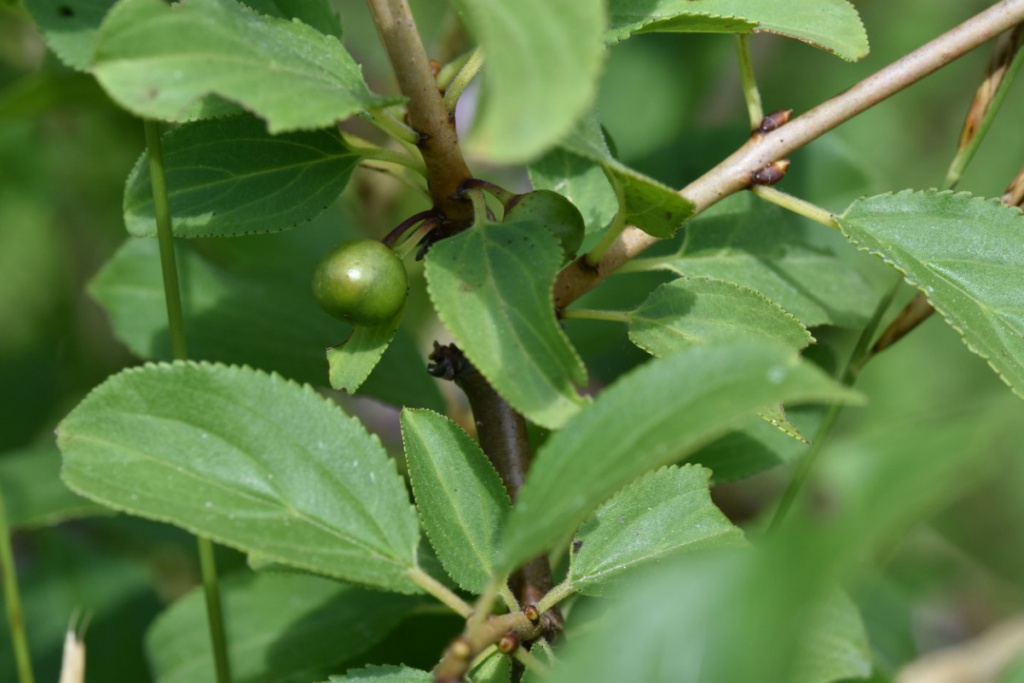
 Hedge near Back Brook on Fosse Sapcote SP 4989 9244 (taken 10.9.2006).JPG)
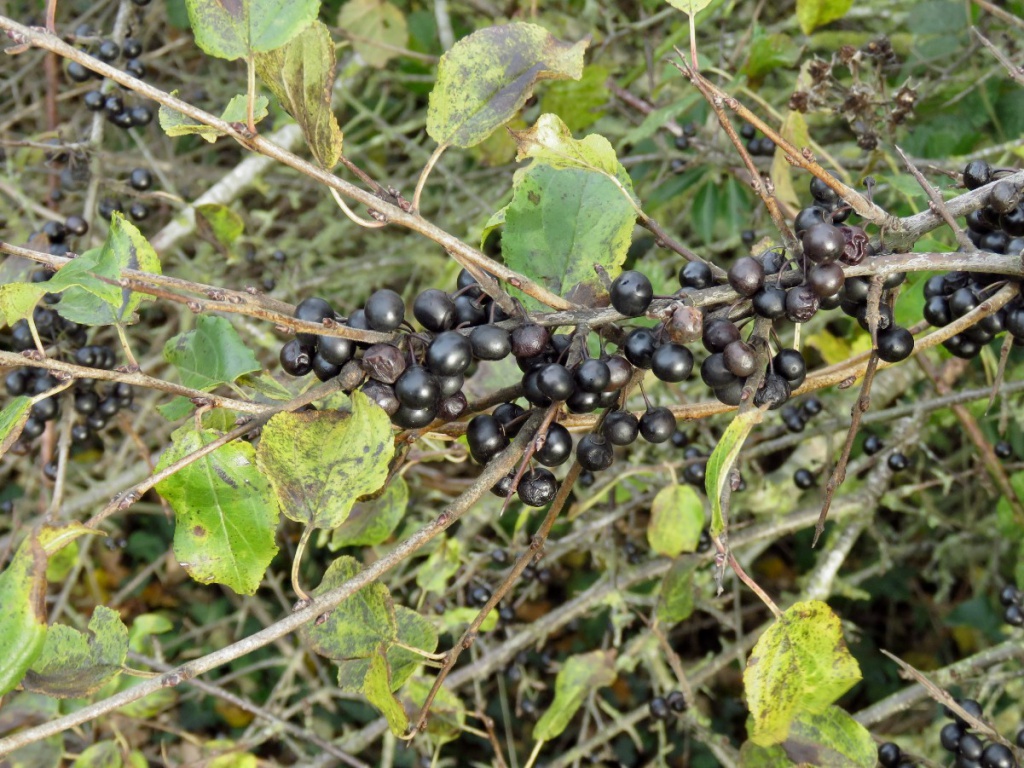
All NatureSpot records

Stigmella catharticella
The larva of the moth Stigmella catharticella mines the leaves of Buckthorn, producing a long straight slender gallery, turning into a series of 'S' turns. Frass may be either dispersed or coiled.
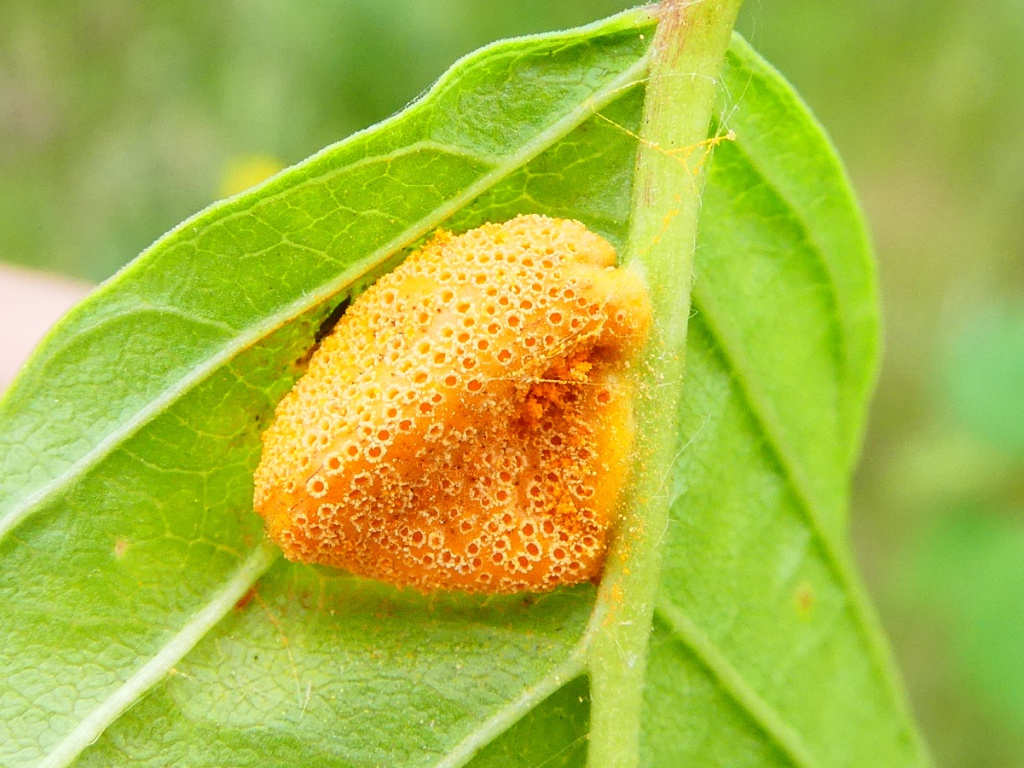
Crown Rust
Puccinia coronata is a rust fungus which affects Buckthorn. The orange aecia cause galls on the leaf blade and petioles, which may cause them to become twisted and distorted.
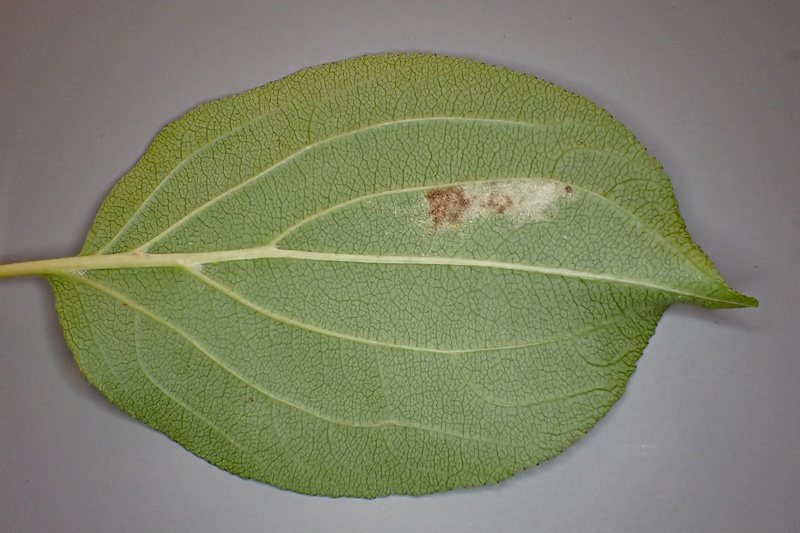
Aequsomatus annulatus
The gall mite Aequsomatus annulatus causes galls to form on the leaves of Buckthorn. An erineum is visible between the veins on the underside of the leaf, the blade becomes thickened and sometimes hairy on the upperside.
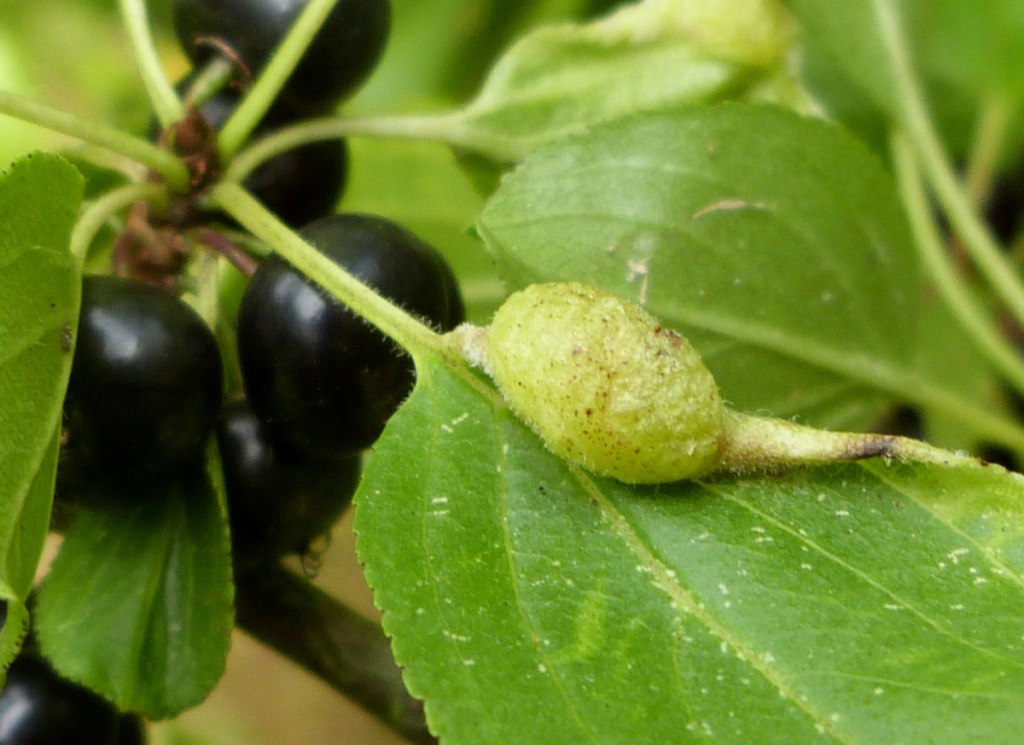
Jumping Plant Louse
The Jumping Plant Louse, Trichochermes walkeri, causes the leaf margin to curl and a gall to be formed on the leaves of Buckthorn. The gall is more likely to be seen than the adult plant louse.