Melampsora epitea s. lat.
Melampsora epitea s. lat.
The rust Melampsora epitea sensu lato produces aecia on the underside of various hosts, including spindle (Euonymus), silver-fir (Abies), larch (Larix), orchids (Orchidaceae) and currants (Ribes). On Spindle and orchids it is considered to be gall-causing, but not on the other aecial hosts.
The primary host, bearing uredinia and telia, is a Salix species; it is not a gall-causer on this host.
This is a probably a complex of species, and the taxonomy is not clear, so we are treating this species as 'sensu lato' - in a broad sense. Some authors separate these into different species, depending on the host; see Further Information below.
Other Melampsora produce uredinia and telia on their primary hosts, Salix species. Ribes and Larix are also the aecial hosts of other species of Melampsora.
host/microscopy 
Photograph the rust on the host. Ensure you have noted the host-plant species in your comments. Microscopic examination will be needed for some aecial host species, and for all Salix uredinial/telial hosts.
Alternating between various species in the aecial stage (e.g. Ribes, Larix, Abies, Euonymus) and Salix species in uredinial/telial stages
On Plant Parasites of Europe website, taxonomy is different to the NBN. Here, Melampsora epitea is treated as a complex of species, including the following that may be present in VC55. It is not clear how these correspond to NBN taxonomy.
- Melampsora abietis-caprearum - aecial host = Abies
- Melampsora euonymi-caprearum - aecial host = Euonymus (NB. this appears to be synonymous with M epitea var. epitea).
- Melampsora laricis-epitea - aecial host = Larix
- Melampsora repentis - aecial host = various species in Orchidaceae
- Melampsora ribesii-epitea - aecial host = Ribes
- Melampsora ribesii-purpureae - aecial host = Ribes
- Melampsora ribesii-viminalis - aecial host = Ribes
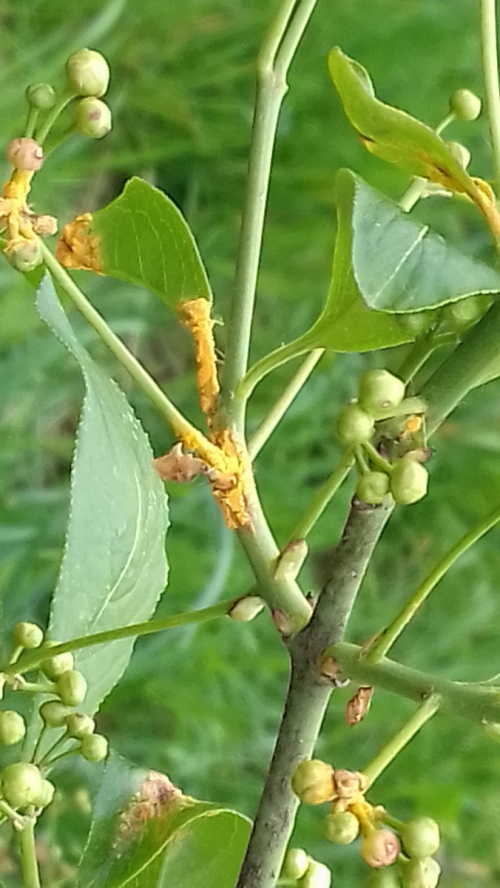 Melinda Bell
Heather, QEDJWood
05 May 2019
aecia on Spindle Melinda Bell
Heather, QEDJWood
05 May 2019
Melampsora epitea variety epitea on Spindle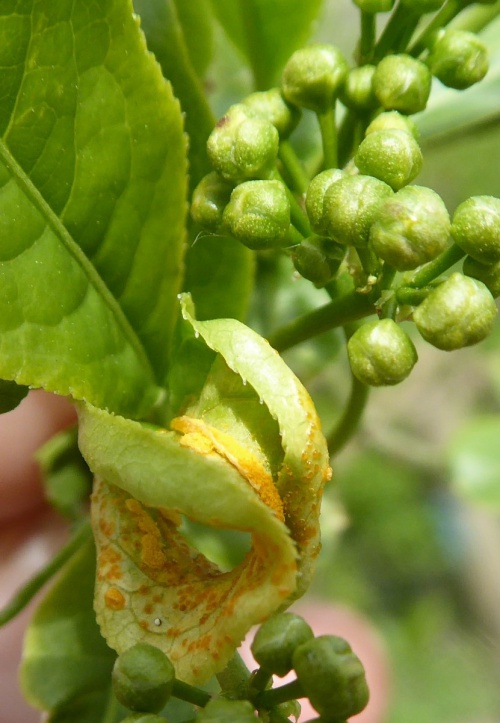 sue
sue
Bagworth
12 April 2020


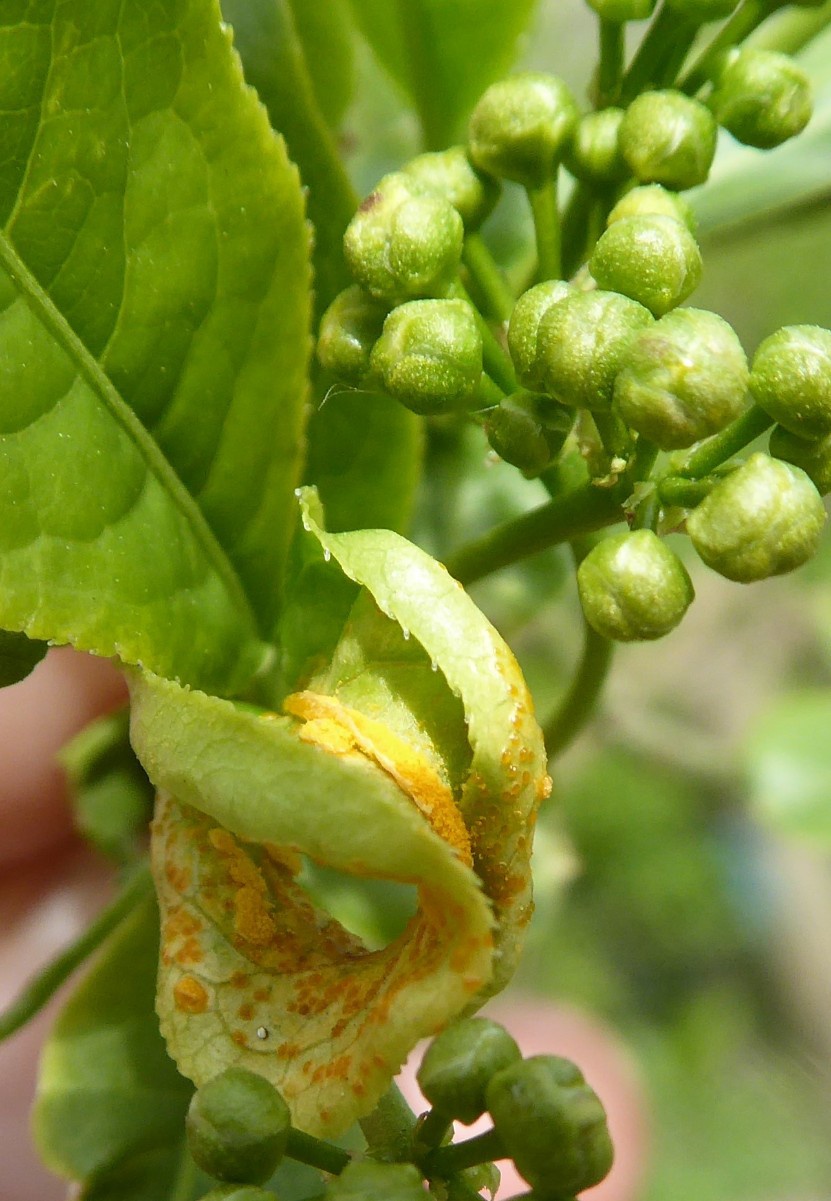
Leicestershire & Rutland Map
Enter a town or village to see local records
MAP KEY:
Yellow squares = NBN records (all known data)
Coloured squares = NatureSpot records: 2025+ | 2020-2024 | pre-2020
UK Map
Additional images
No additional images available for this species.