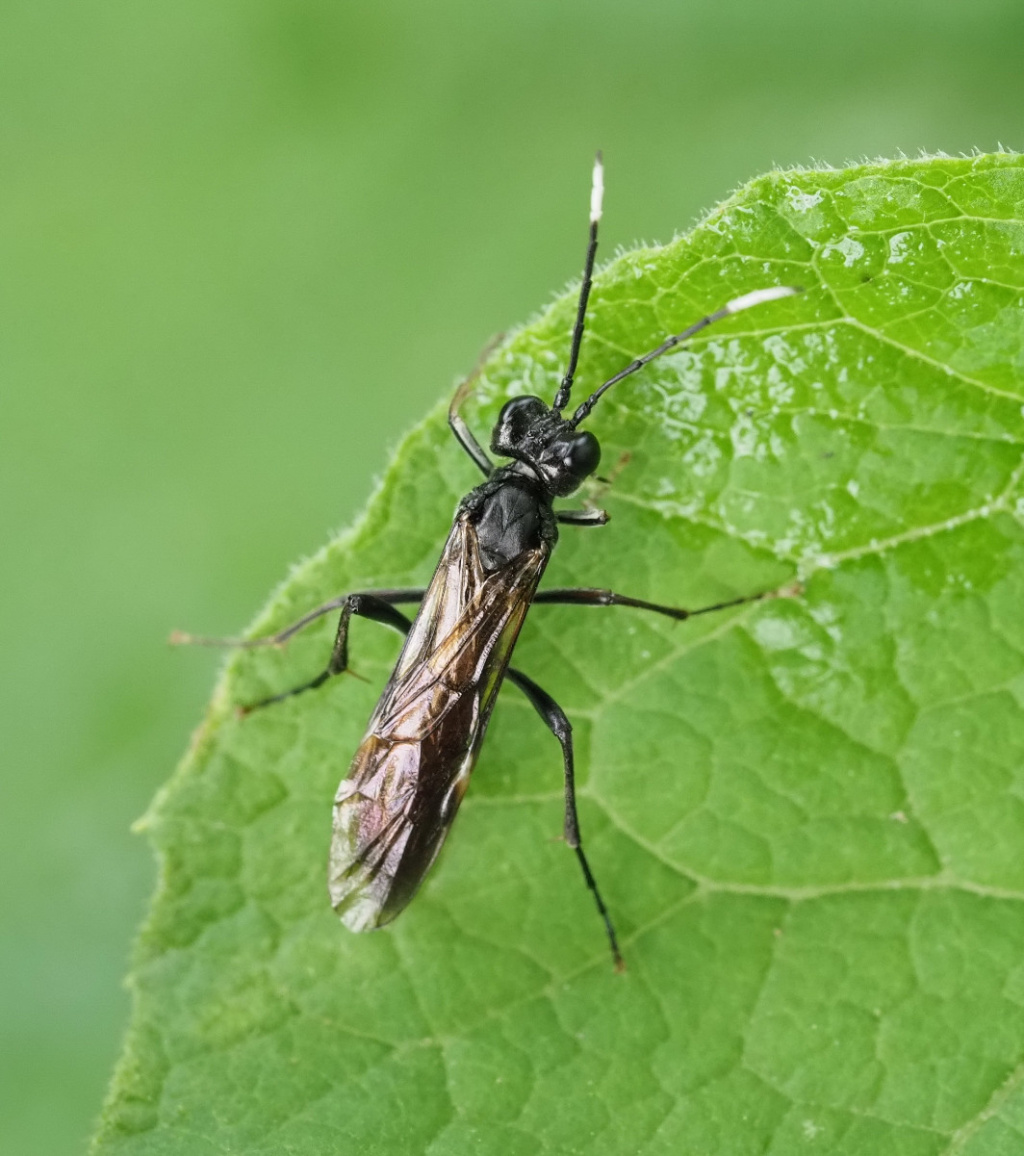
Tenthredo livida
Tenthredo livida
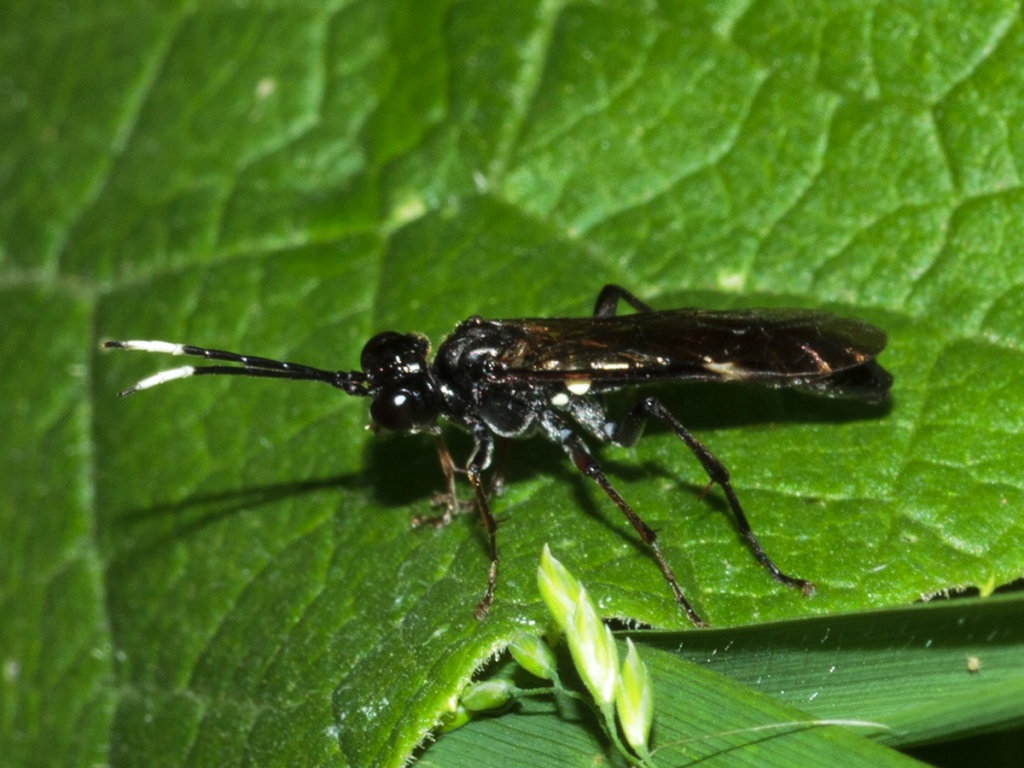
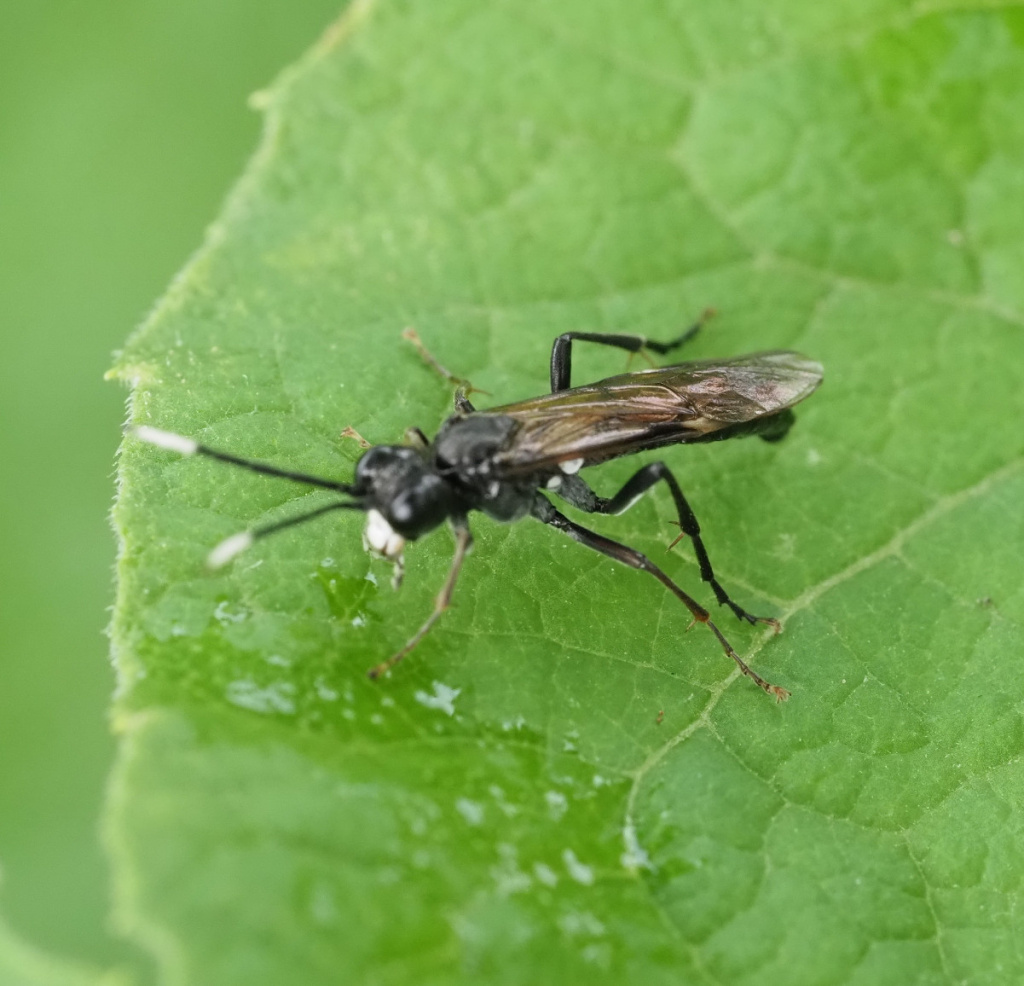
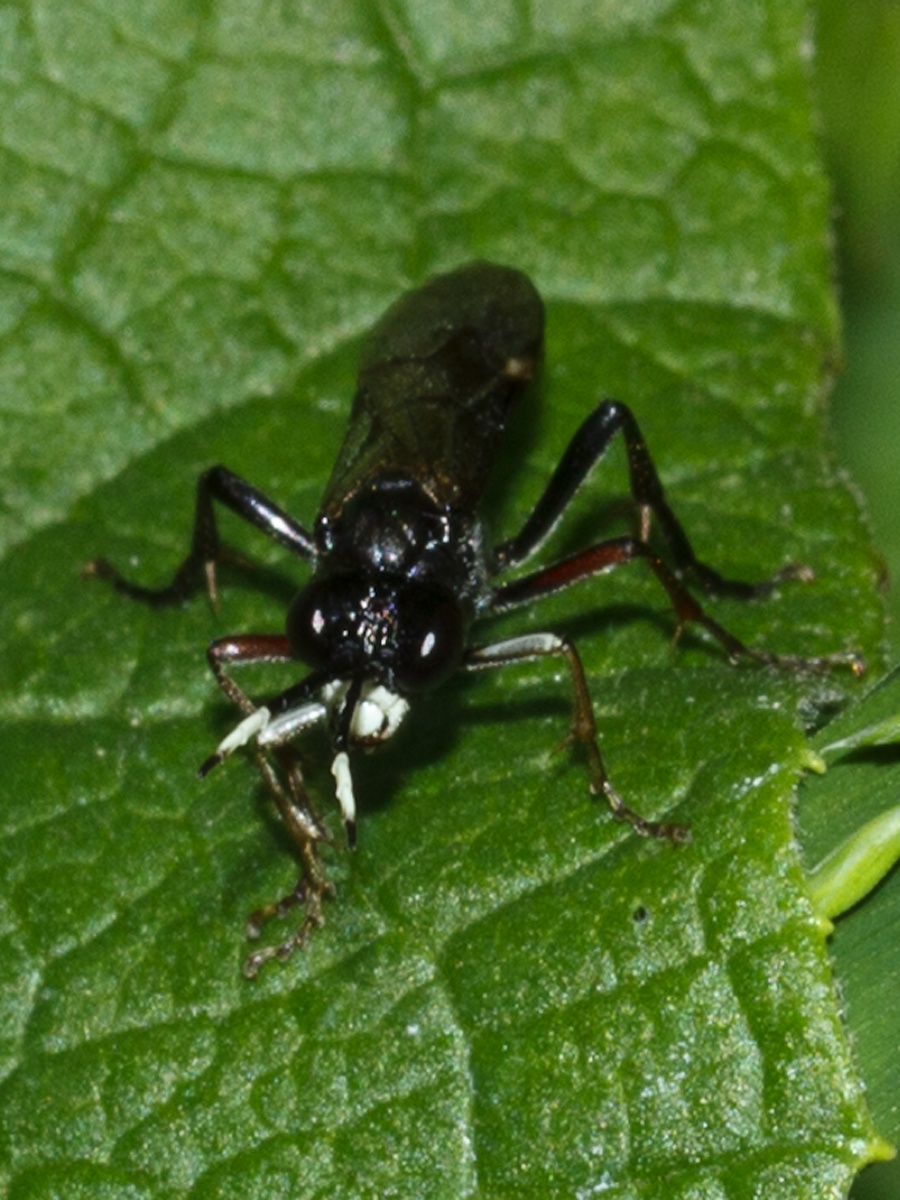
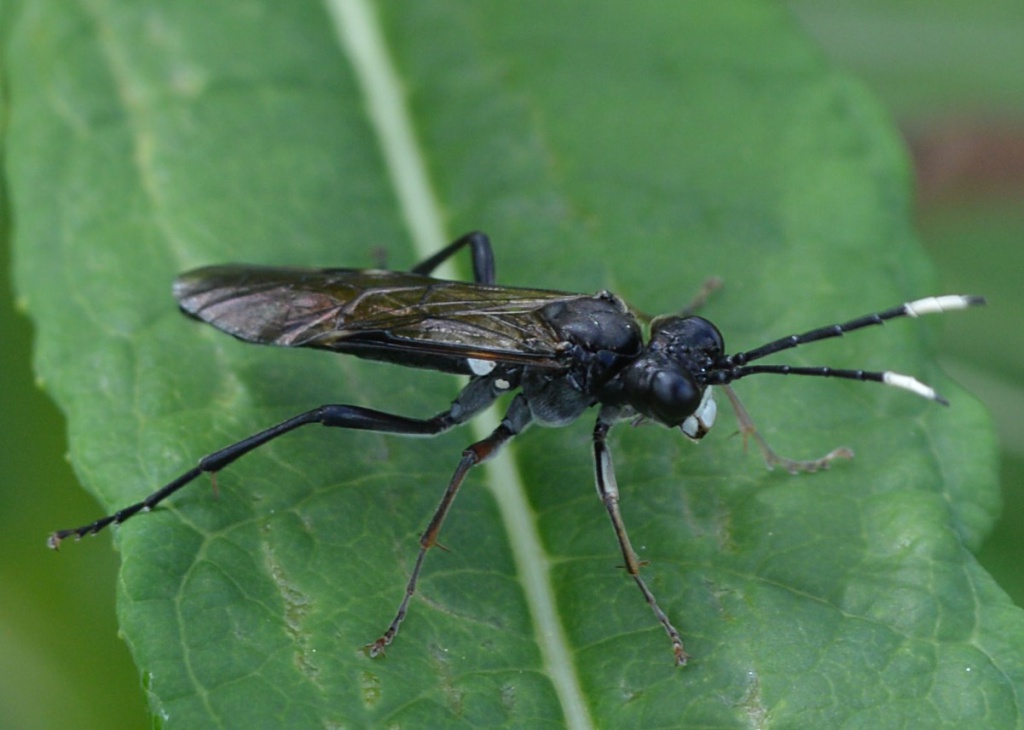
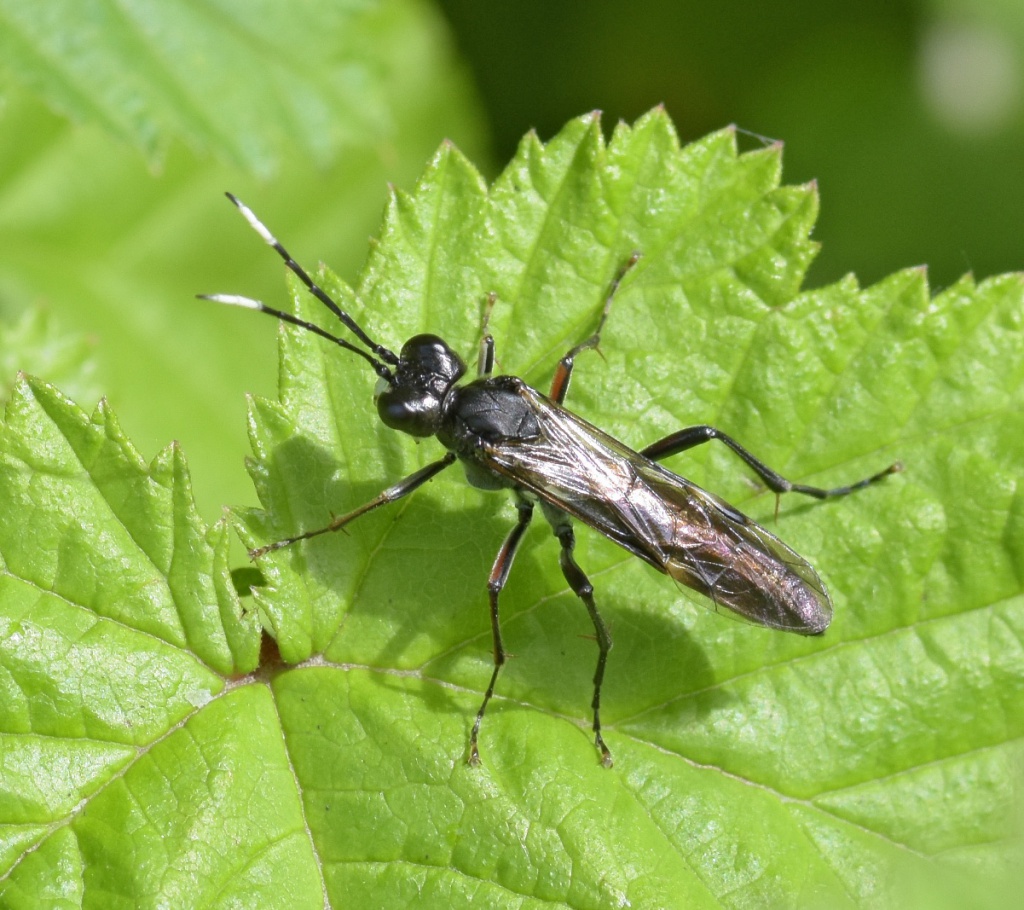
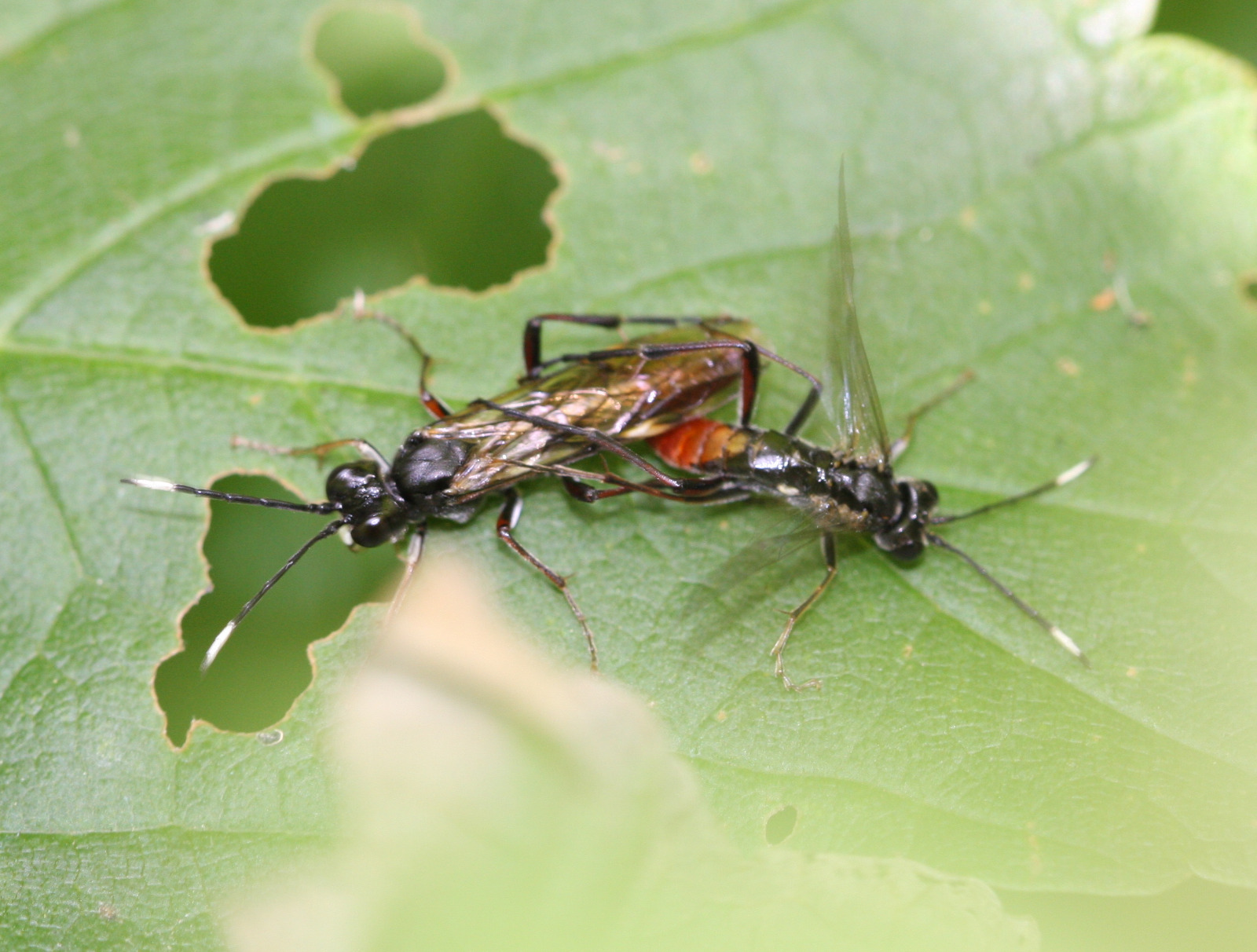
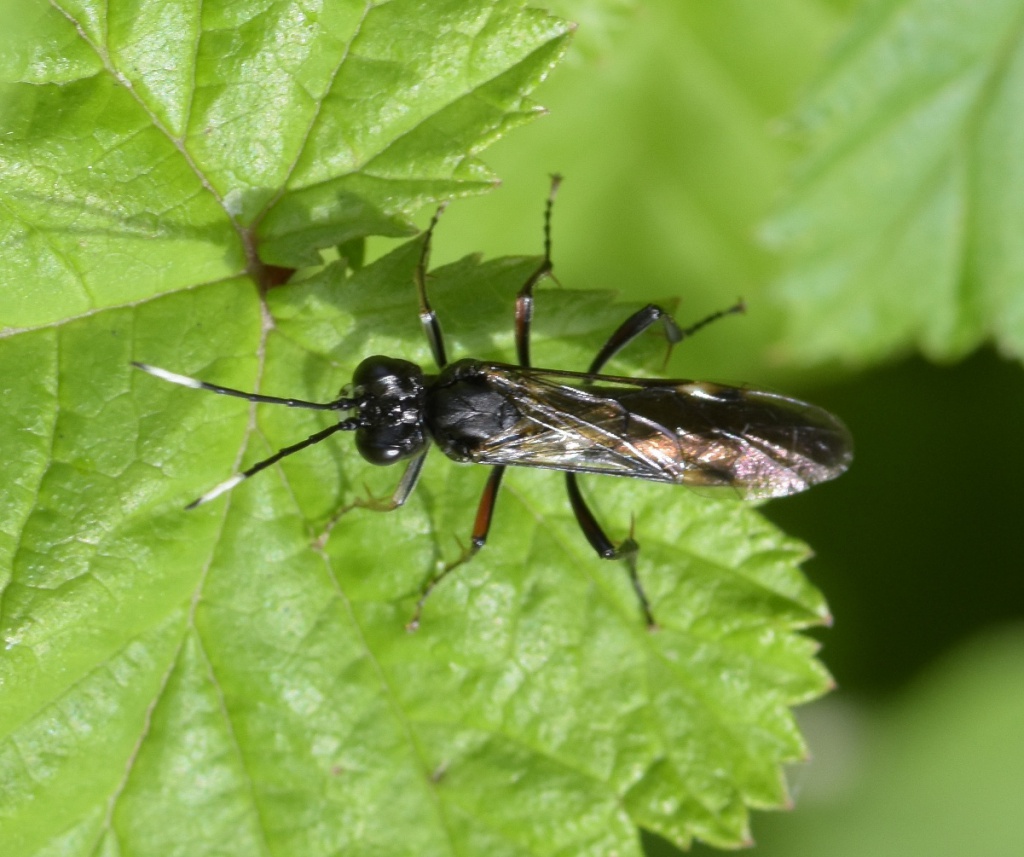
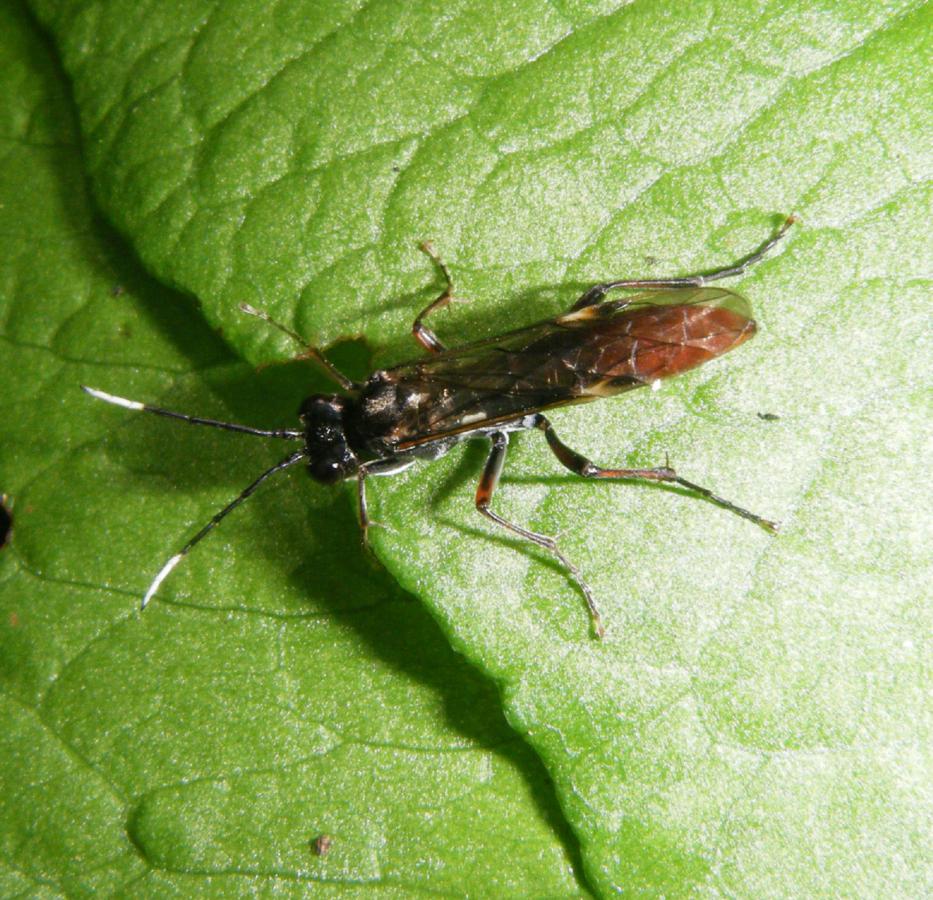
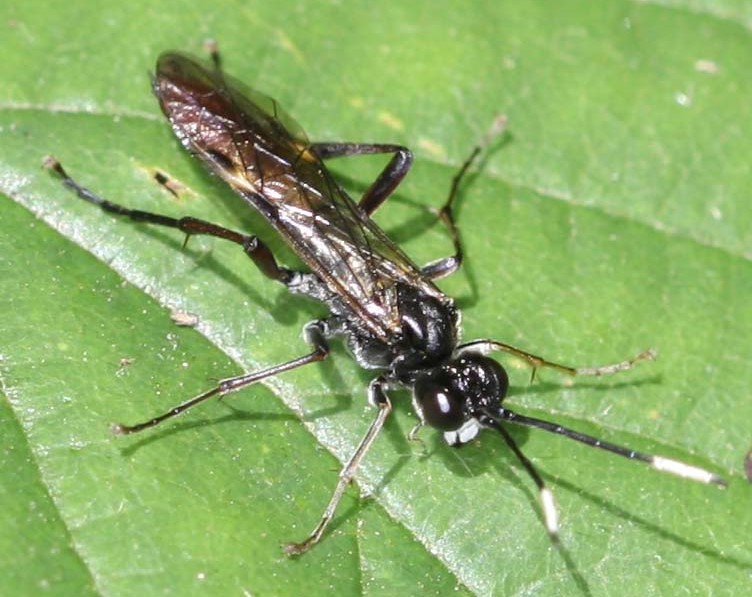
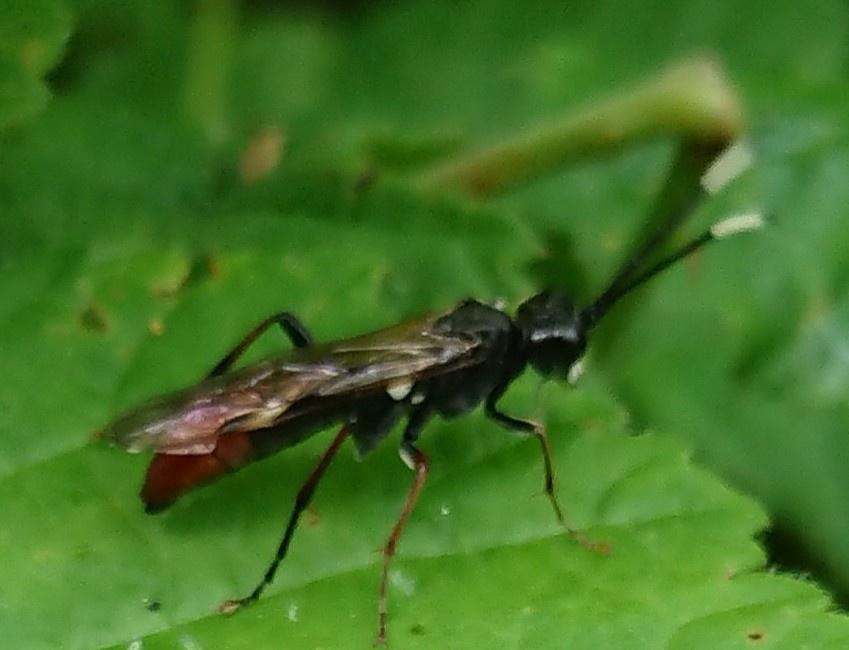
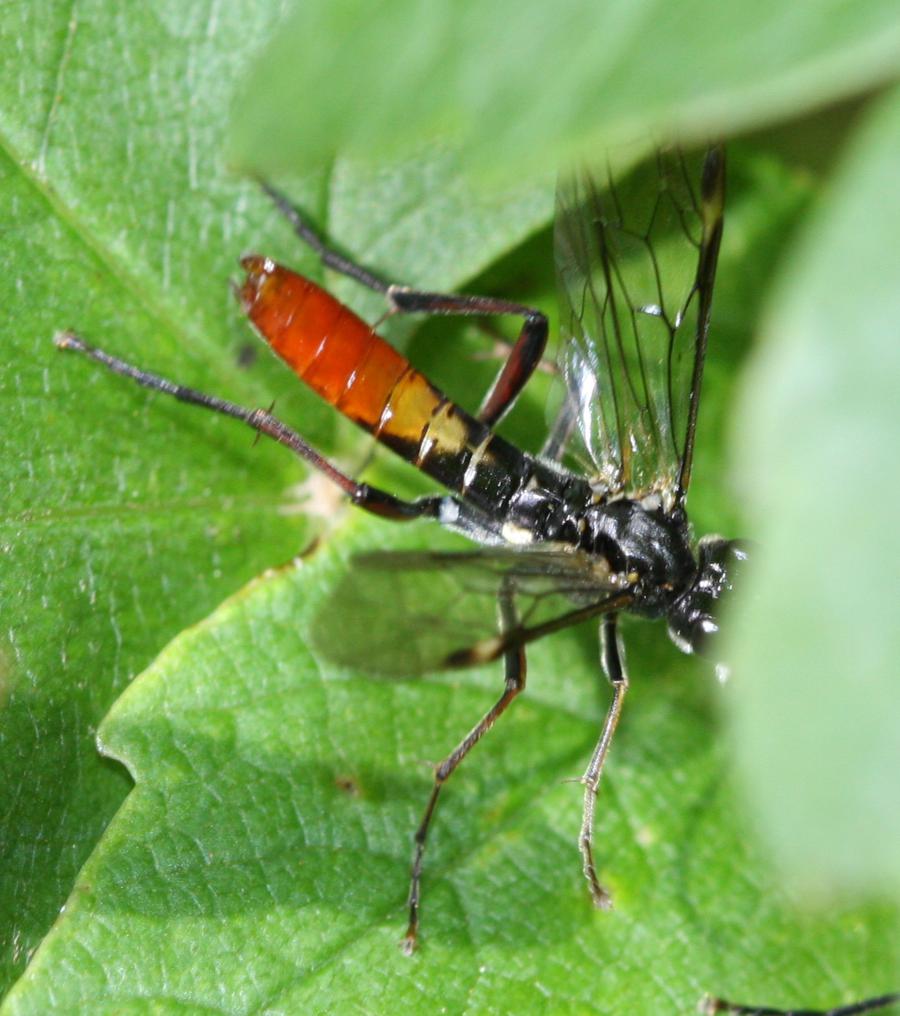
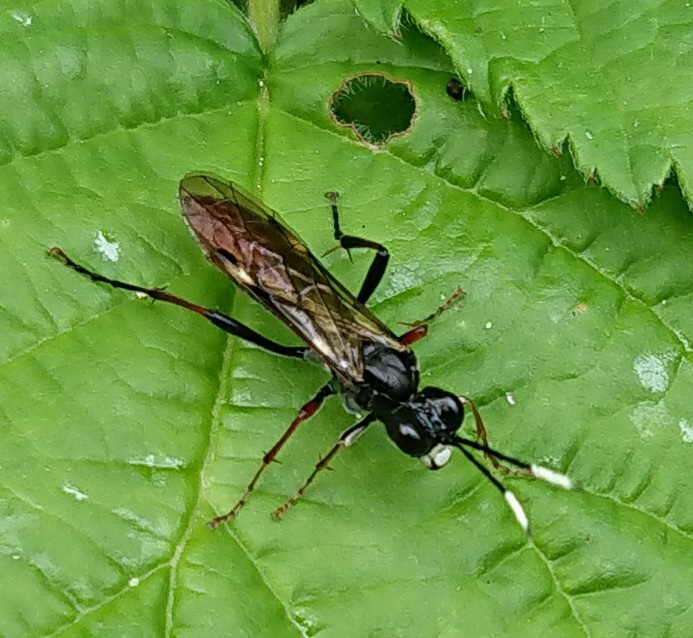
12-15mm. It has a conspicuous white 'mouth' and white tips to its antennae. It is really variable in colour, sometimes all black, but other forms with varying amounts of red, sometimes with yellow on the middle tergites. The white marked antennae together with the white and brown stigma in the forewing are distinctive and help with the identification.
Other species also have the white banded antennae and a white 'mouth'. T. livida can be distinguished by having two-tone stigma - the apical two thirds brown and the basal third pale.
T. ferruginea has a yellowish brown stigma and usually has white on the thorax and over the eyes.
T. balteata has a black or dark brown stigma.
T. colon has a dark brown stigma. The females have hind femurs with the distal third black in colour. Also the teeth on the basal part of the saw are relatively flat and rounded.
T. semicolon has a dark brown stigma. The females have only the tip of the femur black. At the base of the saw the teeth are much sharper and triangular in shape.

- 12-15mm
- bicoloured stigma
- white banded antennae
Found along hedgerows and woodland rides
Adult flies from May to August
The larvae are nocturnal grazers, feeding on a variety of leaves, such as Hazel, Willow and Honeysuckle.
Widespread and common British species
Common in Leicestershire and Rutland.
 male Donkey Lane Sapcote SP 4858 9298 (taken 17.5.2009)...JPG) Graham Calow
Graham Calow
Sapcote
17 May 2009
male female Donkey Lane Sapcote SP 4858 9298 (taken 23.5.2009).JPG) Graham Calow
Graham Calow
Sapcote
23 May 2009
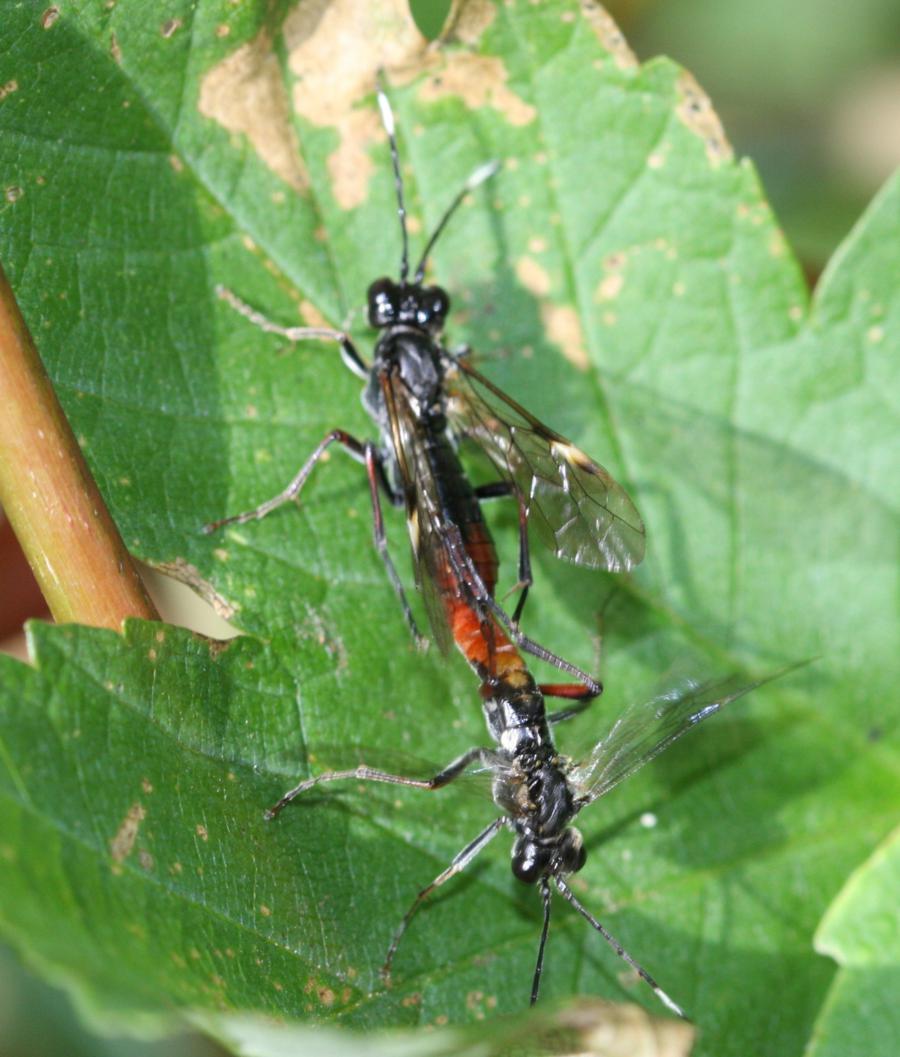
female male Donkey Lane Sapcote SP 4858 9298 (taken 17.5.2009),.JPG) Graham Calow
Graham Calow
Sapcote
17 May 2009
male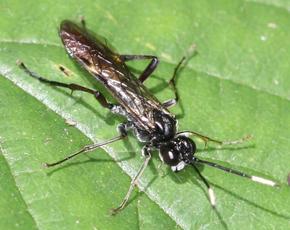 David Nicholls
Ulverscroft NR
20 June 2008
female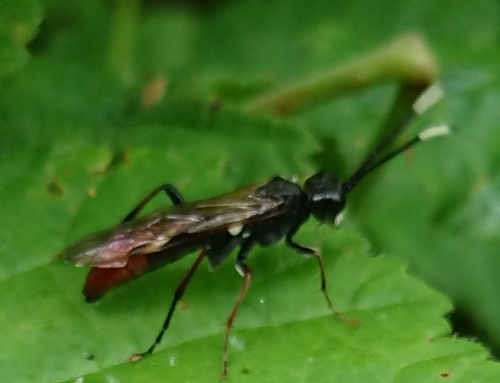 steven lewis
Pickworth Great wood
04 June 2019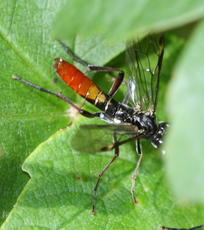 David Nicholls
Rutland Water
27 May 2011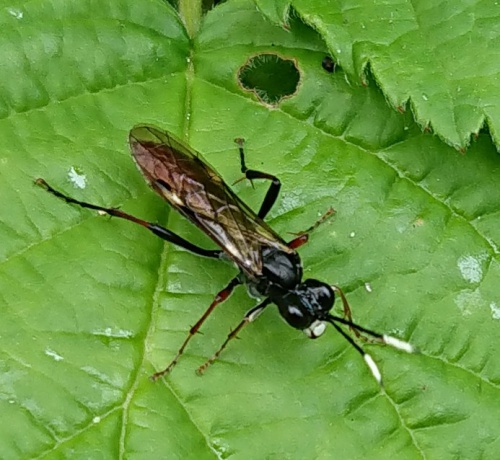 steven lewis
Pickworth Great wood
04 June 2019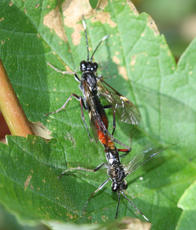 David Nicholls
Rutland Water
27 May 2011
mating pair (male below)
 male Donkey Lane Sapcote SP 4858 9298 (taken 17.5.2009)...JPG)
 female Donkey Lane Sapcote SP 4858 9298 (taken 23.5.2009).JPG)
 male Donkey Lane Sapcote SP 4858 9298 (taken 17.5.2009),.JPG)
Leicestershire & Rutland Map
Enter a town or village to see local records
MAP KEY:
Yellow squares = NBN records (all known data)
Coloured squares = NatureSpot records: 2025+ | 2020-2024 | pre-2020
UK Map
Additional images