Large Rose Sawfly
Large Rose Sawfly - Arge pagana
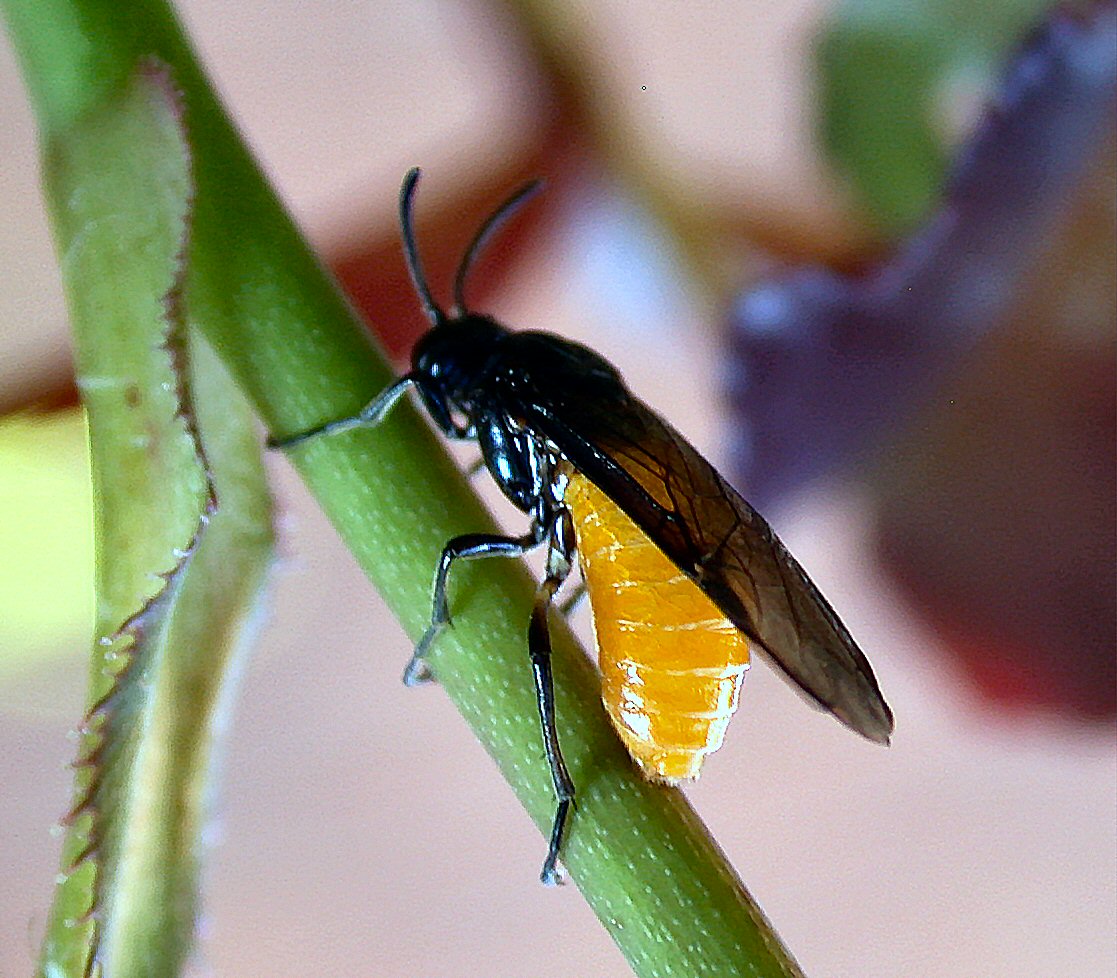
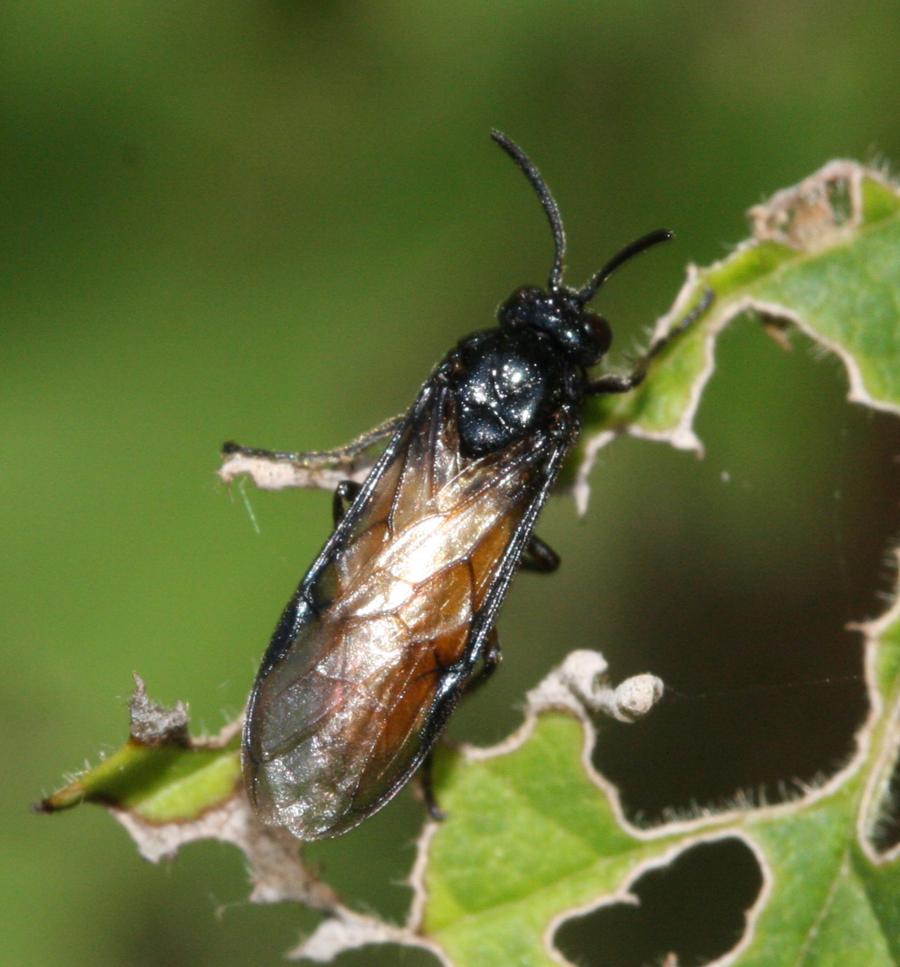
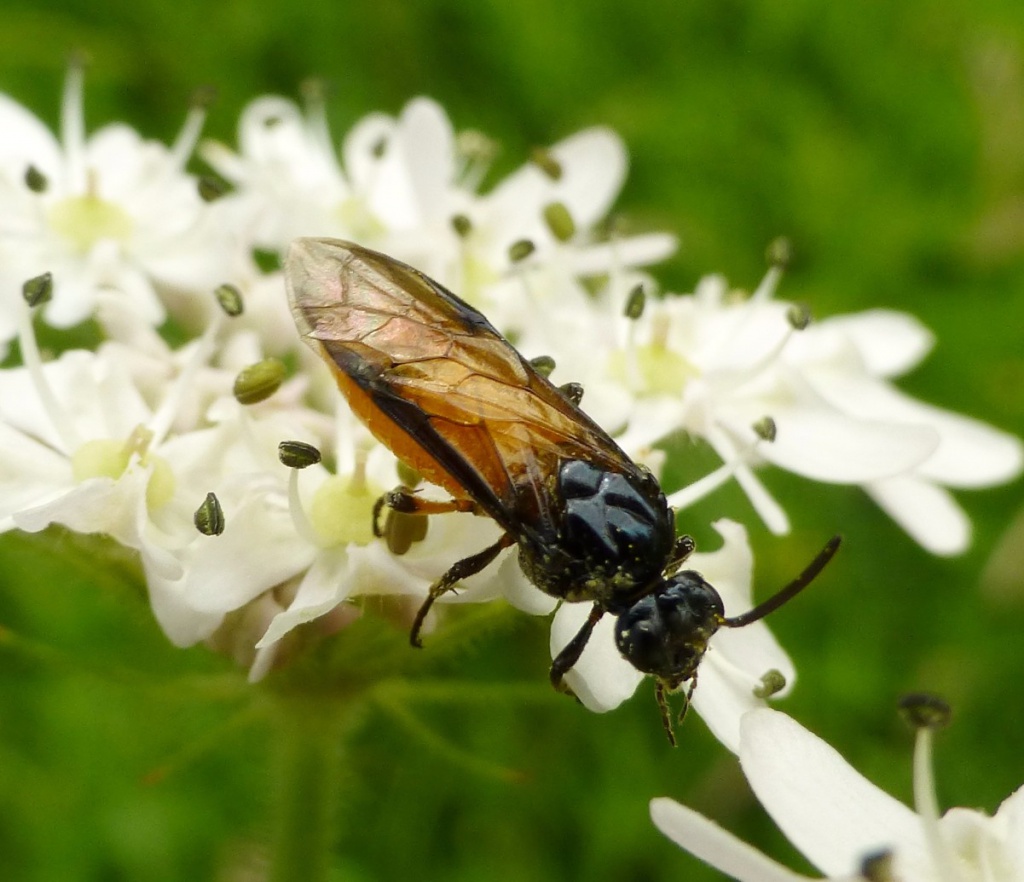
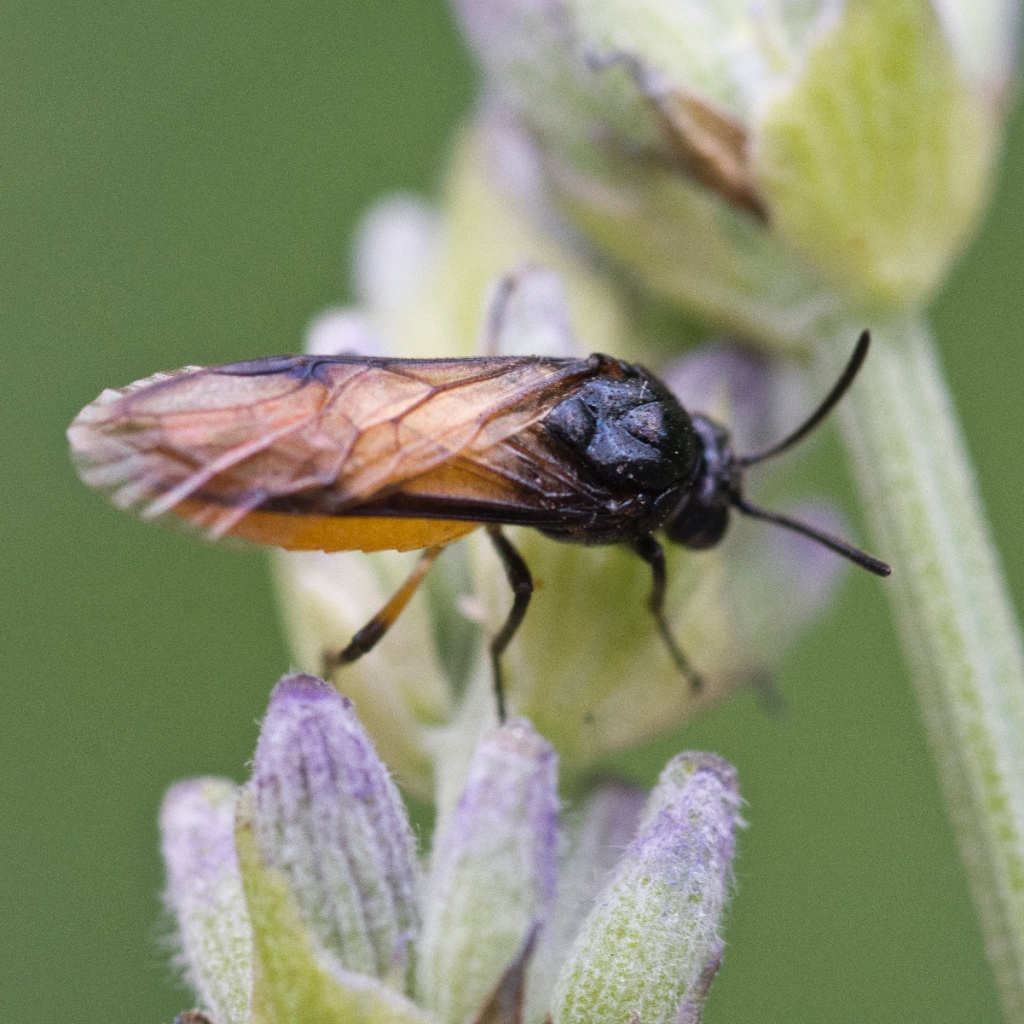
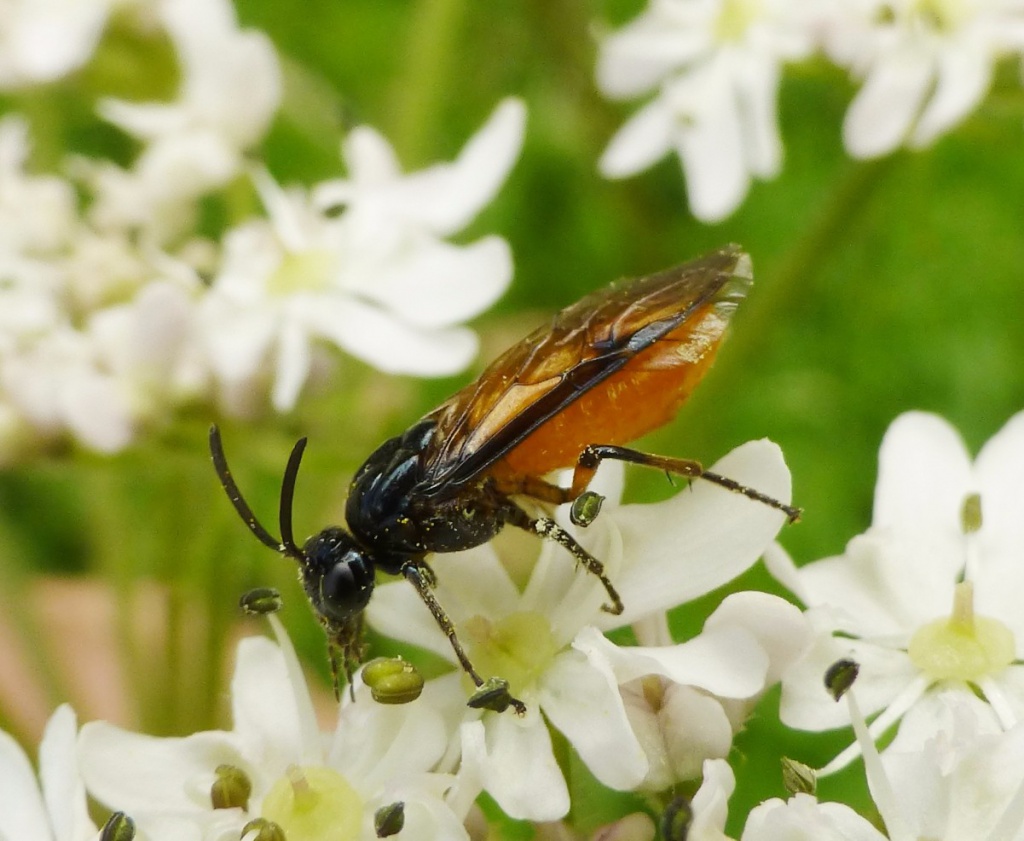
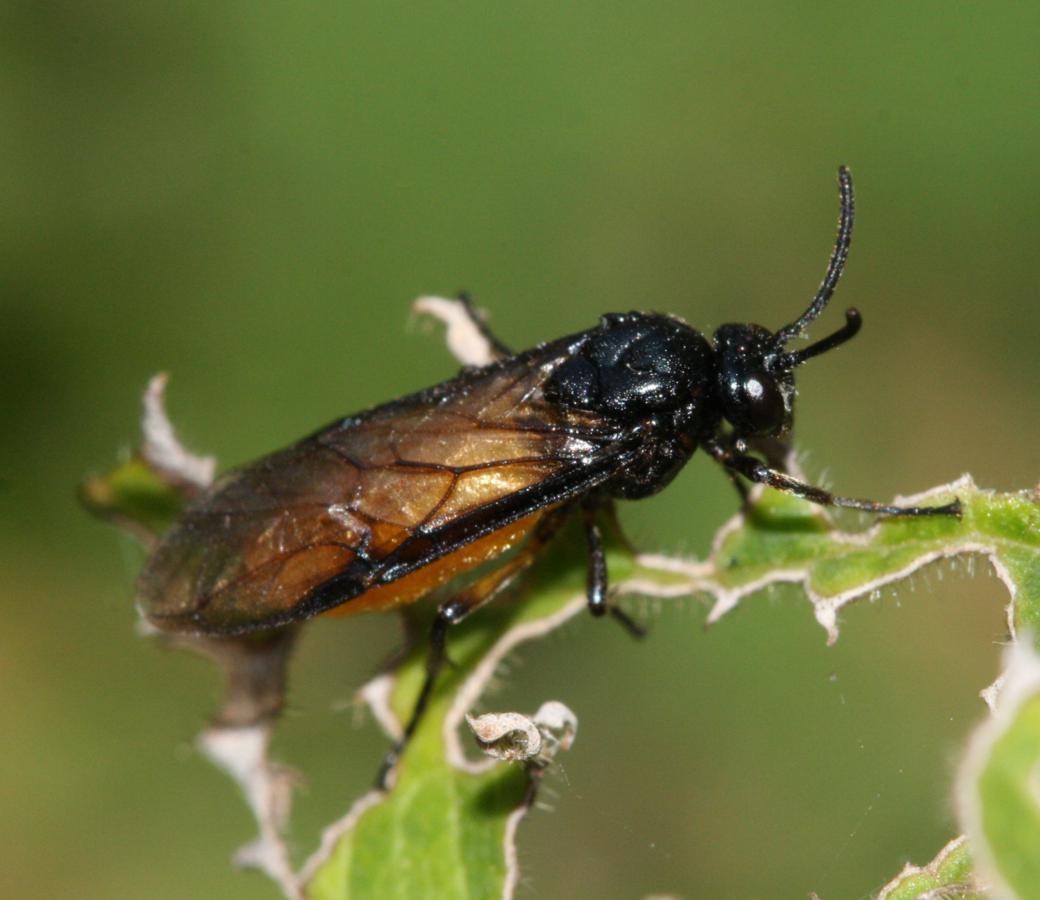
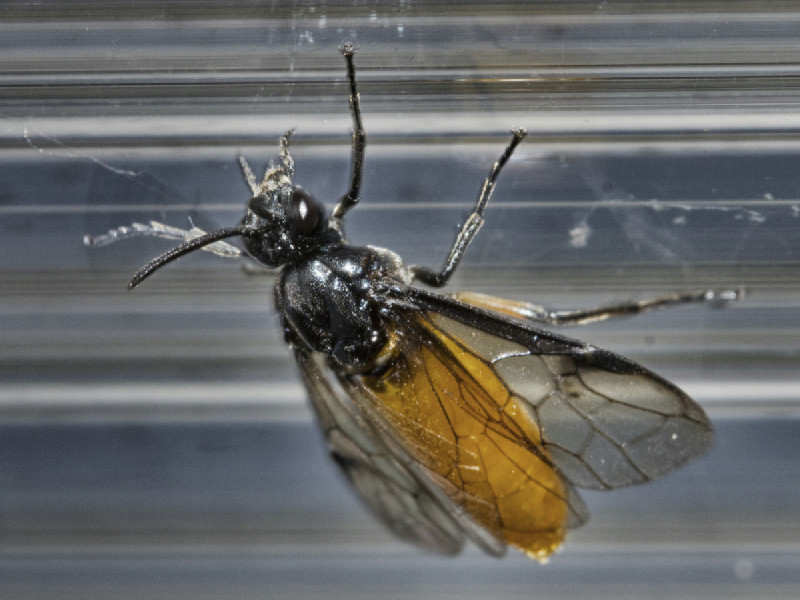
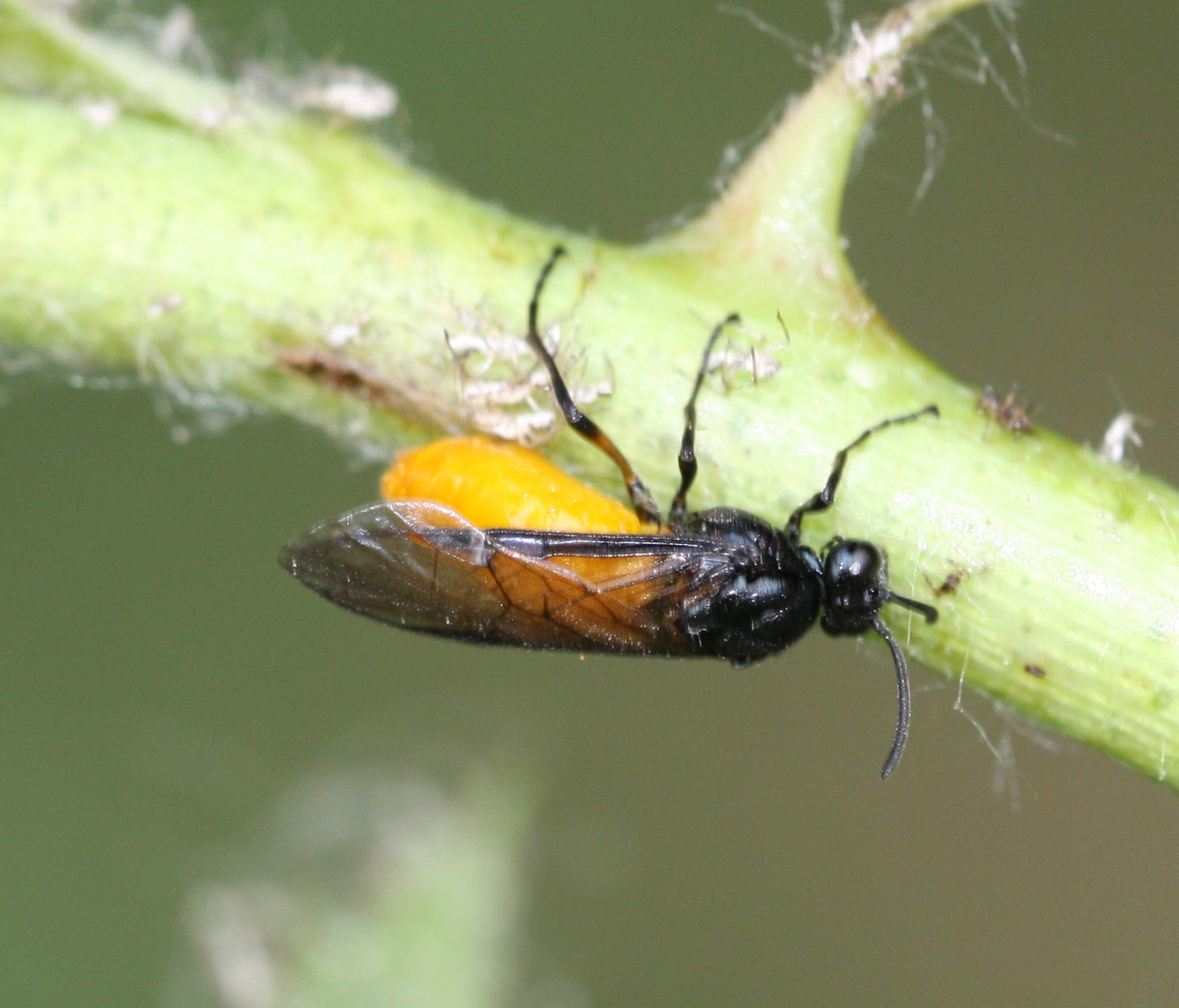
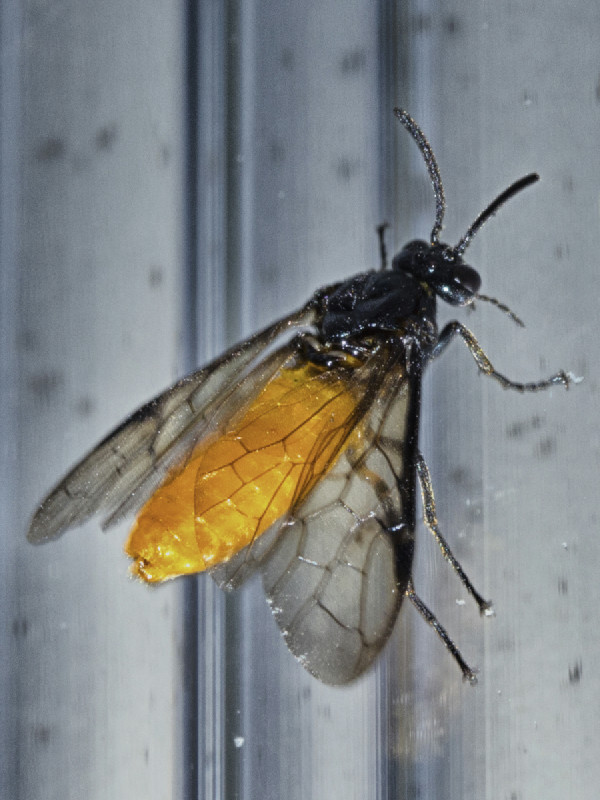
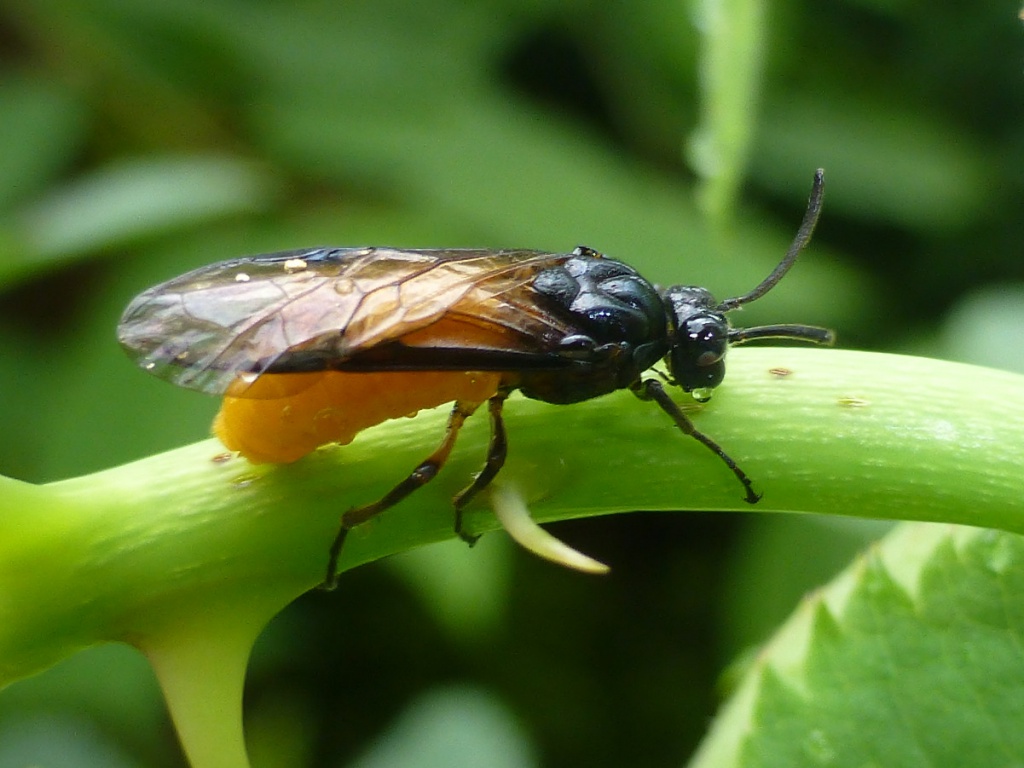
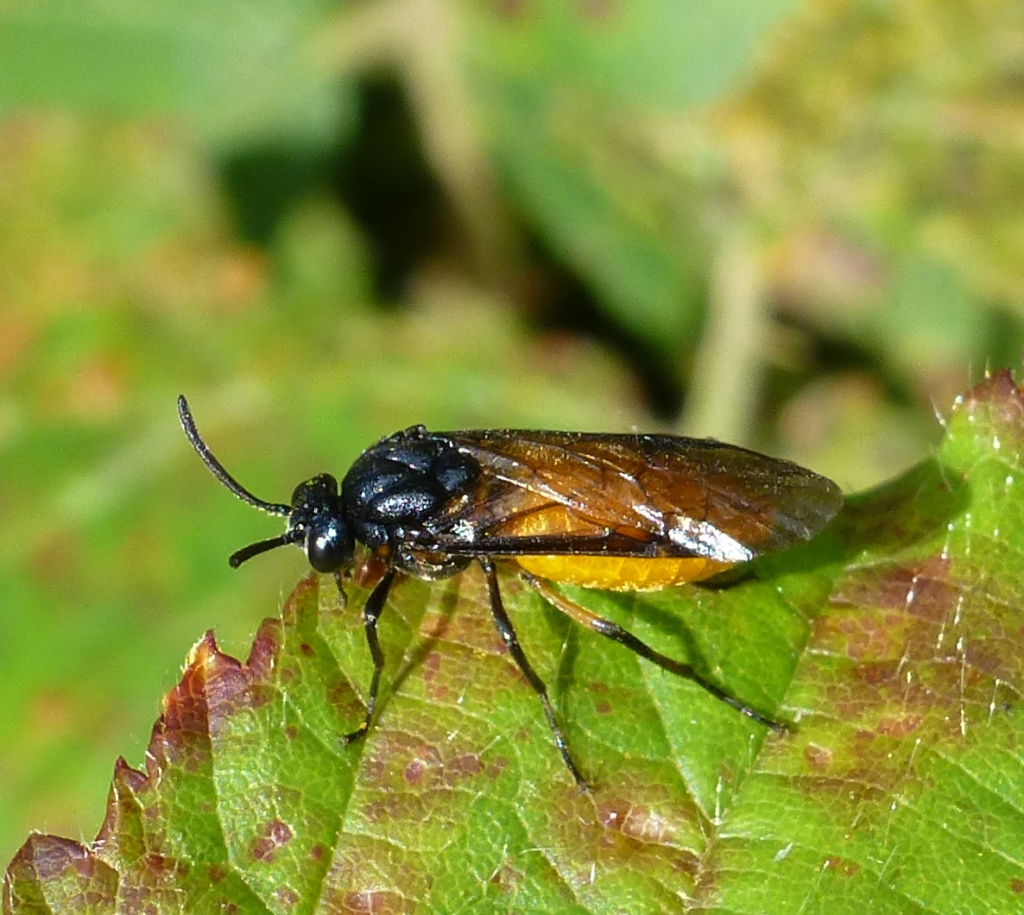
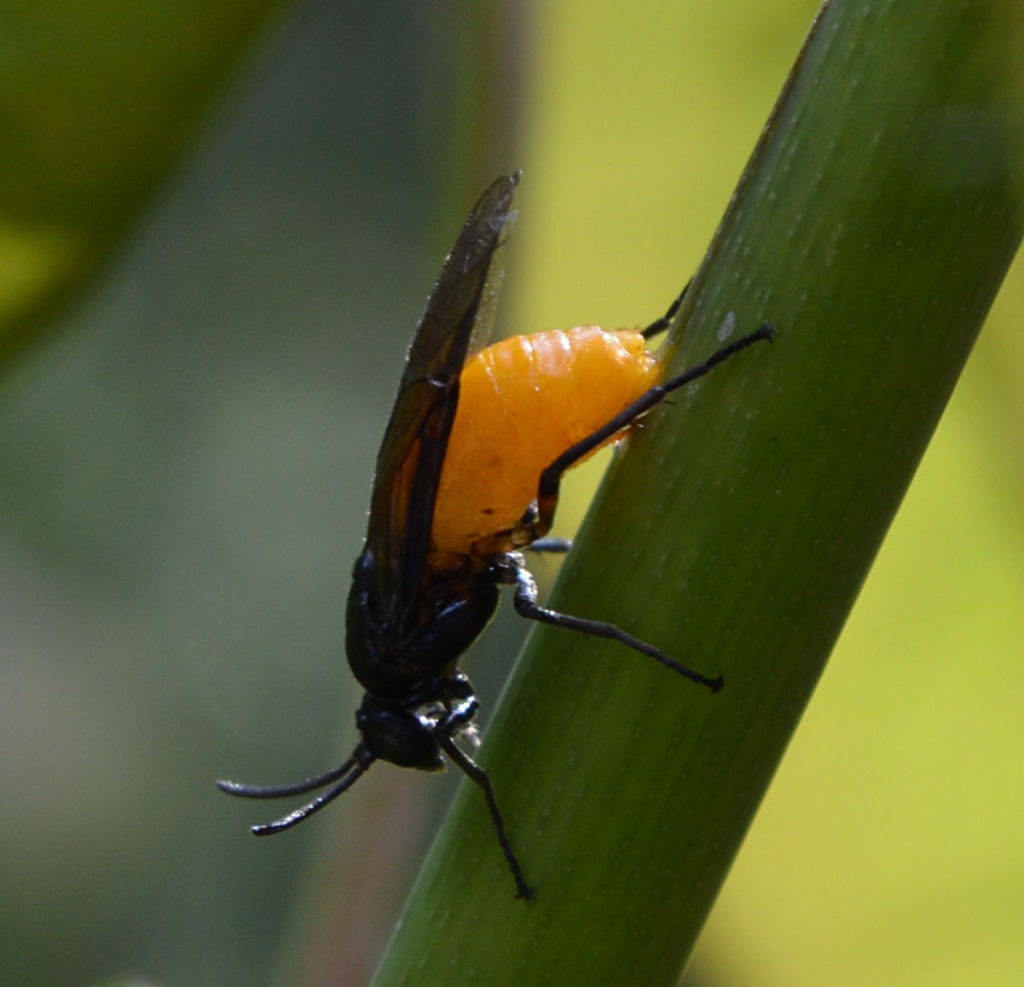
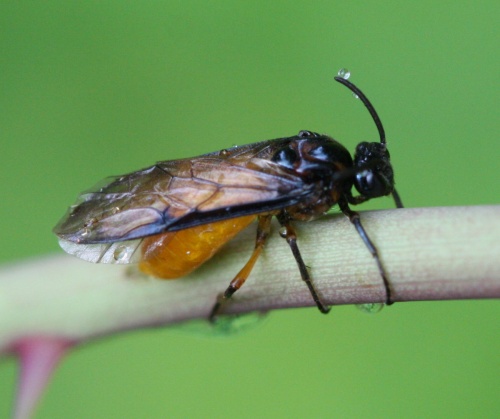
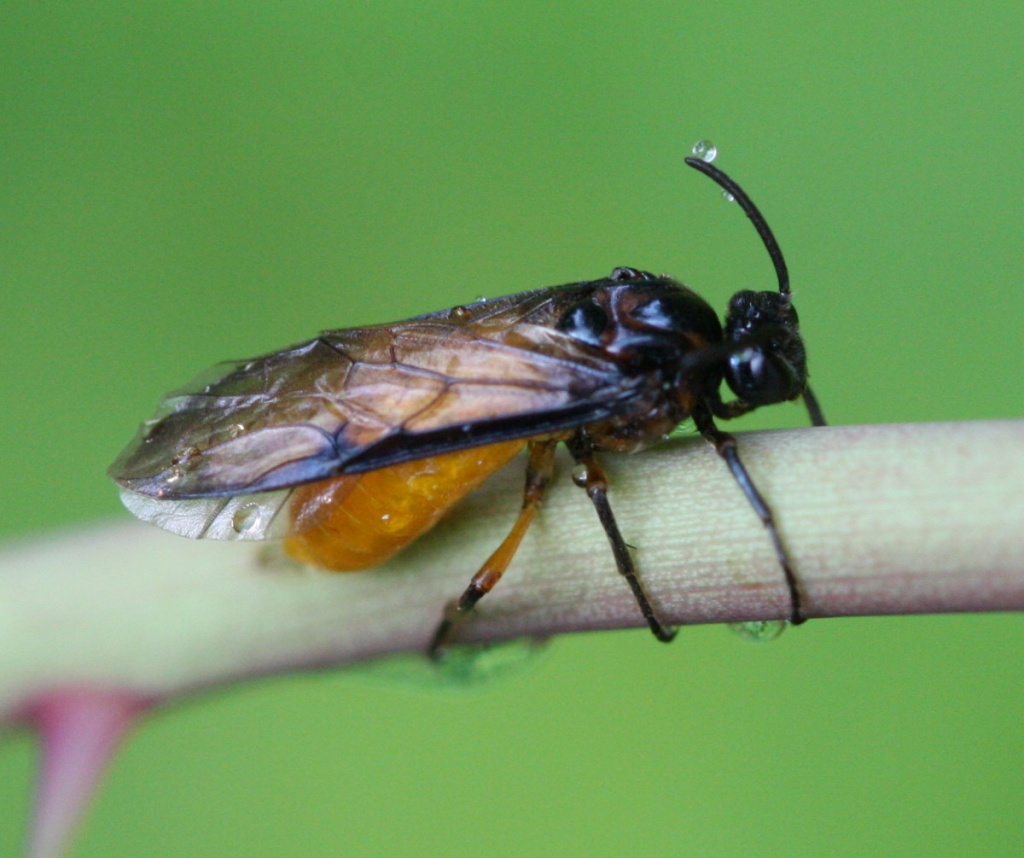
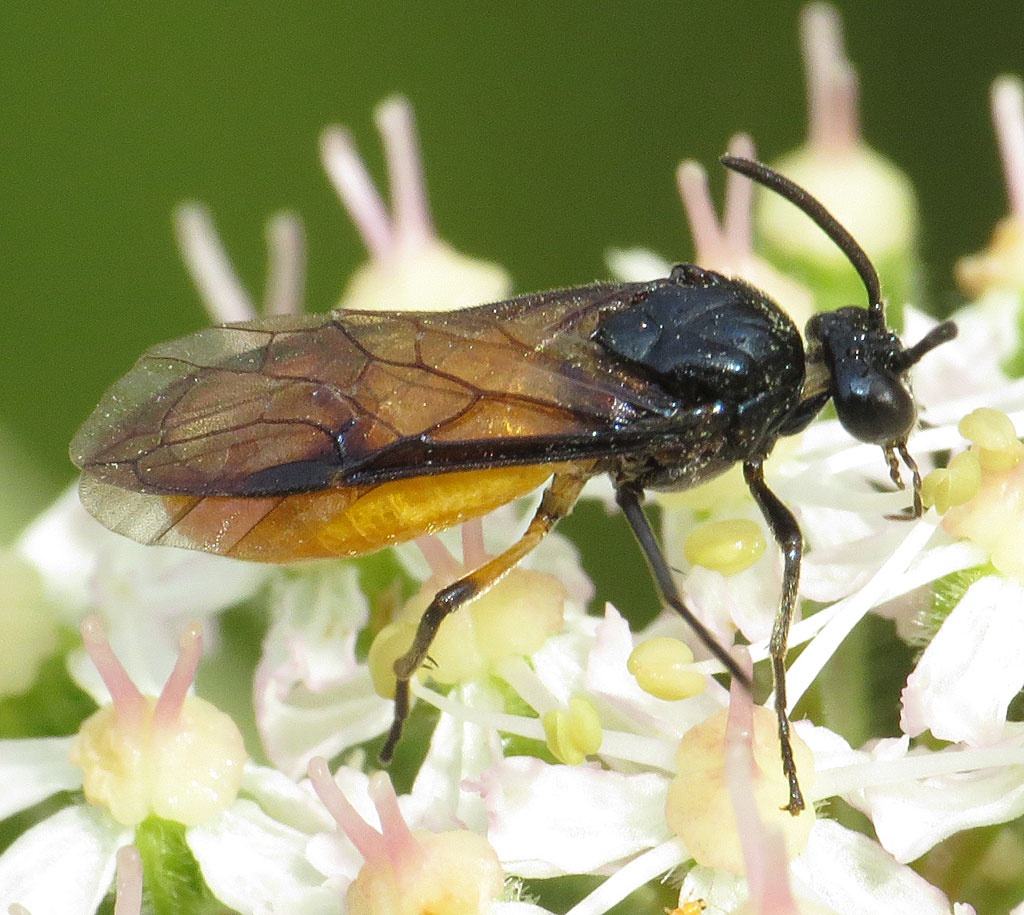
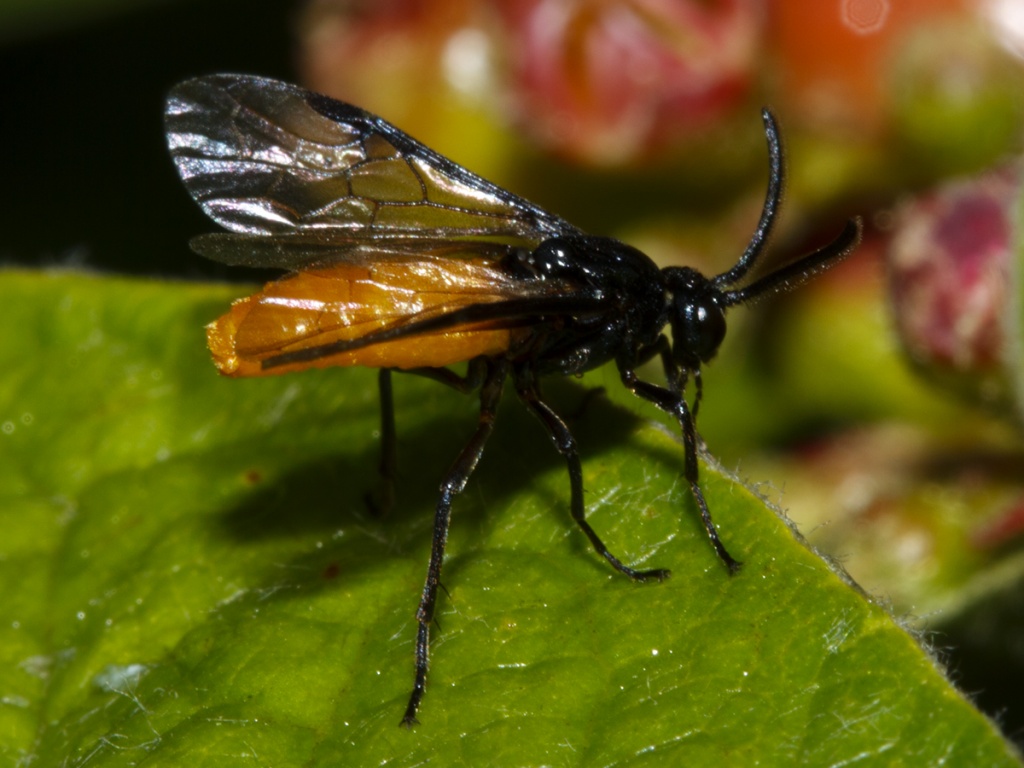
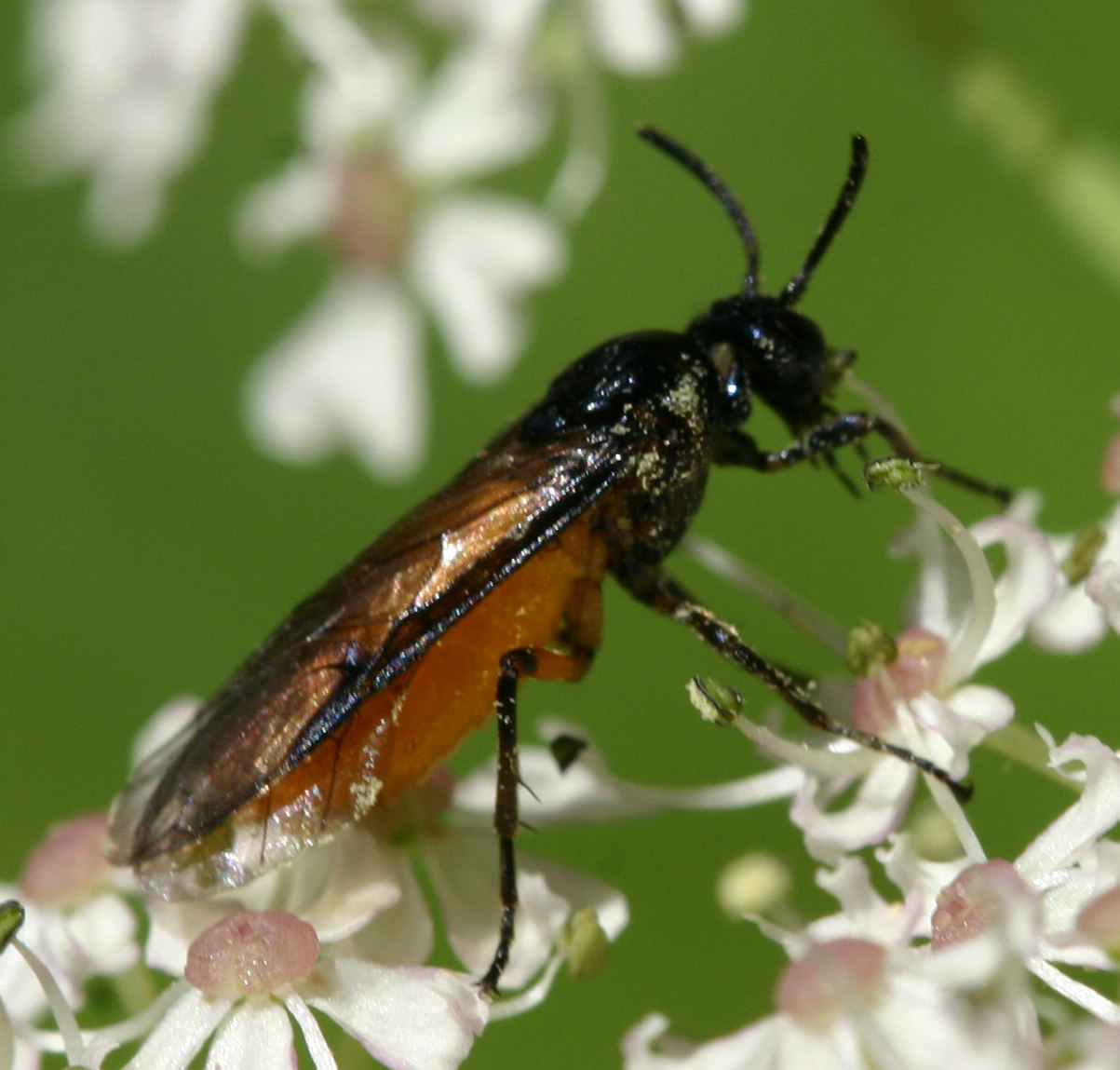
To 10mm, with an orange abdomen and black sides to the thorax. It has a dark intercostal strip along the leading edge of the wings but no wing stigma. The legs are mainly black, with some orange on the hind leg femur. Like all species in the Arge genus, the antennae have only 3 or 4 segments, with the end segment being very long.
The only other orange bodied Arge with a dark intercostal on the wings is Arge ochropus and this species has 'stripy socks' and orange sides to the thorax.
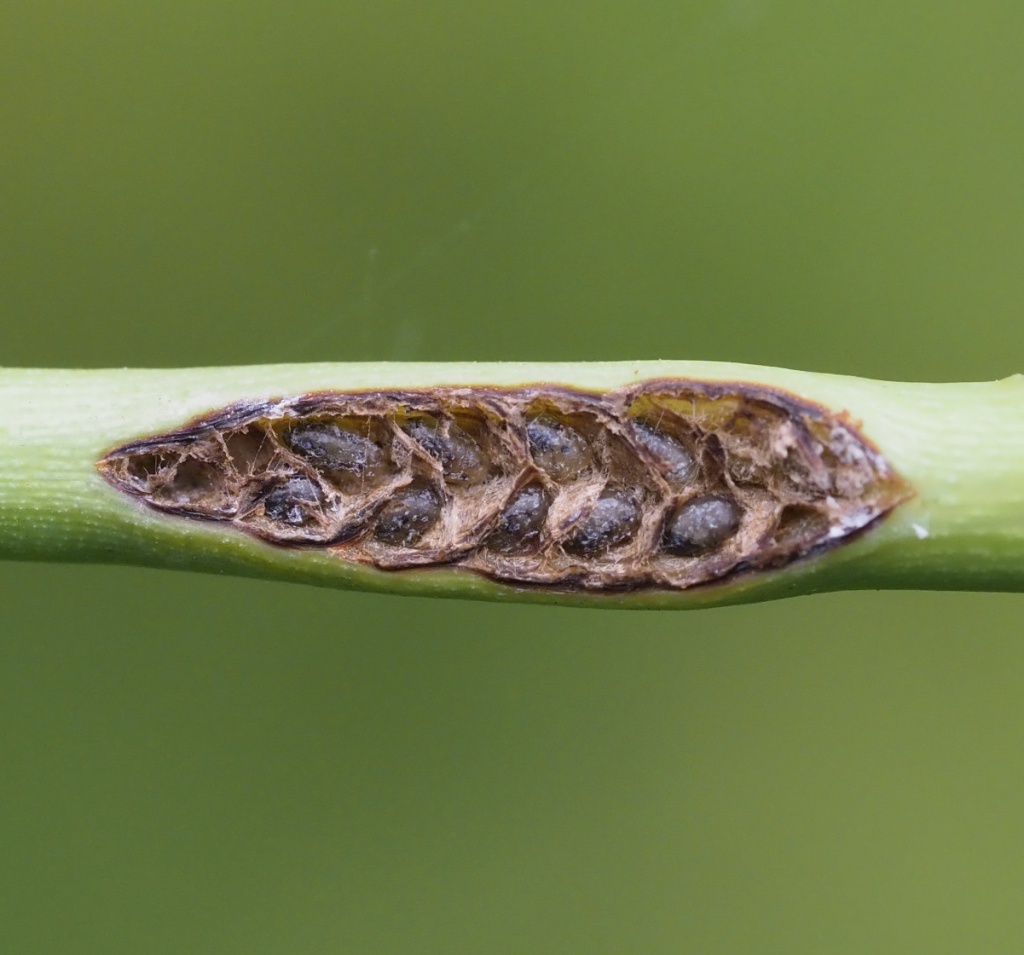
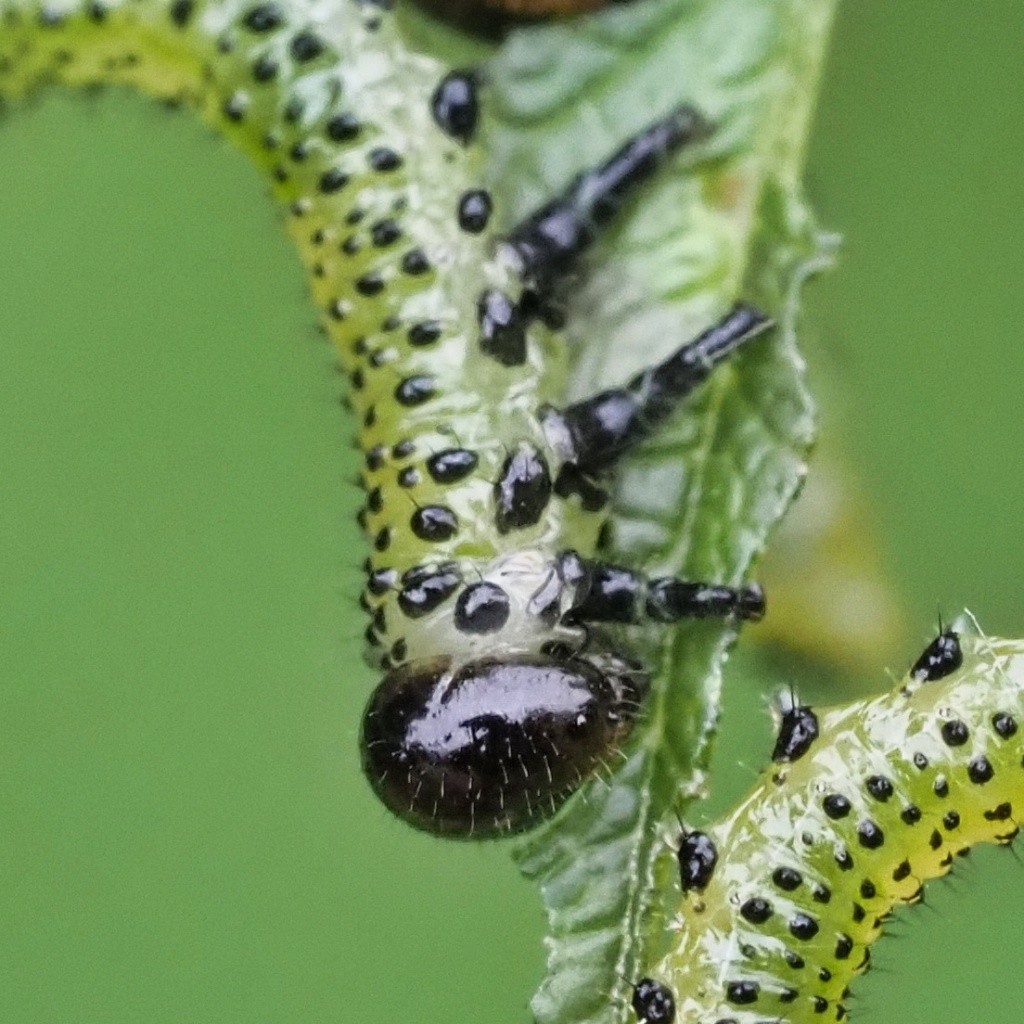
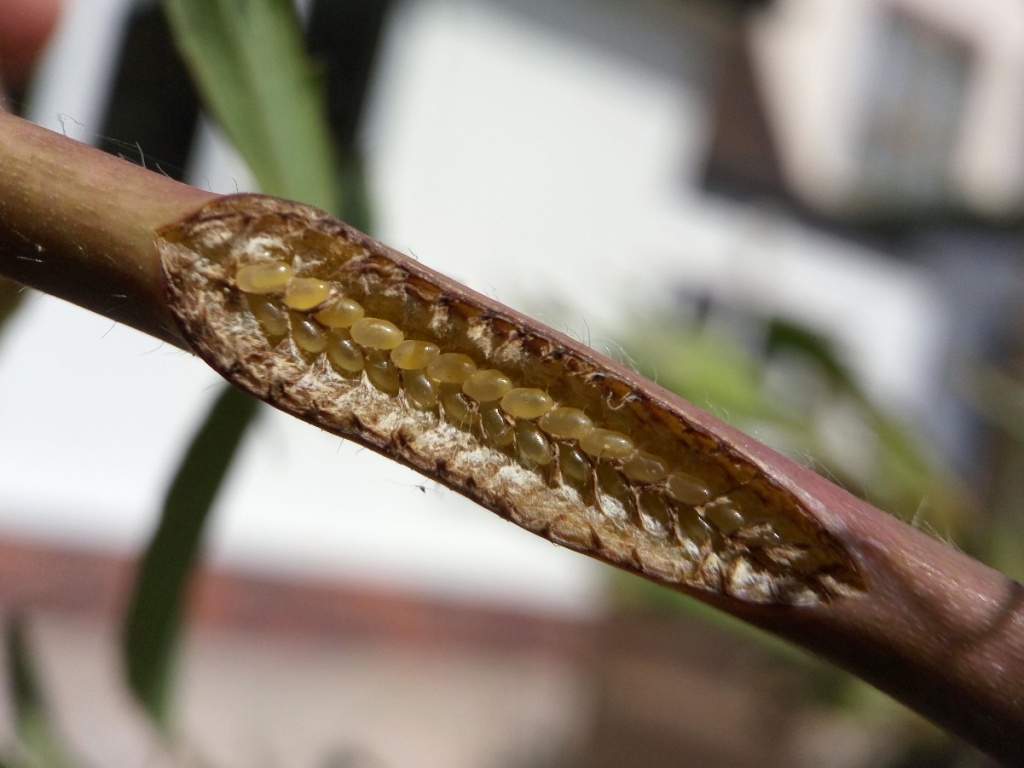
Larvae of Arge ochropus and Arge pagana are tricky to separate, especially from photos. The best feature to check is the black mark on the last dorsal segment (supra-anal mark) – this is a simple spot in pagana but more-or-less divided with a pale middle in ochropus. In the field the best way is to look for the egg scars on the main stem near where the larvae are feeding – two parallel rows in pagana and just a single row in ochropus. See ID Aids below.

- long final antennal segment
- orange abdomen
- thorax sides = black
- intercostal space = black (leading edge of wing)
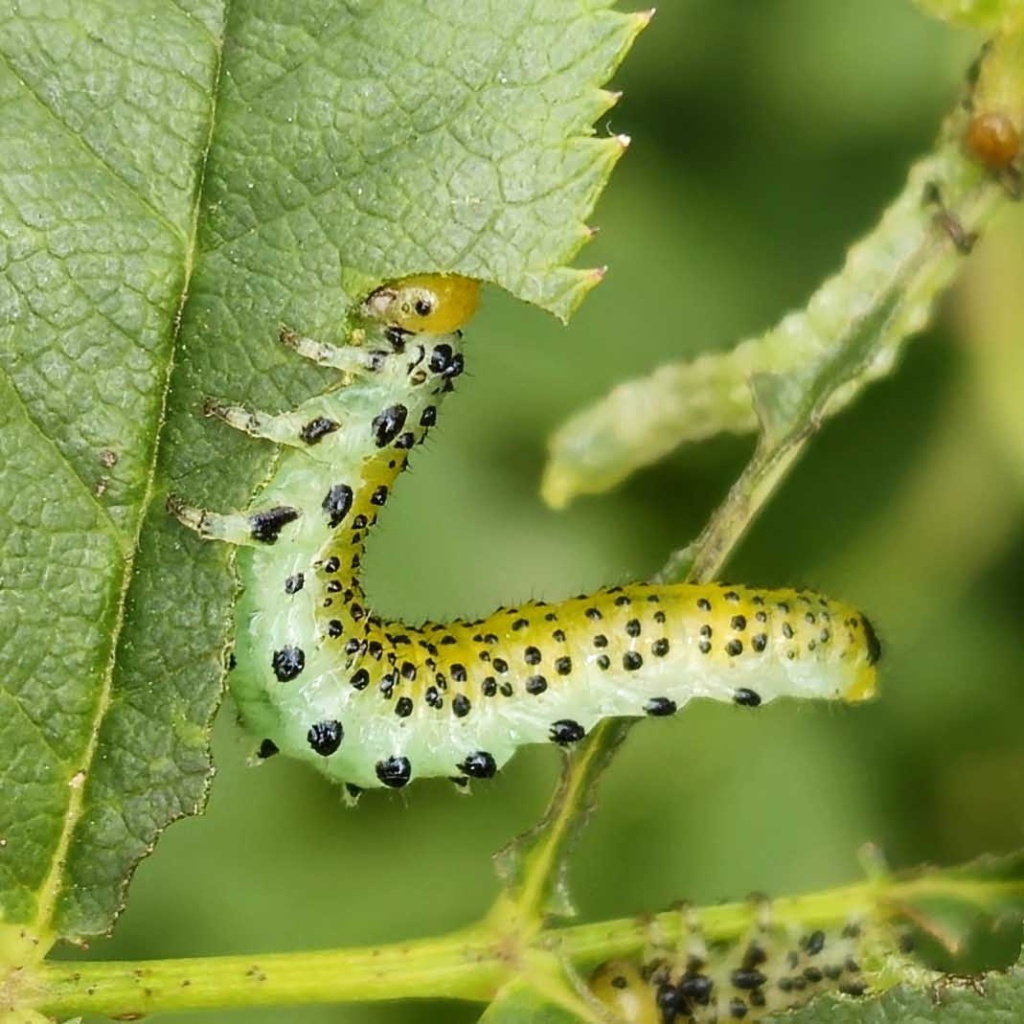
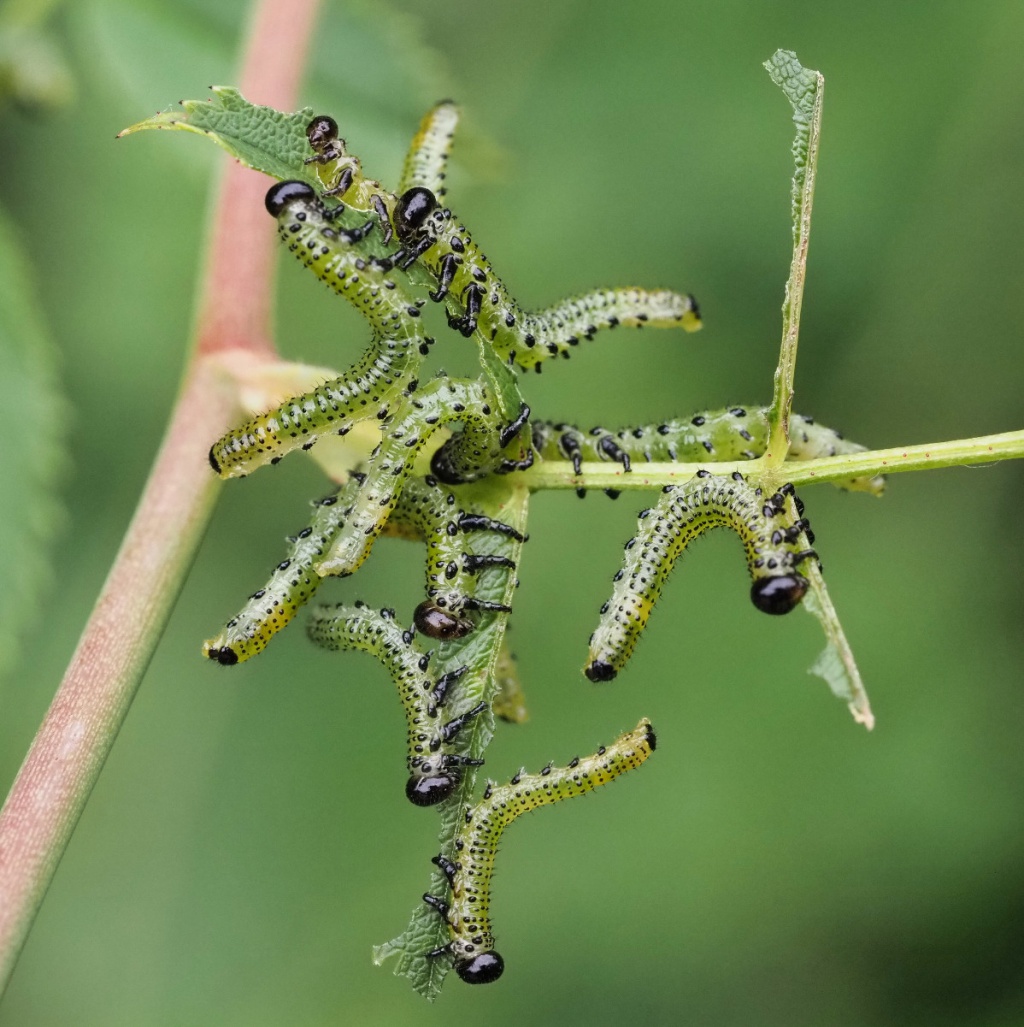
Features that help to separate Arge pagana and Arge ochropus larvae. Note that the head colour isn't a diagnostic feature as it changes from black to yellow through the instars. Also the colour of the head hairs is no longer considered a reliable ID feature.
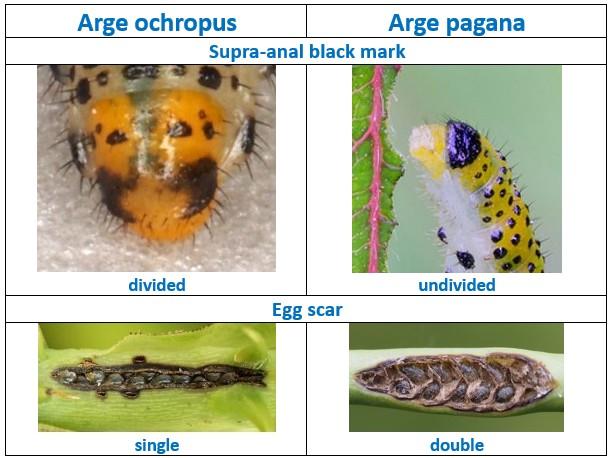
Adult: Check it has fused antennae (looking like one long segment), a yellow abdomen, black sides to the thorax and a dark intercostal space on the wing.
Larva: An image showing the last segment from behind.
Hedgerows and gardens, especially where rose species are present.
March to June
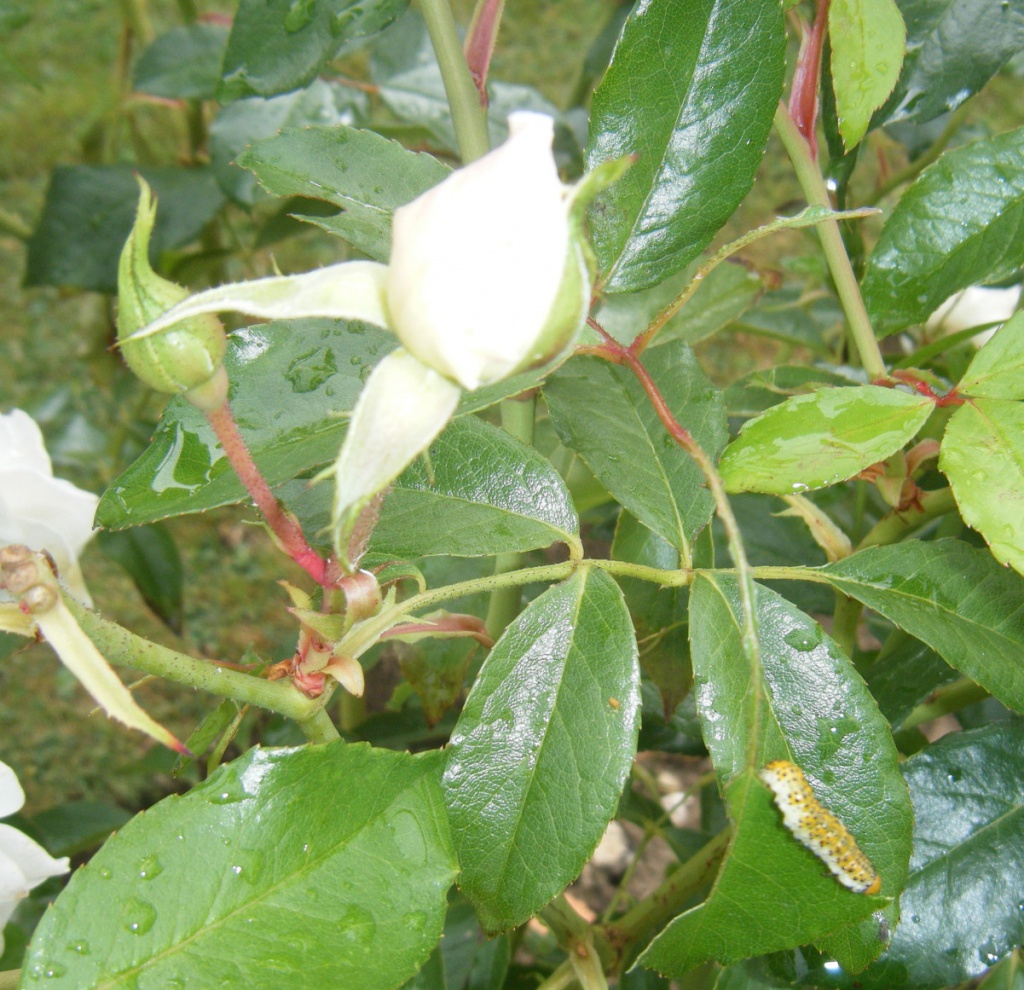
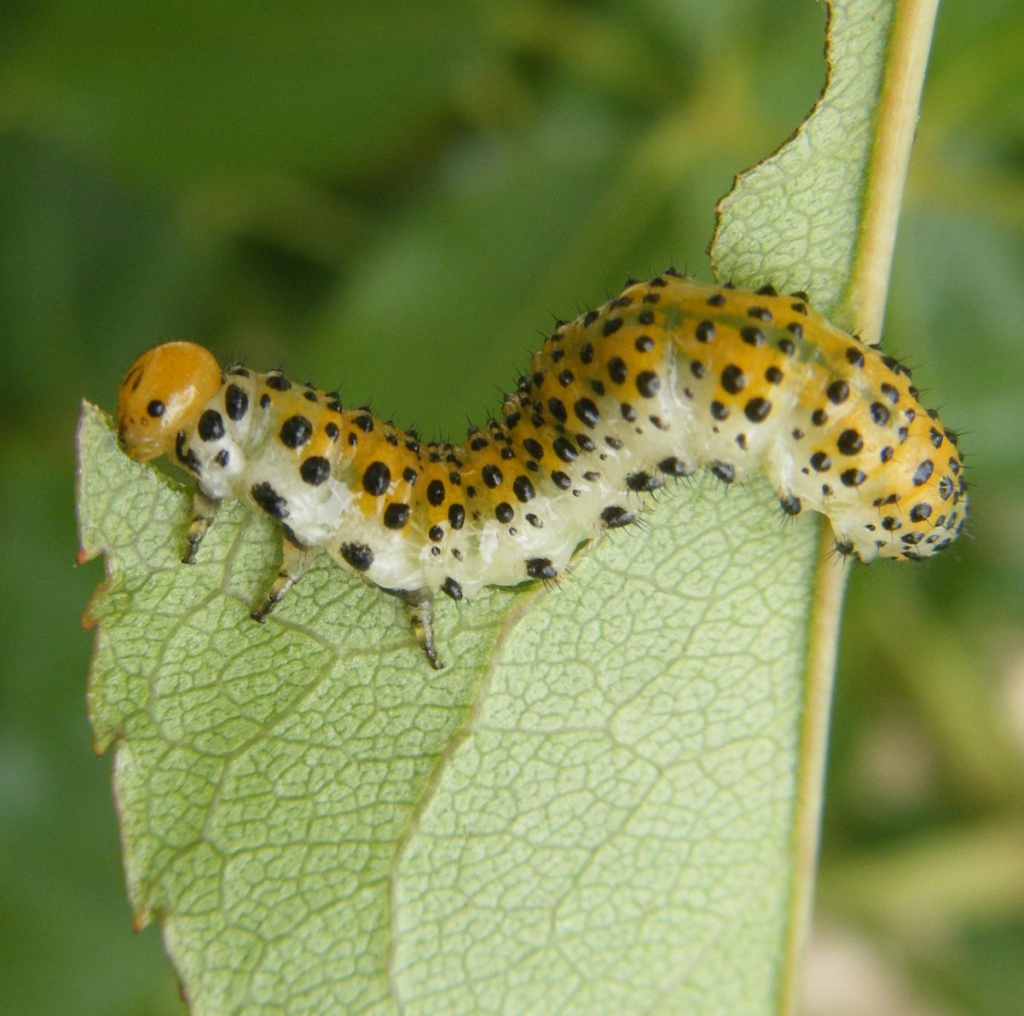
Like all sawflies, female Large Rose Sawflies are in possession of a little saw. With it they make parallel cuts in the fresh shoots of the host plant. In the cut a bunch of eggs is deposited. The larvae hatch quite quickly and move in a group to the freshly emerged leaves. The young larvae (yellow with black spots) stay together for quite some time, capable of eating the entire shoot. Older larvae lead a more single life and eat from older leaves as well.
The Large Rose Sawfly is a common species all over Britain, although most records come from the south of England.
Common in Leicestershire and Rutland.
 David Nicholls
Cloud Wood
07 July 2012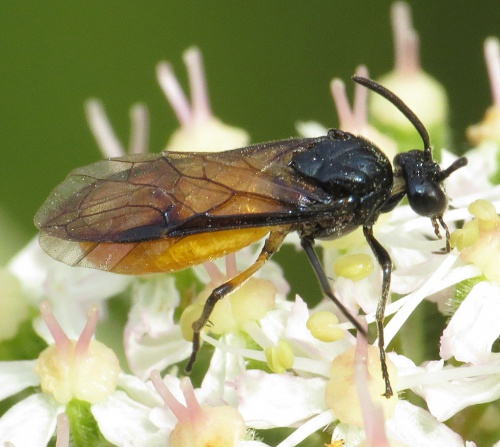 David Gould
Aylestone Meadows
15 August 2014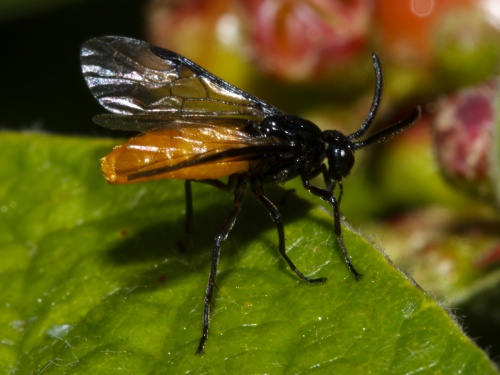 HAPeacock
Leicester Garden
17 June 2012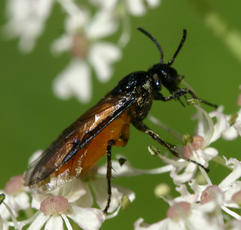 David Nicholls
Martinshaw Wood
29 June 2007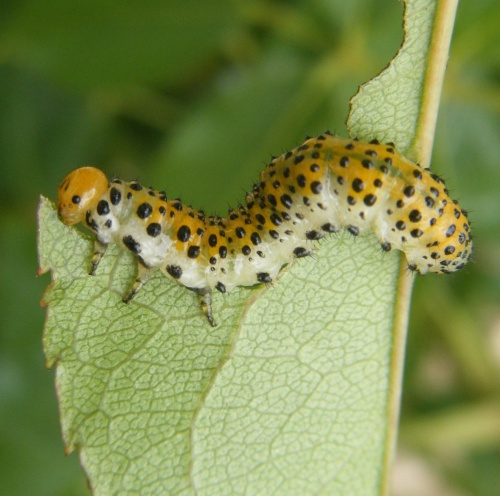 Graham Calow
Sapcote garden1
09 September 2013
larva on garden rose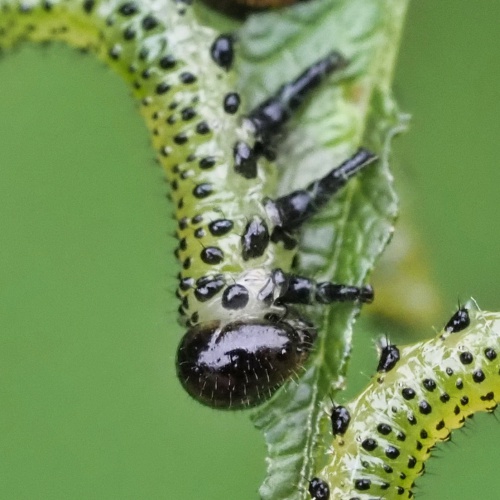 David Nicholls
Brascote, silt lagoons
28 August 2023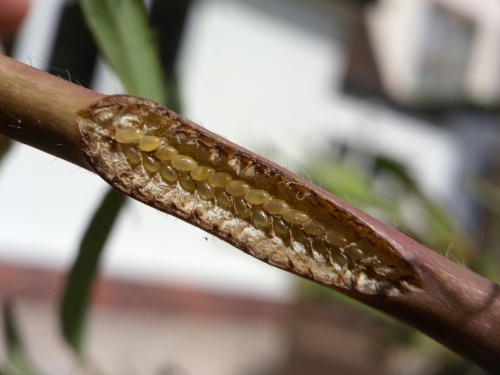 Peter Smith
Cropston garden
10 June 2018
double row of eggs in rose stem
Leicestershire & Rutland Map
Enter a town or village to see local records
MAP KEY:
Yellow squares = NBN records (all known data)
Coloured squares = NatureSpot records: 2025+ | 2020-2024 | pre-2020
UK Map
Additional images