Epinotia pygmaeana
Epinotia pygmaeana
Dingy Spruce Bell
Wingspan 12 to 14 mm, the adults are similar to E. subsequana, but have a noticeable whitish patch on the inner area of the hindwing. Males can further be distinguished by their comb-like antennae.

Occurs around coniferous forests and plantations.
Flying from April to June.
The larvae feed on the needles of coniferous trees, particularly Spruce (Picea) and European Silver Fir (Abies alba). Initially they mine the needles, but later spin them together with silk and feed within.
Widespread but quite local in Britain. In the Butterfly Conservation's Microlepidoptera Report 2011 this species was classified as Nationally Scarce B.
It appears to be rare in Leicestershire and Rutland, where there are few records. L&R Moth Group status = D (rare or rarely recorded).
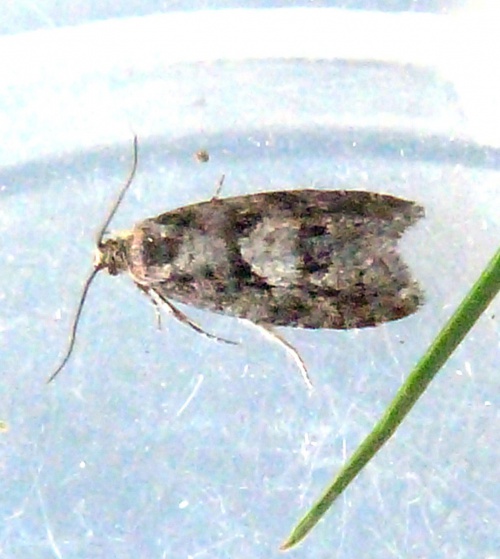 Graham Calow
Dunton Gorse
19 April 2018
confirmed by gen det
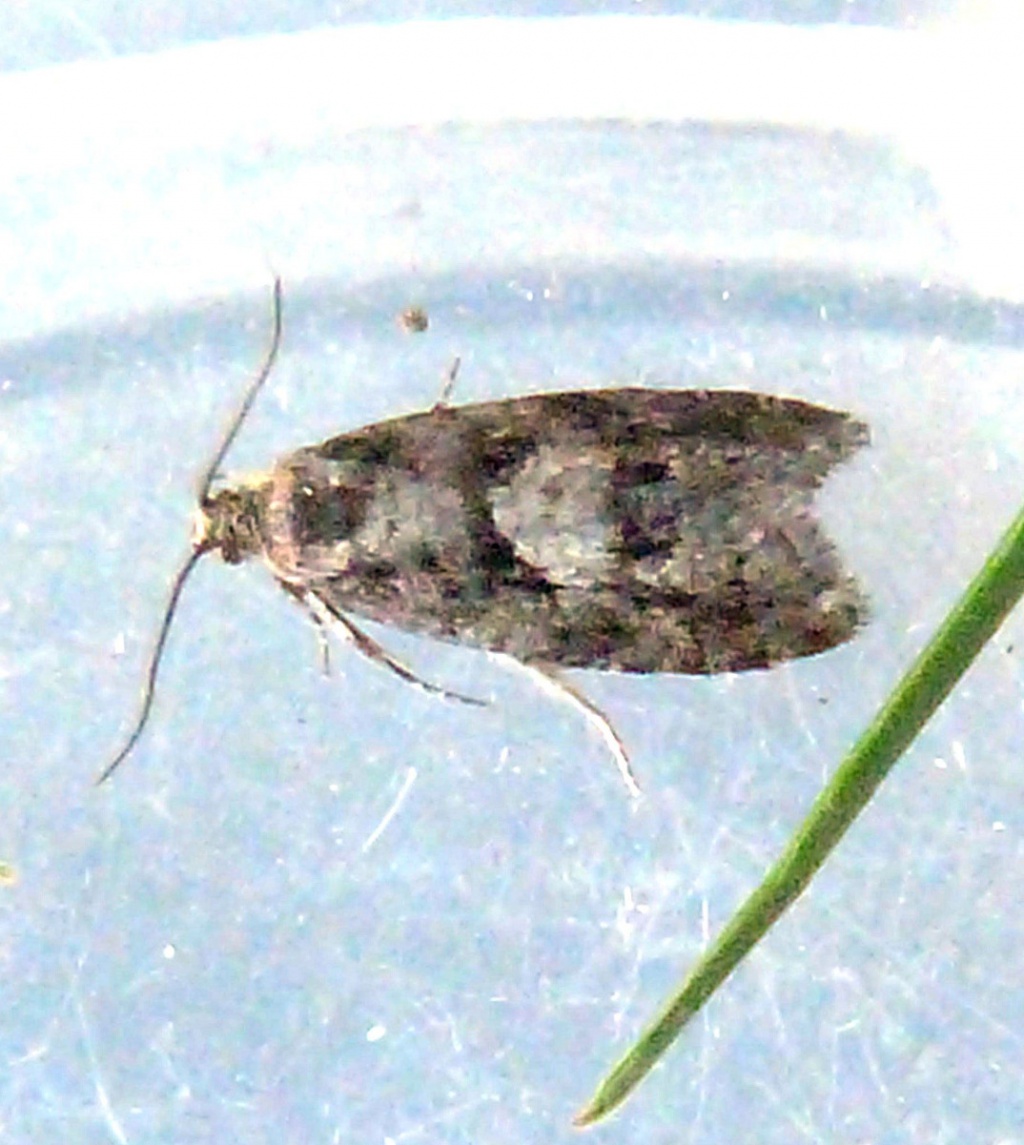
Leicestershire & Rutland Map
Enter a town or village to see local records
MAP KEY:
Yellow squares = NBN records (all known data)
Coloured squares = NatureSpot records: 2025+ | 2020-2024 | pre-2020
UK Map
Additional images
No additional images available for this species.