Fool's-water-cress
Fool's-water-cress - Helosciadium nodiflorum
Apium nodiflorum
Low to medium, prostrate to ascending plant, the stems finely grooved, rooting at the lower nodes. Leaves 1 pinnate, with 5 to 13 oval or lanceolate, toothed segments. Flowers white and minute, the umbels leaf opposed, short stalked or unstalked, with 3 to 12 rays. No bracts, but with bracteoles.
Very similar to Lesser Water-parsnip when it isn't in flower, and often confused with it. Sometimes mistaken for watercress.

No bracts, but bracteoles; flowers in leaf axils, not terminal. Unlike Berula erecta, lacks a white ring-mark/ridge around the lower leaf petioles.
Photo of plant in its habitat with details of umbel. Check lower leaf petioles
Wet habitats, wet ditches, etc.
July and August.
Perennial.
Common in most of Britain, but scarcer in northern England and Scotland.
Common in Leicestershire and Rutland. In the 1979 Flora survey of Leicestershire it was found in 461 of the 617 tetrads.
In the current Checklist (Jeeves, 2011) it is listed as Native, locally abundant
 Old Fosse Sapcote SP 4893 9195 (taken 2.7.2006).JPG) Graham Calow
Graham Calow
Sapcote
02 July 2006 David Nicholls
Wirlybones Wood
18 August 2012 David Gould
Croft Pasture
26 June 2014 Peter Smith
Watermead Park
10 August 2016
Fruit Ron.stevens
Broughton Astley
02 July 2011
 Old Fosse Sapcote SP 4893 9195 (taken 2.7.2006).JPG)


Leicestershire & Rutland Map
Enter a town or village to see local records
MAP KEY:
Yellow squares = NBN records (all known data)
Coloured squares = NatureSpot records: 2025+ | 2020-2024 | pre-2020
UK Map
Additional images


All NatureSpot records
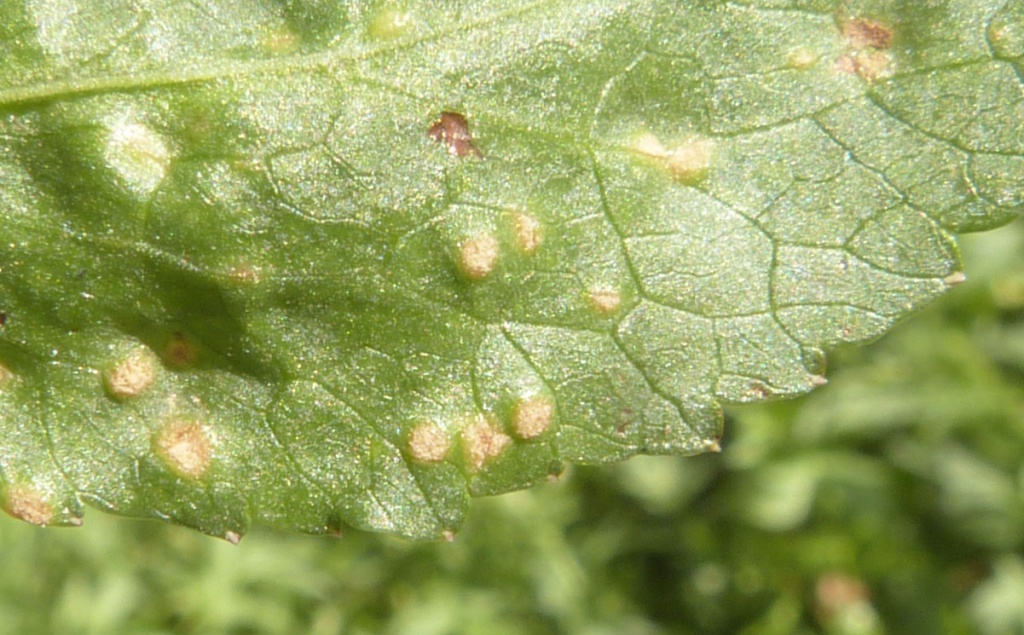
Buerenia inundata
Buerenia inundata causes galls on Apiaceae especially Fool’s-water-cress. The galls take the form of yellowish or pale brown pustules, mainly on the leaves of the host plant.