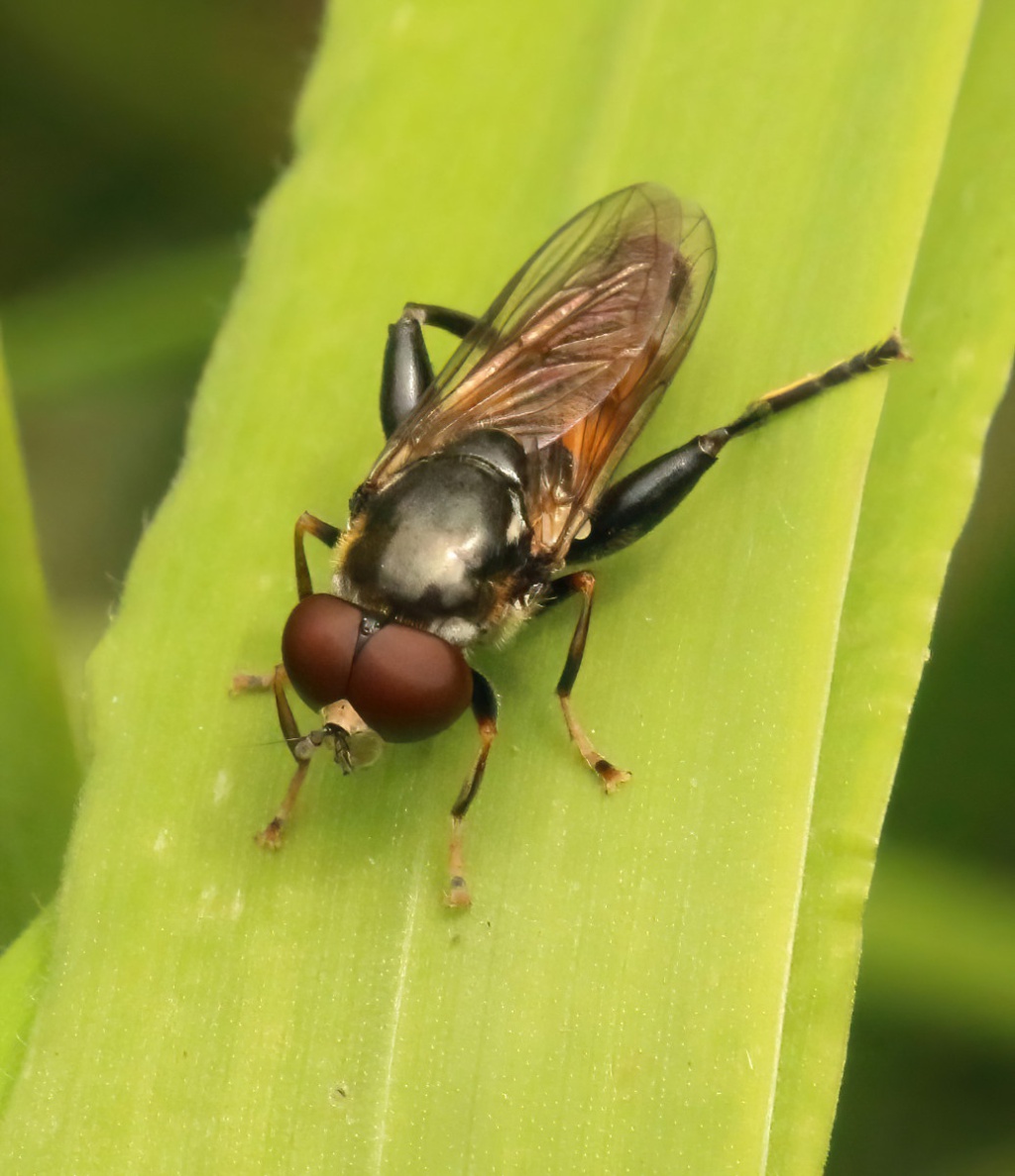
Tropidia scita
Tropidia scita
Wing length: 5.5 to 8.25 mm
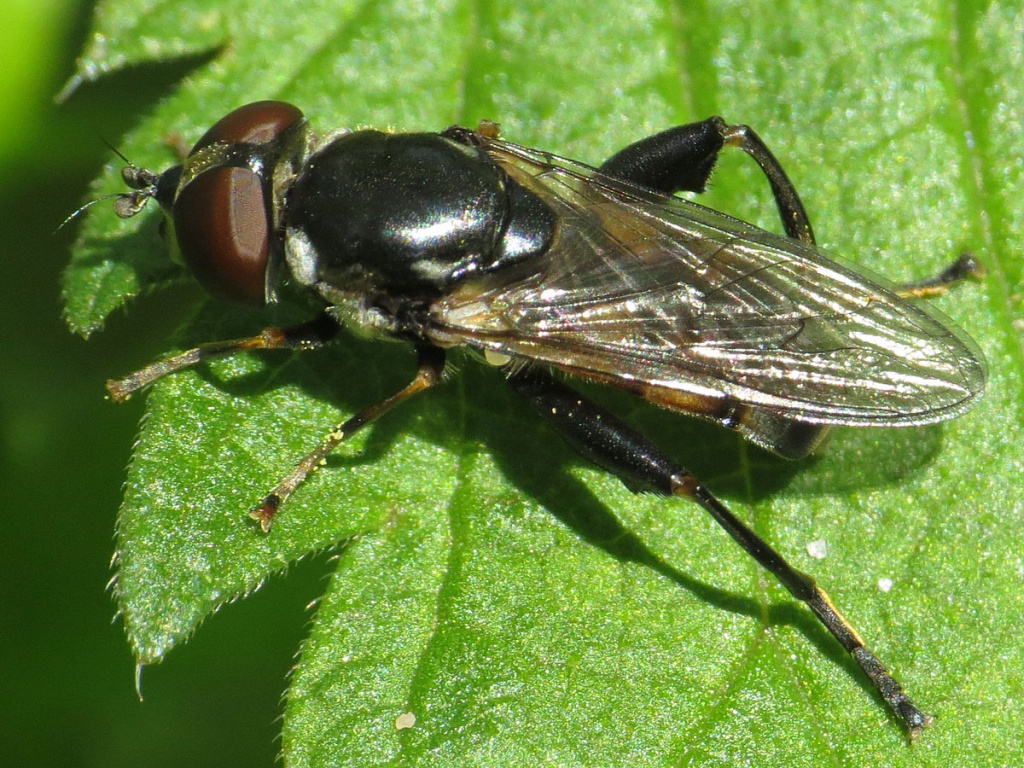
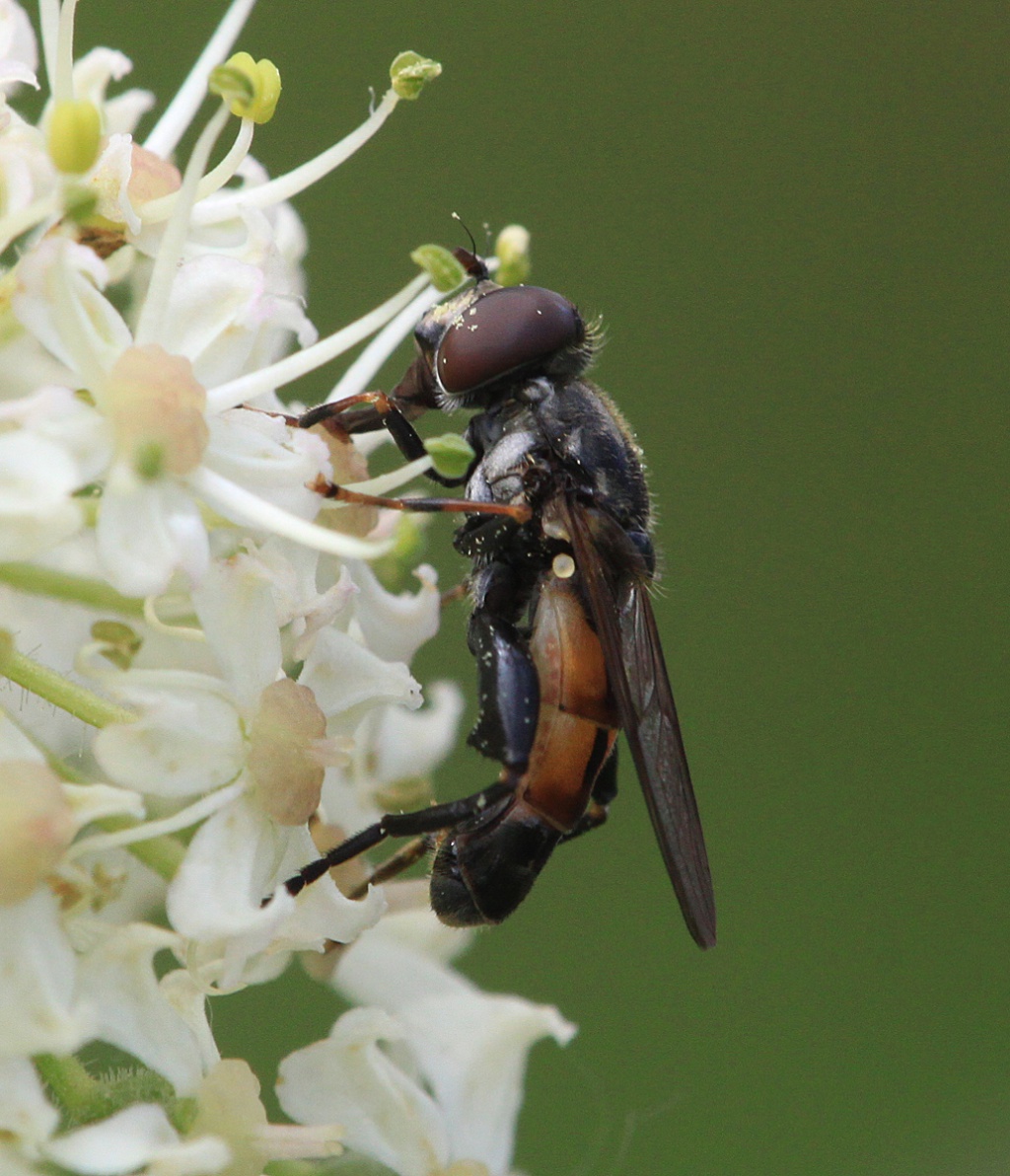
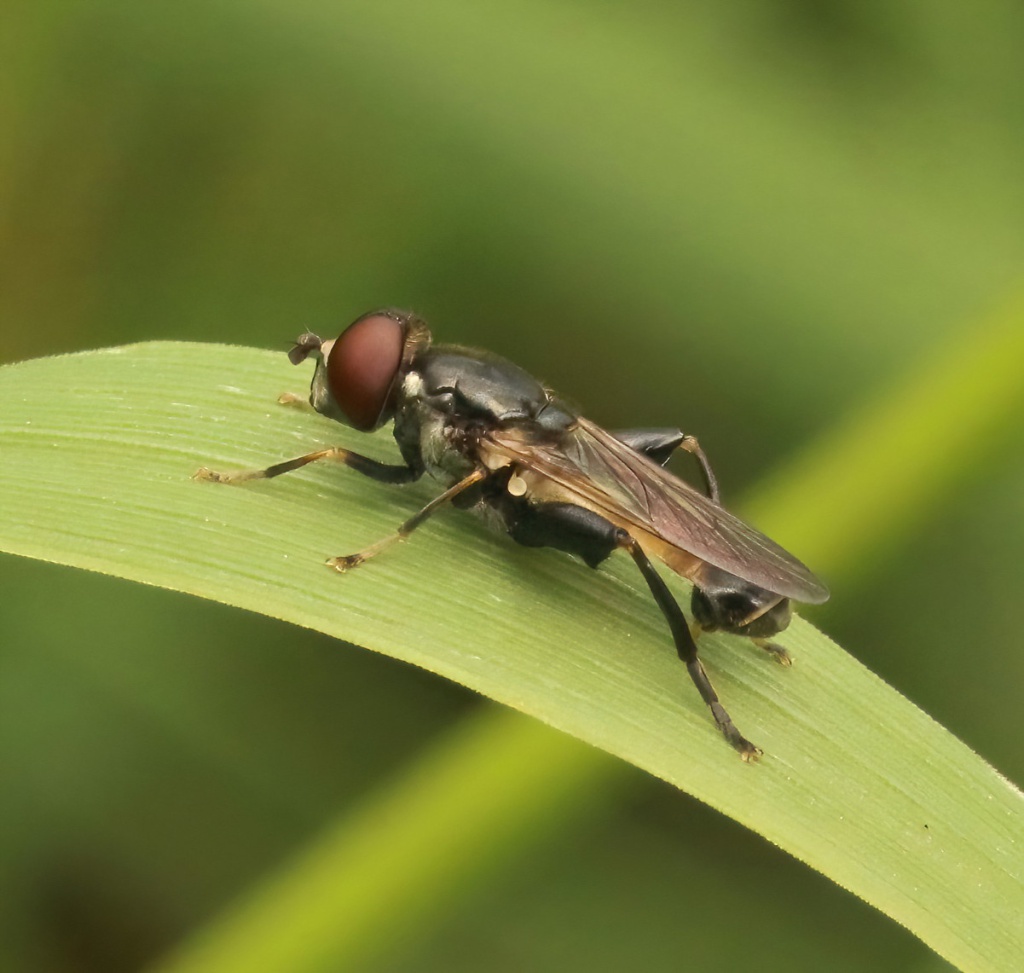
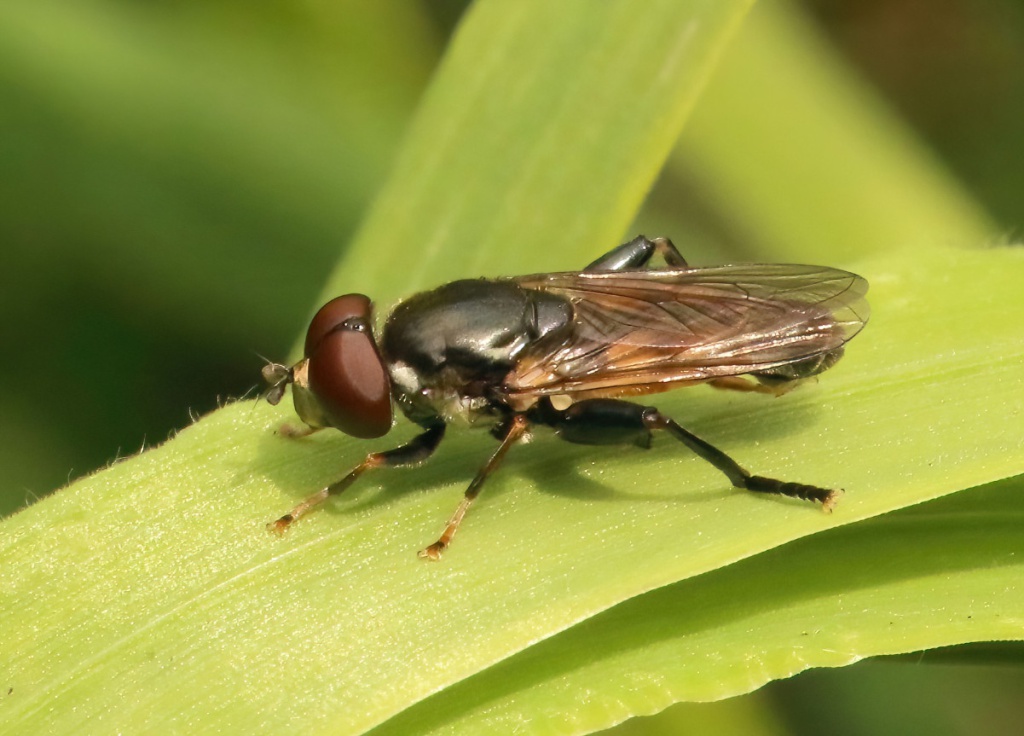
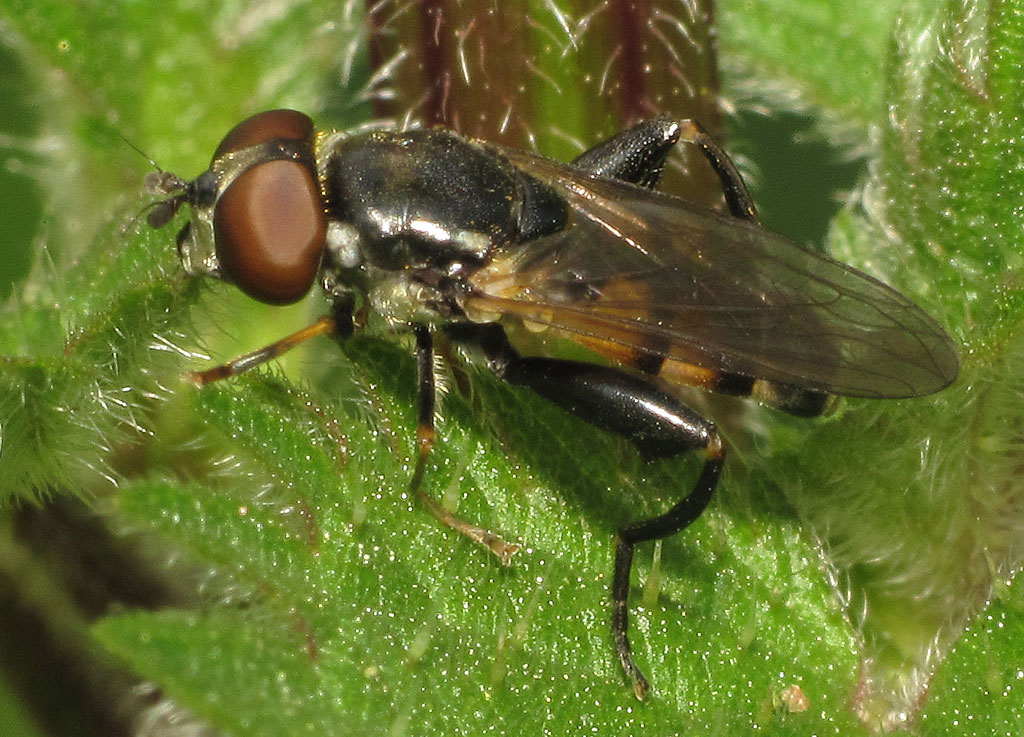
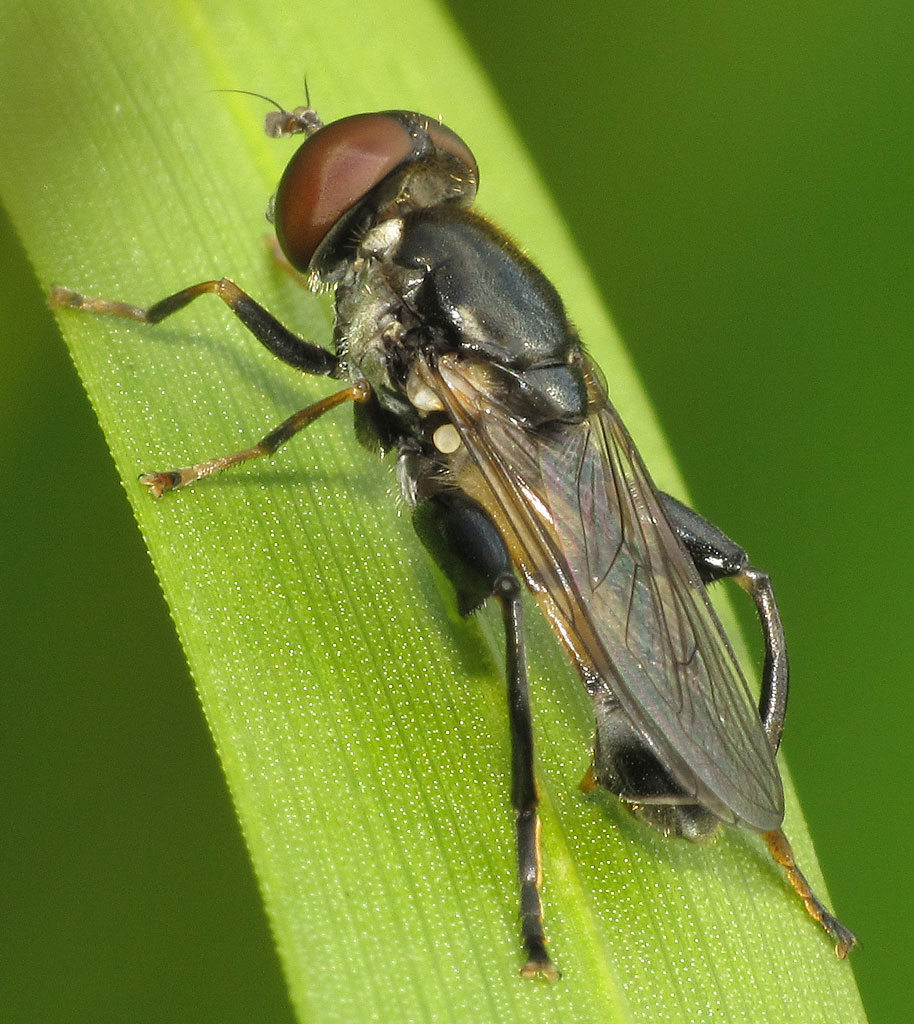
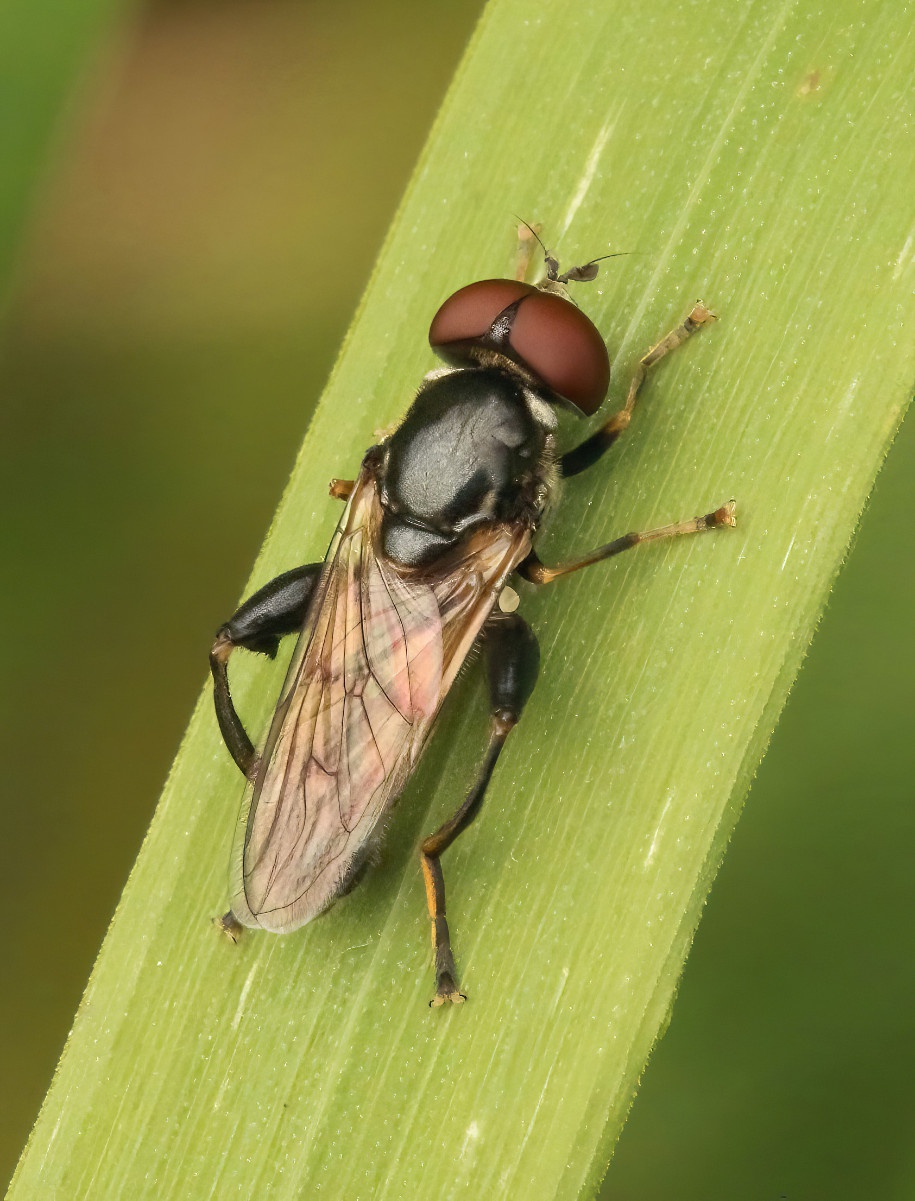
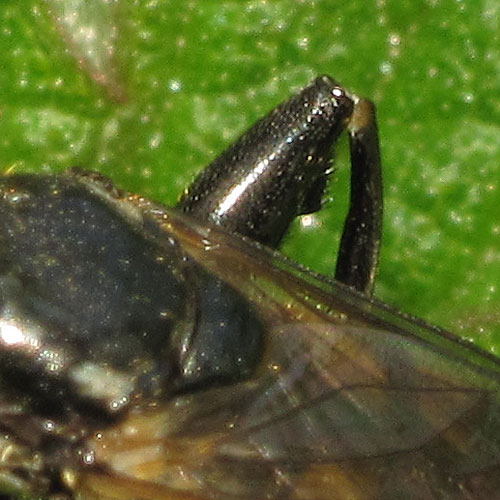
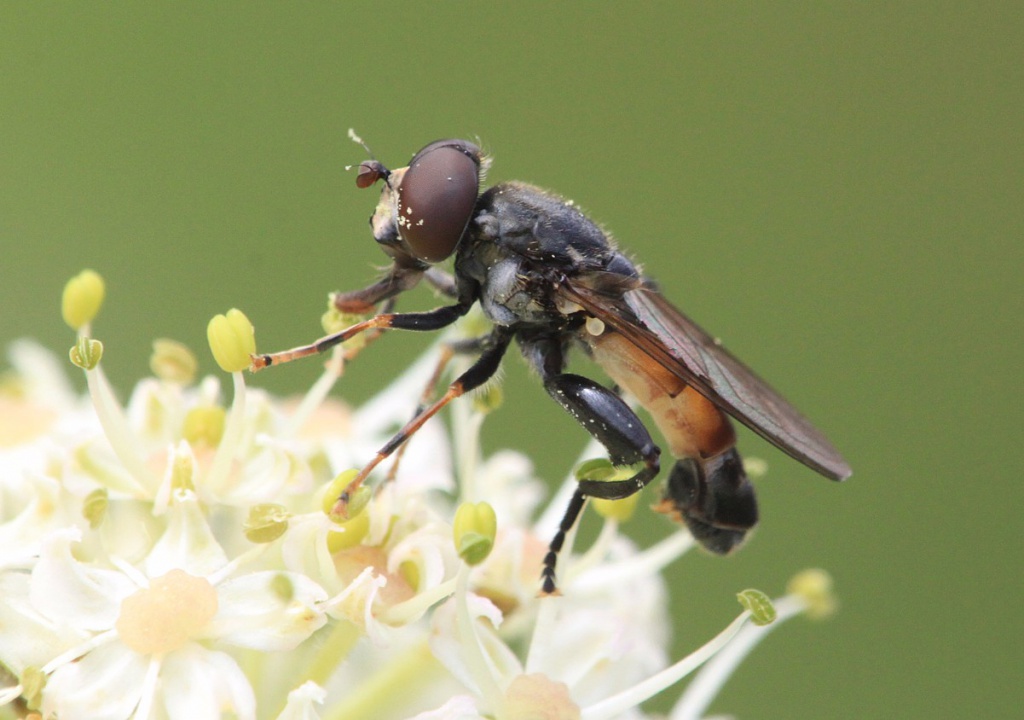
The key identification feature of this hoverfly is the arched and swollen hind femur with a large triangular projection on its lower surface near the apex. (Visible is several photos below, including an enlargment.) The projection has small black spines along its hind edge.
The abdomen has orange markings on tergites 2 and 3, covering the entire lateral margins in males, but reduced in females, sometimes to paired spots.

This fly prefers marshy areas and fens, particularly where reedbeds are present.
May to October, with the greatest numbers being on the wing in June and July.
Still unclear. The larva is believed to develop in wet debris such as reedbed litter.
Widespread in Southern and Eastern England but local. It tends to become coastal further north, reaching as far as southern Scotland.
Local.
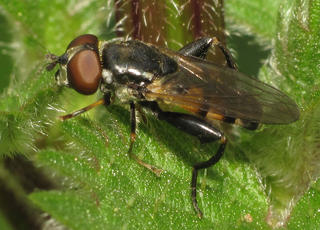 David Gould
Narborough Bog NR
31 May 2011
female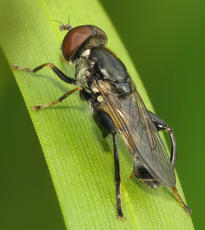 David Gould
Narborough Bog NR
31 May 2011
male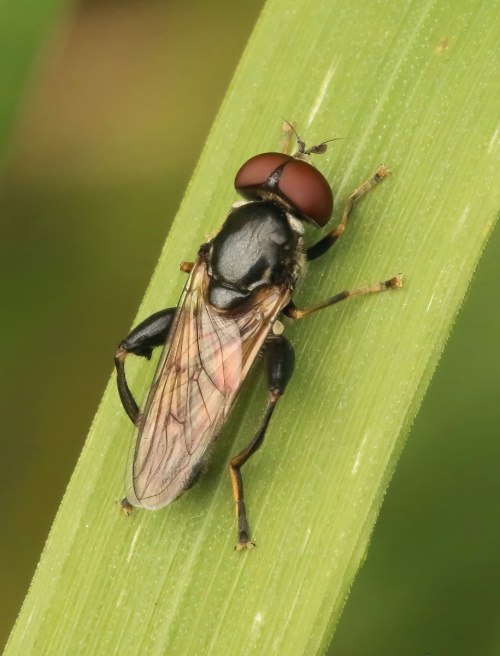 Ian Harding
Kelham Bridge
28 May 2022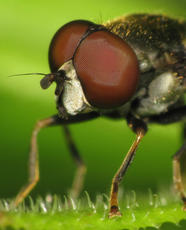 David Gould
Narborough Bog NR
31 May 2011
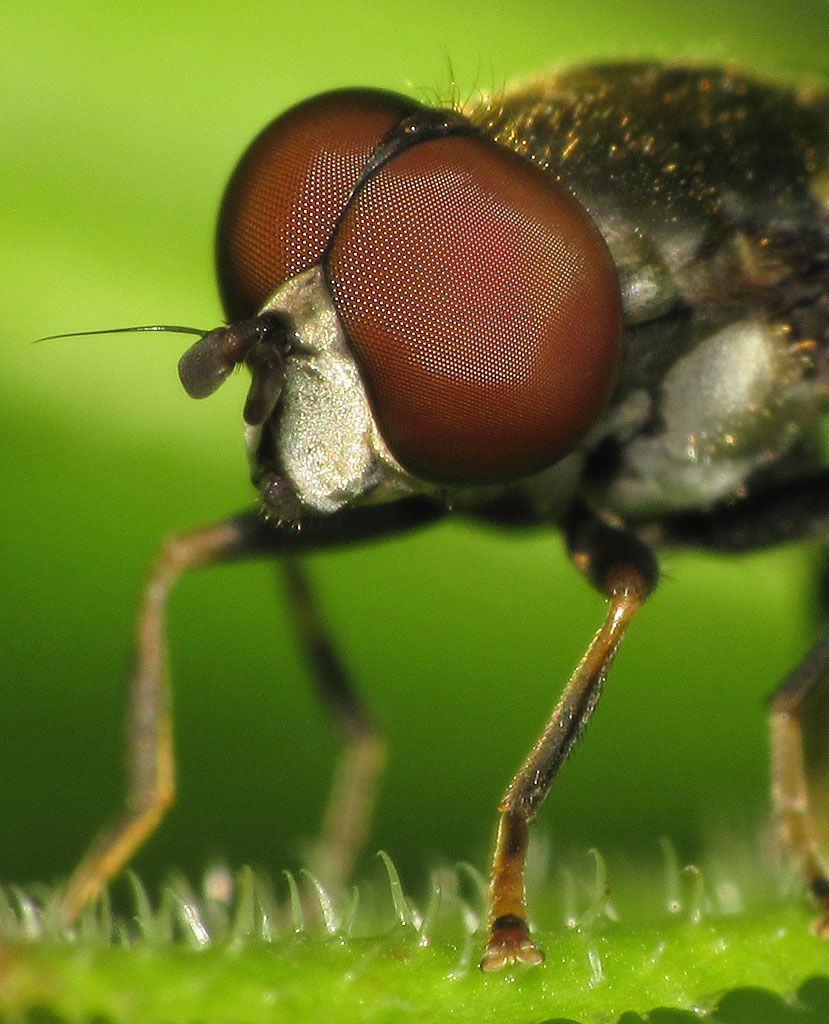
male face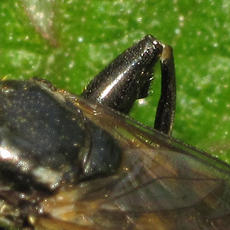 David Gould
Narborough Bog NR
31 May 2011
femoral process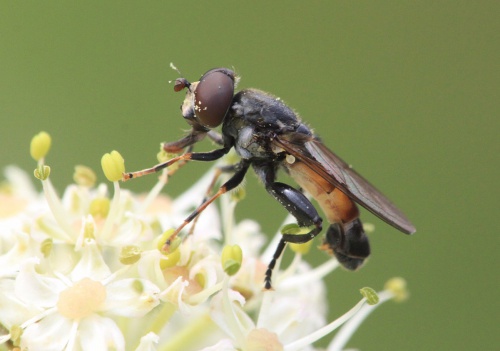 Paul Ruddoch
Melton Country Park
01 July 2016
Leicestershire & Rutland Map
Enter a town or village to see local records
MAP KEY:
Yellow squares = NBN records (all known data)
Coloured squares = NatureSpot records: 2025+ | 2020-2024 | pre-2020
UK Map
Additional images