Red Twin-spot Carpet
Red Twin-spot Carpet - Xanthorhoe spadicearia
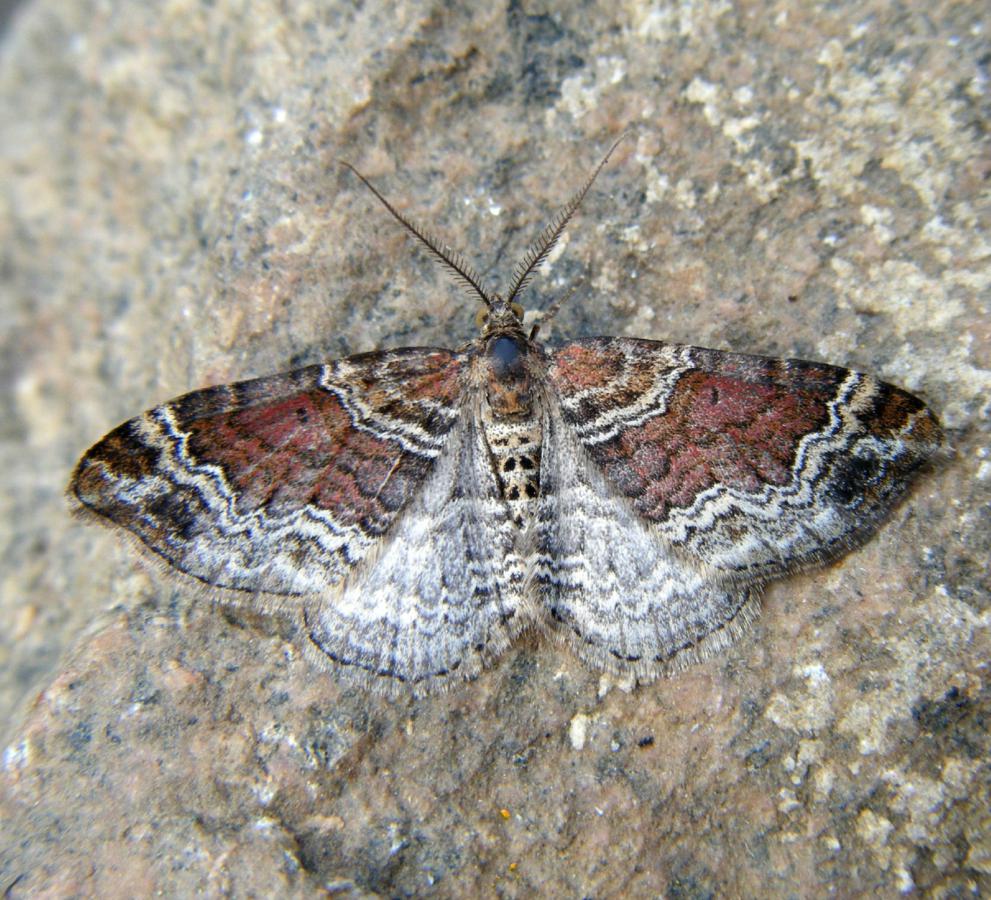
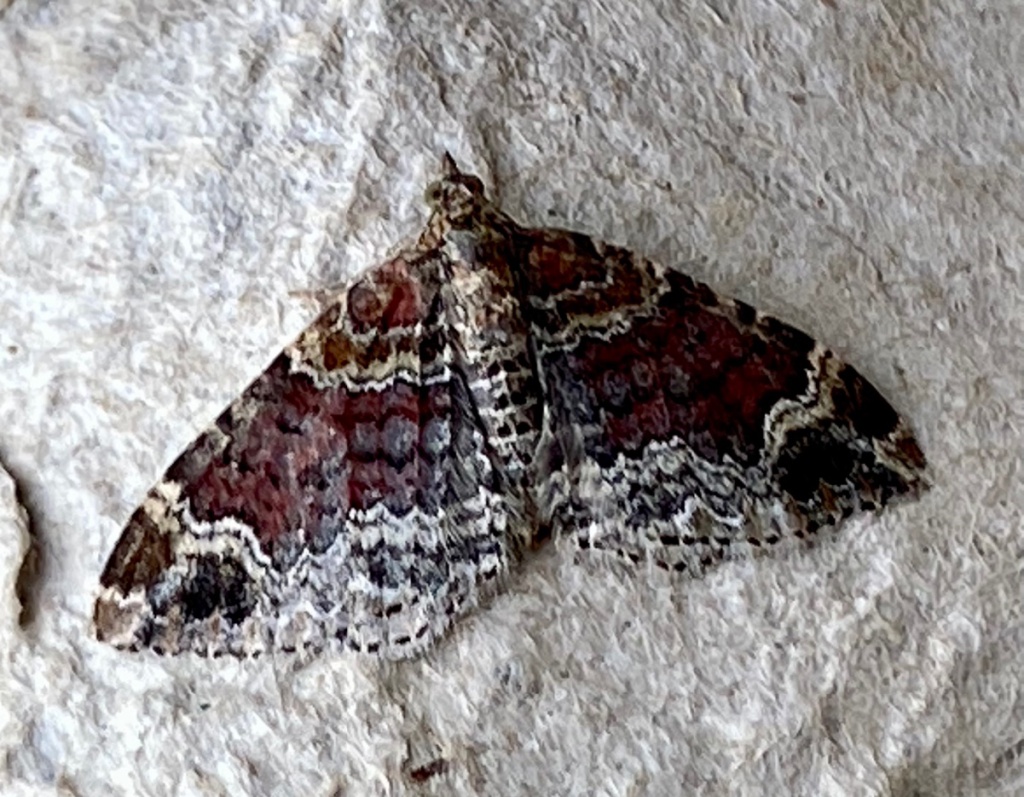
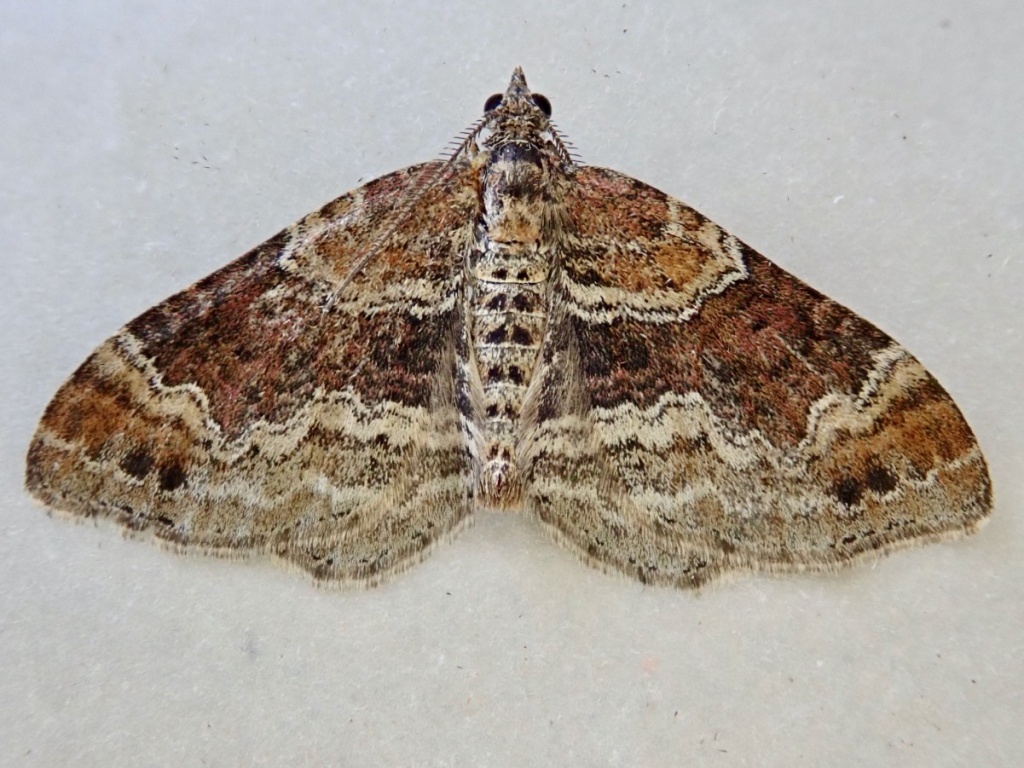
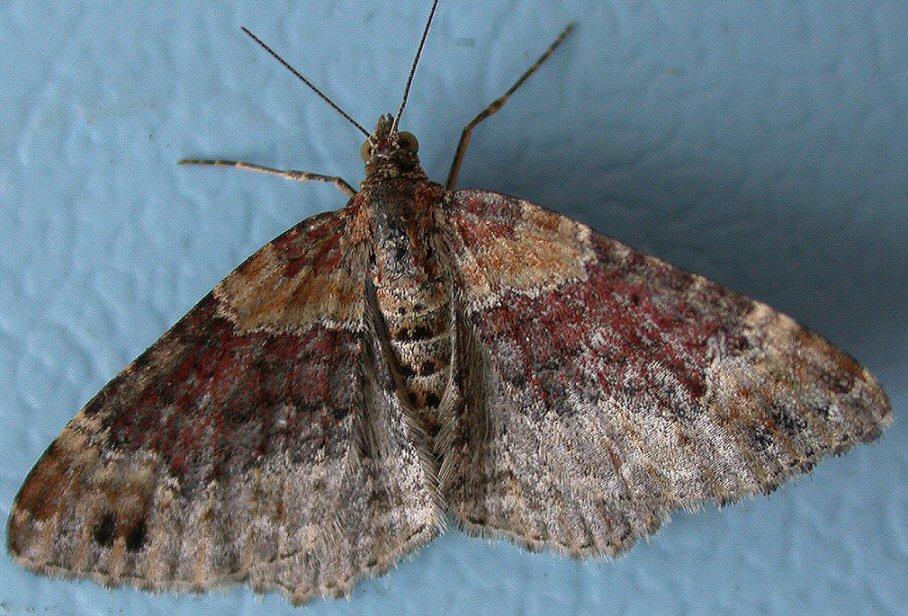
Wingspan 24-27 mm. Similar to Dark-barred Twin-spot Carpet, but more common in VC55. The presence or absence of a notch on the inner edge of the median fascia close to the costa is no longer considered a reliable character to separate the two species. Any individual showing a reddish tones in the median fascia is very likely to be Red Twin-spot Carpet. The underside of the forewing differs between the two species and can be checked in fresh individuals: Red Twin-spot Carpet shows a contrasting pattern with deep ginger colouration towards the apex, whereas Dark-batred Twin-spot Carpet is uniformly grey with little contrast. Both species come in differing forms, however a reddish form of Dark-barred Twin-spot Carpet does seem to be much scarcer than a darker form of Red Twin-spot Carpet, and is unlikely to be prevalent in any population.
Dark-barred Twin-spot Carpet

Individuals that are very worn should either be dissected or ignored.
Gardens, woodland, hedgerows, downs, fens, moors and sand-dunes.
May to June and again in July and August in the south. In more northern parts there is only one brood in June and July.
The larvae feed on low-growing plants such as Knotgrass and Bedstraw.
Found fairly commonly throughout most of Britain. In a recent survey to determine the status of all macro moths in Britain this species was classified as common.
Common in Leicestershire and Rutland. L&R Moth Group status = A (common and resident)
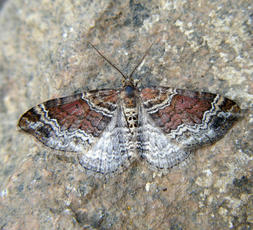 Graham Calow
Sapcote garden1
22 April 2011 Bassett Lane Cemetery Sapcote SP 4866 9309 (taken 5.8.2009).JPG) Graham Calow
Graham Calow
Bassett Lane Cemetery, Sapcote
05 August 2009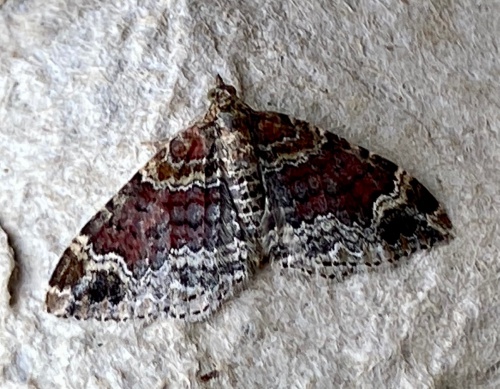 lee kimpton
Rearsby back garden
29 July 2022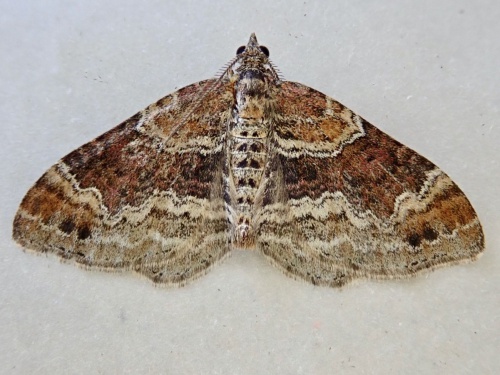 egaten
Thurlaston garden
02 May 2022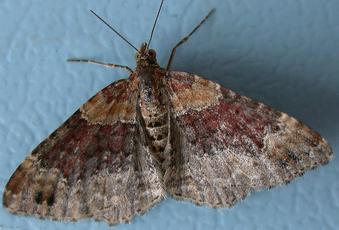 John Cranfield
Fleckney garden1
07 August 2006
 Bassett Lane Cemetery Sapcote SP 4866 9309 (taken 5.8.2009).JPG)
Leicestershire & Rutland Map
Enter a town or village to see local records
MAP KEY:
Yellow squares = NBN records (all known data)
Coloured squares = NatureSpot records: 2025+ | 2020-2024 | pre-2020
UK Map
Additional images
No additional images available for this species.